
On This Page
Description
The dynamic epic novel of political upheaval and societal change in late 1800s Japan, by the #1 New York Times bestselling author and unparalleled master of historical fiction, James ClavellThis epic novel by master writer James Clavell, loosely based on the Namamugi Incident and Anglo-Satsuma War that took place in the late 1800s, is a richly researched, panoramic view of Japan's budding relationship with the Western powers, its sweeping societal changes, and the political upheaval that show more followed.
As Malcolm Struan, the son of Culum and Tess Struan, and a small band of Westerners travel down the T?kaid? road, they are attacked by two Satsuma samurai, who mortally wound John Canterbury and seriously injure Malcolm, who then finds reprieve in the merchant village of Yokohama after a narrow escape facilitated by the unscathed Angelique.
Angelique Richaud, Malcolm's penniless but beautiful French companion, is thrown into a world of political intrigue, fierce devotion, unstable family dynamics, blackmail, and secrets as the trading houses battle for supremacy.
With a cast of dynamic and fully recognized characters, Gai-Jin spins a tale of passionate love affairs, devastating loss, intense power struggles, and the fight to survive and thrive in a hostile new land that will leave readers longing for another foray into Clavell's extraordinary Asian Saga.
. show less
Tags
Recommendations

















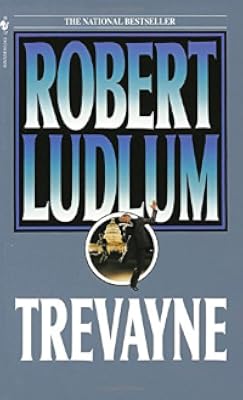

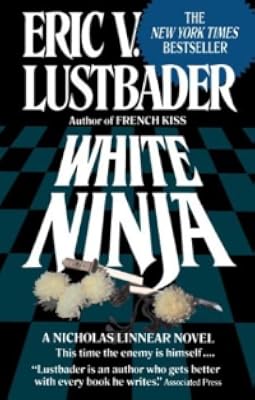

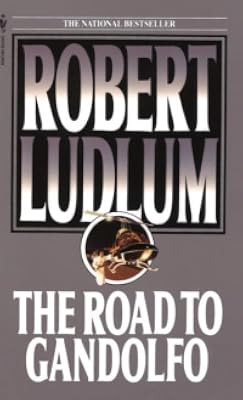
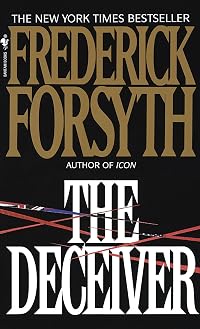

Member Recommendations

Member Reviews
Gai-Jin is the weakest of the three Clavell novels I have so far read, Shogun and Tai-Pan being the other two. The strengths that Clavell brought to bear in the first two books of the Asian Saga, clear storylines and focus, disappeared in Gai-Jin, which, in some parts, frankly, is a mess. Its principle fault is that the story bobs and weaves, which is fine if you are a boxer, but not so effective if you are a novelist. In fact, I felt that the main strength of Gai-Jin was that it was an elongated backstory for a prospective mini-series for television. (It had the feel of TV script.) Alas, by the time Clavell published it in 1994, Gai-Jin was part of a genre, historical fiction, which had already pretty much seen its best days as an show more adaptation for television mini-series.
In fairness, this is an enormously ambitious work. Clavell has taken a vast range of characters whose lives were drawn from historical figures, and done quite a good job of giving them a resurrected life in literature. Along with Shogun and Tai-Pan, King Rat and Noble House are the other novels in the Asian Saga which have been rendered into film or television. And I have seen all of them several times. Gai-Jin was the first of Clavell's novels for which I had no previous image imposed as to what the characters were like. It's impossible to watch Shogun and not see Richard Chamberlain and Yoko Shimada or Tai-Pan and not see Bryan Brown and Joan Chen. So I was happy to find that, like Dickens, Clavell does create characterizations that stand independent of film and television personas. All are vividly pictured in my mind bar one--Malcolm Struan for whom I simply cannot attach a face or even strong overall physical presence.
The story, however, does not satisfy the reader. Really, what is the story? I'm not quite sure. All the way through, I felt it should be the tale of Toranaga Yoshi. But he seems a mere afterthought towards the end. Meanwhile, the Europeans take center stage. And they are a repulsive bunch. To make this Angelique Richaud/Struan's story to me is an abomination. Like most of the main characters, she is a foolish, greedy child, a gold digger in fancy and in fact no matter how much Clavell tries to redeem her towards the end. His other novels have been stories of older, grizzled survivors. Gai-Jin contains too many pompous entitled barely adult know-it-alls. Yes, the opening of the Asian and Pacific trader to Europe was something accomplished by young adventurers. But Angelique, Malcolm, Phillip Tyrer, Settry Pallidar, and Edward Gornt became so annoying that I kept wishing the Japanese would kick them all the way back across the Pacific.
So what happened, here? A failure to focus on the right story, I think, the story of Toranaga. Several times, you feel the novel is turning that direction. But it quickly resumes with the petty affairs and plots of Angelique and her bevy of admirers instead. Clavell was much better when he focused his sympathies on the Japanese in Shogun and the Chinese in Tai-Pan.
(And why did Clavell slip in a couple of metric measurements when the rest of the novel uses English weights and measurements, which is historically accurate?) show less
In fairness, this is an enormously ambitious work. Clavell has taken a vast range of characters whose lives were drawn from historical figures, and done quite a good job of giving them a resurrected life in literature. Along with Shogun and Tai-Pan, King Rat and Noble House are the other novels in the Asian Saga which have been rendered into film or television. And I have seen all of them several times. Gai-Jin was the first of Clavell's novels for which I had no previous image imposed as to what the characters were like. It's impossible to watch Shogun and not see Richard Chamberlain and Yoko Shimada or Tai-Pan and not see Bryan Brown and Joan Chen. So I was happy to find that, like Dickens, Clavell does create characterizations that stand independent of film and television personas. All are vividly pictured in my mind bar one--Malcolm Struan for whom I simply cannot attach a face or even strong overall physical presence.
The story, however, does not satisfy the reader. Really, what is the story? I'm not quite sure. All the way through, I felt it should be the tale of Toranaga Yoshi. But he seems a mere afterthought towards the end. Meanwhile, the Europeans take center stage. And they are a repulsive bunch. To make this Angelique Richaud/Struan's story to me is an abomination. Like most of the main characters, she is a foolish, greedy child, a gold digger in fancy and in fact no matter how much Clavell tries to redeem her towards the end. His other novels have been stories of older, grizzled survivors. Gai-Jin contains too many pompous entitled barely adult know-it-alls. Yes, the opening of the Asian and Pacific trader to Europe was something accomplished by young adventurers. But Angelique, Malcolm, Phillip Tyrer, Settry Pallidar, and Edward Gornt became so annoying that I kept wishing the Japanese would kick them all the way back across the Pacific.
So what happened, here? A failure to focus on the right story, I think, the story of Toranaga. Several times, you feel the novel is turning that direction. But it quickly resumes with the petty affairs and plots of Angelique and her bevy of admirers instead. Clavell was much better when he focused his sympathies on the Japanese in Shogun and the Chinese in Tai-Pan.
(And why did Clavell slip in a couple of metric measurements when the rest of the novel uses English weights and measurements, which is historically accurate?) show less
Aside a few mistakes (contradictions with earlier novels, such as the mention of May-May being Gordon Chen's mother when in Tai-Pan, she was not, among other things), this was a decent read.
Like Tai-Pan, this plodded in some places, particularly through the later half of the book, but Clavell was rather ill and died shortly after finishing this. In my opinion, Shogun remains the best of the lot.
Like Tai-Pan, the ending disappointed me. The reason I loved Shogon so much was because Blackthorne was completely immersed in Japanese culture and had to learn his way through or die. In Tai-Pan and Gai-Jin, much of the novel is centered on the actions of the Europeans, something I did not have too much interest in. I would have preferred to show more have a Shogun-esque story where the main character has to learn to acclimate to Chinese culture.
The writing style though is solid, and is clearly well-researched, a definite plus for this book. I only wish that there was at least a chapter from Culum, Tess, and Gordon Chen's points of views, to show what has happened to them since Tai-Pan, and what happened to the deal set between Dirk and Jianqua, of which there is NO mention at all in Gai-Jin. It was a decent continuation of Tai-Pan in my opinion, but not as wonderful as Shogun. Overall, 3.5 out of five stars for this book. show less
Like Tai-Pan, this plodded in some places, particularly through the later half of the book, but Clavell was rather ill and died shortly after finishing this. In my opinion, Shogun remains the best of the lot.
Like Tai-Pan, the ending disappointed me. The reason I loved Shogon so much was because Blackthorne was completely immersed in Japanese culture and had to learn his way through or die. In Tai-Pan and Gai-Jin, much of the novel is centered on the actions of the Europeans, something I did not have too much interest in. I would have preferred to show more have a Shogun-esque story where the main character has to learn to acclimate to Chinese culture.
The writing style though is solid, and is clearly well-researched, a definite plus for this book. I only wish that there was at least a chapter from Culum, Tess, and Gordon Chen's points of views, to show what has happened to them since Tai-Pan, and what happened to the deal set between Dirk and Jianqua, of which there is NO mention at all in Gai-Jin. It was a decent continuation of Tai-Pan in my opinion, but not as wonderful as Shogun. Overall, 3.5 out of five stars for this book. show less
Not quite as good as Noble House but definitely makes you think about the opening up of Japan as well as giving insights into Japanese culture.
Not as good as Shogun, but still has that immersive quality where you feel less like you're reading a book and more like you're experiencing a world in miniature. And whereas Shogun is ultimately about Japan and not England, Gai-Jin does a good job of giving a view into the pros and cons of the Japanese and European ways of life side by side.
I am a completist: that's the only reason I read this book, the third in James Clavell's celebrated 'Asian Saga.' It isn't a very good book, sadly. It's too long for what it is, and concerns itself with too many trivial matters that really aren't interesting and just weigh down the book.
However, it is still worth fighting through, as Clavell's love of Asian culture and history are clear to see; though too much time is spent detailing the lives and affairs of the British and other traders in Yokohama, the account of life in nineteenth century Japan is quite fascinating at times.
However, it is still worth fighting through, as Clavell's love of Asian culture and history are clear to see; though too much time is spent detailing the lives and affairs of the British and other traders in Yokohama, the account of life in nineteenth century Japan is quite fascinating at times.
A historical fiction novel about European foreigners trying to set up business and trade in 1862 Japan. It is a very well written, highly engaging novel that has a large cast of interesting characters. The book mostly follows the drama of the foreigners with bits about Japan culture at the time as well. There is dealings with the Noble House, which is seen in other books in the series as well. It is an absolutely fantastic book. There is only one part that really drags on for no real reason, with how big this book is, it would have been nice to edit that down.
Here's what I wrote in 2010 about this read: "Rich and engaging, as Clavell's historical novels are. The Gai-Jin are foreigners (European, American) in Japan in the early 1860's. The Shogunate is under attack from within, and Japan is open to foreigners following Perry. Noble House and Brock & Sons on the scene from Hong Kong. Never a dull moment, plenty of intrigue, rich with cultural insights."
Members
- Recently Added By
Lists

Favorite Long Books
330 works; 42 members

Historical Fiction
889 works; 91 members

Asia
178 works; 7 members

Stories set on Island Country of Japan
18 works; 3 members
Author Information

132+ Works 29,351 Members
Screenwriter, director, producer, and novelist, James Clavell, was born on October 10, 1924, in Sydney, Australia. Clavell's full name was Charles Edmund DuMaresq de Clavelle. Though he wrote screenplays for such highly-acclaimed films as The Fly, The Great Escape, and To Sir With Love, Clavell is best known for his best-selling, grand novels. The show more novels, which are set in the Far East, include King Rat, Tai-pan, Shogun, Noble House, and Gai-Jin. Remarkable for their scrupulous attention to cultural detail and their innovative plots, Clavell's work has been compared to that of Charles Dickens. Clavell died on September 7, 1994, at the age of 69. (Bowker Author Biography) show less
Some Editions
Awards and Honors
Distinctions
Notable Lists
Series

Belongs to Publisher Series
Goldmann (44002)
Work Relationships
Is contained in
Contains
Common Knowledge
- Canonical title
- Gai-Jin
- Original title
- Gai-Jin
- Original publication date
- 1993
- People/Characters
- Culum Struan; Tess Struan; Gordon Chen; Jamie McFay; Tyler Brock; Sir Morgan Brock (show all 8); Sir William Aylesbury; Malcolm Struan
- Important places
- Japan
- Dedication
- This novel is for you, whoever you are, with deep appreciation - for without you, the writer part of me would not exist.
- First words
- The panic-stricken girl was galloping full speed back towards the coast, half a mile ahead, along footpaths that led precariously through the rice swamps and paddy fields.
- Last words
- (Click to show. Warning: May contain spoilers.)"In this life," he said with a chuckle to the evening air, "in this World of Tears, you need a sense of humor, neh?"
- Original language*
- englanti
*Some information comes from Common Knowledge in other languages. Click "Edit" for more information.
Classifications
Statistics
- Members
- 2,919
- Popularity
- 6,166
- Reviews
- 33
- Rating
- (3.66)
- Languages
- 14 — Czech, Danish, Dutch, English, Finnish, French, German, Hungarian, Italian, Polish, Portuguese, Romanian, Spanish, Swedish
- Media
- Paper, Audiobook, Ebook
- ISBNs
- 52
- ASINs
- 24