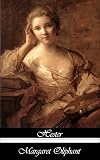
Hester: A Story of Contemporary Life
by Margaret Oliphant
On This Page
Description
'Human nature may be easy to see through, but it is very hard to understand.'The ageing Catherine Vernon, jilted in her youth, has risen to power in a man's world as head of the family bank. She thinks she sees through everyone and rules over a family of dependents with knowing cynicism. But there are two people in Redborough who resist her. One is Hester, a young relationwith a personality as strong as Catherine's, and as determined to find a role for herself. The other is Edward, show more Catherine's favourite, whom she treats like a son. Conflict between young and old is inevitable, and in its depiction of the complex relationships that develop between the three principalcharacters, Publishing October 2003 (exact date?)Margaret Oliphant is one of the great Victorian novelists, and this edition establishes her rediscovered importance. show lessTags
Recommendations

















Member Reviews
After her father's death Abroad, teenage Hester and her widowed mother are offered a home in the generic English town of Redborough by their rich cousin Miss Catherine Vernon. There's a kind of Mansfield Park setup, where Hester is presented with a range of potential suitors from among the assembled cousins, with a range of different obstacles to overcome.
But this turns out not really to be what the book is about at all: Hester is determined to challenge the prevailing "Angel of the hearth" idea of what the role of middle-class Woman should be in life. Hester is not content to provide sympathy, moral guidance and domestic efficiency while some man goes out and does things for her; she wants to work and have a real part in informed show more decision-making. Catherine is the key example that proves it can be done: when the family banking firm was teetering on the edge of collapse (the fault of Hester's father, although Hester doesn't know this) Catherine stepped in to rescue it and ran it successfully for twenty years. Mrs Oliphant, a widow herself, had been supporting her family by her writing for 25 years when this was published, so she knew what she was talking about.
Of course Catherine and Hester dislike each other at sight — they are far too alike — and of course Catherine manages to hold conservative opinions completely inconsistent with her own history, so sparks fly between them.
That part of the plot is all quite fun, but it doesn't really get going until Volume 3, and there are a lot of balls and tea-parties to get through before then, mostly rather repetitive. For a long stretch of Volume 2 it feels as though the plot isn't advancing at all, whilst Oliphant tries to dig out subtle social distinctions through close examination of furniture, dress, hair and speech patterns. There are some jokes — the comic chorus of poor relatives, the notion that "Abroad" is a specific place (like Basingstoke but more exotic), the single-minded husband-hunting of Emma, etc. — but on the whole it's rather heavy going. Oliphant is clearly best at getting inside the heads of her older characters, so Hester and her male cousins often seem surprisingly opaque to the reader, whilst Catherine and old Captain Morgan (not-a-pirate) are very human and believable. show less
But this turns out not really to be what the book is about at all: Hester is determined to challenge the prevailing "Angel of the hearth" idea of what the role of middle-class Woman should be in life. Hester is not content to provide sympathy, moral guidance and domestic efficiency while some man goes out and does things for her; she wants to work and have a real part in informed show more decision-making. Catherine is the key example that proves it can be done: when the family banking firm was teetering on the edge of collapse (the fault of Hester's father, although Hester doesn't know this) Catherine stepped in to rescue it and ran it successfully for twenty years. Mrs Oliphant, a widow herself, had been supporting her family by her writing for 25 years when this was published, so she knew what she was talking about.
Of course Catherine and Hester dislike each other at sight — they are far too alike — and of course Catherine manages to hold conservative opinions completely inconsistent with her own history, so sparks fly between them.
That part of the plot is all quite fun, but it doesn't really get going until Volume 3, and there are a lot of balls and tea-parties to get through before then, mostly rather repetitive. For a long stretch of Volume 2 it feels as though the plot isn't advancing at all, whilst Oliphant tries to dig out subtle social distinctions through close examination of furniture, dress, hair and speech patterns. There are some jokes — the comic chorus of poor relatives, the notion that "Abroad" is a specific place (like Basingstoke but more exotic), the single-minded husband-hunting of Emma, etc. — but on the whole it's rather heavy going. Oliphant is clearly best at getting inside the heads of her older characters, so Hester and her male cousins often seem surprisingly opaque to the reader, whilst Catherine and old Captain Morgan (not-a-pirate) are very human and believable. show less
I thoroughly enjoyed this. My curiosity was piqued by listening to it on Radio 4 but that version told a substantially different story with a totally changed emphasis.
I left wanting more which is good. It evokes Jane Austen without echoing her and is relatively modern in its attitude towards women.
I left wanting more which is good. It evokes Jane Austen without echoing her and is relatively modern in its attitude towards women.
This is the first novel I have read by Mrs Oliphant, and I found it refreshingly feminist and (for a Victorian novel) easy to read. Hester is part of the Vernon family, who own a bank. Although Hester has been kept in ignorance of this, her (now dead) father nearly ruined the bank and ran off, leaving his cousin Catherine to save the day, despite the fact that she was a woman... Now years later, Catherine has handed the bank's management over to Harry and Edward, both of whom are attracted to Hester. (Almost all the characters are distantly related to each other, but I gave up trying to keep the family tree straight in my head.)
The characterization here is excellent, and the misunderstandings that keep Catherine and Hester at odds for show more the majority of the book had me wanting to point out to them how similar they are. Emma, who does not appear until half way through the book, is extremely amusing, and I was kept guessing throughout about Hester's love life.
Highly recommended. Apparently Mrs Oliphant wrote nearly 100 novels, so that will keep me busy! show less
The characterization here is excellent, and the misunderstandings that keep Catherine and Hester at odds for show more the majority of the book had me wanting to point out to them how similar they are. Emma, who does not appear until half way through the book, is extremely amusing, and I was kept guessing throughout about Hester's love life.
Highly recommended. Apparently Mrs Oliphant wrote nearly 100 novels, so that will keep me busy! show less
Mrs. Oliphant knows human nature. I spent a good part of reading this book with a grin on my face because of the antics of the silly characters who ate from the one hand of Catherine Vernon while they bit the other. Catherine Vernon is the matriarch of the Vernon family, the great banking family of an English town. She has saved the bank once already, when the protagonist's father would have ruined it. Hester will not know, till the very end, why Catherine hates her so, but these two will find that they are very much alike.
This is a fascinating nineteenth century novel about women’s lives. There’s powerful Catherine Vernon; female head of a provincial bank, spinster mother of two adopted sons and local patroness. Even the new church is named St Catherine’s. Mrs John is the archetype of unthinking femininity while her daughter Hester is struggling to find herself: ‘People consider a girl a piece of goods to be sold and disposed of’. It also has the most delightful, moving and yet funny scene in Victorian literature on which the whole plots turns - when the price of strawberries will be cheap enough for making jam. Oh for the BBC to adapt Mrs Oliphant’s novel rather than yet another Great Expectations.
Mrs. Oliphant is an author who was enormously popular when her novels were first published but who is nearly forgotten nowadays. She is maybe better-known for her Chronicles of Carlingford series (of which Miss Marjoribanks is one), but Hester is also a very fine novel.
The story centers firstly around Catherine Vernon, a kind of matriarch and queen in Redborough. She is the head of Vernon’s Bank, and it was through her intervention that a run on the bank was prevented in her younger days. The bulk of the story, however, takes place many years later, when Catherine is in her sixties, with her cousin/nephew Edward Vernon playing William Cecil to her Elizabeth I. Catherine’s life is shaken when her fourteen-year-old relative, Hester, show more and her mother move to “the Vernonry” after a period away. A lot of the novel deals with Hester’s growth from girl to woman, and the men who express interest in her along the way.
Hester has a variety of suitors vying for her hand (he cousin Harry, Edward, and the stranger in town, Roland Ashton), which is intriguing, but what I enjoyed the most was the interplay between the two main characters. I was interested in the contrasts that exist between them: one young, one old, both locked in an antagonistic struggle with each other. There’s also a fair amount of antagonism between Hester and Edward Vernon (bringing to mind comparisons with Pride and Prejudice). Is he in love with her or not? It’s fairly obvious from the start that he’s not (someone who’s into you generally doesn’t start fights with you or ignore you completely), so it’s fun to watch Hester figure that out for herself. The plot of the novel drags a bit in the middle, and as such, I thought the book could have been at least 100 pages shorter. But nonetheless, I really enjoyed this novel. show less
The story centers firstly around Catherine Vernon, a kind of matriarch and queen in Redborough. She is the head of Vernon’s Bank, and it was through her intervention that a run on the bank was prevented in her younger days. The bulk of the story, however, takes place many years later, when Catherine is in her sixties, with her cousin/nephew Edward Vernon playing William Cecil to her Elizabeth I. Catherine’s life is shaken when her fourteen-year-old relative, Hester, show more and her mother move to “the Vernonry” after a period away. A lot of the novel deals with Hester’s growth from girl to woman, and the men who express interest in her along the way.
Hester has a variety of suitors vying for her hand (he cousin Harry, Edward, and the stranger in town, Roland Ashton), which is intriguing, but what I enjoyed the most was the interplay between the two main characters. I was interested in the contrasts that exist between them: one young, one old, both locked in an antagonistic struggle with each other. There’s also a fair amount of antagonism between Hester and Edward Vernon (bringing to mind comparisons with Pride and Prejudice). Is he in love with her or not? It’s fairly obvious from the start that he’s not (someone who’s into you generally doesn’t start fights with you or ignore you completely), so it’s fun to watch Hester figure that out for herself. The plot of the novel drags a bit in the middle, and as such, I thought the book could have been at least 100 pages shorter. But nonetheless, I really enjoyed this novel. show less
The longest Virago I own in my collection, this book benefits from small chapters and smooth writing to make it a quick read nonetheless. Hester is the main character, a young girl in the Vernon family who moves back to her home of Redborough years after her father took his young wife off in disgrace. Her mother, a gentle but simple woman, never understood that her husband's reckless actions forced them to flee their home and live in exile. Since Hester's father is dead, and no one else has been around to inform her, Hester's past is shrouded in mystery, and she is excited to return to the home she never knew. Imagine her bewilderment when she meets Catherine Vernon, the woman jilted by her father and who saved the Vernon bank after show more Hester's father had nearly ruined it, and is met with unspoken antagonism and condescension. Hester, being a proud girl of fourteen, instantly bridles at the treatment, and responds with hostility. The two focal women of this story are set up in opposition from the beginning, and their rivalry plays a role in all the events to follow.
Now although Hester's family is out of favor, the Vernon name is much respected in Redborough, and Catherine Vernon is especially revered as the woman who saved the bank. She has become an old woman, who never married and therefore has no children to carry on her legacy, so she has chosen two men out of the Vernon family to be her representatives at the bank. They are now the head partners, and Catherine is living out her retirement in peace. Harry, one of her choices, lives in the white house that once belonged to Hester's mother, and Edward, Catherine's chosen and especial favorite, lives with Catherine herself. Out of her wealth and generosity, Catherine has also set up the Vernonry, where poor relatives are invited to live at her expense. Hester's mother received an invitation to live in one of the rooms in this renovated house, and it was at this request that she and Hester returned to Redborough. Once installed in their new home, Hester makes an enemy of Catherine, a friend of the old Morgans, and becomes intwined in the lives of Harry and Edward. A cast of quirky minor characters complement, and complicate, the lives of these core players, as a new drama quietly unfolds in the small town that rivals the events enacted there before Hester was born.
If the preceeding appears too extensive to set up a synopsis of the book, try reading the novel itself. The author takes two chapters just to introduce the setting and the background history of the Vernon family, before we even meet Catherine. Hester comes in a few chapters later. In fact, that was an issue that I had with this book, and I am a fan of Victorian literature with all its meticulous attention to details. I can happily read paragraphs that drag on for pages, or sentences that take some unraveling, as long as it is well written. My problem with this author was that she had a lot of repetition, of ideas and words, and sometimes even the same exact sentence slightly reworded. The writing was easy enough to read - and, like I said, I have had practice in wading through dense text - but the constant reiteration was annoying, even if it was not a big stumbling block.
Fortunately, I enjoyed the characters and story enough to overlook this irritation. Hester and Catherine are vital women, strong and independent, surprisingly different from much literary representation of women at this time. The minor characters are also a lot of fun, some catty and vindictive, others noble and true. Oliphant successfully incorporated a wide range of people that are all fully realized as individuals. I particularly liked the fact that some of the people have characters that are original, unlike what I'm used to seeing in novels similar to hers. Emma, for instance, and her unshakable practicality. The drama is also compelling, as history tragically repeats itself, inevitably drawing Hester and Catherine together - such strong and similar women are bound to love each other or hate each other, or a little of both, as Hester says at the end. With such good qualities I enjoyed my time with this novel from start to finish. A good story, that could have been even stronger with cleaner writing. show less
Now although Hester's family is out of favor, the Vernon name is much respected in Redborough, and Catherine Vernon is especially revered as the woman who saved the bank. She has become an old woman, who never married and therefore has no children to carry on her legacy, so she has chosen two men out of the Vernon family to be her representatives at the bank. They are now the head partners, and Catherine is living out her retirement in peace. Harry, one of her choices, lives in the white house that once belonged to Hester's mother, and Edward, Catherine's chosen and especial favorite, lives with Catherine herself. Out of her wealth and generosity, Catherine has also set up the Vernonry, where poor relatives are invited to live at her expense. Hester's mother received an invitation to live in one of the rooms in this renovated house, and it was at this request that she and Hester returned to Redborough. Once installed in their new home, Hester makes an enemy of Catherine, a friend of the old Morgans, and becomes intwined in the lives of Harry and Edward. A cast of quirky minor characters complement, and complicate, the lives of these core players, as a new drama quietly unfolds in the small town that rivals the events enacted there before Hester was born.
If the preceeding appears too extensive to set up a synopsis of the book, try reading the novel itself. The author takes two chapters just to introduce the setting and the background history of the Vernon family, before we even meet Catherine. Hester comes in a few chapters later. In fact, that was an issue that I had with this book, and I am a fan of Victorian literature with all its meticulous attention to details. I can happily read paragraphs that drag on for pages, or sentences that take some unraveling, as long as it is well written. My problem with this author was that she had a lot of repetition, of ideas and words, and sometimes even the same exact sentence slightly reworded. The writing was easy enough to read - and, like I said, I have had practice in wading through dense text - but the constant reiteration was annoying, even if it was not a big stumbling block.
Fortunately, I enjoyed the characters and story enough to overlook this irritation. Hester and Catherine are vital women, strong and independent, surprisingly different from much literary representation of women at this time. The minor characters are also a lot of fun, some catty and vindictive, others noble and true. Oliphant successfully incorporated a wide range of people that are all fully realized as individuals. I particularly liked the fact that some of the people have characters that are original, unlike what I'm used to seeing in novels similar to hers. Emma, for instance, and her unshakable practicality. The drama is also compelling, as history tragically repeats itself, inevitably drawing Hester and Catherine together - such strong and similar women are bound to love each other or hate each other, or a little of both, as Hester says at the end. With such good qualities I enjoyed my time with this novel from start to finish. A good story, that could have been even stronger with cleaner writing. show less
Members
- Recently Added By
Talk Discussions
Past Discussions
Victorian Readalong Q3: Hester by Margaret Oliphant in Club Read 2022 (September 2022)
Author Information

246+ Works 3,153 Members
Margaret Oliphant Wilson Oliphant (née Margaret Oliphant Wilson) (4 April 1828 - 25 June 1897), was a Scottish novelist and historical writer who married her cousin, Frank Wilson Oliphant. Oliphant's first novel was published in 1849, Passages in the Life of Mrs. Margaret Maitland. The book dealt with the Scottish Free Church movement. Oliphant, show more during an often difficult life, wrote more than 120 works, including novels, books of travel and description, histories, and volumes of literary criticism. Among the best known of her works of fiction are: Adam Graeme (1852), The Marriage of Elinor (1892), The Ways of Life (1897). She died at Wimbledon, London, on 25 June 1897. (Bowker Author Biography) show less
Series
Belongs to Publisher Series
Work Relationships
Common Knowledge
- Canonical title
- Hester: A Story of Contemporary Life
- Original publication date
- 1883
- Epigraph
- "A springy motion in her gait,
A rising step, did indicate
Of pride and joy no common rate
That flush'd her spirit:
I know not by what name beside
I shall it call: if 'twas not pride,
It was a joy to tha... (show all)t allied
She did inherit.. . . . .She was trained in Nature's school,
Nature had blest her.
A waking eye, a prying mind,
A heart that stirs, is hard to bind;
A hawk's keen sight ye cannot blind,
Ye could not Hester."CHARLES LAMB - First words
- The Banking House of the Vernons was known through all the Home Counties as only second to the Bank of England in stability and strength.
Hester is a witty, ironic, forceful tale of women who run their lives either by choice or by necessity without the support of men - fatherless girls, old maids, widows, domineering sisters. (Introduction) - Last words
- (Click to show. Warning: May contain spoilers.)What can a young woman desire more than such a possibility of choice?
(Click to show. Warning: May contain spoilers.)It is Catherine, the old maid, who is the embodiment of strength for the future and who points the way forward, not only for Hester, but for the new breed of "odd women", the solitary heroines of the 1890s. (Introduction)
Classifications
Statistics
- Members
- 364
- Popularity
- 86,657
- Reviews
- 13
- Rating
- (3.96)
- Languages
- English, Spanish
- Media
- Paper, Audiobook, Ebook
- ISBNs
- 26
- ASINs
- 11