
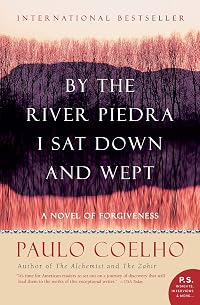
By the River Piedra I Sat Down and Wept: A Novel of Forgiveness
by Paulo Coelho
On the Seventh Day (Paulo Coelho) (1)
On This Page
Description
From Paulo Coelho, author of the international bestseller The Alchemist, comes a poignant, richly poetic story that reflects the depth of love and life. Rarely does adolescent love reach its full potential, but what happens when two young lovers reunite after eleven years? Time has transformed Pilar into a strong and independent woman, while her devoted childhood friend has grown into a handsome and charismatic spiritual leader. She has learned well how to bury her feelings . . . and he has show more turned to religion as a refuge from his raging inner conflicts. Now they are together once again, embarking on a journey fraught with difficulties, as long-buried demons of blame and resentment resurface after more than a decade. But in a small village in the French Pyrenees, by the waters of the River Piedra, a most special relationship will be reexamined in the dazzling light of some of life's biggest questions. show lessTags
Recommendations

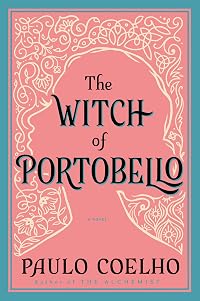
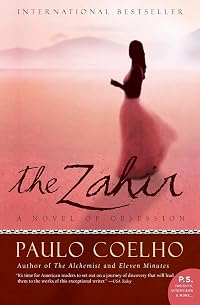



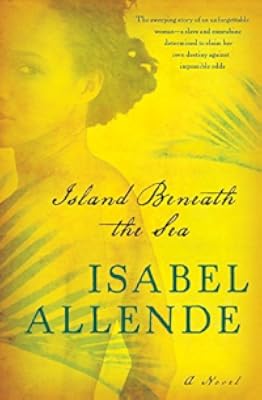
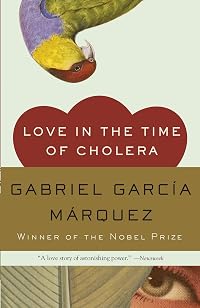
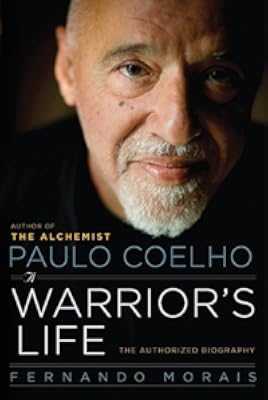
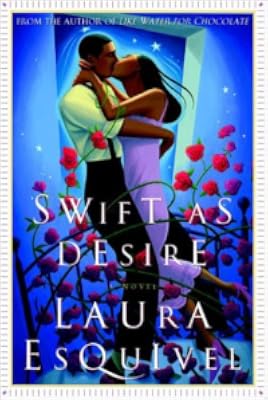

Member Recommendations

Member Reviews
I read this back in 2021, so about four years ago now, and I still think about it sometimes.
At that time I was just in a very reflective phase of life, trying to understand myself better, so the book landed differently. I didn’t struggle with it, I didn’t almost drop it, it just felt like something I needed to read at that exact moment. I’ve come to believe that certain books only open up when you’re ready for them.
What really surprised me was how much the spiritual themes drew me in. There were a lot of references to God, the Son, and the Holy Spirit, and even though I’m Muslim, it didn’t feel alienating. It wasn’t preachy. It felt personal and symbolic. Instead of focusing on the differences, I found myself thinking show more about the shared core, the longing for connection with the divine, the struggle to surrender, the tension between doubt and faith.
It actually made me reflect on my own spirituality in a deeper way. Not in a dramatic, life changing way, but in a quiet internal shift. Like, when was the last time I really examined my relationship with God, beyond routine? It gave me this calm reassurance, almost like a soft reset. A reminder that faith is not just rules and structure, but something lived and felt.
And the concept of the “other” really stayed with me. Not as some psychological diagnosis, but as that inner voice that questions you, hesitates, overthinks, sometimes protects you and sometimes limits you. The way Coelho portrayed that internal dialogue felt so real. At first I wondered if it was meant to signal something extreme, but the more I reflected, the more I realized it’s just human. We all have that voice negotiating our choices.
Looking back now, I think what resonated wasn’t the specific religious framework, but the universal spiritual tension underneath it. It reminded me that even across different faith traditions, the core questions are often the same. How do we trust, how do we love fully, how do we silence fear, how do we listen to God without letting our doubts run the show. That’s what stayed with me long after 2021. show less
At that time I was just in a very reflective phase of life, trying to understand myself better, so the book landed differently. I didn’t struggle with it, I didn’t almost drop it, it just felt like something I needed to read at that exact moment. I’ve come to believe that certain books only open up when you’re ready for them.
What really surprised me was how much the spiritual themes drew me in. There were a lot of references to God, the Son, and the Holy Spirit, and even though I’m Muslim, it didn’t feel alienating. It wasn’t preachy. It felt personal and symbolic. Instead of focusing on the differences, I found myself thinking show more about the shared core, the longing for connection with the divine, the struggle to surrender, the tension between doubt and faith.
It actually made me reflect on my own spirituality in a deeper way. Not in a dramatic, life changing way, but in a quiet internal shift. Like, when was the last time I really examined my relationship with God, beyond routine? It gave me this calm reassurance, almost like a soft reset. A reminder that faith is not just rules and structure, but something lived and felt.
And the concept of the “other” really stayed with me. Not as some psychological diagnosis, but as that inner voice that questions you, hesitates, overthinks, sometimes protects you and sometimes limits you. The way Coelho portrayed that internal dialogue felt so real. At first I wondered if it was meant to signal something extreme, but the more I reflected, the more I realized it’s just human. We all have that voice negotiating our choices.
Looking back now, I think what resonated wasn’t the specific religious framework, but the universal spiritual tension underneath it. It reminded me that even across different faith traditions, the core questions are often the same. How do we trust, how do we love fully, how do we silence fear, how do we listen to God without letting our doubts run the show. That’s what stayed with me long after 2021. show less
I had heard of Coelho before as kind of a bland spiritual writer. Thankfully my previous impression was totally wrong!
The book followed a young woman, Pilar, who has gotten herself into a very complacent place in life, which she has worked hard for but does not move her in any way. Then she receives a letter from her former lover of her adolescent years. She finds he has become a spiritual teacher, espousing the blessings of the divine goddess. Her internal monologues, which comprise a large portion of the book, portray her in conflict about what to do with her life.
Coelho writes with a frankness and lack of selfconsciousness about matters of the heart that in many authors' hands would come off tacky or cheesy. By midway through the show more book I was finding deep succor in his characters' bits of wisdom. While the book could pass as "Christian fiction," I get the impression that Coelho only uses that idiom to speak of human spirituality and love in a broader way.
His style, which moved this reader, reminds me of Herman Hesse's Narcissus and Goldmund, a favorite from my teen years. The characters and their conflicts represent more abstract, archetypal dilemmas of life orientation and value systems. Coelho has written a parable for modern times. show less
The book followed a young woman, Pilar, who has gotten herself into a very complacent place in life, which she has worked hard for but does not move her in any way. Then she receives a letter from her former lover of her adolescent years. She finds he has become a spiritual teacher, espousing the blessings of the divine goddess. Her internal monologues, which comprise a large portion of the book, portray her in conflict about what to do with her life.
Coelho writes with a frankness and lack of selfconsciousness about matters of the heart that in many authors' hands would come off tacky or cheesy. By midway through the show more book I was finding deep succor in his characters' bits of wisdom. While the book could pass as "Christian fiction," I get the impression that Coelho only uses that idiom to speak of human spirituality and love in a broader way.
His style, which moved this reader, reminds me of Herman Hesse's Narcissus and Goldmund, a favorite from my teen years. The characters and their conflicts represent more abstract, archetypal dilemmas of life orientation and value systems. Coelho has written a parable for modern times. show less
Years ago a good friend recommended this to me as one of her favorite books, and I'd been meaning to read it ever since, so when I finally spied it in a used bookshop, I had to snatch it up. I ended up with very mixed feelings about it.
I could see the appeal of the book, and I probably would have appreciated it more if I had read it back in college (as I suspect she did). At my current age, I was a little more resistant. Like The Alchemist, it's part story of emotional journey, part religion/philosophy -- this one focuses on embracing the female aspects of the divine. Now, maybe I've just heard this message enough that it no longer feels radical, maybe I was too busy eye-rolling how much time is spent with a male character lecturing a show more woman on the female divine, maybe I've just drifted too far in the direction of atheism -- but I just couldn't give myself over to the ride this book wanted to take me on. show less
I could see the appeal of the book, and I probably would have appreciated it more if I had read it back in college (as I suspect she did). At my current age, I was a little more resistant. Like The Alchemist, it's part story of emotional journey, part religion/philosophy -- this one focuses on embracing the female aspects of the divine. Now, maybe I've just heard this message enough that it no longer feels radical, maybe I was too busy eye-rolling how much time is spent with a male character lecturing a show more woman on the female divine, maybe I've just drifted too far in the direction of atheism -- but I just couldn't give myself over to the ride this book wanted to take me on. show less
Summary:
From Paulo Coelho, author of the international bestseller The Alchemist , comes a poignant, richly poetic story that reflects the depth of love and life. Rarely does adolescent love reach its full potential, but what happens when two young lovers reunite after eleven years? Time has transformed Pilar into a strong and independent woman, while her devoted childhood friend has grown into a handsome and charismatic spiritual leader. She has learned well how to bury her feelings . . . and he has turned to religion as a refuge from his raging inner conflicts. Now they are together once again, embarking on a journey fraught with difficulties, as long-buried demons of blame and resentment resurface after more than a decade. But in a show more small village in the French Pyrenees, by the waters of the River Piedra, a most special relationship will be reexamined in the dazzling light of some of life's biggest questions.
My take: 2 looks
One review of this book used the words "metaphysical allegory". I should have known then what I would think upon finishing this book. There is a subtitle of "A Novel of Forgiveness".
I don't really know where to start. Pilar is a young woman who is quite conflicted. She thinks she has had a good life, but upon reflection, decides that it was more like quicksand and only served to hold her back. Faced with a man from her past who has fallen deeply in love with her over the past eleven years (of having no contact with her whatsoever), she is like an oscillating fan: back and forth and back and forth. Does she love him? Should she go back to school? No, she doesn't love him. Wait! Yes! Yes, she does love him.
This man, whose name we never know, communicates with the Virgin Mary, performs miracles and feels the calling to spread the feminine-side of the gospel. He goes out half-clothed into the snow to enter into a trance to finally decide whether he should be a religious zealot or a man in love with a woman he barely knows.
They both exorcise themselves of The Other, which seems to be the negative, questioning, realistic, grown-up side of each person's personality. The Other has to stand in the corner and try to sneak back in on occasion, but it doesn't seem to be too stealthy.
All of this felt very overly dramatic and sophomoric (like watching two high-schoolers trying to one-up each other when it comes to "I love you but I must leave you and it's going to tear me apart but I'm going to do it again and again to prove my martyrdom" mentality). Coelho takes himself much too seriously if this is the way the trilogy (this is the first in the And On the Seventh Day series) plays out. However, because of the sheer cleverness of the title of the second in the series, Veronika Decides to Die, I have added it to my list.
I can't recommend this one. show less
From Paulo Coelho, author of the international bestseller The Alchemist , comes a poignant, richly poetic story that reflects the depth of love and life. Rarely does adolescent love reach its full potential, but what happens when two young lovers reunite after eleven years? Time has transformed Pilar into a strong and independent woman, while her devoted childhood friend has grown into a handsome and charismatic spiritual leader. She has learned well how to bury her feelings . . . and he has turned to religion as a refuge from his raging inner conflicts. Now they are together once again, embarking on a journey fraught with difficulties, as long-buried demons of blame and resentment resurface after more than a decade. But in a show more small village in the French Pyrenees, by the waters of the River Piedra, a most special relationship will be reexamined in the dazzling light of some of life's biggest questions.
My take: 2 looks
One review of this book used the words "metaphysical allegory". I should have known then what I would think upon finishing this book. There is a subtitle of "A Novel of Forgiveness".
I don't really know where to start. Pilar is a young woman who is quite conflicted. She thinks she has had a good life, but upon reflection, decides that it was more like quicksand and only served to hold her back. Faced with a man from her past who has fallen deeply in love with her over the past eleven years (of having no contact with her whatsoever), she is like an oscillating fan: back and forth and back and forth. Does she love him? Should she go back to school? No, she doesn't love him. Wait! Yes! Yes, she does love him.
This man, whose name we never know, communicates with the Virgin Mary, performs miracles and feels the calling to spread the feminine-side of the gospel. He goes out half-clothed into the snow to enter into a trance to finally decide whether he should be a religious zealot or a man in love with a woman he barely knows.
They both exorcise themselves of The Other, which seems to be the negative, questioning, realistic, grown-up side of each person's personality. The Other has to stand in the corner and try to sneak back in on occasion, but it doesn't seem to be too stealthy.
All of this felt very overly dramatic and sophomoric (like watching two high-schoolers trying to one-up each other when it comes to "I love you but I must leave you and it's going to tear me apart but I'm going to do it again and again to prove my martyrdom" mentality). Coelho takes himself much too seriously if this is the way the trilogy (this is the first in the And On the Seventh Day series) plays out. However, because of the sheer cleverness of the title of the second in the series, Veronika Decides to Die, I have added it to my list.
I can't recommend this one. show less
I didn't so much see it as a story of forgiveness, but as one of loving another person, more than you love yourself. The kind of selfless love that transcends all challenges and obstacles, and knowing that together all things are bearable, surmountable and possible!
Lettura scorrevole, ci sono interessanti riflessioni sui casi e sul senso della vita ma la storia purtroppo non lascia nulla a mio avviso, se non un certo senso di incompletezza. L'autore rompe alcuni dogmi divertendosi a rielaborare e fantasticare su questioni profonde, lo fa in realtà con una certa superficialità. È un romanzo, certo, ma il risultato detrae alla stessa storia che alla fine diventa così una storiella banale e superficiale. Mi riservo eventualmente di leggere altri libri dell'autore per capire se è il suo stile che non mi piace o se è questo racconto che è riuscito male. Peccato veramente, tra l'altro, per i continui riferimenti biblici usati in modo deviato per fare interpretazioni e allusioni dissolute.
Paulo Coelho always conveys messages and ways of understanding the world through his writing. I remember the first time I read one of his books, I fell in love with that way. But I guess, after reading several books of him, somehow, that became a tiring concept. It’s just that sometimes, it feels forced. He always insert the concept of spirituality even in the most unlikely circumstance. But, I gotta say, in this book, that way of writing seemed dangerous at first, but turned out surprisingly good in the end.
The story of this book is not commonly told, I guess. It’s taboo, not publicly discussed. A love story between a man of God and an ordinary girl is not something you stumble upon everyday. But this book have portrayed it really show more well. It made several points that are very good such as the part where Pilar was pointing how hard it is to compete with the love that was supposed to be devoted to God, and the part that the padre (the superior) pointed out that you can always serve God in another way other than being a priest (in the case of the story). There are also plenty of life lessons. I think this book is one of Paulo Coelho’s best. show less
The story of this book is not commonly told, I guess. It’s taboo, not publicly discussed. A love story between a man of God and an ordinary girl is not something you stumble upon everyday. But this book have portrayed it really show more well. It made several points that are very good such as the part where Pilar was pointing how hard it is to compete with the love that was supposed to be devoted to God, and the part that the padre (the superior) pointed out that you can always serve God in another way other than being a priest (in the case of the story). There are also plenty of life lessons. I think this book is one of Paulo Coelho’s best. show less
Members
- Recently Added By
Lists

Favorite Book Titles
35 works; 1 member

Books With the Most Memorable Titles
478 works; 158 members
Author Information

216+ Works 100,494 Members
Paulo Coelho was born in Rio de Janeiro, Brazil on August 24, 1947. As a teenager, he wanted to become a writer, but his parents wanted him to pursue a more substantial and secure career. At the age of 17, his introversion and opposition to his parents led them to commit him to a mental institution. He escaped three times before being released at show more the age of 20. Once released, he abandoned his ideas of becoming a writer and enrolled in law school to please his parents. He stayed in law school for one year. In 1986, Coelho walked the 500-plus mile Road of Santiago de Compostela in northwestern Spain, a turning point in his life. On the path, he had a spiritual awakening, which he described in his book The Pilgrimage. Before becoming a full-time author, he worked as theatre director and actor, lyricist, and journalist. He wrote song lyrics for many famous performers in Brazilian music including Elis Regina, Rita Lee, and Raul Seixas. His first book, Hell Archives, was published in 1982. He has written over 25 books since then including The Alchemist, Brida, The Fifth Mountain, The Devil and Miss Prym, Eleven Minutes, The Zahir, The Witch of Portobello, Like a Flowing River, and Adultery. He received numerous awards including Las Pergolas Prize, The Budapest Prize, Nielsen Gold Book Award, and the Grand Prix Litteraire Elle. In 1996, he founded the Paulo Coelho Institute, which provides aid to children and elderly people with financial problems. In 2007, Coelho was named a Messenger of Peace to the United Nations. (Bowker Author Biography) show less
Some Editions
Awards and Honors
Awards
Distinctions
Series

Belongs to Publisher Series
Work Relationships
Is contained in
Has as a student's study guide
Common Knowledge
- Canonical title
- By the River Piedra I Sat Down and Wept: A Novel of Forgiveness
- Original title
- Na margemdo rio Piedra eu sentei e chorei
- Original publication date
- 1994
- People/Characters
- Pilar
- Important places
- Pyrenees; Spain
- Epigraph
- But wisdom is justified by all her children - Luke 7:35
- Dedication
- For I. C. and S. B, whose loving communion made me see the feminine face of God; for Monica Antunes, my companion from the beginning, who with her love and enthusiasm spreads the fire all over the world; for Paulo Rocco, for ... (show all)the joy of the battles we have fought together and for the dignity of the battles we have fought between us; and for Matthew Lore, for not having forgotten a sage quotation from the I Ching: "Perseverance is favorable."
- First words
- By the river Piedra I sat down and wept.
- Quotations
- Every day, God gives us the sun - and also one moment in
which we have the ability to change everything that makes us unhappy. Every day, we try to pretend that we haven't
perceived that moment, that it doesn't exist ... (show all)- that today is the same as yesterday and will be the same as tomorrow. But if people really pay attention to their everyday lives, they will discover that magic moment. It may arrive in the instant when we are doing something mundane, like putting our front door key in the lock; it may lie hidden in the quiet that follows the lunch hour or in the thousand and one things that all seem the same to us. But that moment exists - a moment when all the power of the stars becomes a part of us and enables us to perfom miracles. - Last words
- (Click to show. Warning: May contain spoilers.)"Dreams mean work."
- Original language*
- Brasilianisches Portugiesisch
*Some information comes from Common Knowledge in other languages. Click "Edit" for more information.
Classifications
- Genres
- Fiction and Literature, General Fiction, Romance
- DDC/MDS
- 813 — Literature & rhetoric American literature in English American fiction in English
- LCC
- PQ9698.13 .O3546 .N313 — Language and Literature French, Italian, Spanish and Portuguese literatures Portuguese literature Provincial, local, colonial, etc. Brazil
- BISAC
Statistics
- Members
- 4,653
- Popularity
- 3,094
- Reviews
- 56
- Rating
- (3.39)
- Languages
- 29 — Arabic, Catalan, Czech, Danish, Dutch, English, Estonian, Finnish, French, German, Greek, Hebrew, Hungarian, Indonesian, Italian, Japanese, Lithuanian, Norwegian (Bokmål), Polish, Russian, Serbian, Croatian, Slovak, Slovenian, Spanish, Swedish, Turkish, Ukrainian, Portuguese (Portugal)
- Media
- Paper, Audiobook, Ebook
- ISBNs
- 144
- ASINs
- 34