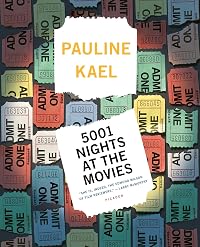
5001 Nights at the Movies
by Pauline Kael
On This Page
Description
The intelligent person's guide to the movies, with more than 2,800 reviewsLook up a movie in this guide, and chances are you'll find yourself reading on about the next movie and the next. Pauline Kael's reviews aren't just provocative—-they're addictive.
These brief, informative reviews, written for the "Goings On About Town" section of The New Yorker, provide an immense range of listings—-a masterly critical history of American and foreign film. This is probably the only movie guide show more you'll want to read for the sheer pleasure of it.
. show less
Tags
Recommendations























Member Reviews
Initial use as guide to foreign films. In retirement I picked it up again as I began to explore the TCM database via my cable channel. Her capsule evaluations seem more critical than I recollected. My introduction to Pauline Kael’s writing – and movies as a serious subject -- was a chapter from her book I Lost it at the Movies excerpted years ago in The Atlantic, read probably when I was in high school. The article was on Franju’s Eyes without a Face, which I only got around to viewing in 2017.
New York my freshman year in college was a mecca for revivals both foreign and domestic. I’m currently reading Susan Sontag’s journal from that period, and it’s another example of how film as an art form was part of the cultural show more moment. There was the French New Wave, and their critical writing in Cahiers du Cinema that reevaluated the productions of the American studio system. My freshman English instructor persuaded me to see Alphaville and my 18th century English lit. prof Leo Braudy was writing a book on Jean Renoir. I remember walking out on Last Year at Marienbad when it was shown at the Thalia on 99th St., being the only person at an afternoon matinee of My Dinner at Maud’s in an art house on the East Side, watching Peckinpah’s Major Dundee at one of the seedy 42nd St. second-run houses after coming from an unsatisfactory viewing of Lola Montes at one of the tonier 5th Avenue theaters. I first learned to navigate the West Village by hunting up a revival of Jules and Jim – still my favorite New Wave movie -- at the small theater featured in the Madonna film Desperately Seeking Susan. The afternoon after the attack on the World Trade Center, I was in my apartment in New Haven watching a TCM revival of The World of Henry Orient, recalling Manhattan as I had imagined it when I was in high school in Honolulu.
When Bonnie and Clyde premiered, the New York Times reviewer Bosley Crowther thought it was garbage, but Pauline Kael “got it,” as she pretty much got the Wild Bunch which I saw first run at a theater in Waikiki with my sister and which I tried to convince my dorm mates to catch on second run when I returned to college. When I moved to New Haven, I used her reviews in The New Yorker to keep up with the new Hollywood films, and I have her to thank for introducing me to the films of Robert Altman and Martin Scorsese.
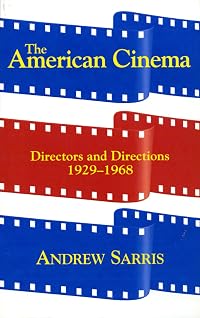
My guide to classic American film was Andrew Sarris’s book, a paperback I picked up at the Columbia University Bookstore the year it was published – I remember stacks of the hardcover printing in one of the big Greenwich Village bookstores. I had the luck to have enrolled in a class on film history taught (sort of) by Sarris my junior year. Although generally identified with the study of films of the American studio system, he in fact did not focus on his specialty, at least in the part of the course he was able to present. He was well grounded in the world cinema of the time, and I got to see Ugetsu Monogatari (rather than one of the more popular Kurosawa films), Day of Wrath, and Murnau’s Sunrise, as well as American classics like The Magnificent Ambersons and Seven Chances as well as the historically significant Birth of a Nation. Unfortunately, the class was put on pause by campus turmoil (the invasion of Cambodia) and was never resumed.
Kael and Sarris were involved in an ongoing feud that I did not follow. (Happily they both loved Ugetsu) So I will speculate based on nothing much that this accounts for her relative sourness on Sarris auteur favorites like Minnelli and Cukor. (Did she write the capsule review of the Bad and the Beautiful after her unsuccessful sabbatical in Hollywood?) Her notes on movies of the 70s and 80s encapsulate her far longer New Yorker reviews you can usually find reprinted in her books. The New Wave, World Cinema, and American studio system movies, on the other hand, are, I believe, the original brief notes for the New Yorker weekly guides to the local revivals and for program notes written prior to the New Yorker gig. These were more useful for me, but for those who were not contemporary with films of the 70s and 80s, those reviews might be as interesting. As I was cycling through TCM I was disappointed she didn’t have notes on Barry Lyndon (she doesn’t care for Kubrick in general) or Cukor’s David Copperfield or Cool Hand Luke. It’s not a good source of reviews for cult films. (See Michael Weldon’s Psychotronic Video Guide). When I was searching the LT database I discovered that 5001 has also been issued as an e-book. I had the print version squirreled away because the book took up too much room; I think you might find the e-book more useful. I’ve also found my outdated Time Out Film Guide to be more comprehensive (the reviews are shorter and by a variety of hands but they’re generally pretty sharp). In my opinion, Kael or Time Out or Sarris make the reviewers on Rotten Tomatoes seem like amateurs (and of course some of them are amateurs). Beyond that, there’s something to be said for personality. Both Kael and Sarris have recognizable voices. There might be wisdom in the tomatoes crowd, but if you want to argue about movies, you probably want to argue with individuals who are strongly defined by a passion for and immersion in the history of the art.
Addendum: Kael seems to have overlooked Yasunari Ozu (Tokyo Story, Floating Weeds, Late Summer) entirely.. Docked 1/2 star. show less
New York my freshman year in college was a mecca for revivals both foreign and domestic. I’m currently reading Susan Sontag’s journal from that period, and it’s another example of how film as an art form was part of the cultural show more moment. There was the French New Wave, and their critical writing in Cahiers du Cinema that reevaluated the productions of the American studio system. My freshman English instructor persuaded me to see Alphaville and my 18th century English lit. prof Leo Braudy was writing a book on Jean Renoir. I remember walking out on Last Year at Marienbad when it was shown at the Thalia on 99th St., being the only person at an afternoon matinee of My Dinner at Maud’s in an art house on the East Side, watching Peckinpah’s Major Dundee at one of the seedy 42nd St. second-run houses after coming from an unsatisfactory viewing of Lola Montes at one of the tonier 5th Avenue theaters. I first learned to navigate the West Village by hunting up a revival of Jules and Jim – still my favorite New Wave movie -- at the small theater featured in the Madonna film Desperately Seeking Susan. The afternoon after the attack on the World Trade Center, I was in my apartment in New Haven watching a TCM revival of The World of Henry Orient, recalling Manhattan as I had imagined it when I was in high school in Honolulu.
When Bonnie and Clyde premiered, the New York Times reviewer Bosley Crowther thought it was garbage, but Pauline Kael “got it,” as she pretty much got the Wild Bunch which I saw first run at a theater in Waikiki with my sister and which I tried to convince my dorm mates to catch on second run when I returned to college. When I moved to New Haven, I used her reviews in The New Yorker to keep up with the new Hollywood films, and I have her to thank for introducing me to the films of Robert Altman and Martin Scorsese.
My guide to classic American film was Andrew Sarris’s book, a paperback I picked up at the Columbia University Bookstore the year it was published – I remember stacks of the hardcover printing in one of the big Greenwich Village bookstores. I had the luck to have enrolled in a class on film history taught (sort of) by Sarris my junior year. Although generally identified with the study of films of the American studio system, he in fact did not focus on his specialty, at least in the part of the course he was able to present. He was well grounded in the world cinema of the time, and I got to see Ugetsu Monogatari (rather than one of the more popular Kurosawa films), Day of Wrath, and Murnau’s Sunrise, as well as American classics like The Magnificent Ambersons and Seven Chances as well as the historically significant Birth of a Nation. Unfortunately, the class was put on pause by campus turmoil (the invasion of Cambodia) and was never resumed.
Kael and Sarris were involved in an ongoing feud that I did not follow. (Happily they both loved Ugetsu) So I will speculate based on nothing much that this accounts for her relative sourness on Sarris auteur favorites like Minnelli and Cukor. (Did she write the capsule review of the Bad and the Beautiful after her unsuccessful sabbatical in Hollywood?) Her notes on movies of the 70s and 80s encapsulate her far longer New Yorker reviews you can usually find reprinted in her books. The New Wave, World Cinema, and American studio system movies, on the other hand, are, I believe, the original brief notes for the New Yorker weekly guides to the local revivals and for program notes written prior to the New Yorker gig. These were more useful for me, but for those who were not contemporary with films of the 70s and 80s, those reviews might be as interesting. As I was cycling through TCM I was disappointed she didn’t have notes on Barry Lyndon (she doesn’t care for Kubrick in general) or Cukor’s David Copperfield or Cool Hand Luke. It’s not a good source of reviews for cult films. (See Michael Weldon’s Psychotronic Video Guide). When I was searching the LT database I discovered that 5001 has also been issued as an e-book. I had the print version squirreled away because the book took up too much room; I think you might find the e-book more useful. I’ve also found my outdated Time Out Film Guide to be more comprehensive (the reviews are shorter and by a variety of hands but they’re generally pretty sharp). In my opinion, Kael or Time Out or Sarris make the reviewers on Rotten Tomatoes seem like amateurs (and of course some of them are amateurs). Beyond that, there’s something to be said for personality. Both Kael and Sarris have recognizable voices. There might be wisdom in the tomatoes crowd, but if you want to argue about movies, you probably want to argue with individuals who are strongly defined by a passion for and immersion in the history of the art.
Addendum: Kael seems to have overlooked Yasunari Ozu (Tokyo Story, Floating Weeds, Late Summer) entirely.. Docked 1/2 star. show less
Scathing, hilarious and completely unpredictable. I first happened upon Pauline Kael in a film appreciation class which was taught by a muppet-like old man; he adored her to pieces and photocopied a few pages of this book for us to read. I never know what she'll say about a movie. For example, the first lines of her review of Casablanca:
"Ingrid Bergman became a popular favorite when Humphrey Bogart, as Rick, the most famous saloonkeeper in screen history, treated her like a whore. Although their romance was certified by a collection of Academy Awards, they didn't press their luck and never appeared together again."
Glorious! Love her or hate her, sing her praises or disagree with every word she writes, you won't find Kael's reviews dull.
"Ingrid Bergman became a popular favorite when Humphrey Bogart, as Rick, the most famous saloonkeeper in screen history, treated her like a whore. Although their romance was certified by a collection of Academy Awards, they didn't press their luck and never appeared together again."
Glorious! Love her or hate her, sing her praises or disagree with every word she writes, you won't find Kael's reviews dull.
This was one of a small collection, used at least partly as a reference for crossword puzzle solving.
Ratings
Members
- Recently Added By
Published Reviews
ThingScore 100
Now, with “5001 Nights at the Movies” Kael has finally overcome her hesitations and put together a representative, if not complete, compilation of these shorts. They are to her regular reviews what butter is to popcorn - and just as tasty. In the homogenized milky way of movie reviews - so much product written about, so few memorable things said - her stuff is the richest (non- show more pasteurized) cream. show less
added by SnootyBaronet
I also recommend taking 5001 Nights along with you to the video store. Wonder whether Voyage Surprise, by the Prevert brothers, is worth taking home? Could be, if only to satisfy your curiosity over Kael’s note: “With Martine Carol, and the dwarf Pierre Pieral, who’s like a miniature Bette Davis.” Tempted to check out Summer and Smoke? Maybe not after reading “There’s supposed to show more be something on fire inside Alma, Tennessee Williams’ lonely, inhibited preacher’s daughter, but from Geraldine Page’s performance and Peter Glenville’s direction ’tain’t smoke that rises—just wispy little old tired ideas goin’ to rejoin the Holy Ghost.” show less
added by SnootyBaronet
Author Information

41+ Works 2,928 Members
Common Knowledge
- Canonical title
- 5001 Nights at the Movies
- First words
- FOREWORD
It is unlikely that anyone in the world has reviewed more movies than Pauline Kael.
A bout de souffle, see Breathless - Quotations
- I wanted to suggest the range of what movies have done, and so I’ve brought together silent films and talkies, foreign films and American ones, and even some shorts. You won’t find Gone With the Wind or The Wizard of Oz. ... (show all)Omitting them is a gesture: I wouldn’t want anyone to take this book for a complete guide to movies.
- Last words
- (Click to show. Warning: May contain spoilers.)A Melvin Simon Production; released by 20th Century-Fox. color (See Taking It All In.)
- Canonical DDC/MDS
- 791.4375
- Canonical LCC
- PN1995
Classifications
- Genres
- Nonfiction, General Nonfiction
- DDC/MDS
- 791.4375 — Arts & recreation Recreation, sports, and performing arts Public performances Motion pictures, radio, television, podcasting Motion pictures Films; screenplays Two or more films
- LCC
- PN1995 — Language and Literature Literature (General) Literature (General) Drama Motion pictures
- BISAC
Statistics
- Members
- 374
- Popularity
- 83,776
- Reviews
- 3
- Rating
- (4.10)
- Languages
- English, Portuguese
- Media
- Paper, Ebook
- ISBNs
- 11
- ASINs
- 4