The Golden Fleece
by Robert Graves 
On This Page
Description
"Along with I, Claudius, The Golden Fleece is considered one of Robert Graves's most exciting and transporting historical novels. The Golden Fleece was at one time the most sacred religious object of the ancient Greeks, and had been sent away as the result of a power struggle between the Greeks and earlier inhabitants of the Greek peninsula. In this the original quest narrative, Jason leads a voyage of heroes, including his friend Hercules and many others, in his ship the Argo, to recapture show more the sacred Golden Fleece and bring it home. To do so he must travel across the whole of the ancient world, perform impossible tasks, and undergo betrayals and tragedies beyond comprehension or human endurance. Poet, translator, memoirist, novelist, classicist Robert Graves stands alone for his ability to bring to modern readers the great stories of the ancient world with all their vividness and gore and power intact. As he has shown in many of his 140 published works, his facility with ancient myths and his understanding of how they still inform our imaginative lives helps make The Golden Fleece feel as fresh and necessary today as it did the first time someone told the story of Jason and the Argonauts some three thousand years ago. Seven Stories' Robert Graves Project spans 14 titles, and includes fiction and nonfiction, adult, young adult and children's books, in a striking new uniform design, with new introductions and afterwords. Among the works still to come are Count Belisarius, Hebrew Myths, and Lawrence and the Arabs. The online partner for the Robert Graves Project is RosettaBooks"-- show lessTags
Recommendations

















Member Reviews
https://nwhyte.livejournal.com/3424586.html
Graves here subverts the received version of the story by situating it in an ancient world of magic and gods, where the worship of the mother goddess has been written out by later traditions. There are some thrilling bits here, as the Argo plays hide-and-seek with its pursuers around the margins of the Black Sea. Graves has a lovely eye for detail, and the humour is a bit hearty but also humanising.
Graves here subverts the received version of the story by situating it in an ancient world of magic and gods, where the worship of the mother goddess has been written out by later traditions. There are some thrilling bits here, as the Argo plays hide-and-seek with its pursuers around the margins of the Black Sea. Graves has a lovely eye for detail, and the humour is a bit hearty but also humanising.
Substance: Kind of fun to read, despite the endless minutiae of ancient Greek names and places.
Graves does an excellent job ot tying together all (surely he got them all..) the mythical and legendary people and events and places of ancient Greece into a coherent, plausible narrative.
Despite the title, Hercules is almost tangential to most of the action, although he is a symbolic and actual focus for much of it. The original title "The Golden Fleece" is much more descriptive.
Style: Graves is very detailed, very descriptive, and very funny, in a sly manner. His narrative writing is very akin to his poetic style, which he exercises in translating the Greek poems (and possibly creating his own).
* * *
I bought this during a decade-long show more obsession with Robert Graves in the 1990s and only got around to reading it this year (2018), mostly to get it behind me and clear out my stacks, but decided I like it enough to keep it. show less
Graves does an excellent job ot tying together all (surely he got them all..) the mythical and legendary people and events and places of ancient Greece into a coherent, plausible narrative.
Despite the title, Hercules is almost tangential to most of the action, although he is a symbolic and actual focus for much of it. The original title "The Golden Fleece" is much more descriptive.
Style: Graves is very detailed, very descriptive, and very funny, in a sly manner. His narrative writing is very akin to his poetic style, which he exercises in translating the Greek poems (and possibly creating his own).
* * *
I bought this during a decade-long show more obsession with Robert Graves in the 1990s and only got around to reading it this year (2018), mostly to get it behind me and clear out my stacks, but decided I like it enough to keep it. show less
This novel, not surprisingly for those who know Robert Graves preoccupation with the idea of a transition from matriarchal worship of the Triple Goddess to the patriarchal Olympians, fairly creaks with scholarship. Every incident seems constructed to buttress some portion of theory to reconcile traditional accounts with Graves interpretation. Nor is it a novel in the usual sense. Incident after incident is recounted but we have little access to the inner lives of the characters. Nor is Heracles really a major character. Interesting to a student of Graves, but not engrossing as a story.
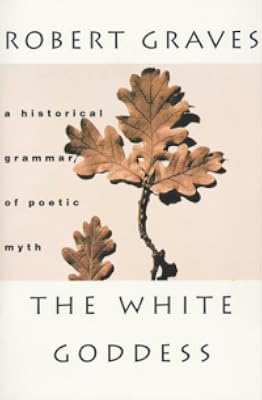
I probably read this in high school and thoroughly enjoyed re-reading it. With a myth you already know the story- the trick is to see how the writer makes it work. I love Graves' perspective and am going back to revisit his myths and the White Goddess.
I was struck by how few scholars these days (or maybe I just don't hang in the right circles) actually read the classics in Greek and Latin. What sources we must be missing! We do have the modern information that comes from Archeology and aerial photography, but these sources tell what the men of the time (or at least those who wrote about them) in their own words.
My greatest complaint is the difficulty in finding a map to follow along. They had one of the Aegean area, but once they got show more past Lemos, we were (like the Argonauts) in Terra Incognita. Apparently Graves had a large government map of the Black Sea while he was writing it. I wish he'd included a map in the book! show less
I was struck by how few scholars these days (or maybe I just don't hang in the right circles) actually read the classics in Greek and Latin. What sources we must be missing! We do have the modern information that comes from Archeology and aerial photography, but these sources tell what the men of the time (or at least those who wrote about them) in their own words.
My greatest complaint is the difficulty in finding a map to follow along. They had one of the Aegean area, but once they got show more past Lemos, we were (like the Argonauts) in Terra Incognita. Apparently Graves had a large government map of the Black Sea while he was writing it. I wish he'd included a map in the book! show less
Jason and the Argonauts, Hercules, the beginning of the Wars of Troy. See the original Harpies, and the soldiers of Cadmus! There's a hair's-breath escape, deep plots, several love stories, and more mythologies than the Tea-party platform! Yep, Robert Graves gives his take on one of the original quest stories and does a very good job!
A very scholarly and enjoyable telling of the myth and using it as a basis for explaining the gradual move of the worship of the female Earth Mother as the major deity to the male Zeus (God the Father) dominant deity. ( )
I have to admit I couldn't handle reading this all the way through. Not by any means a straightforward novel about the Argonauts. Rather, a poetic, allegorical, satirical take on men and myth.
Members
- Recently Added By
Lists

Books Read in 2020
4,379 works; 124 members

Books Read in 2017
4,249 works; 130 members

Spirit of Place
46 works; 1 member

1945 (2020) Retro-Hugo Eligible Novels
14 works; 1 member
Author Information

259+ Works 40,616 Members
Robert Graves (also known as Robert Ranke Graves) was born in 1895 in London and served in World War I. Goodbye to All That: an Autobiography (1929), was published at age thirty three, and gave a gritty portrait of his experiences in the trenches. Graves edited out much of the stark reality of the book when he revised it in 1957. Although his most show more popular works, I, Claudius (1934) and its sequel, Claudius the God and His Wife Messalina (1935), were produced for television by the BBC in 1976 and seen in America on Masterpiece Theater, he was also famous as a poet, producing more than 50 volumes of poetry. Graves was awarded the 1934 James Tait Black Memorial Prize for both I, Claudius and Claudius the God. Also a distinguished academic, Graves was a professor of English in Cairo, Egypt, in 1926, a poetry professor at Oxford in the 1960s, and a visiting lecturer at universities in England and the U.S. He wrote translations of Greek and Latin works, literary criticism, and nonfiction works on many other topics, including mythology and poetry. He lived most of his life in Majorca, Spain, and died after a protracted illness in 1985. (Bowker Author Biography) show less
Robert Graves has a Legacy Library. Legacy libraries are the personal libraries of famous readers, entered by LibraryThing members from the Legacy Libraries group.
Some Editions
Awards and Honors
Awards
Series
Belongs to Publisher Series
Work Relationships
Is contained in
Common Knowledge
- Canonical title
- The Golden Fleece
- Original title
- The Golden Fleece
- Alternate titles
- Hercules, My Shipmate
- Original publication date
- 1944
- People/Characters
- Argus (shipwright); Butes; Castor; Hercules; Hylas; Hypsipyle (Queen of Lemnos) (show all 13); Idmon (soothsayer); Jason [Argonaut]; Medea; Meleager; Mopsus (astrologer); Orpheus; Pollux
- Important places
- Aeaea
- Epigraph
- But as a rule the ancient myths are not found to yield a simple and consistent story, so that nobody need wonder if details of my recension cannot be reconciled with those given by every poet and historian. Diodorus Sicul... (show all)us. Bk.IV, 44: 5,6
- First words
- Ancaeus, little Ancaeus, oracular hero, last survivor (it is said) of all the Argonauts who sailed to Colchis with Jason in search of the Golden Fleece, speak clearly from your rocky tomb by the Goddess's fountain in cool Hes... (show all)peridean Deia.
- Quotations
- Nor is this to be wondered at: the Goddess has always rewarded with dismemberment those who love her best, scattering their bloody pieces over the earth to fructify it, but gently taking their astonished souls into her own ke... (show all)eping.--LAWRENCE NORFOLK (pg. xvi)
- Last words
- (Click to show. Warning: May contain spoilers.)Nor is this to be wondered at: the Goddess has always rewarded with dismemberment those who love her best, scattering their bloody pieces over the earth to fructify it, but gently taking their astonished souls into her own keeping.
- Original language
- English
Classifications
- Genres
- Fiction and Literature, General Fiction, Historical Fiction, Fantasy
- DDC/MDS
- 823.912 — Literature & rhetoric English & Old English literatures English fiction 1900- 1901-1999 1901-1945
- LCC
- PZ3 .G7876 — Language and Literature Fiction and juvenile belles lettres Fiction and juvenile belles lettres Fiction in English
- BISAC
Statistics
- Members
- 710
- Popularity
- 40,068
- Reviews
- 16
- Rating
- (3.73)
- Languages
- 11 — Catalan, Czech, English, French, Greek, Hebrew, Hungarian, Italian, Polish, Spanish, Swedish
- Media
- Paper, Audiobook, Ebook
- ISBNs
- 31
- ASINs
- 23