On This Page
Description
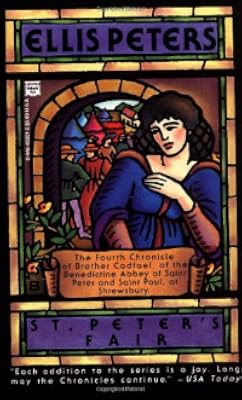
An opportunity to put aside the horrors of war is dashed when bodies begin to pile up at St. Peter's Fair St. Peter's Fair is a grand, festive event, attracting merchants from across England and beyond. There is a pause in the civil war racking the country in the summer of 1139, and the fair promises to bring some much-needed gaiety to the town of Shrewsbury-until the body of a wealthy merchant is found murdered in the river Severn. Was Thomas of Bristol the victim of murderous thieves? And, show more if so, why were his valuables abandoned nearby? Brother Cadfael, that shrewd but kindly monk, offers to help the merchant's lovely niece Emma. But while he is searching for the killer, Thomas of Bristol's wares are ransacked and two more men are murdered. Emma almost certainly knows more than she is telling-as others will soon realize. Cadfael desperately races to save the young girl, knowing that in a country at war with itself, betrayal can come from any direction, and even good intentions can kill. show lessTags
Recommendations









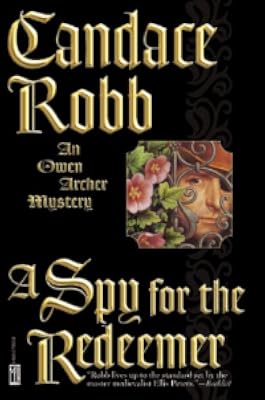
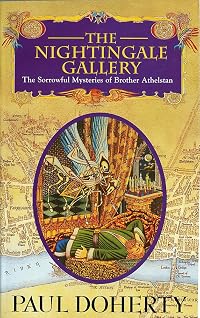
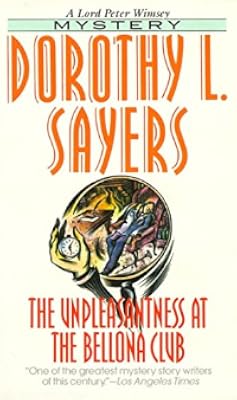
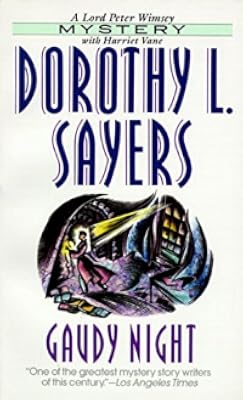
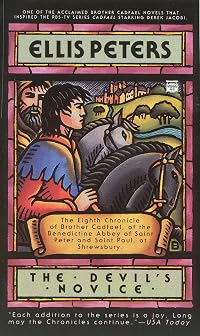
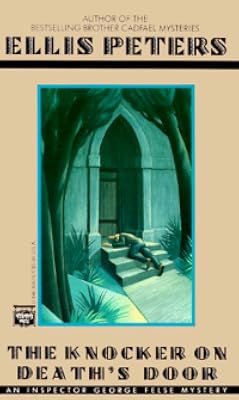
Member Recommendations
charlie68 Same time period
Member Reviews
Derek Jacobi could read a phone book for all I care and I will still love it. As a child I watched Brother Cadfael with my mother and I am so glad to finally be reading the books that the PBS masterpiece theater series was based off of. Brother Cadfael is a medieval monk who always seems to stumble upon a mystery, during the annual fair a merchant is found murdered in the river, his valuables abandoned. Is this just a random act of thievery or is there something more sinister afoot? Wonderfully narrated by Derek Jacobi, this medieval murder mystery is damn good and keeps you guessing. Give me more!
I had a bit of genre whiplash with this one, as I'd picked it up after a month of binge re-reading urban fantasy. To say that the change in pace required an adjustment is an understatement. So it's possible that this book deserves a higher rating even than the 4 stars I gave it, but the fact remains that as much as I loved the writing, it felt like it was taking forever.
I can think of a few authors who try to use the structure of the book to build up suspense, but I'm not sure I've seen it so effectively done as Ellis has here. Breaking each day into it's own section doesn't sound like much, but - in my edition at least - each day is announced on it's own page, free of any other text; the result was a quiet tension.
Unfortunately, as show more effective as it was, I still found that the bad guy was telegraphed by virtue of the cast of characters; the person served no apparent use to the plot. The character wasn't the only one I suspected, nor the only one that was seemingly useless, but he was the one that felt the most obvious.
Nevertheless, it was an excellent mystery and brilliant writing. I'm giddy, having so many more adventures with Brother Cadfael to look forward to.
I read this for Halloween Bingo, Murder Most Foul square show less
I can think of a few authors who try to use the structure of the book to build up suspense, but I'm not sure I've seen it so effectively done as Ellis has here. Breaking each day into it's own section doesn't sound like much, but - in my edition at least - each day is announced on it's own page, free of any other text; the result was a quiet tension.
Unfortunately, as show more effective as it was, I still found that the bad guy was telegraphed by virtue of the cast of characters; the person served no apparent use to the plot. The character wasn't the only one I suspected, nor the only one that was seemingly useless, but he was the one that felt the most obvious.
Nevertheless, it was an excellent mystery and brilliant writing. I'm giddy, having so many more adventures with Brother Cadfael to look forward to.
I read this for Halloween Bingo, Murder Most Foul square show less
Mystery, political intrigue, and murder go to the fair. Brother Cadfael and High Beringar suss out the truth when a visiting merchant is stabbed and a local boy stands accused of murder.
Another fun tale of the soldier-turned-monk who solves murders between tending his herbarium and attending prayers. The author’s style is reminiscent of a medieval manuscript which adds to the period feel of the work.
Another fun tale of the soldier-turned-monk who solves murders between tending his herbarium and attending prayers. The author’s style is reminiscent of a medieval manuscript which adds to the period feel of the work.
“Child, [death] is with us always,” said Cadfael, patient beside him. “Last summer ninety-five men died here in the town, none of whom had done murder. For choosing the wrong side, they died. It falls upon blameless women in war, even in peace at the hands of evil men. It falls upon children who never did harm to any, upon old men, who in their lives have done good to many, and yet are brutally and senselessly slain. Never let it shake your faith that there is a balance hereafter. What you see is only a broken piece from a perfect whole.”
“Such justice as we see is also but a broken shred. But it is our duty to preserve what we may, and fit together such fragments as we find, and take the rest on trust.”
― Ellis Peters, St. show more Peter's Fair show less
“Such justice as we see is also but a broken shred. But it is our duty to preserve what we may, and fit together such fragments as we find, and take the rest on trust.”
― Ellis Peters, St. show more Peter's Fair show less
A weekend’s fair takes place, leading to some townspeople protesting at the profits going to the monastery. A murder of one of the tradespeople takes place, and wise Cadfael quietly investigates.
A nice mixture of cosyish murder-mystery with a background of medieval political intrigue.
A nice mixture of cosyish murder-mystery with a background of medieval political intrigue.
Summary: The murder of a merchant from Bristol during Saint Peter’s Fair is the first of a string of break-ins culminating in another murder; even while two young men vie for the attentions of the merchant’s bereaved niece.
It is the year after Shrewsbury was beseiged and the town is still recovering from the grievous effects of their loss and submission to King Stephen. For the abbey, it is time to play host to Saint Peter’s Fair, a time when merchants come from around both England and nearby Wales to sell their wares to feasting and games and other forms of celebration. It would seem a time to forget the troubles of the past but not for the town fathers, who see the revenues going to the abbey by grant of the king that could have show more helped rebuild the town. They confront the new abbot, Radulfus, who hears them out but will not deviate from the provisions of their grant, much to the townsmen’s dismay.
In this first encounter, Radulfus appears rigid and caring more about law than good relations. But don’t write him off too soon. He’s careful, shrewd, and as we will see, caring.
The scene shifts to the fair. Cadfael is helping interpret for a Welshmen when a conflict breaks out. Younger men of the town approach one of the richest of vendors, Thomas of Bristol, to see if he and the other vendors will give what the abbot refuses. The young men are led by Philip Corviser, son of the man who led the delegation to the abbey. Thomas brusquely refuses them, Philip grasps his sleave to attempt to reason once more. Thomas reacts by striking him a heavy blow with a staff, sending Thomas reeling and resulting in a riot, with Cadfael judiciously intervening to get Thomas and his attractive niece, Emma, away from the melee.
That night, Emma comes to Cadfael. Thomas has not returned to their barge after setting up his stall at the fair. A search turns up Thomas’s body stripped naked in the Severn with his belongings nearby. He doesn’t appear to have been robbed but he’s been strangled. Philip, who has been drinking to deaden the pain from the blow he suffered has been speaking murderous threats, but is drunk. The authorities find him sleeping it off in a forest glade and arrest him.
But strange things keep going on. Someone searches Thomas’s barge, breaks into his stall and ties up the guard, and even searches inside Thomas’s casket. Then, another merchant is found dead in his stall, and his belongings also strewn about. Whoever it was suffered a torn cotte and a knife wound to the arm before succeeding at murder. It appears something is being searched for, and that Philip, who has been in jail, has no part of this. He joins Cadfael and Hugh Beringar in the search for the real murder or murderers, and locates the site where Thomas was murdered and dragged to the river, not far from where he had fallen asleep in a drunken stupor the night of the murder.
Cadfael has been charged by the abbot to aid the investigation. He secures Emma with Aline Beringar, Hugh’s wife. This doesn’t protect her from the attentions of young men, especially the wealthy estate holder, Ivo Corbiere, but also the humbler Philip, who doubts his chances. And Emma has not told Cadfael or Hugh all–namely the letter she carries that will endanger her life.
All this results in a page-turning climax as Hugh and Cadfael, assisted by Philip, and word from Brother Mark of a man he treated with a knife cut up his arm, piece together the clues as to the identity of the murderer and realize that Emma is in great jeopardy. One of the strong aspects of the story is the developing relationship of Cadfael and Hugh, two men with different callings and yet common values, who value each other’s company. Under the influence of Cadfael and Hugh, we see Philip grow up from the impulsive hothead at the beginning of the story to a chastened and rapidly maturing young man. But will these principled men be able to save Emma from a clearly ruthless murderer who will do anything to obtain the document Emma carries? show less
It is the year after Shrewsbury was beseiged and the town is still recovering from the grievous effects of their loss and submission to King Stephen. For the abbey, it is time to play host to Saint Peter’s Fair, a time when merchants come from around both England and nearby Wales to sell their wares to feasting and games and other forms of celebration. It would seem a time to forget the troubles of the past but not for the town fathers, who see the revenues going to the abbey by grant of the king that could have show more helped rebuild the town. They confront the new abbot, Radulfus, who hears them out but will not deviate from the provisions of their grant, much to the townsmen’s dismay.
In this first encounter, Radulfus appears rigid and caring more about law than good relations. But don’t write him off too soon. He’s careful, shrewd, and as we will see, caring.
The scene shifts to the fair. Cadfael is helping interpret for a Welshmen when a conflict breaks out. Younger men of the town approach one of the richest of vendors, Thomas of Bristol, to see if he and the other vendors will give what the abbot refuses. The young men are led by Philip Corviser, son of the man who led the delegation to the abbey. Thomas brusquely refuses them, Philip grasps his sleave to attempt to reason once more. Thomas reacts by striking him a heavy blow with a staff, sending Thomas reeling and resulting in a riot, with Cadfael judiciously intervening to get Thomas and his attractive niece, Emma, away from the melee.
That night, Emma comes to Cadfael. Thomas has not returned to their barge after setting up his stall at the fair. A search turns up Thomas’s body stripped naked in the Severn with his belongings nearby. He doesn’t appear to have been robbed but he’s been strangled. Philip, who has been drinking to deaden the pain from the blow he suffered has been speaking murderous threats, but is drunk. The authorities find him sleeping it off in a forest glade and arrest him.
But strange things keep going on. Someone searches Thomas’s barge, breaks into his stall and ties up the guard, and even searches inside Thomas’s casket. Then, another merchant is found dead in his stall, and his belongings also strewn about. Whoever it was suffered a torn cotte and a knife wound to the arm before succeeding at murder. It appears something is being searched for, and that Philip, who has been in jail, has no part of this. He joins Cadfael and Hugh Beringar in the search for the real murder or murderers, and locates the site where Thomas was murdered and dragged to the river, not far from where he had fallen asleep in a drunken stupor the night of the murder.
Cadfael has been charged by the abbot to aid the investigation. He secures Emma with Aline Beringar, Hugh’s wife. This doesn’t protect her from the attentions of young men, especially the wealthy estate holder, Ivo Corbiere, but also the humbler Philip, who doubts his chances. And Emma has not told Cadfael or Hugh all–namely the letter she carries that will endanger her life.
All this results in a page-turning climax as Hugh and Cadfael, assisted by Philip, and word from Brother Mark of a man he treated with a knife cut up his arm, piece together the clues as to the identity of the murderer and realize that Emma is in great jeopardy. One of the strong aspects of the story is the developing relationship of Cadfael and Hugh, two men with different callings and yet common values, who value each other’s company. Under the influence of Cadfael and Hugh, we see Philip grow up from the impulsive hothead at the beginning of the story to a chastened and rapidly maturing young man. But will these principled men be able to save Emma from a clearly ruthless murderer who will do anything to obtain the document Emma carries? show less
The town of Shrewsbury and the monastery are in disagreement over taxation as the annual fair in honor of St. Peter approaches. When a visiting merchant dies, Brother Cadfael helps the sheriff, Hugh Beringar, investigate matters while they try to keep the man's daughter safe.
Members
- Recently Added By
Lists

Best Historical Fiction
620 works; 261 members

Historical Fiction
889 works; 91 members

Crime and Mysteries to Read
746 works; 31 members

British Mystery
469 works; 14 members

Detective Stories
343 works; 5 members

#MysteryBingo2021Silver(Revised)
36 works; 1 member
#JustTheFacts2021Silver
60 works; 1 member

Set in the Middle Ages
42 works; 9 members

Books Read in 2016
4,666 works; 199 members

al.vick-parents books
301 works; 1 member

Fiction with Men's Given Names in the Title
302 works; 11 members

Books Read in 2019
4,052 works; 110 members

Best Mysteries With a Historical Setting
292 works; 160 members

Fêtes worse than death? — Village festivals in fiction
37 works; 7 members
Author Information

154+ Works 58,499 Members
Ellis Peters is the pseudonym for Edith Pargeter, who was born in Horsehay, Shropshire. She was a chemist's assistant from 1933 to 1940 and participated during World War II in the Women's Royal Navy Service. The name "Ellis Peters" was adopted by Edith Pargeter to clearly mark a division between her mystery stories and her other work. Her brother show more was Ellis and Petra was a friend from Czechoslovakia, thus the name. She came to writing mysteries, she says, "after half a lifetime of novel-writing." Her detective fiction features well-rounded, knowledgeable characters with whom the reader can empathize. Her most famous literary creation is the medieval monk Brother Cadfael. The blend of history and the formula of the detective story gives Peters's works their popular appeal. As detective hero, Brother Cadfael remains faithful to the requirements of the formula, yet the historical milieu in which he operates is both fully realized and well textured. Peters received the Mystery Writers of America's Edgar Award in 1963 and the Crime Writers Association's Silver Dagger Award in 1981. (Bowker Author Biography) show less
Some Editions
Series

Belongs to Publisher Series
Work Relationships
Is contained in
Has the adaptation
Common Knowledge
- Canonical title
- Saint Peter's Fair
- Original title
- Saint Peter's Fair
- Alternate titles*
- Sint Pieter's jaarmarkt
- Original publication date
- 1981
- People/Characters
- Brother Cadfael; Abbot Radulfus; Hugh Beringar; Aline Siward; Emma Vernold; Ivo Corbière (show all 7); Philip Corviser
- Important places
- Shrewsbury, Shropshire, England, UK; Abbey of St. Peter and St. Paul, Shrewsbury, Shropshire, England, UK
- Important events
- Nineteen Year Winter (1135 | 1154)
- Related movies
- Cadfael (1994 | IMDb); St Peter's Fair (1997 | IMDb)
- Epigraph
- [None]
- Dedication
- [None]
- First words
- It began at the normal daily chapter in the Benedictine monastery of Saint Peter and Saint Paul, of Shrewsbury, on the thirtieth day of July, in the year of Our Lord 1139.
- Last words
- (Click to show. Warning: May contain spoilers.)But Earl Ranulf of Chester sat cannily in his own palatine, minded his own business, and stirred neither hand nor foot in her cause.
- Original language*
- Inglese
*Some information comes from Common Knowledge in other languages. Click "Edit" for more information.
Classifications
Statistics
- Members
- 2,270
- Popularity
- 8,787
- Reviews
- 56
- Rating
- (3.83)
- Languages
- 17 — Czech, Danish, Dutch, English, Estonian, Finnish, French, German, Greek, Italian, Japanese, Korean, Norwegian, Polish, Russian, Spanish, Swedish
- Media
- Paper, Audiobook, Ebook
- ISBNs
- 70
- UPCs
- 2
- ASINs
- 23