On This Page
Description
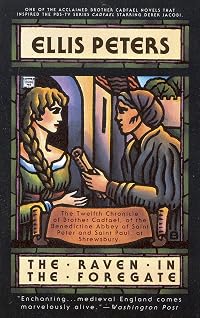
When a harsh priest is drowned, Brother Cadfael discovers a long list of suspects, including a young man who isn't who he claims to be In a mild December in the year of our Lord 1141, a new priest comes to the parishioners of the Foregate outside the Abbey of Saint Peter and Saint Paul. Father Ailnoth brings with him a housekeeper and her nephew-and a disposition that invites murder. Brother Cadfael quickly sees that father Ailnoth is a harsh man who, striding along in his black cassock, show more looks like a doomsaying raven. The housekeeper's nephew, Benet, is quite different-a smiling lad, a hard worker in Cadfael's herb garden, but, as Brother Cadfael soon discovers, an impostor. And when Ailnoth is found drowned, suspicion falls on Benet, though many in the Foregate had cause to want this priest dead. Now Brother Cadfael is gathering clues along with his medicinals to treat a case of unholy passions, tragic politics, and perhaps divine intervention. show lessTags
Recommendations










Member Reviews
Summary: A graceless priest comes to Holy Cross church in Foregate and alienates his parish and is found dead, while a young man who came with him, assigned to Cadfael, is not what he seems.
December of 1141 finds both Abbot Radulfus and Hugh Beringar on the road. The Abbot is called to Winchester for a council to reaffirm church loyalties to King Stephen, now free after an exchange in which Robert of Gloucester returned to the side of Empress Maud. He returns with a priest, formerly clerk to Bishop Henry, along with his housekeeper, Diota Hammet and her nephew Benet, an apparently simple, unskilled young man. He is assigned to help Cadfael. Shortly after, Hugh, who assumed but has never been confirmed in the office of Sheriff, goes to a show more council with Stephen, his future uncertain.
Father Ailnoth is appointed to the parish of Holy Cross in Foregate. The former priest, Father Adam has recently died and was loved by the parish for his pastoral care, particularly the mercy he showed and the light penances he gave when the people came to confess their sins. Father Ailnoth is cut of different cloth and in just the brief time before Christmas has alienated most of his parish. Passionate but believing Eluned could not resist the enticements of men but came in genuine penitence. Ailnoth refuses her absolution, penance, and communion. Cast out from the church, she throws herself in a pond. A young worker comes pleading for Ailnoth to baptize his dying infant. Ailnoth will not come until he finishes praying his office. The infant dies and then Ailnoth refuses the babe burial in consecrated ground. He strikes boys with his staff when their play near the parish house annoys him. He accuses the baker, an upright man and known for his bread, of giving short measure, He gets into a property dispute.
Meanwhile, Cadfael has taken joy getting to know the lad Benet who works hard at all the tasks he has given with cheer. He quickly realizes there is more to Benet than was apparent. He’s a quick study with the herbs, and can be trusted to look after things in Cadfael’s absence. But he wonders, who is this young man, really? He notices when Diota visits not only his affection for his aunt but the message he slips her. He also sees the visit of Sanan Berniere from the house of local noble Ralph Giffard, formerly associated with Maud, and the instant bond that forms between her and Benet, who is plainly not cut out for a monastic life.
Christmas Eve is a cold blustery night signaling the coming of winter. Cadfael is out walking when he sees Father Ailnoth rapidly walking out of town, and Giffard unhappily walking back. He also notes clues that Benet and likely Sanan had been in his workshop during the latter part of Matins. Early Christmas morning, Diota comes to the monastery. Father Ailnoth never returned home. A search is formed and his body is found, out past the mill, with a wound on the back of his head.
There are a host of suspects who had motives to kill the priest. Hugh arrives home as newly confirmed Sheriff to confront this situation. He also has a task from Stephen, to hunt down Ninian Bachilar, a supporter of Maud suspected to be in Shrewsbury. Giffard, eager to put his connections with Maud in the past, announces that Benet is Ninian, from the secret message Diota had carried, and accuses him of murdering Father Ailnoth, who had learned of the young man’s true identity from Giffard. Father Ailnoth’s hasty mission out of town was to confront Ninian, who had been supposed to meet Giffard.
Benet/Ninian, with the help of Sanan has gone into hiding, but not before telling Cadfael the truth. In fact, Cadfael at points warns the young man not to tell him certain things. Neither Cadfael nor Hugh are convinced that Ninian is Father Ailnoth’s killer and play a coy game of turning a blind eye to what each knows about the fugitive young man and the woman who loves him. The discovery of two missing articles, not found with Ailnoth’s body, hold the clues to how Ailnoth met his end, if the pieces can be put together.
Peters makes an interesting contrast in the story between the graceless Ailnoth and the ways Hugh and Cadfael approach his death, seeking truth to be sure but without jumping to graceless conclusions, seeing all those who could be suspects in their full humanity. There is a commentary here about how law is administered, both in church and society. In Cadfael, we see devotion to God and in Hugh, devotion to the king, and yet both pursue very different paths than the hapless Father Ailnoth, who never had the chance to learn mercy. show less
December of 1141 finds both Abbot Radulfus and Hugh Beringar on the road. The Abbot is called to Winchester for a council to reaffirm church loyalties to King Stephen, now free after an exchange in which Robert of Gloucester returned to the side of Empress Maud. He returns with a priest, formerly clerk to Bishop Henry, along with his housekeeper, Diota Hammet and her nephew Benet, an apparently simple, unskilled young man. He is assigned to help Cadfael. Shortly after, Hugh, who assumed but has never been confirmed in the office of Sheriff, goes to a show more council with Stephen, his future uncertain.
Father Ailnoth is appointed to the parish of Holy Cross in Foregate. The former priest, Father Adam has recently died and was loved by the parish for his pastoral care, particularly the mercy he showed and the light penances he gave when the people came to confess their sins. Father Ailnoth is cut of different cloth and in just the brief time before Christmas has alienated most of his parish. Passionate but believing Eluned could not resist the enticements of men but came in genuine penitence. Ailnoth refuses her absolution, penance, and communion. Cast out from the church, she throws herself in a pond. A young worker comes pleading for Ailnoth to baptize his dying infant. Ailnoth will not come until he finishes praying his office. The infant dies and then Ailnoth refuses the babe burial in consecrated ground. He strikes boys with his staff when their play near the parish house annoys him. He accuses the baker, an upright man and known for his bread, of giving short measure, He gets into a property dispute.
Meanwhile, Cadfael has taken joy getting to know the lad Benet who works hard at all the tasks he has given with cheer. He quickly realizes there is more to Benet than was apparent. He’s a quick study with the herbs, and can be trusted to look after things in Cadfael’s absence. But he wonders, who is this young man, really? He notices when Diota visits not only his affection for his aunt but the message he slips her. He also sees the visit of Sanan Berniere from the house of local noble Ralph Giffard, formerly associated with Maud, and the instant bond that forms between her and Benet, who is plainly not cut out for a monastic life.
Christmas Eve is a cold blustery night signaling the coming of winter. Cadfael is out walking when he sees Father Ailnoth rapidly walking out of town, and Giffard unhappily walking back. He also notes clues that Benet and likely Sanan had been in his workshop during the latter part of Matins. Early Christmas morning, Diota comes to the monastery. Father Ailnoth never returned home. A search is formed and his body is found, out past the mill, with a wound on the back of his head.
There are a host of suspects who had motives to kill the priest. Hugh arrives home as newly confirmed Sheriff to confront this situation. He also has a task from Stephen, to hunt down Ninian Bachilar, a supporter of Maud suspected to be in Shrewsbury. Giffard, eager to put his connections with Maud in the past, announces that Benet is Ninian, from the secret message Diota had carried, and accuses him of murdering Father Ailnoth, who had learned of the young man’s true identity from Giffard. Father Ailnoth’s hasty mission out of town was to confront Ninian, who had been supposed to meet Giffard.
Benet/Ninian, with the help of Sanan has gone into hiding, but not before telling Cadfael the truth. In fact, Cadfael at points warns the young man not to tell him certain things. Neither Cadfael nor Hugh are convinced that Ninian is Father Ailnoth’s killer and play a coy game of turning a blind eye to what each knows about the fugitive young man and the woman who loves him. The discovery of two missing articles, not found with Ailnoth’s body, hold the clues to how Ailnoth met his end, if the pieces can be put together.
Peters makes an interesting contrast in the story between the graceless Ailnoth and the ways Hugh and Cadfael approach his death, seeking truth to be sure but without jumping to graceless conclusions, seeing all those who could be suspects in their full humanity. There is a commentary here about how law is administered, both in church and society. In Cadfael, we see devotion to God and in Hugh, devotion to the king, and yet both pursue very different paths than the hapless Father Ailnoth, who never had the chance to learn mercy. show less
The final joke was a little bit belabored, but overall I liked this one very much. Some mystery series become more unlikely the longer they go on - how many murders can there *be* in a small place? But I never get that feeling from this series, because every incident is so different from the next.
Another excellent story in this superb series, Cadfael is right up there with the best of the sleuths. Well written and researched atmospheric descriptive intelligent storytelling, a clever mystery with surprises aplenty. Book twelve in the series but can be read as a standalone story.
Completely and utterly recommended.
Completely and utterly recommended.
In this 12th Chronicle of Brother Cadfael, Ellis Peters once more explores the fine line dividing justice and mercy. She often finds the line blurred but more often than not will shy away from legalism in favor of grace.
We find the rigid legalistic viewpoint embodied in Father Ailnoth, newly appointed priest to the church of the Foregate parish. Dismayed parishioners used to the merciful ways of the late Father Adam are among the many under suspicion when the "black" priest is found drowned Christmas morning.
Brother Cadfael, herbalist and amateur sleuth at the Abbey of Saint Peter and Saint Paul in Shrewsbury, England is summoned to apply his shrewd powers of crime detection made difficult by a close-mouthed populace.
At the conclusion show more of the case there are decisions to be weighed in the scales of justice and grace. Abbot Radulfus eloquently sums up the attitudes of the bearers of grace to a crowd still smarting from the injustices of Father Ailnoth warning them about thinking too highly of oneself and about judging others. "The company of the saints is not to be determined by any measure within our understanding. It cannot be made up of those without sin, for who that ever wore flesh, except one, can make so high a claim? But we, all we who share the burden of sin, it behoves us not to question or fret concerning the measure dealt out to us, or try to calculate our own merit and deserving, for we have not the tools by which to measure values concerning the soul. That is God's business. Rather it behoves us to live every day as though it were our last, to the full of such truth and kindness as is within us, and to lie down every night as though the next day were to be our first, and a new and pure beginning. The day will come when all will be made plain." show less
We find the rigid legalistic viewpoint embodied in Father Ailnoth, newly appointed priest to the church of the Foregate parish. Dismayed parishioners used to the merciful ways of the late Father Adam are among the many under suspicion when the "black" priest is found drowned Christmas morning.
Brother Cadfael, herbalist and amateur sleuth at the Abbey of Saint Peter and Saint Paul in Shrewsbury, England is summoned to apply his shrewd powers of crime detection made difficult by a close-mouthed populace.
At the conclusion show more of the case there are decisions to be weighed in the scales of justice and grace. Abbot Radulfus eloquently sums up the attitudes of the bearers of grace to a crowd still smarting from the injustices of Father Ailnoth warning them about thinking too highly of oneself and about judging others. "The company of the saints is not to be determined by any measure within our understanding. It cannot be made up of those without sin, for who that ever wore flesh, except one, can make so high a claim? But we, all we who share the burden of sin, it behoves us not to question or fret concerning the measure dealt out to us, or try to calculate our own merit and deserving, for we have not the tools by which to measure values concerning the soul. That is God's business. Rather it behoves us to live every day as though it were our last, to the full of such truth and kindness as is within us, and to lie down every night as though the next day were to be our first, and a new and pure beginning. The day will come when all will be made plain." show less
Six-word review: Unlamented sudden death exposes many secrets.
Extended review:
Brother Cadfael's twelfth outing as a medieval sleuth in monastic robes combines familiar elements: mysterious death, misplaced suspicion, disguised aristocrats, young love, and natural justice played out against a vast political field and a very small Benedictine one. Plot predictability, almost inevitable within such a narrow setting featuring a distinctive, knowable character, is its virtue as well as its shortcoming; the writing is, as ever, deft and elegant.
I continue to enjoy this series, but I think it would also do to let a little more time elapse between episodes to offset a cloying sameness. Just what I needed at this juncture, however.
Extended review:
Brother Cadfael's twelfth outing as a medieval sleuth in monastic robes combines familiar elements: mysterious death, misplaced suspicion, disguised aristocrats, young love, and natural justice played out against a vast political field and a very small Benedictine one. Plot predictability, almost inevitable within such a narrow setting featuring a distinctive, knowable character, is its virtue as well as its shortcoming; the writing is, as ever, deft and elegant.
I continue to enjoy this series, but I think it would also do to let a little more time elapse between episodes to offset a cloying sameness. Just what I needed at this juncture, however.
Pleasantly slow-moving evocation of life in the middle ages. Atmospheric, but not quite atmospheric enough. A simple quickly-solved mystery, not enough every day detail or character building to satisfy. Dialog is sometimes a little off, sounding stilted or contrived.
In the twelfth chronicle of Brother Cadfael, the war between the Empress Maud and King Stephen is still raging but Shrewsbury is relatively quiet. Father Adam, pastor of the Foregate Church has died and a replacement is need. Abbot Radulfus, returning from a church council, brings with him Father Ailnoth along with his housekeeper and her nephew to the Foregate as priest and housekeeper. Of course, trouble follows as the new priest is arrogant with his flock. Soon Ailnoth is found dead and the nephew along with a score of parishioners could be the culprit. But with Hugh Beringar and Brother Cadfael, all is sorted out. A good medieval mystery!
Members
- Recently Added By
Lists

Best Crime Fiction
262 works; 39 members

Historical Fiction
889 works; 90 members

Crime and Mysteries to Read
746 works; 31 members

Christmas Reading
142 works; 5 members

Detective Stories
343 works; 5 members

al.vick-parents books
301 works; 1 member

Books Read in 2021
5,361 works; 113 members
Author Information

154+ Works 58,548 Members
Ellis Peters is the pseudonym for Edith Pargeter, who was born in Horsehay, Shropshire. She was a chemist's assistant from 1933 to 1940 and participated during World War II in the Women's Royal Navy Service. The name "Ellis Peters" was adopted by Edith Pargeter to clearly mark a division between her mystery stories and her other work. Her brother show more was Ellis and Petra was a friend from Czechoslovakia, thus the name. She came to writing mysteries, she says, "after half a lifetime of novel-writing." Her detective fiction features well-rounded, knowledgeable characters with whom the reader can empathize. Her most famous literary creation is the medieval monk Brother Cadfael. The blend of history and the formula of the detective story gives Peters's works their popular appeal. As detective hero, Brother Cadfael remains faithful to the requirements of the formula, yet the historical milieu in which he operates is both fully realized and well textured. Peters received the Mystery Writers of America's Edgar Award in 1963 and the Crime Writers Association's Silver Dagger Award in 1981. (Bowker Author Biography) show less
Some Editions
Series

Belongs to Publisher Series
Work Relationships
Is contained in
The Brother Cadfael Mysteries: A Morbid Taste for Bones / The Raven in the Foregate / The Rose Rent by Ellis Peters
Brother Cadfael Omnibus: The Rose Rent | The Hermit of Eyton Forest | The Raven in the Foregate by Ellis Peters
Common Knowledge
- Canonical title
- The Raven in the Foregate
- Original title
- The raven in the foregate
- Original publication date
- 1986
- People/Characters
- Hugh Beringar; Brother Cadfael; Brother Jerome; Abbot Radulfus; Father Ailnoth; Jordan Baker (show all 7); Cynric
- Important places
- Shrewsbury, Shropshire, England, UK (12th century)
- Important events
- Nineteen Year Winter (1135 | 1154)
- Related movies
- Cadfael (1994 | IMDb); The Raven in the Foregate (1997 | IMDb)
- First words
- Abbot Radulfus came to chapter, on this first day of December, with a preoccupied and frowning face, and made short work of the various trivialities brought up by his obedientiaries.
- Last words
- (Click to show. Warning: May contain spoilers.)They had never once set eyes on each other.
- Original language*
- Anglais
*Some information comes from Common Knowledge in other languages. Click "Edit" for more information.
Classifications
Statistics
- Members
- 1,882
- Popularity
- 11,440
- Reviews
- 28
- Rating
- (3.87)
- Languages
- 14 — Czech, Dutch, English, Estonian, French, German, Greek, Italian, Japanese, Korean, Polish, Spanish, Swedish, Portuguese (Portugal)
- Media
- Paper, Audiobook, Ebook
- ISBNs
- 63
- UPCs
- 1
- ASINs
- 30