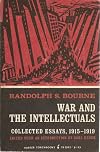
War and the Intellectuals: Collected Essays, 1915-1919
by Randolph S. Bourne
On This Page
Description
Although he died at the age of thirty-two, Randolph Bourne (1886-1918) left a body of writing on politics, culture, and literature that made him one of the most influential public intellectuals of the twentieth century, and a hero of the American left. The twenty-eight essays of this volume--among them, War and the Intellectuals, the analysis of the warfare state that made Bourne the foremost critic of American entry into World War 1, and Trans-National America, his manifesto for cultural show more pluralism in America--show Bourne at his most passionate and incisive as they trace his search for the true wellsprings of nationalism and American culture. show lessTags
Recommendations





















Member Reviews
This important volume includes Bourne's landmark article, "War is the Health of the State." This is part of a larger article, called "The State," which was left unfinished at the time of Bourne's death in 1918. (He died shortly after the Armistice, in the flu epidemic, at the pitifully young age of 32.) It was Bourne who not only distinguished between one's country and the State (nation-state), but connected the State intimately with the drumbeat of war.
He said:
"War is the health of the state. It automatically sets in motion throughout society those irresistable forces for uniformity, for passionate cooperation with the Government in coercing into obedience the minority groups and individuals which lack the larger herd sense...the show more nation in war-time attains a uniformity of feeling, a hierarchy of values culminating at the undisputed apex of the State ideal, which could not possibly be produced through any other agency than war...The State is intimately connected with war, for it is the organization of the collective community when it acts in a political manner; and to act in a political manner towards a rival group has meant, throughout all history - war..."
Bourne follows this with a cogent argument that is several pages long. Since it's in the public domain, you can also read this article online, for example at: http://struggle.ws/hist_texts/warhealthstate1918.html. show less
He said:
"War is the health of the state. It automatically sets in motion throughout society those irresistable forces for uniformity, for passionate cooperation with the Government in coercing into obedience the minority groups and individuals which lack the larger herd sense...the show more nation in war-time attains a uniformity of feeling, a hierarchy of values culminating at the undisputed apex of the State ideal, which could not possibly be produced through any other agency than war...The State is intimately connected with war, for it is the organization of the collective community when it acts in a political manner; and to act in a political manner towards a rival group has meant, throughout all history - war..."
Bourne follows this with a cogent argument that is several pages long. Since it's in the public domain, you can also read this article online, for example at: http://struggle.ws/hist_texts/warhealthstate1918.html. show less
Ratings
Members
- Recently Added By
Author Information
15+ Works 199 Members
Randolph Bourne (1886-1918) studied with Charles Beard and John Dewey at Columbia University. He was a regular contributor to New Republic, Dial, and The Seven Arts, and active in the protest movement against American entry into the first world war
All Editions
Work Relationships
Common Knowledge
- Canonical title
- War and the Intellectuals: Collected Essays, 1915-1919
Classifications
Statistics
- Members
- 92
- Popularity
- 350,343
- Reviews
- 1
- Rating
- (4.50)
- Languages
- English
- Media
- Paper
- ISBNs
- 3
- ASINs
- 2