On This Page
Description
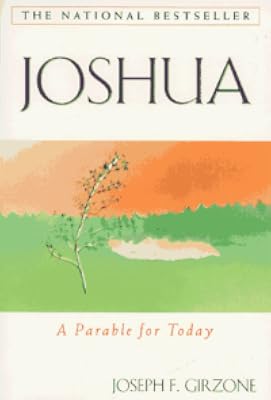
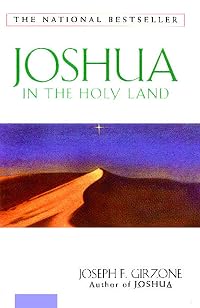
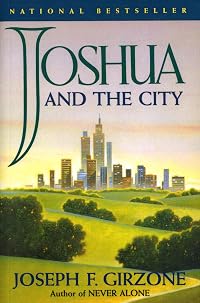
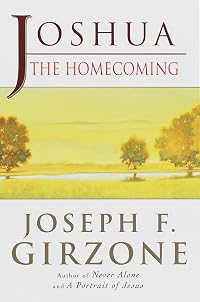
"When Joshua moves to a small cabin on the edge of town, the local people are first mystified, then confused by his presence. A quiet and simple man, Joshua appears to seek nothing for himself. He supports himself solely by carpentry and woodworking; and he charges very little for his services. A statue of Moses he carves for a synagogue causes amazement and consternation. His carvings of the apostle Peter [for the town's churches] surprise the pastors and members ... Neither is what they show more expected. Both are haunting. What sort of a person is Joshua? How can the townspeople explain a few rumors about him? ... The woodcarver disturbs some of his neighbors. While he quietly and lovingly urges all around him to break down the walls that separate them, there are others who are frightened of him ..." show lessTags
Recommendations




























Member Recommendations

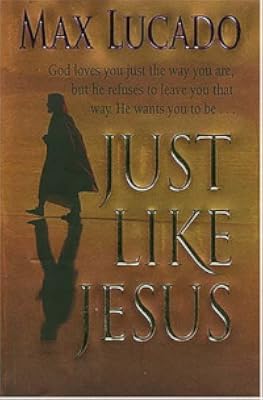
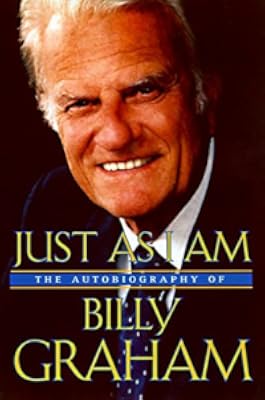
nigelmcbain Both of these works re-use the material of the Gospel narratives to refocus on what the essential message of Yeshua bar Yussif's message was.
Member Reviews
I have a confession to make--I'm not religious, and I'm sure that is partly (but not entirely) responsible for the low rating. I read this because I'm reading through "The Ultimate Reading List" which has an "Inspirational Fiction" component and I decided not to skip it--after all, I do find CS Lewis thought-provoking and enjoyable, and I didn't want to rule out I might find a good book through this listing.
Girzone isn't a CS Lewis though. His style is simple, spare, and inelegant, with clunky dialogue, though fast-reading. Just knowing this was a work of religious fiction and the title, I guessed its subject and found the plot predictable. Basically, the premise is this--Jesus (ie Joshua) is alive and living in the small American show more village of Auburn. He's a carpenter who lives simply--but one that soon has an impact around him. He can see into your soul with a look, his lawn is mowed by sheep wandering in and cropping his grass and he can carry by himself a block of wood weighing hundreds of pounds. One of the basic messages of the book, despite Girzone's position as a priest in the Catholic Church is not simply ecumenical but one that stresses that Jesus is of no church, and that apostles and religious are called to serve people, not any organization, and the message and spirit is far more important than rigid rules or ritual.
However, what struck me more than anything was an inability to see beyond the context of his own belief. For instance there's this passage said by Joshua:
Any ability we have comes from God, and our recognition of it should make us humble, not arrogant. That's the mistake so many scientists make when they think they have created what God has given them to discover. In their smallness they use their discoveries as reason to question the very existence of the person who gave them their ability. That is the modern unforgivable sin.
I'm not a scientist--and I could just point out that after all many scientists are believers, but I think that's really beside the point. From a theocentric point of view, given how often scientific discovery has conflicted with dogma and scripture, I suppose I can understand why it might be thought science is all about proving there is no God. But I doubt even atheist scientists care to do that. Science is about understanding the universe and seeking the truth using logic, observation, and testing your premises--whatever the result--just ask Galileo. It's not about arrogance--it's about integrity.
Similarly, given the thoughts and words Girzone ascribes to Joshua, he seems to believe the reason Jews aren't Christians is because Christians have been mean to them over the ages. I'm no more Jewish than I am a scientist, but I can't imagine a believing Jew finding that credible. Jews aren't Christians because they are not Christians.
That might sound like a tautology, but it isn't. My point is really the same as it is about science versus religion. People don't believe the things they do in reaction to what you believe--whether because of how you treat them (although persecuting them doesn't help)--nor to prove you wrong. They believe what they do because they think it's true and right. show less
Girzone isn't a CS Lewis though. His style is simple, spare, and inelegant, with clunky dialogue, though fast-reading. Just knowing this was a work of religious fiction and the title, I guessed its subject and found the plot predictable. Basically, the premise is this--Jesus (ie Joshua) is alive and living in the small American show more village of Auburn. He's a carpenter who lives simply--but one that soon has an impact around him. He can see into your soul with a look, his lawn is mowed by sheep wandering in and cropping his grass and he can carry by himself a block of wood weighing hundreds of pounds. One of the basic messages of the book, despite Girzone's position as a priest in the Catholic Church is not simply ecumenical but one that stresses that Jesus is of no church, and that apostles and religious are called to serve people, not any organization, and the message and spirit is far more important than rigid rules or ritual.
However, what struck me more than anything was an inability to see beyond the context of his own belief. For instance there's this passage said by Joshua:
Any ability we have comes from God, and our recognition of it should make us humble, not arrogant. That's the mistake so many scientists make when they think they have created what God has given them to discover. In their smallness they use their discoveries as reason to question the very existence of the person who gave them their ability. That is the modern unforgivable sin.
I'm not a scientist--and I could just point out that after all many scientists are believers, but I think that's really beside the point. From a theocentric point of view, given how often scientific discovery has conflicted with dogma and scripture, I suppose I can understand why it might be thought science is all about proving there is no God. But I doubt even atheist scientists care to do that. Science is about understanding the universe and seeking the truth using logic, observation, and testing your premises--whatever the result--just ask Galileo. It's not about arrogance--it's about integrity.
Similarly, given the thoughts and words Girzone ascribes to Joshua, he seems to believe the reason Jews aren't Christians is because Christians have been mean to them over the ages. I'm no more Jewish than I am a scientist, but I can't imagine a believing Jew finding that credible. Jews aren't Christians because they are not Christians.
That might sound like a tautology, but it isn't. My point is really the same as it is about science versus religion. People don't believe the things they do in reaction to what you believe--whether because of how you treat them (although persecuting them doesn't help)--nor to prove you wrong. They believe what they do because they think it's true and right. show less
Joshua is written by a priest who is obviously unhappy with the direction of the Catholic Church, as well as many other authoritarian churches. His character represents what would be Jesus coming back to modern times and decrying how "the church" and "religion" are not what was originally preached in the Gospels. His simple lifestyle brings peace and joy to many, along with a few miracles, but he is forced to answer to the Pope.
My sister handed Joshua to me while she was cleaning out her book collection. It seemed to be an easy read so I took it home with me. Getting to know Joshua was nice and I enjoyed the simple reading and easy life that Joshua chose. But it became pretty clear early that this book would have some similarities to a story we read about in the Gospels. I couldn’t help but get a little anxious anticipating a disappointing ending. There were some difficult messages in the book, some I couldn’t agree with, some I was saddened to agree with. I tried to keep an open mind and realized that my emotional reactions paralleled some of the characters in the book and I realized that is a great gift for a writer.
I believe that Joseph was called to show more write this book after experiencing and seeing the dark side of religion. The side that many of us have experienced in various ways. I felt a little hopeless while reading this but realized the heart of the message is for each of us to choose how we treat one another. It is a reminder of a beautiful life and a model for us all. I remember traveling to Greece and one one of the little Islands we were taken to the storage place for the history of the Greek Orthodox churches on the island. This tiny building was jam packed with picture, statues, confessionals, candles, more pictures, more statues, more artistic history. I sat on the floor to rest while the island guide told us about the history of all these icons. A friend took a picture of me and shared it with me later. She said I looked exhausted with a far away look in my eyes. The truth is that I was sad and what I was thinking was this is not what Jesus had in mind. I think Joseph has had some similar feelings through his life as a Catholic Priest.
Take the time to read Joshua and consider it an opportunity to strengthen your friendships with those in the bible. Be careful to remember the heart of the message when Joseph aptly describes some of the religious leaders we know today but gives us a reminder of the how we may choose to live our lives in a more loving way, what he believes Jesus intended for us. show less
I believe that Joseph was called to show more write this book after experiencing and seeing the dark side of religion. The side that many of us have experienced in various ways. I felt a little hopeless while reading this but realized the heart of the message is for each of us to choose how we treat one another. It is a reminder of a beautiful life and a model for us all. I remember traveling to Greece and one one of the little Islands we were taken to the storage place for the history of the Greek Orthodox churches on the island. This tiny building was jam packed with picture, statues, confessionals, candles, more pictures, more statues, more artistic history. I sat on the floor to rest while the island guide told us about the history of all these icons. A friend took a picture of me and shared it with me later. She said I looked exhausted with a far away look in my eyes. The truth is that I was sad and what I was thinking was this is not what Jesus had in mind. I think Joseph has had some similar feelings through his life as a Catholic Priest.
Take the time to read Joshua and consider it an opportunity to strengthen your friendships with those in the bible. Be careful to remember the heart of the message when Joseph aptly describes some of the religious leaders we know today but gives us a reminder of the how we may choose to live our lives in a more loving way, what he believes Jesus intended for us. show less
This book made me despair over education, and despair even more that it could get into print and be wildly popular as badly written as it was when there are so many undiscovered and really GOOD writers out there. Nonetheless, it was a compelling story and truly inspirational. There must have been a great hunger out there for this to sell so well. Good for Jesus.
I couldn't believe how badly written this book was when I returned to it. I was recommended it by a bookish friend in college, and found it very inspirational at the time... but the writing is just bad. Everything is narrated and nothing described. The premise (that Jesus could be right in front of us and we could be missing him) is what is captivating. And it is compelling to young people to re-imagine Jesus in our own time and place, which contradicts some pretty hard-coded perceptions. It is good as devotional literature goes, but not really going to win anyone over based on its compelling style. Stick with Aslan.
When Joshua moves to a small cabin on the edge of town, the local people are at first mystified, then confused by his presence. A quiet and simple man, Joshua appears to seek nothing for himself. He supports himself solely by carpentry and woodworking, and he charges very little for his services. Yet his work is exquisite. Even more exquisite, and even more mysterious, is the extraordinary effect he has on everyone he meets. All who come in contact with him can't help but be transformed by his incredible warmth. The acceptance and love in his eyes and in each actions amazes the townspeople. Who is Joshua and just what is he up to? The answer to that question amazes them almost as much discovery of that same transforming power in each of show more their own hearts. show less
This a beautiful, inspirational book about Jesus returning in our day and age. Built on the examples of the Bible, Joshua acts in ways surprising to the Christians of his community. I particularly enjoy how Joshua worships at multiple churches in the town, scandalous to some of the characters in the book, but really an example of how God is with us all. Read this book and it will give a boost to your faith in the God of Love.
Members
- Recently Added By
Author Information

37+ Works 7,033 Members
Joseph F. Girzone was born in Albany, New York on May 15, 1930. He received a theology degree from Catholic University of America in 1955 and was ordained a priest that same year. He retired from pastoral work in 1981 at the age of 50 because of health problems. In 1982, he self-published his first novel, Joshua, under the imprint of his own small show more religious press, Richelieu Court Press. He sold the book through direct contact and word of mouth before it was brought to the attention of an editor at Macmillan. He wrote a total of ten books in the Joshua series which were adapted into the film Abandon. He also founded the Joshua Foundation in 1995. He died from a heart condition on November 29, 2015 at the age of 85. (Bowker Author Biography) show less
Series

Common Knowledge
- Original publication date
- 1983
- Disambiguation notice
- Author's last name unknown
Classifications
Statistics
- Members
- 2,238
- Popularity
- 9,031
- Reviews
- 18
- Rating
- (3.68)
- Languages
- English, French, Spanish, Swedish
- Media
- Paper, Audiobook
- ISBNs
- 28
- ASINs
- 8