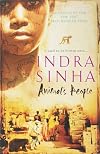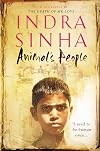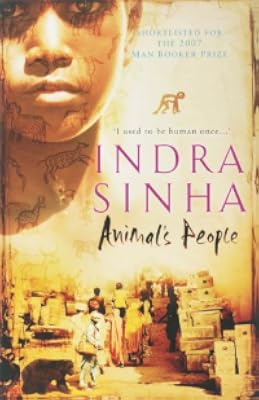
Animal's People
by Indra Sinha
On This Page
Description
Ever since That Night, the residents of Khaufpur have lived a perilous existence. Their world is poisoned. Nobody has received compensation or help for the chemical leak, least of all Animal, as he is known, whose spine twisted at a young age, leaving him to walk on all fours. Though he inhabits a dark kind of half-life, he knows what love is. He has long harboured feelings for his friend Nisha but since she is enamoured of his friend Zafar he cannot even allow himself to hope. When Elli show more Barber arrives, an "Amrikan" keen to set up a free clinic to help the victims of the disaster, deep suspicion arises amongst the community. Animal resolves to turn the situation to his advantage and starts to investigate Elli's motives. show lessTags
Recommendations






































Member Recommendations


Member Reviews
"I used to be human once. So I'm told. I don't remember it myself, but people who knew me when I was small say I walked on two feet just like a human being."
Animal is a 20 year old man who walks on all fours, thus his name. He is a street person in an unnamed city in India based on Bhopal. A chemical leak when he was an infant caused his condition, and he would like nothing more than to be whole. He lives in an improvised hovel with Ma Franci, an elderly French nun from the orphanage he was raised in. Now he cares for her and protects her to the extent he can as she declines into dementia. They are surrounded by others eking out a living on the street, many of whom are also suffering serious health problems resulting from the chemical show more leak. (Their settlement in fact borders on the former chemical plant, now enclosed by barbed wire and no trespassing signs). One of the appeals of this book is getting to know these characters, who have lost what little they have had, as they go about their daily lives, doing ordinary things, loving their families, helping their friends, all without allowing bitterness and hatred to rule them.
Animal's life begins to change when he meets Nisha, who takes him under her wing. She lives with her father, a wealthy and famous former singer of traditional Indian music. Her boyfriend Zafar is an activist, who is continuing the ongoing fight against the American chemical company ("the Kampani"). The fight is complicated by government corruption and the system of back-scratching existing between big business and politicians.
Animal begins to take one meal a day at Nisha's house, and finds himself falling in love with her, and resenting Zafar. Into this mix comes Elli, an American doctor. She is opening a free clinic to help the victims of the spill. Unfortunately, the rumor spreads that she is an agent of the Kampani, perhaps there to collect information to be used against them, and no one will go to her clinic. Animal, however, begins to think that Elli might make him whole again.
All of these threads and stories are narrated by Animal, who has a unique and authentic voice. He can be crass, he is sometimes sex-obsessed, he does some bad things (like trying to poison Zafar), yet he is wholly sympathetic and real. This book was short-listed for the Booker and is deservedly on the 1001 list.
This is a long quote, which I thoroughly enjoyed. The whole book is not preachy, however.
"Behold, the Kampani. On its roof are soldiers with guns. Tanks patrol its foot. Jets fly over leaving criss-cross trails and its basements contain bunkers full of atomic bombs. From this building the Kampani controls its factories all over the world. It's stuffed with banknotes, it is the counting house for the Kampani's wealth. One floor of the building is reserved for the Kampani's three-and-thirty thousand lawyers. Another is for the doctors doing research to prove that the Kampani's many accidents have caused no harm to anyone. On yet another engineers design plants that are cheap to make and run. Chemists on a higher floor are experimenting with poisons, mixing them up to see which most efficiently kill. One floor is devoted to living things waiting in cages to be killed. Above the chemists is a floor of those who sell the Kampani's poisons with slogans like SHAKE HANDS WITH THE FUTURE and NOBODY CARES MORE, above these are a thousand public relations consultants, whose job is dealing with protesters like Zafar who are blind to the Kampani's virtues and put out carping leaflets saying NOBODY CARES LESS. It is the job of the PR people to tell the world how good and caring and responsible the Kampani is. In the directors' floor at the top of the building the Kampani is throwing a party for all its friends. There you'll find generals and judges, senators, presidents and prime ministers, oil sheikhs, newspaper owners, movie stars, police chiefs, mafia dons, members of obscure royal families etcetera etcetera." show less
Animal is a 20 year old man who walks on all fours, thus his name. He is a street person in an unnamed city in India based on Bhopal. A chemical leak when he was an infant caused his condition, and he would like nothing more than to be whole. He lives in an improvised hovel with Ma Franci, an elderly French nun from the orphanage he was raised in. Now he cares for her and protects her to the extent he can as she declines into dementia. They are surrounded by others eking out a living on the street, many of whom are also suffering serious health problems resulting from the chemical show more leak. (Their settlement in fact borders on the former chemical plant, now enclosed by barbed wire and no trespassing signs). One of the appeals of this book is getting to know these characters, who have lost what little they have had, as they go about their daily lives, doing ordinary things, loving their families, helping their friends, all without allowing bitterness and hatred to rule them.
Animal's life begins to change when he meets Nisha, who takes him under her wing. She lives with her father, a wealthy and famous former singer of traditional Indian music. Her boyfriend Zafar is an activist, who is continuing the ongoing fight against the American chemical company ("the Kampani"). The fight is complicated by government corruption and the system of back-scratching existing between big business and politicians.
Animal begins to take one meal a day at Nisha's house, and finds himself falling in love with her, and resenting Zafar. Into this mix comes Elli, an American doctor. She is opening a free clinic to help the victims of the spill. Unfortunately, the rumor spreads that she is an agent of the Kampani, perhaps there to collect information to be used against them, and no one will go to her clinic. Animal, however, begins to think that Elli might make him whole again.
All of these threads and stories are narrated by Animal, who has a unique and authentic voice. He can be crass, he is sometimes sex-obsessed, he does some bad things (like trying to poison Zafar), yet he is wholly sympathetic and real. This book was short-listed for the Booker and is deservedly on the 1001 list.
This is a long quote, which I thoroughly enjoyed. The whole book is not preachy, however.
"Behold, the Kampani. On its roof are soldiers with guns. Tanks patrol its foot. Jets fly over leaving criss-cross trails and its basements contain bunkers full of atomic bombs. From this building the Kampani controls its factories all over the world. It's stuffed with banknotes, it is the counting house for the Kampani's wealth. One floor of the building is reserved for the Kampani's three-and-thirty thousand lawyers. Another is for the doctors doing research to prove that the Kampani's many accidents have caused no harm to anyone. On yet another engineers design plants that are cheap to make and run. Chemists on a higher floor are experimenting with poisons, mixing them up to see which most efficiently kill. One floor is devoted to living things waiting in cages to be killed. Above the chemists is a floor of those who sell the Kampani's poisons with slogans like SHAKE HANDS WITH THE FUTURE and NOBODY CARES MORE, above these are a thousand public relations consultants, whose job is dealing with protesters like Zafar who are blind to the Kampani's virtues and put out carping leaflets saying NOBODY CARES LESS. It is the job of the PR people to tell the world how good and caring and responsible the Kampani is. In the directors' floor at the top of the building the Kampani is throwing a party for all its friends. There you'll find generals and judges, senators, presidents and prime ministers, oil sheikhs, newspaper owners, movie stars, police chiefs, mafia dons, members of obscure royal families etcetera etcetera." show less
It took me a little while to get completely into this but it was worth it. It is told by "Animal", a young man (not a boy at the time this is told, but a young man) whose body was deformed by a chemical leak from a large industrial plant in Khaufpur when he was very small, a baby. The deformity forces him to walk on all fours, and others took to calling him "Animal". A term he embraces from the start, even as he dreams of being able to walk upright some day.
Many years after the chemical disaster, as the poorest part of the country still struggles to cope with its aftermath (including the fact that the abandoned plant and grounds were never cleaned up), Animal begins to tell his story. He insists that the book contain only his show more transcribed words, and no interpretations by others (although spelling corrections are okay). Thus at the start we are treated to his odd way of speaking, given his limited education and influences by others of different dialects and languages. Over time, as he learns to read and write (helped by a friend), the language smooths out a bit but much of the sentence construction retains its unique character.
Enter Elli Barber, a doctor from the U.S., who wants to open a clinic and help those who have suffered from the disaster as well as other ills. The population is suspicious. After all, the chemical company ("kompani") was American. Is she a schill for the company? A populist leader by name of Zafar thinks so. Animal is not so sure, and is torn between his affection for Zafar and his interest in Elli.
We get to know Animal well and his friends somewhat well. Clearly Animal is smart and tough, as he has had to be to survive. He is also caring, but doesn't show this as often.
Through him we learn a lot about the disaster and what it has taken to try to bring the company to justice. Clearly the story parallels that of Bhopal, where Union Carbide had a plant that released at least 30 tons of toxic gas in 1984, killing thousands of people and animals and injuring many more. To date that plant has not been cleaned up and its effects continue to affect the population.
Animal is a character you are going to want to get to know. Tough and funny, wise beyond his years. show less
Many years after the chemical disaster, as the poorest part of the country still struggles to cope with its aftermath (including the fact that the abandoned plant and grounds were never cleaned up), Animal begins to tell his story. He insists that the book contain only his show more transcribed words, and no interpretations by others (although spelling corrections are okay). Thus at the start we are treated to his odd way of speaking, given his limited education and influences by others of different dialects and languages. Over time, as he learns to read and write (helped by a friend), the language smooths out a bit but much of the sentence construction retains its unique character.
Enter Elli Barber, a doctor from the U.S., who wants to open a clinic and help those who have suffered from the disaster as well as other ills. The population is suspicious. After all, the chemical company ("kompani") was American. Is she a schill for the company? A populist leader by name of Zafar thinks so. Animal is not so sure, and is torn between his affection for Zafar and his interest in Elli.
We get to know Animal well and his friends somewhat well. Clearly Animal is smart and tough, as he has had to be to survive. He is also caring, but doesn't show this as often.
Through him we learn a lot about the disaster and what it has taken to try to bring the company to justice. Clearly the story parallels that of Bhopal, where Union Carbide had a plant that released at least 30 tons of toxic gas in 1984, killing thousands of people and animals and injuring many more. To date that plant has not been cleaned up and its effects continue to affect the population.
Animal is a character you are going to want to get to know. Tough and funny, wise beyond his years. show less
Animal is the self-named narrator of this book set in fictional Khaufpur, India. He is telling his story into a tape recorder about the huge chemical explosion that rocked his city and created a living hell. Thousands of people died, many more, like Animal, were permanently disfigured. Animal's twisted spine forced him to "walk" using his hands, arms, and upper torso to drag himself around. However, there was nothing wrong with his mind (unless you count the voices in his head) or his heart. He was lucky enough to attract the attention of Nisha and Zafar who rescued him from the streets and gave him a purpose in life seeking justice for his "people," the Kingdon of the Poor who suffered the most after the deadly gas leak and show more explosion.
Indra Sinha has created a powerful retelling of the Bhopal tragedy using the unique voice of a survivor. Animal is not seeking sympathy; he just wants to get this remarkable story told to the world. It takes awhile to get used to the many Hindi phrases he uses and the crude language when he obsesses about sex and bodily functions. This adds to the authentic nature of his narrative as he talks openly to the Eyes who will someday read his story about hope and justice. Animal's People was chosen for the Booker shortlist in 2007. I'm not sure which book won the award that year, but this is a book I will never forget. show less
Indra Sinha has created a powerful retelling of the Bhopal tragedy using the unique voice of a survivor. Animal is not seeking sympathy; he just wants to get this remarkable story told to the world. It takes awhile to get used to the many Hindi phrases he uses and the crude language when he obsesses about sex and bodily functions. This adds to the authentic nature of his narrative as he talks openly to the Eyes who will someday read his story about hope and justice. Animal's People was chosen for the Booker shortlist in 2007. I'm not sure which book won the award that year, but this is a book I will never forget. show less
Animal’s People is a novel based on the true story of a chemical factory explosion in Bhopal in 1984 that killed thousands and left countless others with serious medical illnesses. It was a finalist in 2007 of the Man Booker Prize. The book follows the life of “Animal,” a young man whose spine was deformed as a result of his exposure the chemicals and thus has to walk on all fours. The narrative is told in a series of recorded tapes from Animal to a Western journalist, although it reads like regular prose. The book opens in the following way, “I used to be human once. So I’m told. I don’t remember it myself, but the people who knew me when I was small say I walked on two feet just like a human being.” What follows is in show more many ways Animal’s journey to regain his humanity although for most of the book he embraces his nickname and renounces the notion of his humanity. When an American doctor tries to set up a clinic in his town to treat those impacted by their exposure to chemicals, Animal becomes torn between “loyalties” to a group of political activists from his town (mainly driven by his love for one of the women) and the new doctor who promises a glimmer of hope for his own medical condition.
Once I got past the profanity, I really enjoyed this book. The book is tragic in that it covers a horrible incident, describes the poverty and hopelessness in a town impacted by an industrial accident. Yet, in many ways this was a book about resilience, friendship, and love. Animal is profane and irreverent, yet it is his style that helps to lighten the book. He finds humor in his surroundings and is rarely self-pitying and always fighting to survive. In some ways the characters do come across as caricatures: the political activists, the young Western idealist doctor who has little awareness of the culture, etc. The ending seemed slightly unrealistic (overly optimistic given the context) but despite these flaws, I really enjoyed it. I loved how Animal was a flawed man who despite his early tragedy was able to bring together a group of different people and create warm and touching bonds.
Warning: There is a lot of profane language (lots of use of the c-word). This profanity is particularly prominent in the first 50 pages. It fits with the character and once you get into the book it is less bothersome but be forewarned if this will bother you.
Quotes:
“If you want my story, you’ll have to put up with how I tell it.”
“as the words pop out of my mouth they rise up in the dark, the eyes in a flash are onto them, the words start out kind of misty, like breath on a cold day, as they lift they change colours and shapes, they become pictures of things and people.”
“When something big like that night happens, time divides into before and after, the before time breaks up into dreams, the dreams dissolve to darkness.”
“To be trapped in an animal body is hell, if you dream of being human.”
“Hope dies in places like this, because hope lives in the future and there’s no future here, how can you think about tomorrow when all your strength is used up trying to get through today?”
“I am Animal fierce and free in all the world is none like me.” show less
Once I got past the profanity, I really enjoyed this book. The book is tragic in that it covers a horrible incident, describes the poverty and hopelessness in a town impacted by an industrial accident. Yet, in many ways this was a book about resilience, friendship, and love. Animal is profane and irreverent, yet it is his style that helps to lighten the book. He finds humor in his surroundings and is rarely self-pitying and always fighting to survive. In some ways the characters do come across as caricatures: the political activists, the young Western idealist doctor who has little awareness of the culture, etc. The ending seemed slightly unrealistic (overly optimistic given the context) but despite these flaws, I really enjoyed it. I loved how Animal was a flawed man who despite his early tragedy was able to bring together a group of different people and create warm and touching bonds.
Warning: There is a lot of profane language (lots of use of the c-word). This profanity is particularly prominent in the first 50 pages. It fits with the character and once you get into the book it is less bothersome but be forewarned if this will bother you.
Quotes:
“If you want my story, you’ll have to put up with how I tell it.”
“as the words pop out of my mouth they rise up in the dark, the eyes in a flash are onto them, the words start out kind of misty, like breath on a cold day, as they lift they change colours and shapes, they become pictures of things and people.”
“When something big like that night happens, time divides into before and after, the before time breaks up into dreams, the dreams dissolve to darkness.”
“To be trapped in an animal body is hell, if you dream of being human.”
“Hope dies in places like this, because hope lives in the future and there’s no future here, how can you think about tomorrow when all your strength is used up trying to get through today?”
“I am Animal fierce and free in all the world is none like me.” show less
“I used to be human once,” declares Animal at the start of the novel. Just for a moment we wonder what strange kind of black magic might have brought about this transmutation of boy to beast.
The truth is far more devastating. The fictional Indian city of Khaufpur where Animal lives, is in fact a thinly disguised Bhopal, and Animal is one of the victims of the world’s worst ever industrial accident which has left him a twisted spine. The now derelict chemical plant is still leaching toxic substances into the water to cause cancer and birth defects.
Animal records his story on a tape-recorder given to him by a “jurnalis” in a distinctive voice which echoes the rhythm and word order of Hindi for the benefit of “the eyes” - show more all those people in the outside world who might bear witness to his remarkable story.
He describes himself as a “hard bastard”. But underneath the rough exterior and the crude speech we quickly recognise that he has a compassionate heart, a wicked sense of humour and a sharp mind. He manages to eke out a living on the streets, ferreting through garbage and sometimes even selling his blood, until he finds employment as a messenger and go-between for a group of activists headed by the charismatic Zafar, who has left his studies to take up the cause of the poor and to fight for justice in the corrupt court system.
It’s a really challenge to an author to take a character who is so completely good, and make him interesting to the reader, yet Sinha manages this with Zafar who becomes Animal’s rival in love in a hilarious love triangle with Nisha, a music teacher’s daughter, who provides Animal with a daily meal and reading lessons.
Matters are complicated when an American woman, Ellie Barber, turns up in town to provide aid for the survivors of the disaster. Zafar and his friends order a boycott of her clinic, because they fear that she is in fact a spy of the kompani. Animal also reinvents himself as a bit of a James Bond character;(“Namispond. Jamispond.”) Much of the time, though, he’s up a tall tree in her garden watching her in various states of undress. He finds himself as something of a double-agent as he knows Ellie might be the one person able to help him by sending him for surgery in Amrika.
Although the subject matter of the book is often dark and painful, and there is no flinching away from the horror of the night of the explosion or the ongoing suffering of the people, the novel is balanced by some wonderfully comic moments, a rollicking plot worthy of a Bollywood movie, and a full complement of larger-than-life characters whom we come to care about.
“I am a small person, not even human, what difference will my story make?” asks Animal at one point of the book. The answer is that former ad-man Indra Sinha who has worked tirelessly to bring the story of Bhopal victims to the wider world might have launched his most powerful campaign yet. show less
The truth is far more devastating. The fictional Indian city of Khaufpur where Animal lives, is in fact a thinly disguised Bhopal, and Animal is one of the victims of the world’s worst ever industrial accident which has left him a twisted spine. The now derelict chemical plant is still leaching toxic substances into the water to cause cancer and birth defects.
Animal records his story on a tape-recorder given to him by a “jurnalis” in a distinctive voice which echoes the rhythm and word order of Hindi for the benefit of “the eyes” - show more all those people in the outside world who might bear witness to his remarkable story.
He describes himself as a “hard bastard”. But underneath the rough exterior and the crude speech we quickly recognise that he has a compassionate heart, a wicked sense of humour and a sharp mind. He manages to eke out a living on the streets, ferreting through garbage and sometimes even selling his blood, until he finds employment as a messenger and go-between for a group of activists headed by the charismatic Zafar, who has left his studies to take up the cause of the poor and to fight for justice in the corrupt court system.
It’s a really challenge to an author to take a character who is so completely good, and make him interesting to the reader, yet Sinha manages this with Zafar who becomes Animal’s rival in love in a hilarious love triangle with Nisha, a music teacher’s daughter, who provides Animal with a daily meal and reading lessons.
Matters are complicated when an American woman, Ellie Barber, turns up in town to provide aid for the survivors of the disaster. Zafar and his friends order a boycott of her clinic, because they fear that she is in fact a spy of the kompani. Animal also reinvents himself as a bit of a James Bond character;(“Namispond. Jamispond.”) Much of the time, though, he’s up a tall tree in her garden watching her in various states of undress. He finds himself as something of a double-agent as he knows Ellie might be the one person able to help him by sending him for surgery in Amrika.
Although the subject matter of the book is often dark and painful, and there is no flinching away from the horror of the night of the explosion or the ongoing suffering of the people, the novel is balanced by some wonderfully comic moments, a rollicking plot worthy of a Bollywood movie, and a full complement of larger-than-life characters whom we come to care about.
“I am a small person, not even human, what difference will my story make?” asks Animal at one point of the book. The answer is that former ad-man Indra Sinha who has worked tirelessly to bring the story of Bhopal victims to the wider world might have launched his most powerful campaign yet. show less
Fantastic. The voice of the protagonist develops out of David Copperfield, is honed on Holden Caulfield, and is forged in the terror and corporate slaughter of the Union Carbide gas leak disaster in Bhopal, India, in 1984. Vulgar, funny, tragic, sad, conscious. The novel stumbles on its final pages, but read generously.
I found much of this book a struggle, because of the Yoda-like language. "Really upset he must be, who almost never swears." It just never was less than jarring every time I came across it, and I came across it a lot. I stuck it out though, because Animal was such a brilliant character, cheeky, clever, rude, and full of life and love, even if he was in denial about being human. And somewhere along the way, the language calmed down, and the plot heated up.
I did realise somewhere towards the end that we know roughly what's going to happen, because Animal is narrating it. But you don't know how its going to get there. And most of the ending took me by surprise (I think Indra Sinha pretty much equals Peter Jackson in not killing off show more characters, to quite an unbelievable extent, really).
The good stuff was the fabulous characters and their rich relationships. Plus the whole Bhopal-like tragedy: Bhopal was one of the first times I sat up as a young teenager and paid attention to the news, so it's always sent a shiver down my spine. I agree with livrecache's quoted review above that none of the characters were victims, and that also gives the story its power. They are all humans, even (especially) Animal. show less
I did realise somewhere towards the end that we know roughly what's going to happen, because Animal is narrating it. But you don't know how its going to get there. And most of the ending took me by surprise (I think Indra Sinha pretty much equals Peter Jackson in not killing off show more characters, to quite an unbelievable extent, really).
The good stuff was the fabulous characters and their rich relationships. Plus the whole Bhopal-like tragedy: Bhopal was one of the first times I sat up as a young teenager and paid attention to the news, so it's always sent a shiver down my spine. I agree with livrecache's quoted review above that none of the characters were victims, and that also gives the story its power. They are all humans, even (especially) Animal. show less
Members
- Recently Added By
Lists

Booker Prize
491 works; 62 members

International IMPAC Dublin Literary Award
179 works; 6 members

Five star books
1,767 works; 110 members

Man Booker Prize Longlist 2007
13 works; 2 members

Booker Prize Shortlist: Titles Not Yet Read
161 works; 4 members

Troublesome bodies
110 works; 7 members
Author Information

7 Works 1,042 Members
Some Editions
Awards and Honors
Series
Belongs to Publisher Series
Common Knowledge
- Canonical title*
- Animal
- Original title
- Animal's People
- Original publication date
- 2007
- People/Characters
- Animal/ Janvaar; Ma Franci; Somraj; Zaafar; Ellie Barber; Nisha
- Important places
- Khaufpur, India; Bhopal, Madhya Pradesh, India
- Important events
- Union Carbide Bhopal massacre
- Dedication
- For Sunil
- First words
- I used to be human once.
- Last words
- (Click to show. Warning: May contain spoilers.)Tomorrow there will be more of us.
*Some information comes from Common Knowledge in other languages. Click "Edit" for more information.
Classifications
Statistics
- Members
- 758
- Popularity
- 37,056
- Reviews
- 28
- Rating
- (3.76)
- Languages
- 10 — Chinese, Danish, Dutch, English, French, German, Italian, Japanese, Norwegian (Bokmål), Turkish
- Media
- Paper, Ebook
- ISBNs
- 20
- ASINs
- 5