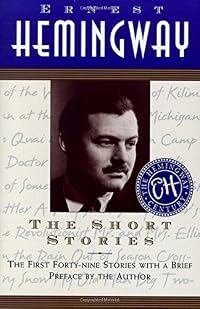
Short Stories of Ernest Hemingway: The First Forty-Nine Stories
by Ernest Hemingway 
On This Page
Description
Forty-nine stories reflect much of the intensity of Hemingway's own life and environment.Tags
Recommendations

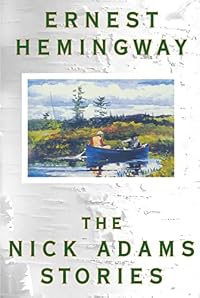
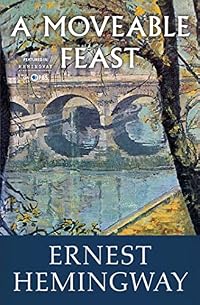
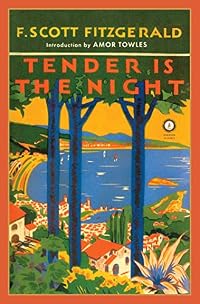
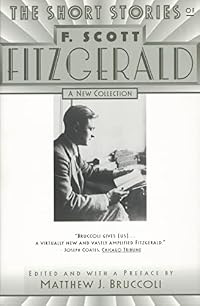
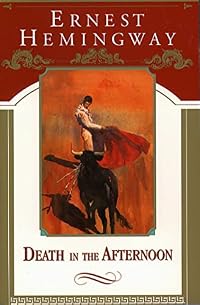
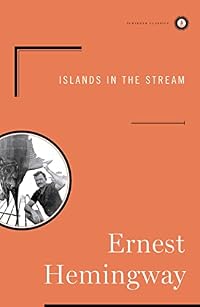
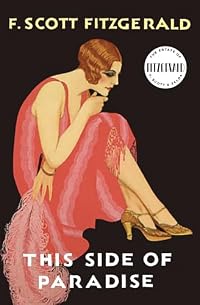
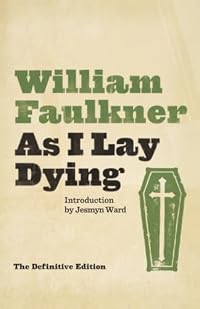
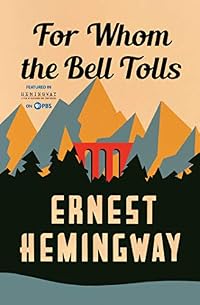
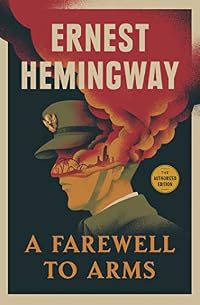
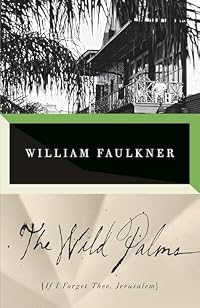
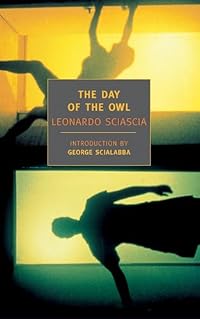
Member Recommendations
Member Reviews
I took a long time reading through this one, studying Hemingway's style. Not only did I learn a great deal about POV, the heart of a story, and methods of characterization, but the collection also inspired me with the great possibilities a short story has to offer.
I've been indoctrinated into the classic New Yorker short story to such a degree that it was unsettling (in a good way) to read new ways of conceiving the form. Those formal potentialities coupled with the depth of emotion Hemingway brought to the page (sadly not featured by the many broadly drawn characterizations of the man we have today) comprised a masterclass in prose writing and language artistry. I hope some of what I learned sticks.
I've been indoctrinated into the classic New Yorker short story to such a degree that it was unsettling (in a good way) to read new ways of conceiving the form. Those formal potentialities coupled with the depth of emotion Hemingway brought to the page (sadly not featured by the many broadly drawn characterizations of the man we have today) comprised a masterclass in prose writing and language artistry. I hope some of what I learned sticks.
I have been reading Hemingway for about six years now and it has taken me a long time to accept that short stories have to be read differently than novels. They require more careful attention at a slower pace, whereas even the hardest novels, if you stick with them, can eventually break the dam of your ignorance with their sheer weight and then you understand them. Short stories are a different form of exercise but, when you accept this, they are entertaining on their own terms.
There can be no better writer than Hemingway to educate you about this, for he was a master of the craft. The First Forty-Nine Stories contains all the short writings from 1923-36, when he was at the peak of writing in this form, including everything from the show more collections In Our Time, Men Without Women and Winner Take Nothing, along with some others.
The first story (which is the last chronologically) is 'The Short Happy Life of Francis Macomber' and is perhaps the perfect short story. It is quick and readable with good characters and a gripping event, while also delving into deep themes, not least the different destructive capacities of men and women. The worst thing you can do to a lion is kill them. You cannot dominate them.
There are a half-dozen other stories which are not far behind 'Macomber' in terms of quality. 'The Snows of Kilimanjaro' has the most beautiful ending and 'Hills Like White Elephants' is a masterpiece of brevity. 'In Another Country' makes a heart-breaking observation about what is really painful to lose in a life of suffering, and 'Indian Camp' makes stellar observations about the weight of parenthood. 'A Clean, Well-Lighted Place' is writing as architecture, about the importance of solace and having a consistent place to find it. It was perhaps with this sentiment in mind that Hemingway wrote 'Big Two-Hearted River', which is like a painting with words – it is influenced by Cézanne – and reading it brings all the peace of mind that looking at a great painting brings. It is a more impressive achievement the more you think about it.
These seven stories are the absolute best of Hemingway's short stories, and perhaps of all short stories, but the rest of the collection is not bad either. 'The Killers' and 'Fifty Grand' are both great storytelling, while 'Soldier's Home' and 'A Day's Wait' are affecting tales. 'Che Ti Dice La Patria?' is acerbic travel writing, while two bullfighting stories, 'The Undefeated' and 'The Capital of the World', force you to begrudgingly admit that the bull ring was a bounteous well for Hemingway's art.
There is plenty more besides, and though there are a few clunkers and the vignettes from In Our Time are mostly unnecessary, most of the lesser stories have something to recommend them. But the best of Hemingway's short stories reproduced here are essential for anyone who is serious about writing and literature. Reading Hemingway encourages you to write and to think about writing; not explicitly, but in the way that looking over a finely-crafted piece of woodworking and noticing how neat the seams are makes you wish you could carve. You can run your hands over his words like searching for grooves in the wood. show less
There can be no better writer than Hemingway to educate you about this, for he was a master of the craft. The First Forty-Nine Stories contains all the short writings from 1923-36, when he was at the peak of writing in this form, including everything from the show more collections In Our Time, Men Without Women and Winner Take Nothing, along with some others.
The first story (which is the last chronologically) is 'The Short Happy Life of Francis Macomber' and is perhaps the perfect short story. It is quick and readable with good characters and a gripping event, while also delving into deep themes, not least the different destructive capacities of men and women. The worst thing you can do to a lion is kill them. You cannot dominate them.
There are a half-dozen other stories which are not far behind 'Macomber' in terms of quality. 'The Snows of Kilimanjaro' has the most beautiful ending and 'Hills Like White Elephants' is a masterpiece of brevity. 'In Another Country' makes a heart-breaking observation about what is really painful to lose in a life of suffering, and 'Indian Camp' makes stellar observations about the weight of parenthood. 'A Clean, Well-Lighted Place' is writing as architecture, about the importance of solace and having a consistent place to find it. It was perhaps with this sentiment in mind that Hemingway wrote 'Big Two-Hearted River', which is like a painting with words – it is influenced by Cézanne – and reading it brings all the peace of mind that looking at a great painting brings. It is a more impressive achievement the more you think about it.
These seven stories are the absolute best of Hemingway's short stories, and perhaps of all short stories, but the rest of the collection is not bad either. 'The Killers' and 'Fifty Grand' are both great storytelling, while 'Soldier's Home' and 'A Day's Wait' are affecting tales. 'Che Ti Dice La Patria?' is acerbic travel writing, while two bullfighting stories, 'The Undefeated' and 'The Capital of the World', force you to begrudgingly admit that the bull ring was a bounteous well for Hemingway's art.
There is plenty more besides, and though there are a few clunkers and the vignettes from In Our Time are mostly unnecessary, most of the lesser stories have something to recommend them. But the best of Hemingway's short stories reproduced here are essential for anyone who is serious about writing and literature. Reading Hemingway encourages you to write and to think about writing; not explicitly, but in the way that looking over a finely-crafted piece of woodworking and noticing how neat the seams are makes you wish you could carve. You can run your hands over his words like searching for grooves in the wood. show less
I took a long time reading through this one, studying Hemingway's style. Not only did I learn a great deal about POV, the heart of a story, and methods of characterization, but the collection also inspired me with the great possibilities a short story has to offer.
I've been indoctrinated into the classic New Yorker short story to such a degree that it was unsettling (in a good way) to read new ways of conceiving the form. Those formal potentialities coupled with the depth of emotion Hemingway brought to the page (sadly not featured by the many broadly drawn characterizations of the man we have today) comprised a masterclass in prose writing and language artistry. I hope some of what I learned sticks.
I've been indoctrinated into the classic New Yorker short story to such a degree that it was unsettling (in a good way) to read new ways of conceiving the form. Those formal potentialities coupled with the depth of emotion Hemingway brought to the page (sadly not featured by the many broadly drawn characterizations of the man we have today) comprised a masterclass in prose writing and language artistry. I hope some of what I learned sticks.
I am not a fan of short stories but Ernest Hemmingway surprised me here. Most of the stories are short, compact, and yet pack a punch. There are memorable ones like 'The Short Happy Life of Francis Macomber, and 'A Natural History of the Dead'. Of course, there are weird ones too. I was left a bit confused because characters of the same name keep appearing in different stories eg. Nick, and I wasn't sure if they were the same person.
I'm not the biggest fan of Ernest Hemingway, but I was in Tokyo's famous Jimbocho district and I'd finally found an English-language bookstore, a second-storey nook disconcertingly named "Bondi Books" that sold vintage and antiques, and I didn't feel like leaving empty-handed. So I picked up this cheap Hemingway anthology, and I'm glad I did, because it was quite good and I think I'm starting to understand him as a writer.
The First 49 Stories is, obviously, a collection of Hemingway's first forty-nine short stories. It is often said that he was a better short story writer than novelist, and while I've only read two of his novels I'd have to agree. Reviewing something like this is difficult, because there's not a lot that can be said show more about Hemingway. It's Hemingway. You either like him or you don't.
One thing I did realise while reading this is that Hemingway's stories are excellent study material for aspiring writers, because his style is so bare and dry that it strips away all the excess and leaves nothing but the exposed skeleton of the story: structure, tone, dialogue. I studied a lot of these stories quite carefully, because I've been trying and failing to write good short stories lately, and if Hemingway cannot teach me how to then nobody can. His "Iceberg Theory" is used to great effect throughout the anthology, particularly in "The Brief And Happy Life of Francis Macomber," "The Killers," "Hills Like White Elephants," "Alpine Idyll," and "The Three-Day Blow." When Hemingway is at his best he wastes not a single word or sentence, and stories running no longer than a few pages can contain great depths of symbolism, emotional depth and austere beauty. "The Three-Day Blow," for example, is only ten pages long, yet contains an examination of alcoholism, male companionship, youthful love, and uncertainty.
When I was in university I read a couple of Hemingway stories and came to the conclusion that they weren't about anything. I was wrong, of course. Much like life itself, they're about everything - as long as you pay careful attention. show less
The First 49 Stories is, obviously, a collection of Hemingway's first forty-nine short stories. It is often said that he was a better short story writer than novelist, and while I've only read two of his novels I'd have to agree. Reviewing something like this is difficult, because there's not a lot that can be said show more about Hemingway. It's Hemingway. You either like him or you don't.
One thing I did realise while reading this is that Hemingway's stories are excellent study material for aspiring writers, because his style is so bare and dry that it strips away all the excess and leaves nothing but the exposed skeleton of the story: structure, tone, dialogue. I studied a lot of these stories quite carefully, because I've been trying and failing to write good short stories lately, and if Hemingway cannot teach me how to then nobody can. His "Iceberg Theory" is used to great effect throughout the anthology, particularly in "The Brief And Happy Life of Francis Macomber," "The Killers," "Hills Like White Elephants," "Alpine Idyll," and "The Three-Day Blow." When Hemingway is at his best he wastes not a single word or sentence, and stories running no longer than a few pages can contain great depths of symbolism, emotional depth and austere beauty. "The Three-Day Blow," for example, is only ten pages long, yet contains an examination of alcoholism, male companionship, youthful love, and uncertainty.
When I was in university I read a couple of Hemingway stories and came to the conclusion that they weren't about anything. I was wrong, of course. Much like life itself, they're about everything - as long as you pay careful attention. show less
Bullfighting. Fly-fishing. Drinking. Women (misogyny?). Hunting. War. Indians. Sex with Indians. Fathers. Sons. Death.
These are the motifs running through Hemingway's work. He has his autobiographical proxies in these stories, most frequently Nick Adams. You get the sense that Hemingway is hiding himself - his protagonists are usually the least well drawn character in the story. It is a metaphorical and written attempt at self-eradication that he literally accomplished in a cabin in Idaho in 1961.
These are the motifs running through Hemingway's work. He has his autobiographical proxies in these stories, most frequently Nick Adams. You get the sense that Hemingway is hiding himself - his protagonists are usually the least well drawn character in the story. It is a metaphorical and written attempt at self-eradication that he literally accomplished in a cabin in Idaho in 1961.
I had forgotten how good a writer the younger Hemingway was. He may have been a better short story writer than a novelist.
Members
- Recently Added By
Lists

Short Story Collections and Anthologies
260 works; 42 members

Bibliografia essenziale
86 works; 2 members

1001 Books You Must Read Before You Die
1,448 works; 1,131 members
Author Information

652+ Works 173,010 Members
Ernest Miller Hemingway was born in the family home in Oak Park, Ill., on July 21, 1899. In high school, Hemingway enjoyed working on The Trapeze, his school newspaper, where he wrote his first articles. Upon graduation in the spring of 1917, Hemingway took a job as a cub reporter for the Kansas City Star. After a short stint in the U.S. Army as a show more volunteer Red Cross ambulance driver in Italy, Hemingway moved to Paris, and it was here that Hemingway began his well-documented career as a novelist. Hemingway's first collection of short stories and vignettes, entitled In Our Time, was published in 1925. His first major novel, The Sun Also Rises, the story of American and English expatriates in Paris and on excursion to Pamplona, immediately established him as one of the great prose stylists and preeminent writers of his time. In this book, Hemingway quotes Gertrude Stein, "You are all a lost generation," thereby labeling himself and other expatriate writers, including F. Scott Fitzgerald, T.S. Eliot, and Ford Madox Ford. Other novels written by Hemingway include: A Farewell To Arms, the story, based in part on Hemingway's life, of an American ambulance driver on the Italian front and his passion for a beautiful English nurse; For Whom the Bell Tolls, the story of an American who fought, loved, and died with the guerrillas in the mountains of Spain; and To Have and Have Not, about an honest man forced into running contraband between Cuba and Key West. Non-fiction includes Green Hills of Africa, Hemingway's lyrical journal of a month on safari in East Africa; and A Moveable Feast, his recollections of Paris in the Roaring 20s. In 1954, Hemingway won the Nobel Prize in Literature for his novella, The Old Man and the Sea. A year after being hospitalized for uncontrolled high blood pressure, liver disease, diabetes, and depression, Hemingway committed suicide on July 2, 1961, in Ketchum, Idaho. (Bowker Author Biography) show less
Ernest Hemingway has a Legacy Library. Legacy libraries are the personal libraries of famous readers, entered by LibraryThing members from the Legacy Libraries group.
Some Editions
Awards and Honors
Notable Lists
Series
Belongs to Publisher Series
Work Relationships
Is contained in
Ernest Hemingway Book-of-the-Month-Club Set of 6: A Farewell to Arms, A Moveable Feast, For Whom the Bell Tolls, The Sun Also Rises, The Old Man and the Sea, The Complete Short Stories by Ernest Hemingway (indirect)
The Complete Short Stories of Ernest Hemingway: The Finca Vigía Edition by Ernest Hemingway (indirect)
Contains
Common Knowledge
- Canonical title
- Short Stories of Ernest Hemingway: The First Forty-Nine Stories
- Original title
- The First Forty-Nine Stories
- Alternate titles*
- The Fifth Column and the First Forty-Nine Stories
- Original publication date
- 1938
- People/Characters
- Ernest Hemingway; Nick Adams
- Original language*
- englanti
*Some information comes from Common Knowledge in other languages. Click "Edit" for more information.
Classifications
Statistics
- Members
- 2,673
- Popularity
- 6,911
- Reviews
- 16
- Rating
- (4.10)
- Languages
- 8 — Catalan, Dutch, English, Finnish, German, Italian, Polish, Spanish
- Media
- Paper, Ebook
- ISBNs
- 31
- UPCs
- 1
- ASINs
- 39