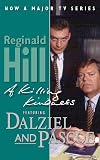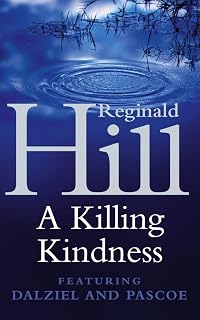
On This Page
Description
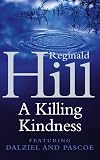
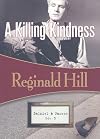
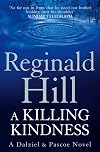
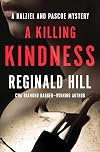
Adapted into a long-running hit show for the BBC, the Gold Dagger Award-winning series is now available as eBooks. The CID's Andrew Dalziel prefers simple killers. Not a crackpot who fancies himself Hamlet and taunts authorities with lofty quotes from the Bard. Dubbed the Yorkshire Choker, he's already taken three lives in four weeks and promises more tragedy to come. To help nab the serial strangler, Peter Pascoe has enlisted the help of linguistics professors, psychologists, and show more psychics-all of it nonsense to the grounded Dalziel. But as the murders escalate, the motives become more tangled, and the killer's identity grows more elusive scene-by-crime-scene, Dalziel and Pascoe must do everything they can to bring down the curtain on the princely fiend. show lessTags
Recommendations








Member Reviews
The Shakespearean Strangler
Review of the Grafton Books paperback edition (1987) of the Collins Crime Club hardcover original (1980)
Yorkshire CID Detective Superintendent Andy Dalziel (pronounced "dee-ELL") and assistants Detective Inspector Peter Pascoe and Detective Sergeant Wield are faced with a serial killer case in A Killing Kindness. Various seemingly unrelated women are being strangled and the killer begins making phone-calls to the local press quoting excerpts from Hamlet for no apparent show more reason. The Yorkshire CID are stumped and begin using the assistance of everyone from clairvoyants to speech dialect experts in an effort to break the case.
The non-politically correct Dalziel provokes the suspects, witnesses and lawyers in his own inimitable style, accompanied by the now standard belching and scratching which are his trademarks. He does provide a sort of defense for his methods though:
The sideplots provide further background on Pascoe's home life with feminist Ellie, who is expecting their first child. Ellie crosses swords with Dalziel in various satisfactory ways. We also learn behind the scenes that Sergeant Wield is a closeted homosexual in a long distance relationship.
The case is solved in the end of course when Pascoe finds a breakthrough clue. The finale is perhaps a touch unrealistic, when justice is served through apparent supernatural means. Still this was a satisfactory episode of the series.
See front cover at https://upload.wikimedia.org/wikipedia/en/1/19/AKillingKindness.jpg
Cover image of the original Collins Crime Club hardcover edition (1980). Image sourced from Wikipedia.
I re-read A Killing Kindness due to a recent discovery of my old mystery paperbacks from the 1980s in a storage locker cleanout. I was also curious about the precedents for Mick Herron's Jackson Lamb in the Slough House espionage series in the personality of Reginald Hill's Chief Inspector Andy Dalziel, which Herron has acknowledged.
See photograph at https://pbs.twimg.com/media/FZkxI4CXkAAu2sG?format=jpg&name=large
Book haul of the early Dalziel and Pascoe paperbacks, mostly from Grafton Books in the 1980s. Image sourced from Twitter.
Trivia and Link
A Killing Kindness was adapted for television in 1997 as Episode 2 of Series 2 of the long running TV series of Dalziel and Pascoe (1996-2007). The entire episode is posted on YouTube here, but it is formatted in a way that makes it hard to watch. show less
Review of the Grafton Books paperback edition (1987) of the Collins Crime Club hardcover original (1980)
I say we will have no more marriages, those that married already, all but one, shall live; the rest shall keep as they are. To a nunnery, go." - excerpt from Shakespeare's [book:Hamlet|1420], used as a taunt by the killer in A Killing Kindness.
Yorkshire CID Detective Superintendent Andy Dalziel (pronounced "dee-ELL") and assistants Detective Inspector Peter Pascoe and Detective Sergeant Wield are faced with a serial killer case in A Killing Kindness. Various seemingly unrelated women are being strangled and the killer begins making phone-calls to the local press quoting excerpts from Hamlet for no apparent show more reason. The Yorkshire CID are stumped and begin using the assistance of everyone from clairvoyants to speech dialect experts in an effort to break the case.
The non-politically correct Dalziel provokes the suspects, witnesses and lawyers in his own inimitable style, accompanied by the now standard belching and scratching which are his trademarks. He does provide a sort of defense for his methods though:
'That wasn't exactly conciliatory,' said Pascoe as they moved rapidly away.
'You don't conciliate that sort,' said Dalziel. 'Make 'em think you're a thick, racist, sexist, pig. Then they underestimate you and overreach themselves.'
'Ah,' said Pascoe and wondered privately what strange self-image Dalziel kept locked away in his heart.
The sideplots provide further background on Pascoe's home life with feminist Ellie, who is expecting their first child. Ellie crosses swords with Dalziel in various satisfactory ways. We also learn behind the scenes that Sergeant Wield is a closeted homosexual in a long distance relationship.
The case is solved in the end of course when Pascoe finds a breakthrough clue. The finale is perhaps a touch unrealistic, when justice is served through apparent supernatural means. Still this was a satisfactory episode of the series.
See front cover at https://upload.wikimedia.org/wikipedia/en/1/19/AKillingKindness.jpg
Cover image of the original Collins Crime Club hardcover edition (1980). Image sourced from Wikipedia.
I re-read A Killing Kindness due to a recent discovery of my old mystery paperbacks from the 1980s in a storage locker cleanout. I was also curious about the precedents for Mick Herron's Jackson Lamb in the Slough House espionage series in the personality of Reginald Hill's Chief Inspector Andy Dalziel, which Herron has acknowledged.
See photograph at https://pbs.twimg.com/media/FZkxI4CXkAAu2sG?format=jpg&name=large
Book haul of the early Dalziel and Pascoe paperbacks, mostly from Grafton Books in the 1980s. Image sourced from Twitter.
Trivia and Link
A Killing Kindness was adapted for television in 1997 as Episode 2 of Series 2 of the long running TV series of Dalziel and Pascoe (1996-2007). The entire episode is posted on YouTube here, but it is formatted in a way that makes it hard to watch. show less
There appears to be a new serial killer in Yorkshire as "A Killing Kindness" begins, as first one, then another, and another, woman is found strangled to death. The deaths seem to be ritualistic, until the fourth one occurs which is different from all the others. And there seem to be mysterious phone calls, quoting Shakespeare, that are related to the deaths as well. Superintendent Dalziel is furious when one of his Sergeants apparently calls in a gypsy clairvoyant, but there may be no other way to solve the case before there are still more deaths…."A Killing Kindness" is the sixth Dalziel and Pascoe novel, published in 1980, and like the previous novels in this series, there’s a serious problem with the casual sexism that is a show more constant in the story. But if one can get past that difficulty, the story itself is intriguing, and of course the main characters are all interesting, particularly as the “regulars” intermingle and change in their relationships. The ending was wholly unsatisfying, though, so only a mild recommendation from me. show less
The blurb on the back of the book is inaccurate, because the victim, Mary Dinwoodie, was not a young girl who had been out with her boyfriend, but a widow who had first of all lost her husband then her daughter.
The portrayal of a gay policeman in this novel is unusual for the times, but the fact that he feels obliged to keep it a secret is not surprising.
Why were the killings considered a kindness? The reason given by the killer is quite bizarre, which you will find out when you read the book.
The portrayal of a gay policeman in this novel is unusual for the times, but the fact that he feels obliged to keep it a secret is not surprising.
Why were the killings considered a kindness? The reason given by the killer is quite bizarre, which you will find out when you read the book.
Usual convoluted plot and literary referenecs but Dalziel's dialogue always a pleasure to read!
This is the only one I have read out of the whole series. I thought the characterization of the main police officers was well done, but there were so many characters, and I even kept getting the murdered women muddled up in my mind. The plot only really worked because the murderer spent pages explaining how and why he had done what he had done.
I'm familiar with these books because of the UK TV series, so I decided to give it a try. I won't be returning. The main characters aren't particularly likable, and the "who" in "whodunit" is telegraphed fairly early, always a turnoff for me. Well, at least I know now.
Usual fun interaction between Pascoe and the Fat Man. Wield has trouble in personal life. Gypsies play an interesting role.
Members
- Recently Added By
Author Information

84+ Works 18,510 Members
Reginald Hill has received Britain's most coveted mystery writers award, the Cartier Diamond Dagger Award, as well as the Golden Dagger, for his Dalziel/Pascoe series. (Publisher Provided) Reginald Hill was born in Hartlepool, England on April 3, 1936. He received an English degree from St. Catherine's College, Oxford University and worked as a show more teacher until 1980, when he retired to become a full-time writer. His first novel, A Clubbable Woman, was published in 1970. During his lifetime, he wrote over 50 books that range from historical novels to science fiction including Fell of Dark, No Man's Land, The Spy's Wife, and The Woodcutter. He was best known for the Dalziel and Pascoe series and the Joe Sixsmith series. He also wrote under the pseudonyms of Patrick Ruell, Dick Morland, and Charles Underhill. He received the 1990 Golden Dagger Award for Best Crime Novel of the Year for Bones and Silence and the 1995 Cartier Diamond Dagger Award for lifetime achievement. He died from a brain tumor on January 12, 2012 at the age of 75. (Bowker Author Biography) show less
Some Editions
Series

Belongs to Publisher Series
SaPo (359)
Common Knowledge
- Canonical title
- A Killing Kindness
- Original title
- A Killing Kindness
- Original publication date
- 1971
- People/Characters
- Andrew Dalziel; Peter Pascoe; Sergeant Wield; Rosetta Stanhope; Ellie Pascoe; Pauline Stanhope (show all 9); Dave Lee; Tommy Maggs; Mrs. Sorby
- Important places
- Yorkshire, England, UK
- Related movies
- Dalziel and Pascoe (1996 | IMDb)
- Epigraph
- The man that lays hands upon a woman, save in the way of kindness, is a wretch whom 'twere gross flattery to name a coward. John Tobin
- Dedication
- For Dan and Pat
- First words
- ... it was green, all green, all over me, choking, the water, the boiling at first, and roaring, and seething ...
- Last words
- (Click to show. Warning: May contain spoilers.)Then he returned inside to wait.
- Original language*
- englanti
*Some information comes from Common Knowledge in other languages. Click "Edit" for more information.
Classifications
Statistics
- Members
- 517
- Popularity
- 57,928
- Reviews
- 9
- Rating
- (3.66)
- Languages
- English, Finnish, French
- Media
- Paper, Audiobook, Ebook
- ISBNs
- 31
- ASINs
- 6