On This Page
Description
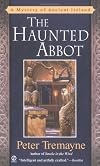
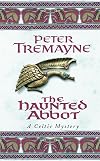
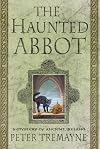
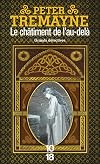
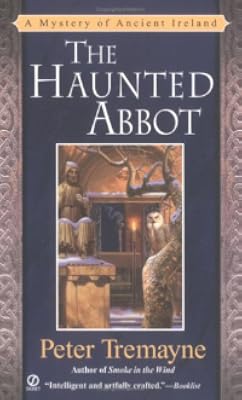
In December of 666 A.D., Fidelma of Cashel and her companion Brother Eadulf, having completed their business with the Archbishop of Canterbury, make one final journey before returning to Ireland. At the insistence of Brother Botulf, a childhood friend of Eadulf, they detour from their trip to Eadulf's home village and make their way to Aldred's Abbey. Arriving at midnight on the night of the old pagan festival of Yule, as requested, they find Botulf's dead body - his head caved in by a blunt show more instrument. As Fidelma and Eadulf soon learn, however, murder isn't the only danger which faces those in the abbey. The ghost of a young woman haunts the cloister shadows, a ghost which closely resembles the Abbot's dead wife. Now it will require all of Fidelma's skill as an advocate of the Brehon Courts to unravel the mystery and uncover the truth behind these events before those secrets take yet another life. show lessTags
Recommendations




Member Reviews
Brother Botulf, a friend of Brother Eadulf's, asks him to visit the abbey where he lives but when Eadulf and Sister Fidelma arrive at the abbey the attitude of the monks varies from unwelcoming to downright hostile and Botulf has been murdered.
I enjoyed the mystery and the tense, exciting atmosphere very much. I did start to find the usually tolerant Fidelma's attitude of cultural superiority over the Saxons and her contempt for their culture troubling but when eventually Eadulf called her out over it, she dismissed it as an emotional outburst he would soon get over and in fact the press of events forced them to drop the subject and it was never renewed. Without that it would have been a 5 star read.
I enjoyed the mystery and the tense, exciting atmosphere very much. I did start to find the usually tolerant Fidelma's attitude of cultural superiority over the Saxons and her contempt for their culture troubling but when eventually Eadulf called her out over it, she dismissed it as an emotional outburst he would soon get over and in fact the press of events forced them to drop the subject and it was never renewed. Without that it would have been a 5 star read.
For anyone not reading the series in order, there is a mild spoiler below.
Fidelma, now Eadulf's ben cahrrthach, accompanies him to his Saxon homelands to Aldred's Abbey, where Eadulf has received an urgent summons from his old friend Brother Botulf. While warned that the abbey is home to great evil, they journey through perilous weather to arrive at the abbey only to find Botfulf dead and the abbot in charge to be a tyrannical misogynist.
The first half might be more aptly called a "Brother Eadulf" mystery than a Sister Fildema mystery, and some may find that more pleasing than others. Sadly, given than readers have waited eleven prior installments for Fidelma and Eadulf to be more than companions, this book does little to develop their show more relationship (one might argue until the very last sentence of the book). In what is probably the most chaste representation of a couple I've ever encountered, the final page seems almost to say: "I'll get to them in the next installment, promise!". I guess I will find out.
There's a supernatural tinge here, which of course faithful Fidelma readers will know always holds some other explanation. The characterization is a bit more complex across the board than in some of the other books. Allies can't be trusted, there are several folks who aren't quite antagonists, but neither are they allies, and as always there are mistaken identities. Aldhere, an outlaw, has a rich backstory that provides him with a certain depth and nuance of character. Women get very little airtime (partially due to the setting of Abbot Cild's vehemently male-only abbey), save for a peasant girl named Lioba, the Abbot's wife (in memoriam), and Bertha, the "woman" of Aldhere.
What is most refreshing in this particular book is that we get more sense of Anglo-Saxon history in the Heptarchy: the kingdom of Mercia, vs. East Anglia, etc. Much is made of the different systems of justice, not just between Christian and pagan, but more specifically between that of Eireann and Saxon. As I cannot speak to authority on either culture, I will simply say that there is a clear implication as to which is more enlightened (which will not come as a surprise).
The story benefits from a few different locations--the abbey, outside the abbey, and the farmhouse of 'Mad' Mul. There are some labyrinthine passages--both actual and metaphorical--that help keep the narrative alive. The arrival of Sigeric, high steward to Ealdwulf, King of East Anglia, provides a bit of a jumpstart just as things start to lag a bit, as does a murder just before the end of the book. show less
Fidelma, now Eadulf's ben cahrrthach, accompanies him to his Saxon homelands to Aldred's Abbey, where Eadulf has received an urgent summons from his old friend Brother Botulf. While warned that the abbey is home to great evil, they journey through perilous weather to arrive at the abbey only to find Botfulf dead and the abbot in charge to be a tyrannical misogynist.
The first half might be more aptly called a "Brother Eadulf" mystery than a Sister Fildema mystery, and some may find that more pleasing than others. Sadly, given than readers have waited eleven prior installments for Fidelma and Eadulf to be more than companions, this book does little to develop their show more relationship (one might argue until the very last sentence of the book). In what is probably the most chaste representation of a couple I've ever encountered, the final page seems almost to say: "I'll get to them in the next installment, promise!". I guess I will find out.
There's a supernatural tinge here, which of course faithful Fidelma readers will know always holds some other explanation. The characterization is a bit more complex across the board than in some of the other books. Allies can't be trusted, there are several folks who aren't quite antagonists, but neither are they allies, and as always there are mistaken identities. Aldhere, an outlaw, has a rich backstory that provides him with a certain depth and nuance of character. Women get very little airtime (partially due to the setting of Abbot Cild's vehemently male-only abbey), save for a peasant girl named Lioba, the Abbot's wife (in memoriam), and Bertha, the "woman" of Aldhere.
What is most refreshing in this particular book is that we get more sense of Anglo-Saxon history in the Heptarchy: the kingdom of Mercia, vs. East Anglia, etc. Much is made of the different systems of justice, not just between Christian and pagan, but more specifically between that of Eireann and Saxon. As I cannot speak to authority on either culture, I will simply say that there is a clear implication as to which is more enlightened (which will not come as a surprise).
The story benefits from a few different locations--the abbey, outside the abbey, and the farmhouse of 'Mad' Mul. There are some labyrinthine passages--both actual and metaphorical--that help keep the narrative alive. The arrival of Sigeric, high steward to Ealdwulf, King of East Anglia, provides a bit of a jumpstart just as things start to lag a bit, as does a murder just before the end of the book. show less
I appreciated this book better than most others in the Fidelma stories, because I saw that Fidelma was taking a step back (narratively speaking) to put Eadulf in the foreground as a pretty decent sleuth - he is shown to be more poised than Fidelma and he is taking full advantage of her illness to investigate the local haunting of a supposed dead woman. This storyline is very gothic and you should expect lots of side stories that are interconnected to the main plot. Very enjoyable, I think this is one of the best one of the series.
Beaucoup de connaissances de lieux, us et coutumes de la part de l'auteur pour raconter cette sombre histoire de meurtres, de vengeances et de folie... mais que de termes compliqués, que de personnages, on s'y perd un peu, et l'histoire perd un peu, du coup, de son intérêt. Dommage.
Brother Eadulf and Sister Fidelma leave Canterberry and head to Alred's Abbey which is close to where Eadulf grew up. A note from his childhood friend Brother Boltuf has sent them wandering into a snowstorm due to its seemingly important nature. Mad Mul, the local farmer gives them a ride to the Abbey for a price, as it's on his way back to his farm. He tells them the Abbey is a place of evil and the Abbot Cild is a devil. He also warns them that while the area is still under a Christian king, the two kings to the north and south are fighting. One of them has returned to the old gods rather than the Christian God and wants to take over the entire area. Then there's Mercia a group of heathens who live at the border and wants to take over show more everyone's land.
When they arrive late at night at the Abbey its to find out that the Abbey has changed and no longer allows women and that Brother Boltuf has been murdered. Eadulf uses his connection as an emissary to Archbishop Thomas of Canterberry and as gerefa of Seaxmund's Ham, which is similar to Fidelma's role of dalaigh, an advocate of the ancient court laws, to gain entrance and a place to stay for the night. But when Eadulf became a man of the cloth he gave up his power of gerefa which is how it works in his land. Women in his land don't have a voice and are seen yet not heard so Eadulf tells Fidelma to try to curb her tongue, but she tells him she will be as she is.
Abbot Cild refuses to see Fidelma but sees Eadulf and tells him they must leave in the morning and Eadulf tells him that he has no intention of leaving until he has uncovered the story of his friend's murder. At the funeral, Garb of Maigh Eo from Connacht back in Ireland has arrived to announce the troscud has begun and that his father Gadra will begin fasting in two weeks time if he has not been given compensation for the murder of his daughter at Cild's hand. Cild had married his daughter while living in Connacht and studying to become a monk. If Cild ignores this, which he likely will since these laws are not enforceable in his land, then Garda dies then Garb will see Cild's life as forfeit and not worth anything and will kill him causing a war between his people and the local king's which could quickly get out of hand and become a large war engulfing the area.
Unfortunately for the reader and Eadulf Fidelma has become very ill from the effects of walking in the weather and cannot be moved. But Fidelma isn't the only woman Eadulf sees in the Abbey, he sees a woman with red-gold hair decked out in fancy red dress and jewels. One of the young brothers sees her too standing over Fidelma as she lay there sick and he freaks out because he believes that it is Gelgeis the Abbot's dead wife.
Cild was a cruel husband and a bit crazy, especially power crazy. His brother Aldhere was younger than him yet his father let him inherit the lands and title over him because of Cild's craziness. Aldhere was mistakenly branded a coward during a battle because he followed orders at first. The king wanted him to make his case before him but he knew that the king would either kill him or imprison him for life since the person who had accused him of cowardice and had died was the king's cousin so he chose a life of being an outlaw. But he is still trying to clear his name.
After the brother sees who he thinks is Gelgeis the Abbot accuses Fidelma of witchcraft and Eadulf of helping her and of putting them on trial with him as judge and jury with the sentence to be buried to death. One of the monks, the apothecary is sympathetic to their cause and shows them the tunnels that lead out of Fidelma's room and tells them how to leave the Abbey via the tunnel. On their way out they find a room with armor with the markings of some king or local leader that he can't quite identify and they see Botulf's purse and blood proving that he didn't die where Cild said he did outside of the Abbey. They escape and head to where Garda is located at to get information from him and pick up puzzle pieces. One of them is that there is a young woman with golden hair who lives in the area and is a bit of a whore. Is she the woman Eadulf saw in the Abbey or did he see the ghost of Gelgeis?
This was a hard book to read as it was mostly told through the eyes of Brother Eadulf who is a whiner and boy did he whine in this book. His land has changed and his way of looking at things has changed and he doesn't like this so he whines. He whines and gets angry and blows up making things worse at the Abbey. It only starts to get good when Fidelma gets better and starts to pick up some of the narration, but still, most of the narration is Eadulf in this book, which is annoying. I read these books for Fidelma, not Eadulf. I put up with him so having a book that is mainly him is not my cup of tea. As such I have to take off for that I did like the characters of Mad Mul and Aldhere, though. They helped make this book more enjoyable. I give it three and a half out of five stars.
Quotes
My people have a saying: let those who think war is a solution go to war. A war only makes the victor brutal and the vanquished vengeful.
-Peter Tremayne (The Haunted Abbot p 22)
There is an old proverb. “Let not your tongue cut your throat.”
-Peter Tremayne (The Haunted Abbot p 91)
Falsehood often goes farther than truth when dealing with a liar, and such a lie will eventually pass away while only the truth remains.
-Peter Tremayne (The Haunted Abbot p 108)
Indeed, much is accomplished by drinking here for drink unlocks secrets, it confirms our hopes, lifts burdens from anxious minds, teaches us new arts and urges the timorous into battle. For a bad night, there is always the soft mattress of mead, and many a friend and many a lover have met over a jug.
-Peter Tremayne (The Haunted Abbot p 215)
Our fate is written more by coincidence than by careful planning
-Peter Tremayne (The Haunted Abbot p 295) show less
When they arrive late at night at the Abbey its to find out that the Abbey has changed and no longer allows women and that Brother Boltuf has been murdered. Eadulf uses his connection as an emissary to Archbishop Thomas of Canterberry and as gerefa of Seaxmund's Ham, which is similar to Fidelma's role of dalaigh, an advocate of the ancient court laws, to gain entrance and a place to stay for the night. But when Eadulf became a man of the cloth he gave up his power of gerefa which is how it works in his land. Women in his land don't have a voice and are seen yet not heard so Eadulf tells Fidelma to try to curb her tongue, but she tells him she will be as she is.
Abbot Cild refuses to see Fidelma but sees Eadulf and tells him they must leave in the morning and Eadulf tells him that he has no intention of leaving until he has uncovered the story of his friend's murder. At the funeral, Garb of Maigh Eo from Connacht back in Ireland has arrived to announce the troscud has begun and that his father Gadra will begin fasting in two weeks time if he has not been given compensation for the murder of his daughter at Cild's hand. Cild had married his daughter while living in Connacht and studying to become a monk. If Cild ignores this, which he likely will since these laws are not enforceable in his land, then Garda dies then Garb will see Cild's life as forfeit and not worth anything and will kill him causing a war between his people and the local king's which could quickly get out of hand and become a large war engulfing the area.
Unfortunately for the reader and Eadulf Fidelma has become very ill from the effects of walking in the weather and cannot be moved. But Fidelma isn't the only woman Eadulf sees in the Abbey, he sees a woman with red-gold hair decked out in fancy red dress and jewels. One of the young brothers sees her too standing over Fidelma as she lay there sick and he freaks out because he believes that it is Gelgeis the Abbot's dead wife.
Cild was a cruel husband and a bit crazy, especially power crazy. His brother Aldhere was younger than him yet his father let him inherit the lands and title over him because of Cild's craziness. Aldhere was mistakenly branded a coward during a battle because he followed orders at first. The king wanted him to make his case before him but he knew that the king would either kill him or imprison him for life since the person who had accused him of cowardice and had died was the king's cousin so he chose a life of being an outlaw. But he is still trying to clear his name.
After the brother sees who he thinks is Gelgeis the Abbot accuses Fidelma of witchcraft and Eadulf of helping her and of putting them on trial with him as judge and jury with the sentence to be buried to death. One of the monks, the apothecary is sympathetic to their cause and shows them the tunnels that lead out of Fidelma's room and tells them how to leave the Abbey via the tunnel. On their way out they find a room with armor with the markings of some king or local leader that he can't quite identify and they see Botulf's purse and blood proving that he didn't die where Cild said he did outside of the Abbey. They escape and head to where Garda is located at to get information from him and pick up puzzle pieces. One of them is that there is a young woman with golden hair who lives in the area and is a bit of a whore. Is she the woman Eadulf saw in the Abbey or did he see the ghost of Gelgeis?
This was a hard book to read as it was mostly told through the eyes of Brother Eadulf who is a whiner and boy did he whine in this book. His land has changed and his way of looking at things has changed and he doesn't like this so he whines. He whines and gets angry and blows up making things worse at the Abbey. It only starts to get good when Fidelma gets better and starts to pick up some of the narration, but still, most of the narration is Eadulf in this book, which is annoying. I read these books for Fidelma, not Eadulf. I put up with him so having a book that is mainly him is not my cup of tea. As such I have to take off for that I did like the characters of Mad Mul and Aldhere, though. They helped make this book more enjoyable. I give it three and a half out of five stars.
Quotes
My people have a saying: let those who think war is a solution go to war. A war only makes the victor brutal and the vanquished vengeful.
-Peter Tremayne (The Haunted Abbot p 22)
There is an old proverb. “Let not your tongue cut your throat.”
-Peter Tremayne (The Haunted Abbot p 91)
Falsehood often goes farther than truth when dealing with a liar, and such a lie will eventually pass away while only the truth remains.
-Peter Tremayne (The Haunted Abbot p 108)
Indeed, much is accomplished by drinking here for drink unlocks secrets, it confirms our hopes, lifts burdens from anxious minds, teaches us new arts and urges the timorous into battle. For a bad night, there is always the soft mattress of mead, and many a friend and many a lover have met over a jug.
-Peter Tremayne (The Haunted Abbot p 215)
Our fate is written more by coincidence than by careful planning
-Peter Tremayne (The Haunted Abbot p 295) show less
The Culture shock was well written. This adventure of Sister Fidelma has lots of twists and turns and a few murders, as well as a lot of political manouvering.
Lots of twists and turns in this story...they get a bit tedious towards the end of the story.
Members
- Recently Added By
Lists

al.vick-parents books
301 works; 1 member

Physical TBR List
68 works; 1 member
Author Information

149+ Works 14,977 Members
Peter Tremayne is the fiction writing pseudonym of the Celtic scholar and author Peter Berresford Ellis, who was born in Coventry, Warwickshire, England on March 10, 1943. Even though he received a BA and an MA in Celtic Studies, he decided to become a journalist and worked at numerous weekly newspapers throughout England and Ireland. In 1968, he show more published is first book, Wales: A Nation Again, about the Welsh struggle for political independence. He became a full-time writer in 1975 and has published over 90 books under his own name and the pseudonyms Peter Tremayne and Peter MacAlan. One of his best known works under his real name is The Cornish Language and its Literature, which is considered the definitive history of the language. In 1988, he received an Irish Post Award in recognition of his services to Irish historical studies. Under the pseudonym Peter Tremayne, he writes the Sister Fidelma Mystery series. He received the French Prix Historia for the best historical mystery novel of 2010 for Le Concile des Maudits (The Council of the Cursed). (Bowker Author Biography) show less
Series

Common Knowledge
- Canonical title
- The Haunted Abbot
- Original title
- The Haunted Abbot
- Original publication date
- 2002-09-02 (Headline Book Publishing|London) (Headline Book Publishing | London)
- People/Characters
- Sister Fidelma (dálaigh | anruth | religieuse); Brother Eadulf (Saxon); Aldhere (outlaw); Brother Beornwulf; Bertha; Brother Botulf (show all 24); Abbot Cild; Cynric (innkeeper); Dado; Dagobert (merchant | Frank); Gadra (cheiftain); Garb; Brother Higbald (apothecary); Brother Laisre; Lioba; 'Mad' Mul (farmer); Brother Osred (smith); Brother Redwald; Sigeric (high steward); Brother Tola; Werferth (commander | bodyguard); Wiglaf; Brother Wigstan; Brother Willibrod (dominus)
- Important places
- Suffolk, England; Ireland
- Epigraph
- Even when there is no law, there is conscience.
Publilius Syrus
First century BC - Dedication
- In memory of Moira Evans (22 September 1951 - 4 August 2001), a great friend, who offered support and encouragement and believed in Sister Fidelma
- First words
- ‘Please close the door, Brother. The wind is blowing the snow in here and it is already cold enough.‘
- Last words
- (Click to show. Warning: May contain spoilers.)I want my baby to be born in Cashel.
- Original language
- English UK
Classifications
Statistics
- Members
- 384
- Popularity
- 81,288
- Reviews
- 10
- Rating
- (3.89)
- Languages
- 5 — Dutch, English, French, German, Italian
- Media
- Paper, Audiobook, Ebook
- ISBNs
- 12
- ASINs
- 7