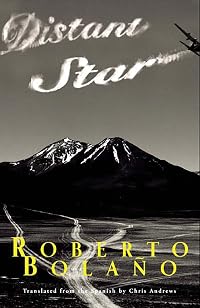
Distant Star
by Roberto Bolaño
On This Page
Description
An unnamed narrator observes the progression of a young poet into an enigmatic officer and nationalist sky writer with darkly creative aspirations in Pinochet's air force.Tags
Recommendations

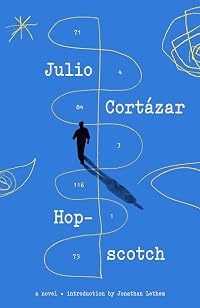
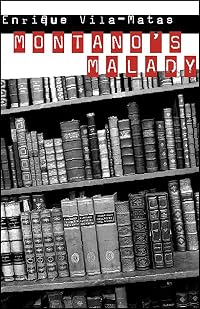
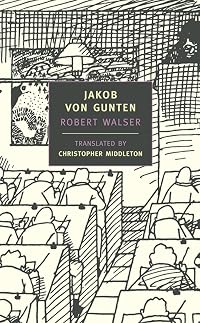
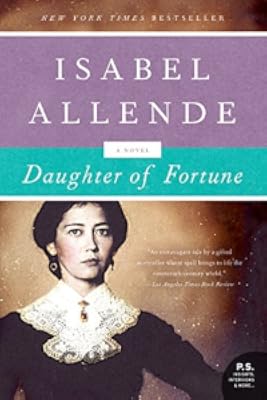
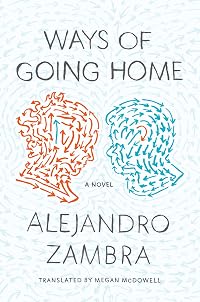
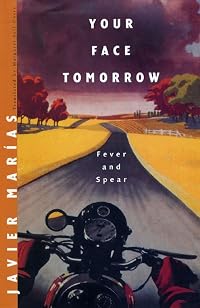
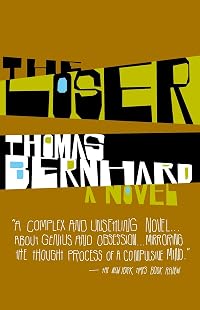

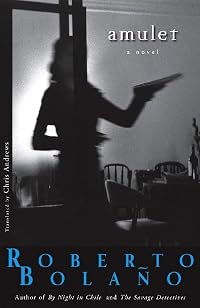
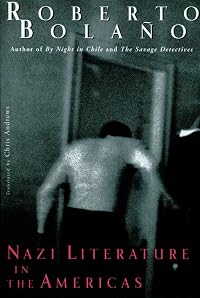
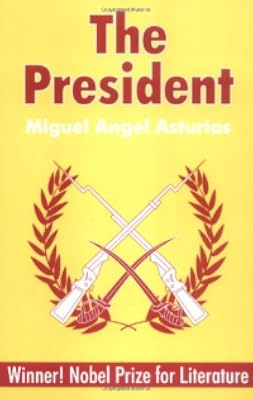
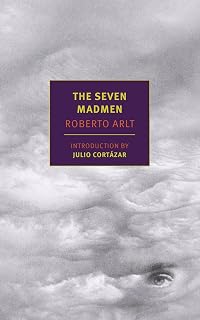
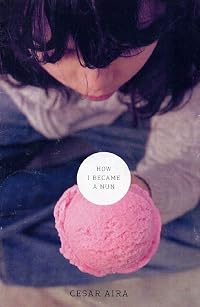
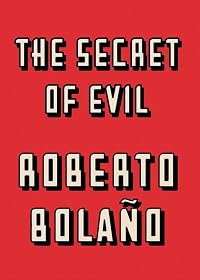
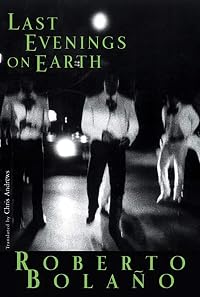


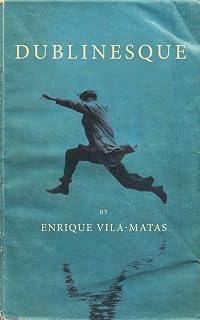
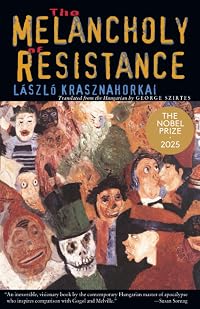

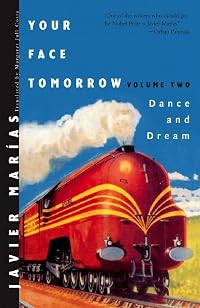


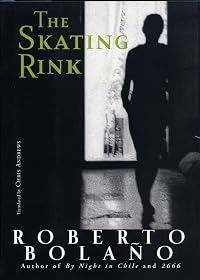
Member Recommendations

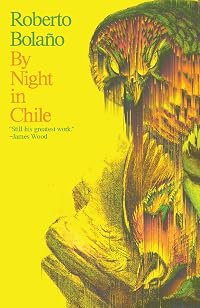
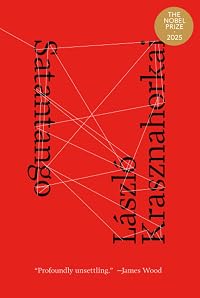
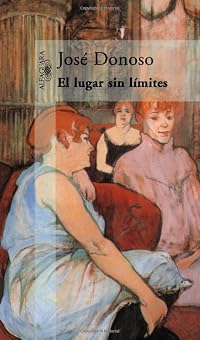
chrisharpe I thought Soriano's novela satirising the Argentine dictatorship might appeal to those who enjoyed Distant Star - it's funnier and it packs a lot more punch.
Member Reviews
I've been trying to read more literary fiction, and Distant Star was on a cart outside a local used bookstore (my kryptonite). This novel is nominal about the relationship between the unnamed narrator and Carlos Wieder. Wieder infiltrated the narrator's student poetry workshop under an assumed name, and each chapter reveals a new and uncanny element to Wieder's personality: The aspiring poet, the Peronist hatchetman, the truly brilliant aviator, the avante-garde poet who skywrites his messages on the most insubstantial medium of them all, the hidden literary figure publishing under assumed names, the vicious serial killer using politics as an excuse for his crimes.
The novel loops elliptically through biographies of lies, alternative show more selves under different conditions, and the twinned meanings of art and crime and meaning itself. It's well crafted, breezy, yet clever. But ultimately, not my cup of tea. I may pause my project to improve my reading habits. show less
The novel loops elliptically through biographies of lies, alternative show more selves under different conditions, and the twinned meanings of art and crime and meaning itself. It's well crafted, breezy, yet clever. But ultimately, not my cup of tea. I may pause my project to improve my reading habits. show less
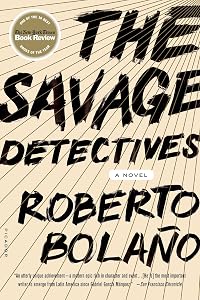
This short novel has some similar elements to [b:The Savage Detectives|63033|The Savage Detectives|Roberto Bolaño|http://photo.goodreads.com/books/1342651149s/63033.jpg|2503920], but it's much darker. Bolaño looks at the sinister side of Latin American poetry movements and politics, as he explores the dark careers and identities of Alberto Ruiz-Tagle, aka Carlos Wieder, a member of the Chilean air force who achieves as small measure of fame as a poet-aviator practicing a dark kind of performance art by skywriting over the Andes. The book's narrator, who met Ruiz-Tagle/Wieder in a series of poetry workshops during their youth, describes the clues that he, a friend, and a private investigator uncover in their efforts to find Wieder, show more whom they suspect of committing violent acts.
The ominous political reality of Chile in the 1970s and after pervades Distant Star. Friends and acquaintances disappear or are disappeared. Fascist villains as well as leftist heroes move easily throughout the Americas and Europe, adopting and discarding identities as they go. Bolaño threads a strong sense of menace and evil about to be detected throughout, so this book is not a fast read, in spite of its short length.
While reading, I also considered some questions of culpability. What is our responsibility in the face of violence, racism, hatred, and evil? How do we as readers understand the impact of literary movements and art on crimes perpetrated against individuals? What is the relationship between the individual and the repressive state? And how do we as an audience negotiate the relationship between acts of violence and art? All necessary questions, raised by Bolaño in his inimitable style. show less
The ominous political reality of Chile in the 1970s and after pervades Distant Star. Friends and acquaintances disappear or are disappeared. Fascist villains as well as leftist heroes move easily throughout the Americas and Europe, adopting and discarding identities as they go. Bolaño threads a strong sense of menace and evil about to be detected throughout, so this book is not a fast read, in spite of its short length.
While reading, I also considered some questions of culpability. What is our responsibility in the face of violence, racism, hatred, and evil? How do we as readers understand the impact of literary movements and art on crimes perpetrated against individuals? What is the relationship between the individual and the repressive state? And how do we as an audience negotiate the relationship between acts of violence and art? All necessary questions, raised by Bolaño in his inimitable style. show less
Strange, disturbing, absorbing and compulsively re-read-able modern take on the crime novel/noir about a poet who murders for Pinochet and the community he's a part of. Blood all around.
Estrella Distante (Distant Star) is a short novel by Roberto Bolaño. This was the second time I read it, and after reading four out of the five books of 2666, I´m happy to step back and read this novel, which in many ways prefaces his later work. It is the story of a poet and his search for an old acquaintance, Alberto Ruiz Tagle, who becomes Carlos Weider, a pilot for the Armed Forces of Pinochet who writes poetry in the sky, commits horrible crimes under the auspices of the regime, exhibits a macabre photography gallery in Santiago, and disappears from public existence while leaving a winding trail of publications across South America and Europe in bizarre and little-read genre publications. The search for the mysterious writer, a show more theme that many of Bolaño´s books share, relates back to the poetry workshops in Concepción where the narrator met Carlos Weider, and traces the stories of the founders and participants of the workshops after Pinochet´s military coup in 1973. Through their stories, the narrator gives a panorama of Chilean poetry in the middle half of the 20th century and shows the effects that such a horrible and dramatic series of events such as the coup and the subsequent repression of the opposition could have on different individuals. It also examines the myths that people construct around people that pass through their lives mysteriously, and the realities that may lie beneath.
It is difficult to explain why I love the books of Roberto Bolaño so much. I think that, like the elusive writers and poets that the characters of many of his books search for, he invites the reader to search for his or her own conception of the author and his work. I know that I feel a great affinity for his characters’ relentless quest for knowledge and understanding of subjects small and large, from forgotten, ghost-like authors to the wave of murders in Ciudad Juárez. After I finish his books, I think about the authors that must have influenced him and how his work relates to people like Jorge Luis Borges and Nicanor Parra, people that both he and I have read with great pleasure during our lives. Like Borges, his stories exhibit the joy that he finds in writing and the passion that intellectual pursuits inspire in him. Like Parra, he looks around him and sees a ridiculous world filled with ridiculous people, and he seems to seek and inhabit a similar role as literary renegade as Parra. Finally, and most importantly, I think that he, as much as any author I´ve read, shows me the modern world in the ways that I want to see it, thrilling and often horrendous. I went to a museum and saw an art exhibition related to the femicide in Juárez, and I felt after reading La Parte de los crímenes from 2666 that I had a connection to the events that I couldn´t have gotten from reading newspaper articles on the internet: he had created Juárez for me, and had imagined the lives of the people investigating the crimes and living amongst the criminals and victims. No matter what the topic is that he writes about, short stories or novels, I don´t think that I´ve ever read anything by him that didn´t leave me satisfied and inspired to seek out more of his writing. I am excited to have a lifetime ahead of me to read his books and watch my feelings and understanding of his writing change as I change as a person. show less
It is difficult to explain why I love the books of Roberto Bolaño so much. I think that, like the elusive writers and poets that the characters of many of his books search for, he invites the reader to search for his or her own conception of the author and his work. I know that I feel a great affinity for his characters’ relentless quest for knowledge and understanding of subjects small and large, from forgotten, ghost-like authors to the wave of murders in Ciudad Juárez. After I finish his books, I think about the authors that must have influenced him and how his work relates to people like Jorge Luis Borges and Nicanor Parra, people that both he and I have read with great pleasure during our lives. Like Borges, his stories exhibit the joy that he finds in writing and the passion that intellectual pursuits inspire in him. Like Parra, he looks around him and sees a ridiculous world filled with ridiculous people, and he seems to seek and inhabit a similar role as literary renegade as Parra. Finally, and most importantly, I think that he, as much as any author I´ve read, shows me the modern world in the ways that I want to see it, thrilling and often horrendous. I went to a museum and saw an art exhibition related to the femicide in Juárez, and I felt after reading La Parte de los crímenes from 2666 that I had a connection to the events that I couldn´t have gotten from reading newspaper articles on the internet: he had created Juárez for me, and had imagined the lives of the people investigating the crimes and living amongst the criminals and victims. No matter what the topic is that he writes about, short stories or novels, I don´t think that I´ve ever read anything by him that didn´t leave me satisfied and inspired to seek out more of his writing. I am excited to have a lifetime ahead of me to read his books and watch my feelings and understanding of his writing change as I change as a person. show less
I started out not liking this and--though it is short--thinking I didn't want to finish this story about a bunch of self-absorbed wanna-be poets (I generally find myself disappointed in fiction about writers and writing), but then...I was sucked in to Bolano's world and involved in the mystery (though suspecting that the apparent mystery was not the real mystery). Interesting that Bruno Schulz makes an appearance at the end, as I had a similar feeling of being drawn into a uniquely twisted perspective. 2666 next? Yeah, maybe...
this was a perfect little meditation on the dark side of art. some parts are hard to read, and the menace embodied in the main subject was a little difficult to live with while reading, but it was worth it ... to me. you may disagree.
This was not my favorite of Bolaño's novels. Although it begins with an intriguing primary subject - a violently sociopathic poet, Carlos Wieder - it quickly branches out into the fates of various poets and friends of the narrator in the wake of the Pinochet coup. These tangents are one of Bolaño's strengths, as he weaves between real and fictional historical figures deftly enough that there is no clear line between the two. A couple of anecdotes about obscure journals or poetry movements do a great job of setting the mood or giving the reader a "general feel" of a time and place. However, in a book this short (my copy is about 150 pages) I can't help but feel that they also detract from what is ostensibly the main thrust of the show more novel. Wieder features prominently in only about half of the ten chapters, decreasingly important as the book goes on. I kept waiting for some kind of revelation or insight into Wieder's character that never came. Perhaps that's part of the book - that some people do terrible things and you'll never really know why. show less
Members
- Recently Added By
Author Information

95+ Works 28,035 Members
Some Editions
Awards and Honors
Awards
Notable Lists
Series
Belongs to Publisher Series
Compactos Anagrama (242)
Narrativas hispánicas (210)
New Directions Paperbook (993)
Harvill (309)
Meulenhoff editie (1935)
Common Knowledge
- Canonical title*
- Het lichtende kwaad
- Original title
- Estrella distante
- Alternate titles
- Distant star (English translation) (English translation)
- Original publication date
- 1996 (original Spanish) (original Spanish); 2004 (English: Andrews) (English: Andrews)
- People/Characters*
- Alberto Ruiz-Tagle / Carlos Wieder; Juan Stein; Bibiano O'Ryan
- Important places*
- Concepción, Chile; Barcelona, Cataluña, España
- Important events*
- Golpe de Estado de Pinochet (Chile, 1973); Dictadura militar chilena
- Epigraph
- "What star falls unseen?"
William Faulkner - Dedication
- For Victoria Ávalos and Lautaro Bolaño
- First words*
- La primera vez que vi a Carlos Wieder fue en 1971 o tal vez en 1972, cuando Salvador Allende era presidente de Chile.
- Last words*
- (Click to show. Warning: May contain spoilers.)Cuídese, mi amigo, dijo finalmente y se marchó.
- Blurbers
- Sontag, Susan; Wood, James
- Original language
- Spanish
*Some information comes from Common Knowledge in other languages. Click "Edit" for more information.
Classifications
- Genres
- Fiction and Literature, General Fiction
- DDC/MDS
- 863.64 — Literature & rhetoric Spanish Literature Spanish fiction 20th Century 1945-2000
- LCC
- PQ8098.12 .O38 .E813 — Language and Literature French, Italian, Spanish and Portuguese literatures Spanish literature Provincial, local, colonial, etc. Spanish America
- BISAC
Statistics
- Members
- 1,121
- Popularity
- 22,567
- Reviews
- 30
- Rating
- (3.77)
- Languages
- 14 — Czech, Danish, Dutch, English, French, German, Greek, Italian, Japanese, Polish, Portuguese, Spanish, Swedish, Turkish
- Media
- Paper, Audiobook, Ebook
- ISBNs
- 49
- ASINs
- 10