On This Page
Description
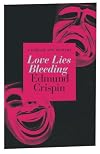
From a British mystery author known as "the master of the whodunnit," an amateur detective delights in solving murders at an English boys' school. Prof. Gervase Fen of Oxford University is honored to award the prizes at the Speech Day ceremonies at Castrevenford High School. As it turns out, the headmaster's selection of the part-time sleuth as a presenter is most fortuitous indeed. For the night before the big event, two of the school's staff members are murdered . . . Of course, Fen is show more happy to do some investigating, if only to get more fodder for the crime novel he's writing. Between the kidnapping, the student romances, and the accidental discovery of a long-lost Shakespearian manuscript, the eccentric Oxford don certainly gets some food for thought. But that's all in a day's work for an amateur detective with a penchant for literary allusions and an uncanny knack for solving the unsolvable. Praise for the mysteries of Edmund Crispin "A marvellous comic sense." -P. D. James, New York Times-bestselling author of the Inspector Adam Dalgliesh series "Master of fast-paced, tongue-in-cheek mystery novels, a blend of John Dickson Carr, Michael Innes, M.R. James, and the Marx Brothers." -Anthony Boucher, author of the Fergus O'Breen series "An absolute must for devotees of cultivated crime fiction." -Kirkus Reviews "One of the most literate mystery writers of the twentieth century." -The Boston Globe "Beneath a formidable exterior he had unsuspected depths of frivolity." -Philip Larkin, poet and author of A Girl in Winter "One of the last exponents of the classical English detective story." -The Times (London.) show lessTags
Recommendations


















Member Reviews
Professor of English Literature Gervase Fen helps out an old friend by agreeing at short notice to present the prizes at a school speech day - little expecting also to be called upon to investigate several murders and a kidnapping, and possibly - just possibly - to discover a lost Shakespearean manuscript.
A nicely-plotted mystery with excellent character sketches and a lot of depth. The insane bloodhound is a nice touch, and the scene with the headmaster interrogating the sixteen-year-old boy caught making illicit assignations with a girl is really very amusing. Fen is his usual self (but less annoying than he often is) and the whodunnit is satisfyingly complex. Well paced, well written, rich and full-bodied. In more than one sense.
The show more kind of book with which to snuggle down before a roaring fire (should you be so fortunate as to have access to one) on a really cold night, with either a large glass of wine or a large mug of cocoa depending on your preferences. show less
A nicely-plotted mystery with excellent character sketches and a lot of depth. The insane bloodhound is a nice touch, and the scene with the headmaster interrogating the sixteen-year-old boy caught making illicit assignations with a girl is really very amusing. Fen is his usual self (but less annoying than he often is) and the whodunnit is satisfyingly complex. Well paced, well written, rich and full-bodied. In more than one sense.
The show more kind of book with which to snuggle down before a roaring fire (should you be so fortunate as to have access to one) on a really cold night, with either a large glass of wine or a large mug of cocoa depending on your preferences. show less
Crispin writes in an ostentatiously pompous style with a rich vocabulary that often sends me to the dictionary, and with an overwhelming number of similes - all to jocular effect (I hope it is done on purpose). As to the plot, Gervaise Fen, invited to a prize-giving at a boys' school not far from Stratford-on-Avon, discovers the perpetrator(s) of three - perhaps four - murders motivated by the discovery of a lost manuscript thought to be by Shakespeare. He keeps the entangled threads of the mystery to himself until the conclusion. Fen almost falls asleep during his explanations of alibis and underhand plotting and blotting paper and I almost did too. Apart from the lengthy conclusion I found it all most enjoyable. A pity about Mr show more Merryweather. show less
Le estoy cogiendo el gusto a las novelas de Edmund Crispin. Tras ‘La juguetería errante’ y ‘El canto del cisne’, la editorial Impedimenta nos ofrece ‘Trabajos de amor ensangrentados’. Se tratan de novelas protagonizadas por el profesor de Lengua y Literatura en Oxford y detective aficionado Gervase Fen, excéntrico, inteligente y perspicaz como pocos. Sus casos tienen que ver con misterios y crímenes a puerta cerrada, en los que se analizan las pruebas y pesquisas minuciosamente, pasando por interrogatorios, pistas falsas y revelaciones varias, hasta llegar a una explicación final pormenorizada.
En ‘Trabajos de amor ensangrentados’ (Loves Lies Bleeding, 1948), nos encontramos en el Instituto de Castrevenford, donde Fen show more ha sido invitado para la entrega de premios y diplomas. Pero unos atroces hechos van a empañar los festejos: dos profesores han sido asesinados y una alumna ha desaparecido. Entonces, el director le pedirá a su amigo Fen que se implique en el caso.
Calidad literaria, buen ritmo narrativo, protagonistas atractivos, toque de humor british y conversaciones cultas y citas eruditas, hace de este un entretenimiento más que recomendable. show less
En ‘Trabajos de amor ensangrentados’ (Loves Lies Bleeding, 1948), nos encontramos en el Instituto de Castrevenford, donde Fen show more ha sido invitado para la entrega de premios y diplomas. Pero unos atroces hechos van a empañar los festejos: dos profesores han sido asesinados y una alumna ha desaparecido. Entonces, el director le pedirá a su amigo Fen que se implique en el caso.
Calidad literaria, buen ritmo narrativo, protagonistas atractivos, toque de humor british y conversaciones cultas y citas eruditas, hace de este un entretenimiento más que recomendable. show less
I LOVED this. It starts a little slow - the setting (a school) is really interesting for it offers a lot of different locations and characters to work with. The plot is excellent and the motive is incredible - I hadn't read anything about the book prior to my reading and I would absolutely discourage anyone from reading the summary. The motive needs to be the revelation it is in the novel as I think it's very innovative. I also really appreciated the carefully laid out conclusion and recap of the murders at the end. It was done very well and ended up being very clear and logical. There's quite a lot going on in this - from a car chase to a hunt in the woods - but the puzzle is essentially intellectual and you can guess the murderer's show more identity if you pay very close attention. The clues, along with the motive, are quite original (I'd never encountered them before at least). While the detective is male, the female characters are all different and interesting which is always important to me.
This is really good. It was my first Crispin, which I read to partake in a book club discussion, but it won't be the last. There wasn't as much humour as I was expecting given Crispin's reputation for parodying the genre, but he delivered on so many other accounts. show less
This is really good. It was my first Crispin, which I read to partake in a book club discussion, but it won't be the last. There wasn't as much humour as I was expecting given Crispin's reputation for parodying the genre, but he delivered on so many other accounts. show less
A nicely written story with a thoroughly idiosyncratic hero. Gervase Fen, language and literature professor, is called upon to perform some discreet detective work at Castrevonford School: two people have been murdered the night before the school's Speech Day, and the headmaster wants the case solved quietly. Fen calls upon his knowledge as a professor to solve the case, which eventually involves a lost Shakespeare manuscript as well as a missing schoolgirl and the aforementioned murder victims.
This is an excellent example of Golden Age detective fiction. It does take three whole chapters before the murders occur, but apart from that, the book is brilliant. Crispin is definitely a worthy read for any fan of good British mysteries.
This is an excellent example of Golden Age detective fiction. It does take three whole chapters before the murders occur, but apart from that, the book is brilliant. Crispin is definitely a worthy read for any fan of good British mysteries.
It's a long time since I read any of Crispin's books and I had forgotten his donnish detective, Gervase Fen. I enjoyed reading my yellow-wrapped Cheap Edition with a gentle whiff of damp and crisp browning paper - much better than a paperback, even a green Penguin.
The story is set in a boarding school not too far from Stratford-upon-Avon. Fen has arrived to present the prizes at the school's speech day. An opportune choice, as, soon after his arrival, two of the teaching staff are found shot to death. The urbane headmaster seems amazingly unfussed about the events, worrying mainly about keeping the story from the visiting parents, and having to contact Gabbitas for two replacements. There is another problem in the disappearance of a show more girl from the neighbouring girls' school which may seem irrelevant but we, and Fen, know better. The plot moves along quite briskly with another murder to come as well as a major role for the demented bloodhound who we inexplicably met at the start of the book.
I found the style somehat irritating: Fen is making comments that suggest he has worked everything out about a third of the way through the book, certainly before a motive has been found. We get some helpful hints along the way but the full denouement has to wait until Fen gets round to telling his headmaster friend the details in the last couple of chapters, after the murderer is dead. I don't consider that a 'spoiler' because, in the days of capital punishment, the murderer in middle-class who-dun-its was usually allowed a less grim end than the noose.
An interesting feature was the relationships between Fen and a couple of nubile 16-year-old schoolgirls who play important parts in the story. For a married, middle-aged professor he has an inappropriate interest in their physical development and goes as far as kissing one on the tip of her nose, not to mention offering them cigarettes and whisky. Those were the days! show less
The story is set in a boarding school not too far from Stratford-upon-Avon. Fen has arrived to present the prizes at the school's speech day. An opportune choice, as, soon after his arrival, two of the teaching staff are found shot to death. The urbane headmaster seems amazingly unfussed about the events, worrying mainly about keeping the story from the visiting parents, and having to contact Gabbitas for two replacements. There is another problem in the disappearance of a show more girl from the neighbouring girls' school which may seem irrelevant but we, and Fen, know better. The plot moves along quite briskly with another murder to come as well as a major role for the demented bloodhound who we inexplicably met at the start of the book.
I found the style somehat irritating: Fen is making comments that suggest he has worked everything out about a third of the way through the book, certainly before a motive has been found. We get some helpful hints along the way but the full denouement has to wait until Fen gets round to telling his headmaster friend the details in the last couple of chapters, after the murderer is dead. I don't consider that a 'spoiler' because, in the days of capital punishment, the murderer in middle-class who-dun-its was usually allowed a less grim end than the noose.
An interesting feature was the relationships between Fen and a couple of nubile 16-year-old schoolgirls who play important parts in the story. For a married, middle-aged professor he has an inappropriate interest in their physical development and goes as far as kissing one on the tip of her nose, not to mention offering them cigarettes and whisky. Those were the days! show less
A very good mystery read, as long as you put down the book once it is resolved. The last 28 pages are exposition... completely unnecessary. A few tidbits thrown in at the end that might make it more interesting. But on the whole long-winded once the crime was resolved.
Liked the characters, which all seemed very tangible and real. And on the whole very entertaining. Would be interested to see it in movie or tv show form (abridged of course).
Liked the characters, which all seemed very tangible and real. And on the whole very entertaining. Would be interested to see it in movie or tv show form (abridged of course).
Members
- Recently Added By
Lists

Books mentioned in Julian Symons’ Bloody Murder
438 works; 6 members

Best Books Set in Boarding Schools
160 works; 57 members

Haycraft Queen Cornerstones
181 works; 3 members

Must Read Detective Stories (Nick Fuller)
278 works; 2 members
Author Information

54+ Works 7,547 Members
Some Editions
Awards and Honors
Notable Lists
Series

Belongs to Publisher Series
Work Relationships
Common Knowledge
- Canonical title
- Love Lies Bleeding
- Original title
- Love Lies Bleeding
- Alternate titles*
- Liebe stirbt zuerst
- Original publication date
- 1948
- People/Characters
- Gervase Fen; Mrs Bly; Mr Merrythought (large bloodhound); Superintendent Stagge
- Important places
- Castrevenford, England, UK; Melton Chart, England, UK; Stratford-upon-Avon, Warwickshire, England, UK
- Dedication
- To the Carr Club
- First words
- The headmaster sighed.
- Last words
- (Click to show. Warning: May contain spoilers.)'Let's hope I don't meet an ancient mariner,' he said.
*Some information comes from Common Knowledge in other languages. Click "Edit" for more information.
Classifications
Statistics
- Members
- 665
- Popularity
- 43,101
- Reviews
- 17
- Rating
- (3.84)
- Languages
- 8 — Dutch, English, German, Italian, Japanese, Portuguese (Portugal), Spanish, Swedish
- Media
- Paper, Audiobook, Ebook
- ISBNs
- 29
- ASINs
- 20