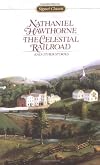
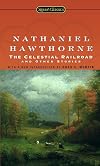
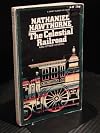
The Celestial Railroad and Other Stories
by Nathaniel Hawthorne
On This Page
Description
Of Nathaniel Hawthorne's insight into the Puritan's simultaneous need for fulfillment and self-destruction, D. H. Lawrence wrote, "Nathaniel knew disagreeable things in his inner soul. He was careful to send them out in disguise." By means of artfully crafted and compelling tales, Hawthorne explored the destinies and concerns of early American settlers and citizens. In several of the stories in this collection, characters who hold themselves apart from their fellow man fall prey to the show more corroding desires of lust for perfection. Then they unwittingly commit evils--against themselves and others--in the name of pride. Edgar Allan Poe noted of Hawthorne's writing: "Every word tells, and there is not a word which does not tell." show lessTags
Recommendations




















Member Reviews
Hawthorne's allegorical satire on the sad state of those who profess Christ, but are not willing to suffer for His name's sake, presupposes a knowledge of John Bunyan's "Pilgrim's Progress". Even the names of his characters are reminiscent of Bunyan's characters. It is an worthwhile read, but, sadly, all too true, even today.
Hawthorne is so very Puritan, but he is also a very interesting writer. I would say that I like his writing, but do not really understand the cultural context he is coming from. Still, 'twas fun.
Wonderful anthology in Hawthorne's easy to read style that deals with moral issues and the surreal.
Ratings
Members
- Recently Added By
Lists

Favourite 19th century fiction
257 works; 62 members
Author Information

875+ Works 79,281 Members
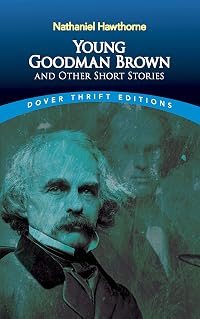
Nathaniel Hawthorne was born on July 4, 1804 in Salem, Massachusetts. When he was four years old, his father died. Years later, with financial help from his maternal relatives who recognized his literary talent, Hawthorne was able to enroll in Bowdoin College. Among his classmates were the important literary and political figures Horatio Bridge, show more Henry Wadsworth Longfellow, and Franklin Pierce. These friends supplied Hawthorne with employment during the early years after graduation while Hawthorne was still establishing himself as a legitimate author. Hawthorne's first novel, Fanshawe, which he self-published in 1828, wasn't quite the success that he had hoped it would be. Not willing to give up, he began writing stories for Twice-Told Tales. These stories established Hawthorne as a leading writer. In 1842, Hawthorne moved to Concord, Massachusetts, where he wrote a number of tales, including "Rappaccini's Daughter" and "Young Goodman Brown," that were later published as Mosses from an Old Manse. The overall theme of Hawthorne's novels was a deep concern with ethical problems of sin, punishment, and atonement. No one novel demonstrated that more vividly than The Scarlet Letter. This tale about the adulterous Puritan Hester Prynne is regarded as Hawthorne's best work and is a classic of American literature. Other famous novels written by Hawthorne include The House of Seven Gables and The Blithedale Romance. In 1852, Hawthorne wrote a campaign biography of his college friend Franklin Pierce. After Pierce was elected as President of the United States, he rewarded Hawthorne with the Consulship at Liverpool, England. Hawthorne died in his sleep on May 19, 1864, while on a trip with Franklin Pierce. (Bowker Author Biography) show less
All Editions
Some Editions
Work Relationships
Common Knowledge
- Original publication date
- 1832 - 1851
Classifications
Statistics
- Members
- 556
- Popularity
- 53,417
- Reviews
- 3
- Rating
- (3.54)
- Languages
- English
- Media
- Paper, Ebook
- ISBNs
- 18
- ASINs
- 11