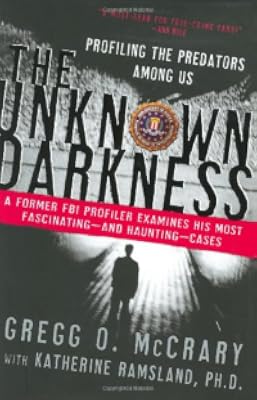
The Unknown Darkness: Profiling the Predators Among Us
by Gregg O. McCrary
On This Page
Description
A former Supervisory Special Agent for the FBI discusses the harrowing competition between the agency and the individuals they seek to capture, describing in detail ten cases in which he explores the strengths and pitfalls of modern criminal investigation. Reprint.Tags
Recommendations
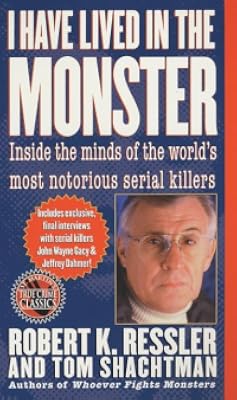
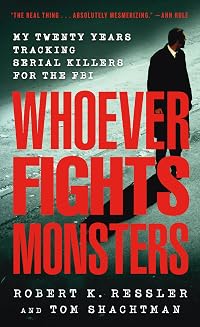
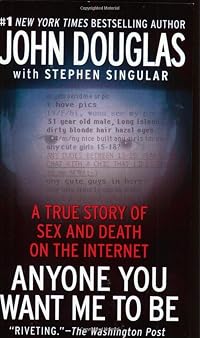
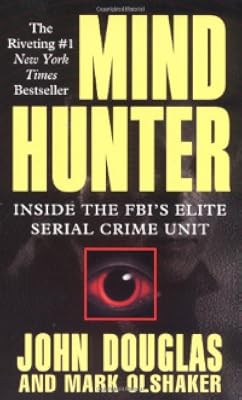


Member Reviews
Gregg McCrary was one of the first agents assigned to the FBI's Behavioral Science Unit and he helped form what it is today. As a profiler he was involved in some well known cases. He assisted with the capture of several sexual sadists and serial killers but his experience ran to many kinds of criminals. He studied a forger turned bomber and was part of the negotiating team at Waco. He also testified regarding Marilyn Sheppard's murder when her son, Sam, sued the state of Ohio for his father's incarceration. The case I found totally captivating was that of Jack Unterweger, an Austrian, who not only perpetrated the murders of almost a dozen women, but also covered the crimes for the media!
McCrary believes there is no possibility of show more reforming a pyschopath and I particularly enjoyed his explanation of this belief: "What if you discovered that a cake had no sugar in it? Could you rub sugar into it to make it edible? No. What if you found that it had motor oil baked into it? Could you squeeze it out to make the cake edible? Obviously not. The only question is what to do with the cake."
McCrary goes into great detail with his frustration at the situation in Waco. Not only with the trouble of multiple agencies working together (or not, as was the case) but also difficulties with the public. As he recalls "Several people who thought they were God and wanted to go in to set Koresh straight."
I don't know if the style is largely from McCrary or his co-author, Ramsland, but the book is very readable. A fascinating look into the mind of man who looks into the minds of 'the predators among us'. Fans of true crime and psychology will enjoy it. show less
McCrary believes there is no possibility of show more reforming a pyschopath and I particularly enjoyed his explanation of this belief: "What if you discovered that a cake had no sugar in it? Could you rub sugar into it to make it edible? No. What if you found that it had motor oil baked into it? Could you squeeze it out to make the cake edible? Obviously not. The only question is what to do with the cake."
McCrary goes into great detail with his frustration at the situation in Waco. Not only with the trouble of multiple agencies working together (or not, as was the case) but also difficulties with the public. As he recalls "Several people who thought they were God and wanted to go in to set Koresh straight."
I don't know if the style is largely from McCrary or his co-author, Ramsland, but the book is very readable. A fascinating look into the mind of man who looks into the minds of 'the predators among us'. Fans of true crime and psychology will enjoy it. show less
This is a pretty solid book. McCrary worked some very interesting cases and not only does he have a lot of fascinating things to say about them, but he's also able to make his work approachable. It's easy to understand how he worked each case and reached his conclusions. He's also good at keeping his ego in check: some of his colleagues are prone to breaking off their books to take potshots at other agents or prop up their own egos. McCrary takes a balanced view, and doesn't hesitate to admit when he and the FBI did something wrong. I was particularly impressed with the chapter on Waco, and how he approached his analysis of it afterward.
I did have one huge problem with the book, and it made me cut my rating heavily. He talks about show more profiling the Bernardo/Holmolka killings, and the discovery that they'd videotaped themselves torturing their victims. What he writes about the tapes is detailed to the point of feeling exploitative--there are whole passages where he gives a play-by-play of exactly what was on the tapes and every act these poor girls suffered. Frankly, I'm not sure why he did this when a summary would have been more than enough. The reader doesn't need graphic insight into the last hours of Leslie Mahaffy, Kristen French, and Tammy Homolka, and providing it felt like yet another violation. show less
I did have one huge problem with the book, and it made me cut my rating heavily. He talks about show more profiling the Bernardo/Holmolka killings, and the discovery that they'd videotaped themselves torturing their victims. What he writes about the tapes is detailed to the point of feeling exploitative--there are whole passages where he gives a play-by-play of exactly what was on the tapes and every act these poor girls suffered. Frankly, I'm not sure why he did this when a summary would have been more than enough. The reader doesn't need graphic insight into the last hours of Leslie Mahaffy, Kristen French, and Tammy Homolka, and providing it felt like yet another violation. show less
Interesting account of profiling in the US from one of the top FBI profilers.
A creepy true crime biography from the FBI Profiler who's spawned countless TV shows. McCrary doesn't mince words and tells all in graphic details, some of the work he's done over his career as an FBI profiler. Could probably have used a stronger writer helping him clean up his stories, but regardless the content shown thru.
A great true-crime book that doesn't deal with just forensics! My home-town isn't too far from Dryden, NY and I'd never heard of the Harris family's murder!
Ratings
Members
- Recently Added By
Author Information
1 Work 141 Members
Common Knowledge
- Quotations
- Several people who thought they were God and wanted to go in to set Koresh straight.
What if you discovered that a cake had no sugar in it? Could you rub sugar into it to make it edible? No. What if you found that it had motor oil baked into it? Could you squeeze it out to make the cake edible? Obviously not.... (show all) The only question is what to do with the cake.
Classifications
- Genres
- Nonfiction, General Nonfiction, Politics and Government
- DDC/MDS
- 363.25 — Society, government, & culture Social problems and social services Public Safety - Police, Crime Investigation Police services Criminal investigation & forensics
- LCC
- HV6505 .M39 — Social sciences Social pathology. Social and public welfare. Criminology Social pathology. Social and public welfare. Criminology Crimes and offenses
- BISAC
Statistics
- Members
- 141
- Popularity
- 232,608
- Reviews
- 5
- Rating
- (3.89)
- Languages
- English
- Media
- Paper
- ISBNs
- 6
- ASINs
- 2