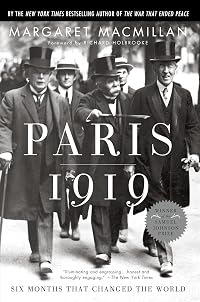
Paris 1919: Six Months That Changed the World
by Margaret MacMillan
On This Page
Description
Between January and July 1919, after "the war to end all wars," men and women from around the world converged on Paris to shape the peace. Center stage was an American president, Woodrow Wilson, who with his Fourteen Points seemed to promise to so many people the fulfillment of their dreams. Stern, intransigent, impatient when it came to security concerns and idealistic in his dream of a League of Nations that would resolve all future conflict peacefully, Wilson is only one of the characters show more who fill the pages of this book. David Lloyd George, the British prime minister, brought Winston Churchill and John Maynard Keynes. Lawrence of Arabia joined the Arab delegation. Ho Chi Minh, a kitchen assistant at the Ritz, submitted a petition for an independent Vietnam. For six months, Paris was effectively the center of the world as the peacemakers carved up bankrupt empires and created new countries. This book brings to life the personalities, ideals, and prejudices of the men who shaped the settlement. They pushed Russia to the sidelines, alienated China, and dismissed the Arabs. They struggled with the problems of Kosovo, of the Kurds, and of a homeland for the Jews. The peacemakers, so it has been said, failed dismally; above all they failed to prevent another war. Margaret MacMillan argues that they have unfairly been made the scapegoats for the mistakes of those who came later. She refutes received ideas about the path from Versailles to World War II and debunks the widely accepted notion that reparations imposed on the Germans were in large part responsible for the Second World War. show lessTags
Recommendations







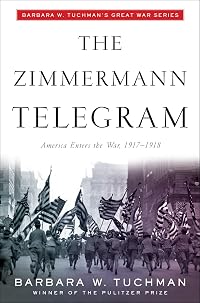

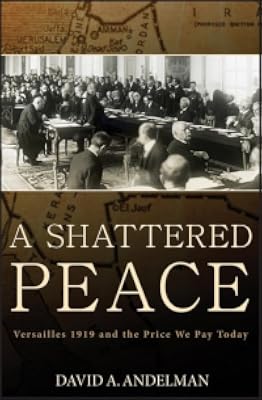
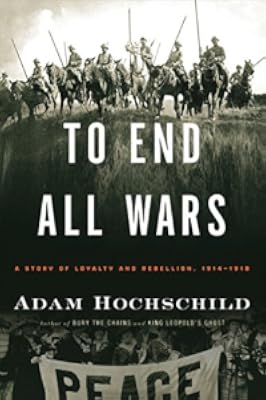
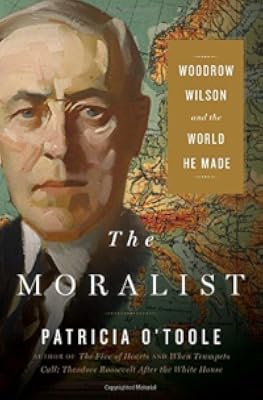
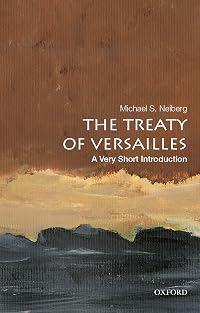


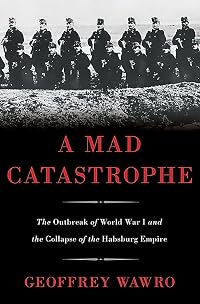
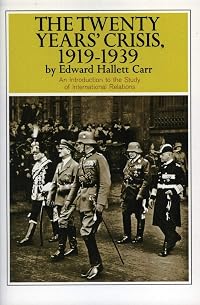

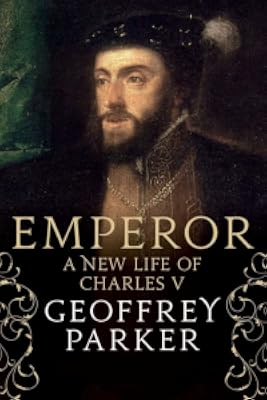
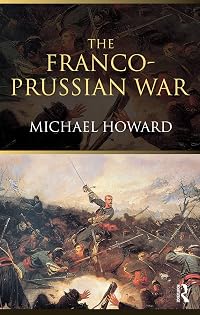
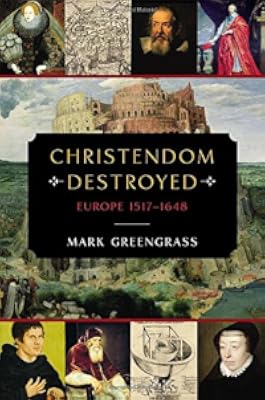
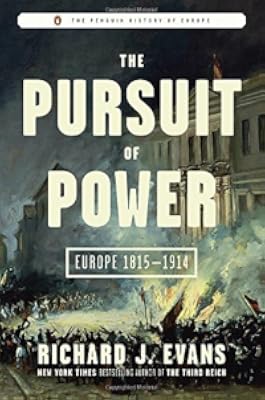

Member Recommendations

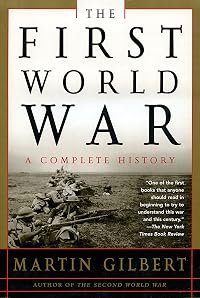
sushidog The micro view of Canadians in the First World War vs. what it all meant.
Scotland The early chapters of this book are focused on Queen Marie's appearance at the Paris Peace Conference, including descriptions of interviews with all the major players. Very inciteful perspective.
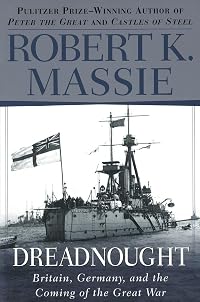
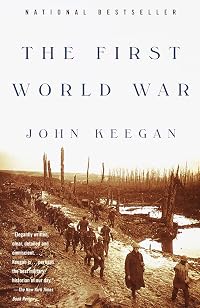
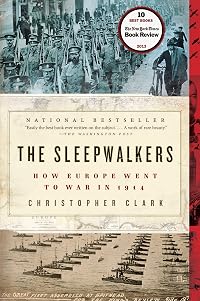
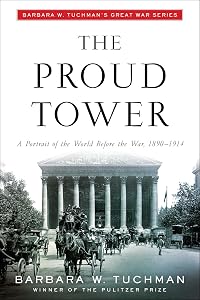
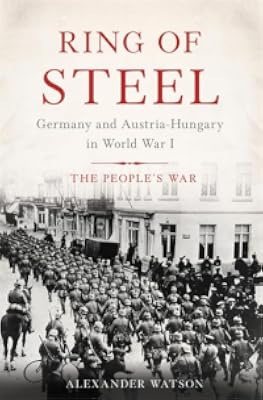
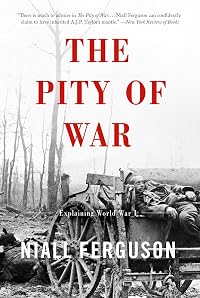
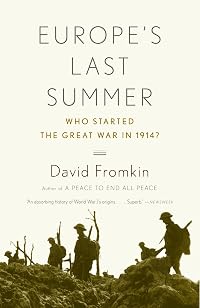
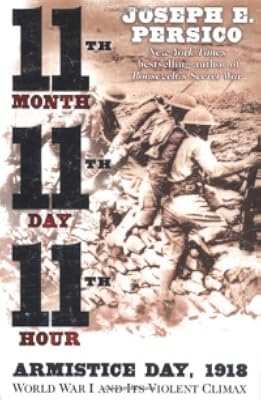
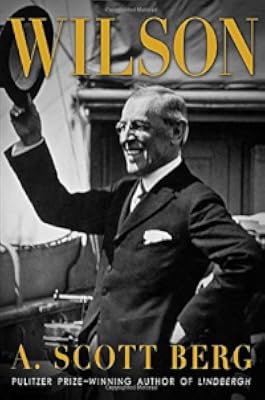
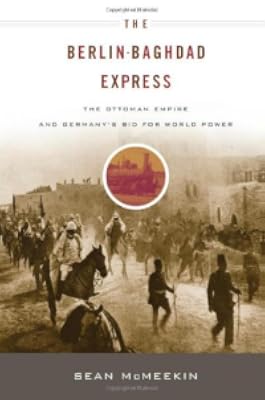
Cecrow Strong book ends, both by good writers, for the mistakes leading into and resulting from WWI.
Member Reviews
As someone who thought I understood the basics of the Paris Peace Conference of 1919, how Europe and the Middle East were divided, and its ramifications leading to the Second World War, I found myself surprised at how much I didn't know about the people, the process, and the problems of making the peace. It was quite humbling. I felt MacMillan did an excellent job of providing just the right amount of background information, and blended the before, during, and after accounts of the period to clearly explain why the peace treaty was created as it was, the roles of the key players, the leadup to Germany's subsequent militarization, and the origins of the map of the world as we find it today.
A really wonderful book that goes through each of the "problems" that faced the Allies when they convened in Paris at the end of WW I. It brings the characters alive (Lloyd George the sly, Woodrow Wilson the idealist and Clemenceau the grizzly veteran) and does a great job of illustrating the impossible job that they had in front of them.
Those six months were pregnant with possibilities to guide Europe and the rest of the world away from the mess of hyper-nationalism, secret agreements, naval race and a scramble for Africa that had caused the world to walk into a pointless war that apparently none of them wanted. And to their credit, the big 3 seem to have genuinely grappled with this possibility. Ultimately two things doomed them and show more caused the whole shit show to repeat itself with more advanced killing machines a mere 20 years later - 1) the inability of Britain and France (and to a lesser extent, Italy) to not think in imperialistic terms and 2) their supercilious assumption that they can draw imaginary lines on maps where the now vanished Austria-Hungary and Ottoman empires were and people would automatically respect those lines. Despite their "noble" intentions, these two forces kept pulling the allies back into the same sordid mess of secret agreements and shameless land-grabs (couched in new language as "mandates") that had been a primary impetus for the Great War. The book goes through each of the impacted regions in turn giving a very convincing account of the enormous complexities facing the big 3 along every step of the way. As one can imagine, there is a lot of local politics that the reader has to wade through but to the book's credit, it sustains its pace very well.
Almost every single region created or substantially modified by the Paris conference has been a source of violence and bloodshed over the past 100 years (Germany/Austria in WW II, the Balkans during the Cold War and in the 1990s and the Middle East even today). The League of Nations, supposedly the crown jewel of the peace conference that would make war obsolete, died a still birth. Germany was left fuming by the perceived harshness of the terms and by being made to assume sole responsibility for the war making the country a powder keg for the Nazis to exploit. The betrayal of China to satisfy Japanese imperialist ambitions turned China away from democracy towards Soviet Russia and communism.
Despite these damning records, MacMillan argues convincingly that it wasn't all the fault of the peacemakers - they weren't always Machiavellian. They really tried as best as they knew how (within the parameters of their 19th century world-view with all its attendant racist and imperialistic assumptions). It just wasn't good enough. show less
Those six months were pregnant with possibilities to guide Europe and the rest of the world away from the mess of hyper-nationalism, secret agreements, naval race and a scramble for Africa that had caused the world to walk into a pointless war that apparently none of them wanted. And to their credit, the big 3 seem to have genuinely grappled with this possibility. Ultimately two things doomed them and show more caused the whole shit show to repeat itself with more advanced killing machines a mere 20 years later - 1) the inability of Britain and France (and to a lesser extent, Italy) to not think in imperialistic terms and 2) their supercilious assumption that they can draw imaginary lines on maps where the now vanished Austria-Hungary and Ottoman empires were and people would automatically respect those lines. Despite their "noble" intentions, these two forces kept pulling the allies back into the same sordid mess of secret agreements and shameless land-grabs (couched in new language as "mandates") that had been a primary impetus for the Great War. The book goes through each of the impacted regions in turn giving a very convincing account of the enormous complexities facing the big 3 along every step of the way. As one can imagine, there is a lot of local politics that the reader has to wade through but to the book's credit, it sustains its pace very well.
Almost every single region created or substantially modified by the Paris conference has been a source of violence and bloodshed over the past 100 years (Germany/Austria in WW II, the Balkans during the Cold War and in the 1990s and the Middle East even today). The League of Nations, supposedly the crown jewel of the peace conference that would make war obsolete, died a still birth. Germany was left fuming by the perceived harshness of the terms and by being made to assume sole responsibility for the war making the country a powder keg for the Nazis to exploit. The betrayal of China to satisfy Japanese imperialist ambitions turned China away from democracy towards Soviet Russia and communism.
Despite these damning records, MacMillan argues convincingly that it wasn't all the fault of the peacemakers - they weren't always Machiavellian. They really tried as best as they knew how (within the parameters of their 19th century world-view with all its attendant racist and imperialistic assumptions). It just wasn't good enough. show less
“We can learn from history, but we can also deceive ourselves when we selectively take evidence from the past to justify what we have already made up our minds to do.” ― Margaret MacMillan
It was 1919 and the Great War had ended the previous year when, from January to June, the leaders of Britain, France, Italy and the United States met in Paris to decide the outcome of the war they had just won against the Central Powers. This would be difficult, for the Great War of 1914-18 had seen the disappearance of four old multinational empires: the Russian, Austro-Hungarian, German and Ottoman. The fate of people from places as disparate as Strasburg to Baghdad--hundreds of millions--was to be decided. What should this peace conference show more consider? A Congress of nations had convened in Vienna in 1815 to reorder Europe after the defeat of Napoleon , but confined itself, like others before it, to adjusting the fates of dynasties and states. The peacemakers of 1919 had also paid attention to principles, promises, public opinion and a fast-changing and unstable political scene. It was a current question whether much of central Europe would follow the direction of the Russian revolution.
The making of the Versailles treaty had early on been written about by two young English participants in the Paris negotiations, who wrote their own accounts of the events. In ''Peacemaking 1919,'' Harold Nicolson sketched caustic vignettes of elderly statesmen adrift in a world they couldn't comprehend. And John Maynard Keynes, in ''The Economic Consequences of the Peace,'' demolished the credibility of the settlement itself, eviscerated the case for war reparations and predicted the disaster that must follow. These accounts are still worth reading.
Margaret MacMillan with her ''Paris 1919'' has written a very good history of the negotiations, full of detail and fairly comprehensive. While the organization of the book is sometimes confusing, for example discussing the 1919 creation of Yugoslavia without first explaining what happened in the Balkan wars of 1912-13. And the author's decision to tell the story of the breakup of the Hapsburg empire after her account of the little states that succeeded may confuse those not already familiar with that story. But the many national narratives were well told and constitute parts of the book that I enjoyed the most.
MacMillan has a good focus on the characterization of individuals, both leading figures like Woodrow Wilson, David Lloyd George and Georges Clemenceau, and peripheral actors like Queen Marie of Romania and many other hapless supplicants from Beijing to Budapest. Wilson is treated fairly and realistically. Despite his good intentions, perhaps because of them, he was widely viewed as petulant, petty and vain. Lloyd George and Clemenceau, while growing tolerant of his obsessions never got used to his peculiarly American brand of idealism. Wilson, just as would prove to be the case upon his return to face the Senate, was unable to adapt and compromise, demurring the requisite political trading that might achieve some of his goals. His obsession with achieving his new League of Nations was not shared by the many Europeans.
Nevertheless, the American president was the key figure in Paris. The French were understandably concerned with keeping Germany down for the indefinite future. The Italians wanted the territorial pound of flesh they had been secretly promised in return for switching sides in 1915. The British sought above all to stabilize the periphery of Europe and protect access to their imperial possessions farther south and east. Only the Americans had a Big Idea -- self-determination. The peoples and nations now released from imperial captivity were each to receive their own spaces, assigned after careful specialist attention to history, geography, language and other relevant considerations. Poles, Czechs, Slovaks, Slovenes, Serbs, Latvians, Lithuanians, Estonians, Romanians, Bulgarians, Italians, Greeks, Jews, Arabs, Armenians, even Kurds were to have a place in the sun. Only Germans, and to a lesser extent Turks, were not free to determine where and with whom they would live -- the price of defeat.
The unintended consequences of this "Big Idea" are still haunting the world today almost a century later. The idea of self-determination was a chimera leading to a disastrous reality. As Robert Lansing, Wilson's secretary of state, predicted: ''It will raise hopes which can never be realized. It will, I fear, cost thousands of lives. In the end it is bound to be discredited, to be called the dream of an idealist who failed to realize the danger until it was too late to check those who attempt to put the principle into force.'' He was right. The peoples of central Europe and the old Ottoman empire could not be divided into conveniently distinct communities. They were mixed up together then and we have seen the results in the Balkans at the end of the twentieth century and are seeing a continuation of sorts both in the Middle East and the old Soviet Empire today. show less
It was 1919 and the Great War had ended the previous year when, from January to June, the leaders of Britain, France, Italy and the United States met in Paris to decide the outcome of the war they had just won against the Central Powers. This would be difficult, for the Great War of 1914-18 had seen the disappearance of four old multinational empires: the Russian, Austro-Hungarian, German and Ottoman. The fate of people from places as disparate as Strasburg to Baghdad--hundreds of millions--was to be decided. What should this peace conference show more consider? A Congress of nations had convened in Vienna in 1815 to reorder Europe after the defeat of Napoleon , but confined itself, like others before it, to adjusting the fates of dynasties and states. The peacemakers of 1919 had also paid attention to principles, promises, public opinion and a fast-changing and unstable political scene. It was a current question whether much of central Europe would follow the direction of the Russian revolution.
The making of the Versailles treaty had early on been written about by two young English participants in the Paris negotiations, who wrote their own accounts of the events. In ''Peacemaking 1919,'' Harold Nicolson sketched caustic vignettes of elderly statesmen adrift in a world they couldn't comprehend. And John Maynard Keynes, in ''The Economic Consequences of the Peace,'' demolished the credibility of the settlement itself, eviscerated the case for war reparations and predicted the disaster that must follow. These accounts are still worth reading.
Margaret MacMillan with her ''Paris 1919'' has written a very good history of the negotiations, full of detail and fairly comprehensive. While the organization of the book is sometimes confusing, for example discussing the 1919 creation of Yugoslavia without first explaining what happened in the Balkan wars of 1912-13. And the author's decision to tell the story of the breakup of the Hapsburg empire after her account of the little states that succeeded may confuse those not already familiar with that story. But the many national narratives were well told and constitute parts of the book that I enjoyed the most.
MacMillan has a good focus on the characterization of individuals, both leading figures like Woodrow Wilson, David Lloyd George and Georges Clemenceau, and peripheral actors like Queen Marie of Romania and many other hapless supplicants from Beijing to Budapest. Wilson is treated fairly and realistically. Despite his good intentions, perhaps because of them, he was widely viewed as petulant, petty and vain. Lloyd George and Clemenceau, while growing tolerant of his obsessions never got used to his peculiarly American brand of idealism. Wilson, just as would prove to be the case upon his return to face the Senate, was unable to adapt and compromise, demurring the requisite political trading that might achieve some of his goals. His obsession with achieving his new League of Nations was not shared by the many Europeans.
Nevertheless, the American president was the key figure in Paris. The French were understandably concerned with keeping Germany down for the indefinite future. The Italians wanted the territorial pound of flesh they had been secretly promised in return for switching sides in 1915. The British sought above all to stabilize the periphery of Europe and protect access to their imperial possessions farther south and east. Only the Americans had a Big Idea -- self-determination. The peoples and nations now released from imperial captivity were each to receive their own spaces, assigned after careful specialist attention to history, geography, language and other relevant considerations. Poles, Czechs, Slovaks, Slovenes, Serbs, Latvians, Lithuanians, Estonians, Romanians, Bulgarians, Italians, Greeks, Jews, Arabs, Armenians, even Kurds were to have a place in the sun. Only Germans, and to a lesser extent Turks, were not free to determine where and with whom they would live -- the price of defeat.
The unintended consequences of this "Big Idea" are still haunting the world today almost a century later. The idea of self-determination was a chimera leading to a disastrous reality. As Robert Lansing, Wilson's secretary of state, predicted: ''It will raise hopes which can never be realized. It will, I fear, cost thousands of lives. In the end it is bound to be discredited, to be called the dream of an idealist who failed to realize the danger until it was too late to check those who attempt to put the principle into force.'' He was right. The peoples of central Europe and the old Ottoman empire could not be divided into conveniently distinct communities. They were mixed up together then and we have seen the results in the Balkans at the end of the twentieth century and are seeing a continuation of sorts both in the Middle East and the old Soviet Empire today. show less
Many books promise you that the event they cover "changed the world" but "Paris 1919: six months that changed the world" is that rare beast that actually lives up to its claim.
In the great tradition of wars, the aftermath of the Great War saw the victors converge on Paris in 1919 to carve up the spoils. It was a cast of thousands; everyone from US President Woodrow Wilson to British PM David Lloyd George (and Winston Churchill) to Ho Chi Minh, Lawrence of Arabia and a group of Korean monks who walked all the way from Korea to Paris only to find that they had missed the conference and so walked back again.
As an Australian, it's a mixed blessing that Australian Prime Minister Billy Hughes plays a part in proceedings as well. While show more Hughes's offsider, former PM Joseph Cook, comes off as a complete dill, Hughes manages to annoy Wilson to distraction, tell the Japanese that they will never be the equal of the white man (in retrospect, probably not Australia's best moment on the international stage) and gain control of an awful lot of colonies through a mixture of obfuscation and flat out lying.
Just as important are the people who don't turn up. The Montenegrins are absent and they become part of Yugoslavia (against their will) and the Kurds, apparently invited, are absent and, nearly a century later they are still the world's largest ethnic group without a state to call their own.
A great read. show less
In the great tradition of wars, the aftermath of the Great War saw the victors converge on Paris in 1919 to carve up the spoils. It was a cast of thousands; everyone from US President Woodrow Wilson to British PM David Lloyd George (and Winston Churchill) to Ho Chi Minh, Lawrence of Arabia and a group of Korean monks who walked all the way from Korea to Paris only to find that they had missed the conference and so walked back again.
As an Australian, it's a mixed blessing that Australian Prime Minister Billy Hughes plays a part in proceedings as well. While show more Hughes's offsider, former PM Joseph Cook, comes off as a complete dill, Hughes manages to annoy Wilson to distraction, tell the Japanese that they will never be the equal of the white man (in retrospect, probably not Australia's best moment on the international stage) and gain control of an awful lot of colonies through a mixture of obfuscation and flat out lying.
Just as important are the people who don't turn up. The Montenegrins are absent and they become part of Yugoslavia (against their will) and the Kurds, apparently invited, are absent and, nearly a century later they are still the world's largest ethnic group without a state to call their own.
A great read. show less
David Lloyd George was the author's great-grandfather. Similar to Barbara Tuchman, she is very familiar with the foibles of the ruling class. Her character vignettes are a joy to read. She truly manages to evoke the flair of the period and the city. Her book provides both a good account of the peace negotiations and a summary of the resolutions for the discussed territories. The end of the First World War saw the collapse of the Eastern European empires of Germany, Austria, Russia and the Ottoman Empire. MacMillan highlights the American and French failure in creating viable and ethnically sound units. In my opinion, she is too soft on the often pernicious British influence (especially in the Middle East).
The peace negotiations were show more doomed from the start, as the German acceptance of a preliminary peace had not resulted in an occupation of the defeated's territory. Thus, the odd situation that the Allies could not really exert pressure upon the Germans. On the other hand, the Allies wanted to transfer the cost of this senseless war upon the shoulders of those least able to bear them. The unwillingness of the US establishment to accept international responsibilities and to refinance and net the war debts of its Allies was the underlying cause of the treaty's failure. The excessive French demands were only secondary in nature. As Keynes had shown, Germany could have paid a fairly calculated war debt if given economic aid at the same time. Given that for half a year, the world's politicians worked alongside one another in one city, the fruits of its labor were barren. The prize for the worst behaved negotiators clearly goes to the Italians whose ineptitude during the war turned into a gargantuan appetite during the peace negotiations. No wonder that it was the first to fall into fascism.
Highly recommended. show less
The peace negotiations were show more doomed from the start, as the German acceptance of a preliminary peace had not resulted in an occupation of the defeated's territory. Thus, the odd situation that the Allies could not really exert pressure upon the Germans. On the other hand, the Allies wanted to transfer the cost of this senseless war upon the shoulders of those least able to bear them. The unwillingness of the US establishment to accept international responsibilities and to refinance and net the war debts of its Allies was the underlying cause of the treaty's failure. The excessive French demands were only secondary in nature. As Keynes had shown, Germany could have paid a fairly calculated war debt if given economic aid at the same time. Given that for half a year, the world's politicians worked alongside one another in one city, the fruits of its labor were barren. The prize for the worst behaved negotiators clearly goes to the Italians whose ineptitude during the war turned into a gargantuan appetite during the peace negotiations. No wonder that it was the first to fall into fascism.
Highly recommended. show less
Paris 1919 is a terrific book: first class scholarship and analysis blended with human touches that bring the protagonists alive. The drafting of the Versailles Treaty at the end of WWI was a monumental and complex task, but it was one conducted by men who displayed varying strengths, weaknesses, hopes, fears, arrogance, humility (not too much of that in this group!), hates, nationalist fervor, generosity, petulance, hypocrisy, pettiness, honesty, intrigues, manipulations, open-handedness, happiness, disappointments, anger, despair....the whole panoply of emotions that come into play when people are working, sometimes together and sometimes (more often) at cross-purposes, in high stakes games. MacMillan has mined diaries and memoirs, show more biographies and autobiographies. In doing so, she makes the people and the process alive, colourful and immediate almost 100 years after the event.
In her conclusions, Macmillan has no time for those blame the trials of the 1920s and 1930s, much less the advent of WWII, on the Versailles Treaty. To do so, she argues, is to "ignore the actions of everyone–political leaders, diplomats, soldiers, ordinary voters–for twenty years between 1919 and 1939". Hitler exploited the Treaty as a "godsend for his propaganda". Regardless of how the Treaty might have been written, Hitler "wanted more: the destruction of Poland, control of Czechoslovakia, above all conquest of the Soviet Union. He would have demanded room for the German people to expand and the destruction of the their enemies, whether Jews or Bolsheviks. There was nothing in the Treaty of Versailles about that."
Macmillan's final words:
"The peacemakers of 1919 made mistakes, of course. By their offhand treatment of the non-European world, they stirred up resentments for which the West is still paying today. They took pains over the borders in Europe, even if they did not draw them to everyone's satisfaction, but in Africa they carried on the old practice of handling out territory to suit the imperialist powers. In the Middle East, they threw together peoples, in Iraq most notably who still have not managed to cohere into a civil society. If they could have done better, they certainly could have done much worse. They tried, even cynical old Clemenceau, to build a better order. They could not foresee the future and they certainly could not control it. That was up to their successors. When war came in 1939, it was the result of twenty years of decisions taken or not taken, not of arrangements made in 1919. ...The peacemakers...grappled with huge and difficult questions . How can the irrational passions of nationalism or religion be contained before they do more damage? How can we outlaw war? We are still asking those questions." show less
In her conclusions, Macmillan has no time for those blame the trials of the 1920s and 1930s, much less the advent of WWII, on the Versailles Treaty. To do so, she argues, is to "ignore the actions of everyone–political leaders, diplomats, soldiers, ordinary voters–for twenty years between 1919 and 1939". Hitler exploited the Treaty as a "godsend for his propaganda". Regardless of how the Treaty might have been written, Hitler "wanted more: the destruction of Poland, control of Czechoslovakia, above all conquest of the Soviet Union. He would have demanded room for the German people to expand and the destruction of the their enemies, whether Jews or Bolsheviks. There was nothing in the Treaty of Versailles about that."
Macmillan's final words:
"The peacemakers of 1919 made mistakes, of course. By their offhand treatment of the non-European world, they stirred up resentments for which the West is still paying today. They took pains over the borders in Europe, even if they did not draw them to everyone's satisfaction, but in Africa they carried on the old practice of handling out territory to suit the imperialist powers. In the Middle East, they threw together peoples, in Iraq most notably who still have not managed to cohere into a civil society. If they could have done better, they certainly could have done much worse. They tried, even cynical old Clemenceau, to build a better order. They could not foresee the future and they certainly could not control it. That was up to their successors. When war came in 1939, it was the result of twenty years of decisions taken or not taken, not of arrangements made in 1919. ...The peacemakers...grappled with huge and difficult questions . How can the irrational passions of nationalism or religion be contained before they do more damage? How can we outlaw war? We are still asking those questions." show less
I rarely give out five stars--that's deliberate--but this is so illuminating on a complex topic without being dry, I think it deserves full marks. The book treats of "six months that changed the world"--the Paris Peace Conference that produced the Treaty of Versailles. I was taught in high school that the vindictive terms of that treaty were ruinous to Germany and at the root of Hitler's rise and the outbreak of World War II. It was a view popularized by John Maynard Keynes (who was involved in the peace process--as was Winston Churchill. There were some interesting and unexpected players in this story.) MacMillan makes the case it was by no means so simple. That among other things, that especially since the terms were never really show more enforced, you can't really blame the treaty for what would happen over the next decades. I think what really astonished me about the peace conference though was just how many fingers were in how many pies. Yes, some developments such as establishment of Poland, Czechoslovakia and Yugoslavia were fait accomplis by the time the conference started, but it was largely this conference, and especially the "Big Three" of France, Britain, and the United States who drew the borders.
And not just of Europe, but in Africa and the Middle East as well, and we're still dealing with the messy after effects. To take one example, Iraq was created from three different provinces of the recently defunct Ottoman Empire and drawn to suit colonial ambitions of the British and French--not along historical lines or reasons of ethnic cohesion. Roots not just of World War II, but Greek/Turkish, Jewish/Arab, Bosnia/Serb, Chinese/Japanese conflicts can be traced back here. It's all very complicated, and it's a very, very long book (around 600 pages) but part of what makes it digestible is that MacMillan breaks it up regionally, following say the personalities of the newly emerging Yugoslavia and following up on its ultimate fate and how it was affected by those six months in 1919.
I think it also escapes being dry due to how well drawn are the various personalities involved. MacMillan deals with many of the leaders from the newly emerging states, but her primary focus is on the leaders of the Big Three: Woodrow Wilson of the United States, Clemenceau of France and Lloyd George of Britain. Wilson seemed from the portrait painted here a dangerous mix of naive and stubborn. His precious League of Nations became an idee fixe that overrode all other issues. If there was a problem with the deals emerging, it seems Wilson would wave it away with the idea the League of Nations would fix it. At the same time, his stubborn inflexibility, his dogmatism and partisanship doomed the acceptance of the League and the Treaty back in the United States. And those very ideals, particularly "self-determination" as enunciated in his 14 Points, raised unrealistic expectations and caused bitter disappointment. Clemenceau comes across as vengeful and vindictive towards the Germans. At the same time, given what MacMillan detailed of France's losses in the war, and its geography that didn't put a channel, let alone an ocean, between it and Germany, Clemenceau's determination to keep Germany weak is understandable. I got less of a fix on Lloyd George. Some called him "vacillating" and "unprincipled" according to MacMillan. He seemed the opposite of Wilson--much more pragmatic. But without the kind of guiding principles or clear goals of Wilson or Clemenceau, he did seem more indecisive. He seemed all over the map--oftentimes quite literally.
I think there's really no more fascinating time than the outbreak of World War I and it's immediate aftermath. I can't think of a period of more stark, abrupt change. The end of the war marks the real end of the 19th century, whatever the dates. Visual and performing arts, literature, music made radical breaks--you can even see it in modes of dress. MacMillan illuminates an important part of what shaped that era. show less
And not just of Europe, but in Africa and the Middle East as well, and we're still dealing with the messy after effects. To take one example, Iraq was created from three different provinces of the recently defunct Ottoman Empire and drawn to suit colonial ambitions of the British and French--not along historical lines or reasons of ethnic cohesion. Roots not just of World War II, but Greek/Turkish, Jewish/Arab, Bosnia/Serb, Chinese/Japanese conflicts can be traced back here. It's all very complicated, and it's a very, very long book (around 600 pages) but part of what makes it digestible is that MacMillan breaks it up regionally, following say the personalities of the newly emerging Yugoslavia and following up on its ultimate fate and how it was affected by those six months in 1919.
I think it also escapes being dry due to how well drawn are the various personalities involved. MacMillan deals with many of the leaders from the newly emerging states, but her primary focus is on the leaders of the Big Three: Woodrow Wilson of the United States, Clemenceau of France and Lloyd George of Britain. Wilson seemed from the portrait painted here a dangerous mix of naive and stubborn. His precious League of Nations became an idee fixe that overrode all other issues. If there was a problem with the deals emerging, it seems Wilson would wave it away with the idea the League of Nations would fix it. At the same time, his stubborn inflexibility, his dogmatism and partisanship doomed the acceptance of the League and the Treaty back in the United States. And those very ideals, particularly "self-determination" as enunciated in his 14 Points, raised unrealistic expectations and caused bitter disappointment. Clemenceau comes across as vengeful and vindictive towards the Germans. At the same time, given what MacMillan detailed of France's losses in the war, and its geography that didn't put a channel, let alone an ocean, between it and Germany, Clemenceau's determination to keep Germany weak is understandable. I got less of a fix on Lloyd George. Some called him "vacillating" and "unprincipled" according to MacMillan. He seemed the opposite of Wilson--much more pragmatic. But without the kind of guiding principles or clear goals of Wilson or Clemenceau, he did seem more indecisive. He seemed all over the map--oftentimes quite literally.
I think there's really no more fascinating time than the outbreak of World War I and it's immediate aftermath. I can't think of a period of more stark, abrupt change. The end of the war marks the real end of the 19th century, whatever the dates. Visual and performing arts, literature, music made radical breaks--you can even see it in modes of dress. MacMillan illuminates an important part of what shaped that era. show less
Members
- Recently Added By
Lists

BEST BOOKS TO UNDERSTAND XX CENTURY'S HISTORY
63 works; 3 members

World War I books
32 works; 8 members

World War I - fiction & non-fiction
19 works; 4 members

CBC's 100 True Stories
100 works; 6 members
All Things Germany
321 works; 4 members

Ten books that most shaped your view of history
91 works; 12 members

Europe
205 works; 5 members

Female Author
1,234 works; 65 members

Books Referenced by Khalidi's The Hundred Years' War on Palestine
181 works; 1 member

My List
302 works; 1 member
THE WAR ROOM
813 works; 24 members

Books in the Bibliography of The Cold War by John Lewis Gaddis
192 works; 1 member
Author Information

18+ Works 7,532 Members
Margaret MacMillan is the award-winning author of Paris 1919, Nixon and Mao, and Women of the Raj. A past provost of Trinity College at the University of Toronto, MacMillan is the warden of St. Antony's College at Oxford University.
Some Editions
Awards and Honors
Awards
Distinctions
Notable Lists
Series
Belongs to Publisher Series
Work Relationships
Common Knowledge
- Canonical title*
- Les artisans de la paix. Comment Lloyd George, Clemenceau et Wilson ont redessiné la carte du monde
- Original title
- Peacemakers: The Paris Conference of 1919 and Its Attempt to End War
- Alternate titles
- Paris 1919: Six Months That Changed the World
- Original publication date
- 2001
- People/Characters
- Woodrow Wilson; David Lloyd George; Georges Clemenceau; Vittorio Orlando; Hermann Müller; John Maynard Keynes (show all 9); League of Nations; Billy Hughes; Saionji Kinmochi
- Important places
- France; Paris, France; Versailles, Yvelines, Île-de-France, France
- Important events
- World War I; Paris Peace Conference; Treaty of Versailles; Treaty of Saint-Germain-en-Laye; Treaty of Neuilly-sur-Seine; Treaty of Trianon (show all 7); Treaty of Sèvres
- Dedication
- To Eluned and Robert MacMillan
- First words
- For six months in 1919, Paris was the capital of the world.
- Last words
- (Click to show. Warning: May contain spoilers.)We are still asking those questions.
- Blurbers
- Brinkley, Douglas; Jenkins, Roy; Cook, Blanche Wiesen; Massie, Allan
- Original language
- English
- Canonical DDC/MDS
- Anglais (Royaume-Uni)
- Disambiguation notice
- Full title (2001 UK edition): Peacemakers : the Paris Conference of 1919 and its attempt to end war;
(2002 US edition, Random House): ... (show all)://lccn.loc.gov/2002023707" rel="nofollow" target="_new">Paris 1919 : six months that changed the world;
Audio cassette set (2003) has title: Six months that changed the world [sound recording] : the Paris Peace Conference of 1919 / Margaret Macmillan
Richard Holbrook wrote the foreword
*Some information comes from Common Knowledge in other languages. Click "Edit" for more information.
Classifications
Statistics
- Members
- 3,651
- Popularity
- 4,464
- Reviews
- 57
- Rating
- (4.06)
- Languages
- 13 — Czech, Danish, Dutch, English, Estonian, French, German, Greek, Italian, Polish, Portuguese, Spanish, Turkish
- Media
- Paper, Audiobook, Ebook
- ISBNs
- 52
- ASINs
- 15