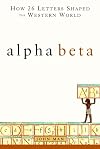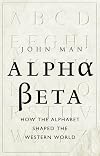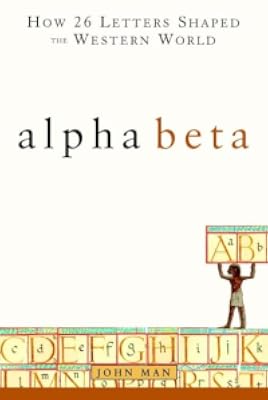
Alpha Beta: How 26 Letters Shaped the Western World
by John Man
On This Page
Description
Praise for Alpha Beta"This book comes at the perfect moment as we rediscover the importance in early reading of cracking the alphabetic code. The story of how that code came into being is a fascinating one, and Man is the ideal writer to tell it." Times Educational Supplement"A richly absorbing exploration, from B.C. to PCs, of the evolution of the most fundamental characters of our cultural history, the alphabet we so much take for granted. John Man writes with a compellingly restless show more curiosity and immediacy. The ever surprising, exotically detailed narrative in his informative book makes it. show lessTags
Recommendations













Member Recommendations
Member Reviews
This is the history of the development of the 26 letters of the English alphabet, and it’s an interesting one, too.
I was expecting something different – maybe more a roll call of each letter, going into its development. Instead, it was more academic, and more enlightening than I had expected.
The book also concerns itself partly with the origins of written language, the move from pictographs to syllables to letters.
And about English, where the letters came from (Etruscans, we think) and where it went from there. He also takes a side trip into what he considers the perfect alphabet, Korean.
This is a short book but lots of fun, and makes me want to read more about the development of the alphabet. Anybody know a good book?
For more of show more my book reviews, go to Ralphsbooks. show less
I was expecting something different – maybe more a roll call of each letter, going into its development. Instead, it was more academic, and more enlightening than I had expected.
The book also concerns itself partly with the origins of written language, the move from pictographs to syllables to letters.
And about English, where the letters came from (Etruscans, we think) and where it went from there. He also takes a side trip into what he considers the perfect alphabet, Korean.
This is a short book but lots of fun, and makes me want to read more about the development of the alphabet. Anybody know a good book?
For more of show more my book reviews, go to Ralphsbooks. show less
Like a lot of books with high-concept titles, this one isn't really true to its billing. It is not a biography or even a history of the alphabet as we English-speakers know it. It's a survey of all the alphabets that have battled it out over the history of humankind -- a broader editorial scope that is challenging to sum up pithily. Certainly there's an emphasis on all things A to Z, but with a lot of time spent on Chinese, Korean, Cyrillic, cuneiform, hieroglyphs, and so forth. (The Korean material is especially interesting.) It's a fascinating, relatively quick read.
One side note: there's a fascinating side bit in here about Thomas A. Sebeok, a retired professor from Bloomington, Illinois, who developed a plan for how to mark for show more thousands of years that a given spot is poisoned by nuclear waste.
Showing that no symbols could do the job, he determines that the best plan, if any, would be to create an "atomic priesthood" whose sole role would be to maintain the continuity of this important information, generation after generation.
Even though I've followed the Long Now organization for many years, I only now have connected Sebeok's plan with the group's projections, and with Neal Stephenson's novel, Anathem, which features a priesthood quite similar to the one described here.
According to this post from the Long Now, Sebeok was not on the minds of the group's founders, even though there are striking parallels in their perspectives:
http://blog.longnow.org/2008/07/16/communication-measures-to-bridge-10-millennia... show less
One side note: there's a fascinating side bit in here about Thomas A. Sebeok, a retired professor from Bloomington, Illinois, who developed a plan for how to mark for show more thousands of years that a given spot is poisoned by nuclear waste.
Showing that no symbols could do the job, he determines that the best plan, if any, would be to create an "atomic priesthood" whose sole role would be to maintain the continuity of this important information, generation after generation.
Even though I've followed the Long Now organization for many years, I only now have connected Sebeok's plan with the group's projections, and with Neal Stephenson's novel, Anathem, which features a priesthood quite similar to the one described here.
According to this post from the Long Now, Sebeok was not on the minds of the group's founders, even though there are striking parallels in their perspectives:
http://blog.longnow.org/2008/07/16/communication-measures-to-bridge-10-millennia... show less
Very well written
There is just so much that we don't know -- cannot know -- about the development of the alphabet. But the evidence that there is, combined with much speculation, begins to create a version of the story.
Alphabet > History
Det är nog inte så få västerlänningar som känner en liten smula skadeglädje när de läser om det kinesiska skriftsystemet, och de ansträngningar dess användare måste utstå för att kunna läsa en dagstidning: ett par tusen olika tecken memorerade. Hur oändligt mycket enklare tycks inte alfabetet vara, med ett fåtal tecken som istället för ord motsvarar ljud. Och visst, alfabetet är en stor arbetsbesparing och underlättar lärandet av skrift, men det har samtidigt en stor nackdel: det måste anpassas till varje nytt språk det skall användas i (eller riktigare: det måste anpassas eller återuppfinnas). Hade ett skriftspråk baserat på ord kommit att dominera världen hade det varit mycket lättare att diskutera med show more andra; oavsett om man tycker att ›häst‹ skall uttalas ›horse‹, ›pferd‹, ›ma‹ eller ›hevonen‹ hade tecknet varit detsamma och man hade kunnat diskutera via ett lingua franca som baserats på skrift, inte tal.
Nåväl, denna svaghet är faktiskt också alfabetets största styrka, för även om man svårligen kan tänka sig ett språk utan till exempel substantiv, så är de grammatiska skillnaderna mellan olika språk stundom så stora så att de omöjliggör gemensamma bildtecken. Så kom till exempel koreanerna att utarbeta ett eget alfabet då de kinesiska tecknen passade deras agglutinerade språk dåligt. Alfabeten kan helt enkelt anpassas till fler olika språk. Om just alfabetenas – främst det latinska – handlar denna bok. Eller kanske snarare säger sig handla, för det är inte så få utvikningar som görs, bland annat till Korea, men även Exodus och Homeros diskuteras. Fokus ligger dock främst på hur alfabetet uppstod och dess tidiga utveckling, fram till dess en sydlig etruskisk stad gör sig fri och börjar bygga upp sin egen maktbas från Tiberns stränder. På det hela taget småtrevlig läsning, med intressanta inblickar i några av östra medelhavets kulturer, även om jag inte tycker jag lärt mig så vansinnigt mycket mer om hur själva alfabetet uppstått. show less
Nåväl, denna svaghet är faktiskt också alfabetets största styrka, för även om man svårligen kan tänka sig ett språk utan till exempel substantiv, så är de grammatiska skillnaderna mellan olika språk stundom så stora så att de omöjliggör gemensamma bildtecken. Så kom till exempel koreanerna att utarbeta ett eget alfabet då de kinesiska tecknen passade deras agglutinerade språk dåligt. Alfabeten kan helt enkelt anpassas till fler olika språk. Om just alfabetenas – främst det latinska – handlar denna bok. Eller kanske snarare säger sig handla, för det är inte så få utvikningar som görs, bland annat till Korea, men även Exodus och Homeros diskuteras. Fokus ligger dock främst på hur alfabetet uppstod och dess tidiga utveckling, fram till dess en sydlig etruskisk stad gör sig fri och börjar bygga upp sin egen maktbas från Tiberns stränder. På det hela taget småtrevlig läsning, med intressanta inblickar i några av östra medelhavets kulturer, även om jag inte tycker jag lärt mig så vansinnigt mycket mer om hur själva alfabetet uppstått. show less
Aug 16, 2008Swedish
Ratings
Members
- Recently Added By
Lists

Works cited in Palimpsest: A History of the Written Word by Matthew Battles
79 works; 2 members
Author Information

61+ Works 4,982 Members
John Man is a historian specializing in the nature of leadership. John's books have been published in over twenty languages around the world and include histories of the Great Wall of China and the Mongolian Empire. He lives in England.
Some Editions
Common Knowledge
- Original publication date
- 2000
Classifications
Statistics
- Members
- 510
- Popularity
- 59,169
- Reviews
- 6
- Rating
- (3.60)
- Languages
- 5 — Dutch, English, Hungarian, Portuguese (Portugal), Swedish
- Media
- Paper, Ebook
- ISBNs
- 11
- ASINs
- 5