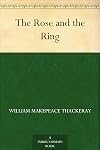
The Rose & the Ring
by William Makepeace Thackeray 
On This Page
Description
Between the kingdoms of Paflagonia and Crim Tartary, there lived a mysterious personage, who was known in those countries as the Fairy Blackstick, from the ebony wand or crutch which she carried; on which she rode to the moon sometimes, or upon other excursions of business or pleasure, and with which she performed her wonders. When she was young, and had been first taught the art of conjuring by the necromancer, her father, she was always practicing her skill, whizzing about from one kingdom show more to another upon her black stick, and conferring her fairy favors upon this Prince or that. show lessTags
Recommendations




















Member Recommendations

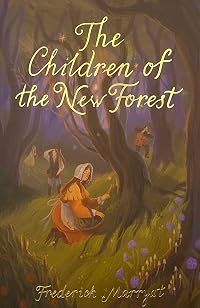
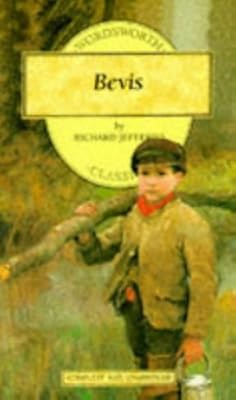
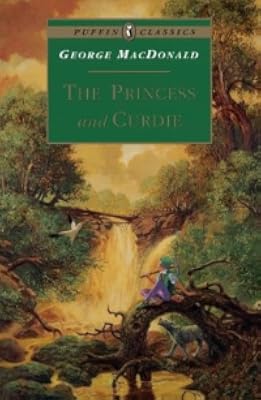
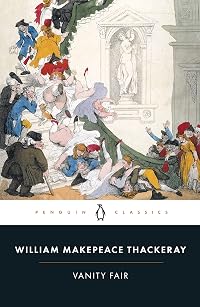
GeraniumCat The Rose and the Ring is a fairy story from much the same period as Chronicles of Pantouflia, and has very much the same tone.
Member Reviews
Sometimes I'm really sad that I'm an adult. When I was a child, I read an excerpt from this fairy tale and loved it. When I was a young adult in library school I saw that I had read only a excerpt and went in search of the entire book. That being in the dark ages before Amazon, it took me several decades to find the book. And, now, alas, after trying twice, I've found it unreadable. The character I really liked only appears in chapter 4. The rest of the characters are drawn to make moral points. The anti-drinking, dancing and card playing messages are ubiquitous. The story is long and it's rather clear how it will come out. So I've passed my copy on to someone younger who can overlook it's faults and still appreciate it. If only I'd had show more the whole book when I was twelve. show less
This is a short, silly story about two kingdoms called Paflagonia and Crim Tartary, and the dealings of the Fairy Blackstick, who decrees that the best thing for two royal babies in these realms is for them to experience a bit of misfortune. There are cases of mistaken identity, wicked characters who receive their just deserts eventually, and some very silly character names. The story is told with arch narration and is amusing enough. I’m not sure how much of it will stick with me, but it’s certainly worth trying out if you like that sort of old-fashioned story.
A delightful fairytale parody. You have the usual suspects, fairy-godmothers, princes and princesses, magic etc. But it doesn't take itself seriously and even critiques the fairytale tropes a bit.
Not much else to say other than it ended on a particularly high note which was great as so many things i read tend to fall down a bit during the finale.
Not much else to say other than it ended on a particularly high note which was great as so many things i read tend to fall down a bit during the finale.
I've given this four stars based on its potential, which I missed out on due to listening to the Librivox audiobook instead of reading the text with illustrations.
I would love to find an illustrated hardcopy one day. It's the sort of book that begs to be presented as a glossy hardcover. I enjoyed all the nonsense of this story, and wish that I had a better understanding of the times in which it was written. And I'd love to have some children to read it to (mine are sadly all grown up). This actually says a lot about the book, as I'm not a fan of fairy tales. But this was too much fun to resist.
I would love to find an illustrated hardcopy one day. It's the sort of book that begs to be presented as a glossy hardcover. I enjoyed all the nonsense of this story, and wish that I had a better understanding of the times in which it was written. And I'd love to have some children to read it to (mine are sadly all grown up). This actually says a lot about the book, as I'm not a fan of fairy tales. But this was too much fun to resist.
One of my favorite books when young and one I still like -- I bought this papernback after mislaying the hardback I had as a child, which I later discovered. I loved the names of the characters --especially the gallant Captain of the Guard, Kutasoff Hedzoff, and enjoyed the complexity of the plot, in which the magic rose and ring (which make their possessors the most desirable people) are exchanged among several characters with extraordinary results, and the Fairy Blackstick sees to it that the hero and heroine benefit by a little misfortune, and then end happily ever after, and everyone else gets his/her just rewards, from the usurping kings Valoroso and Padilla down to the footman's odious wife Barbara Griselda Gruffanuff.
Thackeray's Christmas pantomime for children follows the general tropes of other books of this ilk written in the 1800s: there's silliness for the kiddos, but it's also filled with social and political quips clearly intended for adults. Neither have aged well and the whole thing just didn't land for me. I think I have a low tolerance for this particular genre: the plot is flimsy, and the feeling that the author/narrator is constantly wink-winking and nudge-nudging you with his jokes becomes tiresome fairly quickly. *shrug*
According to the author's introduction, this was intended to be put on as a dramatic presentation, or pantomime, at Christmastime, for children.
It was indeed published at Christmas (1854), but I'm not at all convinced that the main intended audience was children. This is, technically, a fairy tale, but it's mainly a political and social satire, caricaturing the events and personalities of the day. I'm quite certain that quite a lot of the humor flew past me, but it seems that it was quite timely.
The titular rose and ring are magical objects that makes the bearer seem irresistibly beautiful to those around them. They originate with the Fairy Blackstick, who is quite unpopular after wishing some infants 'misfortune' at their christenings, show more rather than magical blessings. However, sometimes a bit of misfortune is good for the character.
The plot is a rather slapstick romantic comedy, with quite a lot of lampooning of the upper crust. It's entertaining - but was probably even funnier 150 years ago. show less
It was indeed published at Christmas (1854), but I'm not at all convinced that the main intended audience was children. This is, technically, a fairy tale, but it's mainly a political and social satire, caricaturing the events and personalities of the day. I'm quite certain that quite a lot of the humor flew past me, but it seems that it was quite timely.
The titular rose and ring are magical objects that makes the bearer seem irresistibly beautiful to those around them. They originate with the Fairy Blackstick, who is quite unpopular after wishing some infants 'misfortune' at their christenings, show more rather than magical blessings. However, sometimes a bit of misfortune is good for the character.
The plot is a rather slapstick romantic comedy, with quite a lot of lampooning of the upper crust. It's entertaining - but was probably even funnier 150 years ago. show less
Members
- Recently Added By
Lists

1001 Children's Books You Must Read Before You Grow Up
774 works; 101 members

Christmas Books
370 works; 40 members

Hayao Miyazaki's 50 Recommended Children's Books
48 works; 6 members

Books Read in 2006
421 works; 8 members

Book Titles Mentioned In Newberry Medal And Honor Books
884 works; 3 members

Books Read in 2024
4,623 works; 126 members

Read in 2006
140 works; 1 member
Author Information

717+ Works 24,579 Members
William Makepeace Thackeray was born in Calcutta, India, where his father was in service to the East India Company. After the death of his father in 1816, he was sent to England to attend school. Upon reaching college age, Thackeray attended Trinity College, Cambridge, but he left before completing his degree. Instead, he devoted his time to show more traveling and journalism. Generally considered the most effective satirist and humorist of the mid-nineteenth century, Thackeray moved from humorous journalism to successful fiction with a facility that was partially the result of a genial fictional persona and a graceful, relaxed style. At his best, he held up a mirror to Victorian manners and morals, gently satirizing, with a tone of sophisticated acceptance, the inevitable failure of the individual and of society. He took up the popular fictional situation of the young person of talent who must make his way in the world and dramatized it with satiric directness in The Luck of Barry Lyndon (1844), with the highest fictional skill and appreciation of complexities inherent within the satiric vision in his masterpiece, Vanity Fair (1847), and with a great subtlety of point of view and background in his one historical novel, Henry Esmond (1852). Vanity Fair, a complex interweaving in a vast historical panorama of a large number of characters, derives its title from John Bunyan's Pilgrim's Progress and attempts to invert for satirical purposes, the traditional Christian image of the City of God. Vanity Fair, the corrupt City of Man, remains Thackeray's most appreciated and widely read novel. It contrasts the lives of two boarding-school friends, Becky Sharp and Amelia Smedley. Constantly attuned to the demands of incidental journalism and his sense of professionalism in his relationship with his public, Thackeray wrote entertaining sketches and children's stories and published his humorous lectures on eighteenth-century life and literature. His own fiction shows the influence of his dedication to such eighteenth-century models as Henry Fielding, particularly in his satire, which accepts human nature rather than condemns it and takes quite seriously the applicability of the true English gentleman as a model for moral behavior. Thackeray requested that no authorized biography of him should ever be written, but members of his family did write about him, and these accounts were subsequently published. (Bowker Author Biography) show less
William Makepeace Thackeray has a Legacy Library. Legacy libraries are the personal libraries of famous readers, entered by LibraryThing members from the Legacy Libraries group.
Some Editions
Awards and Honors
Series
Belongs to Publisher Series
Work Relationships
Is contained in
Common Knowledge
- Canonical title
- The Rose & the Ring
- Original publication date
- 1854
- First words
- This is Valoroso XXIV, King of Paflagonia, seated with his Queen and only child at their royal bnrekfast-table, and receiving the letter which announces to his Majesty a proposed visit from Prince Bulbo, heir of Padella, reig... (show all)ning King of Crim Tartary.
- Quotations
- Prince Giglio ... delivered a speech so magnificent that no report can do justice to it. It was all in blank verse ... it lasted for three days and three nights, during which not a single person who heard him was tired, or re... (show all)marked the diference between daylight and dark.
- Original language
- English
Classifications
Statistics
- Members
- 480
- Popularity
- 63,063
- Reviews
- 10
- Rating
- (3.43)
- Languages
- 11 — Catalan, Dutch, English, French, German, Hungarian, Italian, Polish, Portuguese, Spanish, Swedish
- Media
- Paper, Audiobook, Ebook
- ISBNs
- 66
- ASINs
- 52