
Fail-Safe
by Eugene Burdick (Author), Harvey Wheeler (Author)
On This Page
Description
From the New York Times-bestselling authors, this "chilling and engrossing" nuclear-showdown thriller packs "a multi-megaton wallop" (Chicago Tribune). Originally published during the Cuban Missile Crisis, this suspenseful novel takes off as a group of American bombers--armed with a deadly payload of nuclear weapons--heads towards Moscow, their motives unknown. Suddenly, a nuclear apocalypse looms closer than it ever has, and the lives of millions depend on the high-stakes diplomacy of show more leaders on both sides of the divide. The basis for the classic 1964 movie starring Henry Fonda, this two-million-copy bestseller is not only a terrifying thriller, but a fascinating social commentary on Cold War politics and a look at how, in a world poised on the brink, accidents and mistakes can have catastrophic consequences. Exploring the thin line between peace and global destruction that characterized this turbulent era, it is as timely as ever--"gripping, exciting and almost unbearably fascinating" (Los Angeles Times). "Excruciatingly tense." --The Wall Street Journal show lessTags
Recommendations













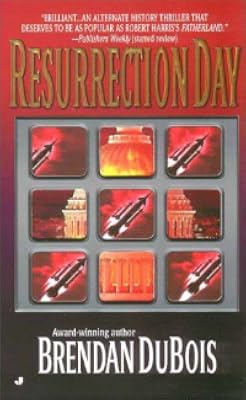
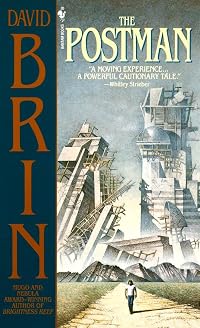

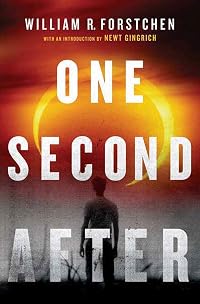
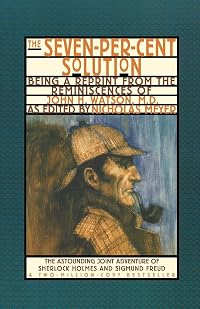

Member Recommendations


Member Reviews
This is an very tense nuclear stand-off thriller published and made into a film (which I have seen several times) at the height of the Cold War in the early 1960s. In sum, there is a precautionary stationing of US aircraft at their Fail-Safe points in the world when an unidentified plane appears on radars. This turns out to be a commercial aircraft that had lost power. However, due to a technical failure when the aircraft are recalled, one small group of the planes flies past its Fail-Safe point towards Soviet territory, and cannot be recalled. Eventually, the President has to send fighter planes to try to shoot them down before they enter Soviet airspace in what would be seen as an act of war, and contact the Soviet leader to try to show more convince him this is a genuine accident. Interestingly, the Soviet leader is clearly identified as the real one of the time, Nikita Khrushchev, while the US President is not named even fictionally (played in the film by Henry Fonda as a very liberal President).
I don’t want to give precise spoilers here but the whole incident spirals out of control and results in a tragic conclusion for both the US and the Soviet Union, due to misunderstandings, with no malice intended by either side. It is a very powerful novel, and the second half, and especially the last few chapters, packs a real emotional punch and makes one think. The first half, on the other hand, was rather slow, with several lengthy digressions into the backstory of some of the characters, for example as they walk into a room for a meeting, which took me out of the narrative flow too much. It is probably this feature that makes me think that this is one of the fairly rare cases where the film is somewhat better than the book in terms of its flow. Sadly the film seems to have sunk without trace due to having been released at more or less the same time as the similarly themed Dr Strangelove. But both book and film are well worth seeking out. show less
I don’t want to give precise spoilers here but the whole incident spirals out of control and results in a tragic conclusion for both the US and the Soviet Union, due to misunderstandings, with no malice intended by either side. It is a very powerful novel, and the second half, and especially the last few chapters, packs a real emotional punch and makes one think. The first half, on the other hand, was rather slow, with several lengthy digressions into the backstory of some of the characters, for example as they walk into a room for a meeting, which took me out of the narrative flow too much. It is probably this feature that makes me think that this is one of the fairly rare cases where the film is somewhat better than the book in terms of its flow. Sadly the film seems to have sunk without trace due to having been released at more or less the same time as the similarly themed Dr Strangelove. But both book and film are well worth seeking out. show less
It’s exactly fifty years later and this book is still very powerful. I’ve seen the movie version with Henry Fonda a couple of times, knew exactly how the story ended, and I still couldn’t put it down and then cried at the end.
It’s the mid-sixties and the USA and USSR, mutually distrustful and each protected by huge stockpiles of weaponry, depend on multiple technological safeguards to ensure against accidental war. Civilian and military intellectuals from all sides engage in philosophical debates which inform national policy on armament, pre-emptive war, and nuclear policy. Swagger and the threat of annihilation are generally thought to be prohibitive of intentional war. But, of course, errors of machinery and human activity do show more occur, and here an unnoticed breakdown in a minor part of one machine mistakenly sends a group of bombers into the Soviet Union with orders to bomb Moscow. Unable to recall them, the President (presumably JFK) contacts Khrushchev, and the two must weigh their actions in the event the planes are successful.
Gripping, informative, and, finally, heartbreaking, and very highly recommended. show less
It’s the mid-sixties and the USA and USSR, mutually distrustful and each protected by huge stockpiles of weaponry, depend on multiple technological safeguards to ensure against accidental war. Civilian and military intellectuals from all sides engage in philosophical debates which inform national policy on armament, pre-emptive war, and nuclear policy. Swagger and the threat of annihilation are generally thought to be prohibitive of intentional war. But, of course, errors of machinery and human activity do show more occur, and here an unnoticed breakdown in a minor part of one machine mistakenly sends a group of bombers into the Soviet Union with orders to bomb Moscow. Unable to recall them, the President (presumably JFK) contacts Khrushchev, and the two must weigh their actions in the event the planes are successful.
Gripping, informative, and, finally, heartbreaking, and very highly recommended. show less
A classic nuclear-crisis thriller, written in the early 1960s when bombers hadn't *quite* yielded to missiles as the principal means of delivering nuclear weapons. The plot is fiendishly simple . . . a minor technical glitch in the command-and-control systems at Strategic Air Command headquarters sends a squadron of bombers to attack Moscow. The president, his advisors, and the commanding generals of the Air Force have to figure out how to head off World War III.
Critics of the novel have argued (for decades now) that it resolves a situation that could never occur with a solution that would never work. Maybe so (and almost certainly so now, in the missile age) . . . but to me that's beside the point. "Fail-Safe" is an argument that, to show more paraphrase Einstein, if we're going to live in a world with nuclear weapons, we *must* change the way we think or drift inevitably toward catastrophe. show less
Critics of the novel have argued (for decades now) that it resolves a situation that could never occur with a solution that would never work. Maybe so (and almost certainly so now, in the missile age) . . . but to me that's beside the point. "Fail-Safe" is an argument that, to show more paraphrase Einstein, if we're going to live in a world with nuclear weapons, we *must* change the way we think or drift inevitably toward catastrophe. show less
What happens when the safeguards in a system fail to protect us? An unidentified flying object comes into American air space so all the military might is called up to identify it and protect the U.S. from it. Once the all-clear is given, one group of bombers don't step down. They continue as if there is still a problem and begin a flight to the Soviet Union to drop their bombs. Can the President get them back before they begin a war?
This is as timely know as it was in 1962. At the end of the book the President and Khrushchev are philosophizing about computers and man. Their conversation could occur today and be relevant. We still rely on computers and they are taking over our lives. I liked the questions this book raised and I have to show more admit I did not see the ending coming. I thought it would go the other way. Still relevant today. show less
This is as timely know as it was in 1962. At the end of the book the President and Khrushchev are philosophizing about computers and man. Their conversation could occur today and be relevant. We still rely on computers and they are taking over our lives. I liked the questions this book raised and I have to show more admit I did not see the ending coming. I thought it would go the other way. Still relevant today. show less
Wow! This book is intense! I knew it was going to be since I saw the movie first, and it was also incredibly intense.
I was surprised I'd never heard of this movie or book, since Red Alert/Dr. Strangelove came out at nearly the same time and that movie definitely overshadowed the film for this book, but I think this one is actually better. It is a great character study and really relates the fears and anxieties of the time.
I was surprised I'd never heard of this movie or book, since Red Alert/Dr. Strangelove came out at nearly the same time and that movie definitely overshadowed the film for this book, but I think this one is actually better. It is a great character study and really relates the fears and anxieties of the time.
One of the “classics” of the sixties, this book is intriguing on a number of different levels. The first is that it is a well-written book that tells a compelling story. While it slightly suffers from age in a few spots, these do not become overbearing and the reader isn’t jolted by them. The second is from the historical perspective. Having grown up in that era – an era where nightmares of nuclear bombs could wake a kid up in the middle of the night – I recognized how much of this we really lived. The third was in comparison to the movie “Dr. Strangelove.” I have never seen the movie “Fail-Safe” (which I feel I desperately need to do now) but have seen Strangelove innumerable times, and it was fascinating to see how show more much of this was translated into that movie. And the fourth is the purely political level. I couldn’t help but draw parallels to what is happening today; both with 911 and with Iraq. Watching these reactions in the cold war made me think about the same issues regarding whatever temperature war we’re having right now. All told, quite a bit to get out of book that is over 40 years old. show less
Well written and tense. Slightly dated but still worth the read. Easier to follow if you imagine Henry Fonda as the president as in the 1964 film.
Members
- Recently Added By
Lists

Books You Read During High School (For School)
301 works; 52 members

NPRs your picks: top 100 Killer Thrillers
100 works; 17 members

Top Five Books of 2024
795 works; 264 members
Author Information


Some Editions
Awards and Honors
Distinctions
Notable Lists
Series
Belongs to Publisher Series
Work Relationships
Has the adaptation
Common Knowledge
- Canonical title
- Fail-Safe
- Original publication date
- 1962
- Related movies
- Fail-Safe (1964 | IMDb); Fail Safe (2000 | IMDb)
- Dedication
- For Carol and for Peggy
- First words
- (Preface) The people in this novel are our contemporaries and they deal with a problem that is already upon us.
(Chapter 1 - 1962 Edition)
The Translator
Peter Buck walked up to the N Street entrance of the White House.
Peter Buck walked up to the Pennsylvania entrance of the White House. - Quotations
- "In one way," continued the President, "we didn't even make the decision to have the computerized systems in the first place. These automated systems became technologically possible, so we built them. Then it became possible ... (show all)to turn more and more control decisions over to them, so we did that. And before we knew it, we had gone so far that the systems were able to put us in the situation we are in today."
- Last words
- (Click to show. Warning: May contain spoilers.)Have the citation read simply: for the highest act of courage and the most supreme coception of duty to his country and to mankind.
- Disambiguation notice
- Per WorldCat, ISBN 0670808725 is for A Catskill Eagle by Robert B. Parker.
Classifications
- Genres
- Fiction and Literature, Science Fiction, Suspense & Thriller, General Fiction
- DDC/MDS
- 813.54 — Literature & rhetoric American literature in English American fiction in English 1900-1999 1945-1999
- LCC
- PS3552 .U7116 .F35 — Language and Literature American literature American literature Individual authors 1961-
- BISAC
Statistics
- Members
- 1,008
- Popularity
- 25,990
- Reviews
- 23
- Rating
- (3.84)
- Languages
- 8 — Dutch, English, Finnish, German, Hebrew, Italian, Spanish, Swedish
- Media
- Paper, Audiobook, Ebook
- ISBNs
- 12
- UPCs
- 1
- ASINs
- 39