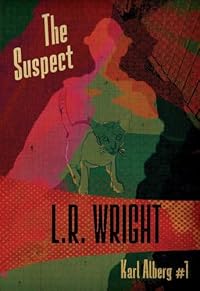
On This Page
Description
This Edgar Award-winning debut kicks off the crime series—and basis for the Fox TV and Hulu series Murder in a Small Town—set along Canada’s Sunshine Coast.To Karl Alberg, the coastal town of Sechelt, just north of Vancouver, looks like the perfect place to soothe a psyche that’s been battered by big-city police work. Bees buzz among the roses, and the local librarian is attractive, intriguing, and unattached. Perhaps he has at last come in from the cold. But sunny towns can show more conceal a lot of secrets—some of them bleak enough to make a man yearn for some nice straightforward urban crime.
In 1986 L.R. Wright’s The Suspect became the first Canadian novel to win an Edgar award, beating out titles by Ruth Rendell and Jonathan Kellerman. It went on to become a cult favorite among mystery fans, who prized its delicately etched sense of melancholy and intriguing character studies of the cop, his quarry, and the enigmatic librarian who proves an unlikely bridge between the two. show less
Tags
Recommendations











Member Recommendations

Member Reviews
Finished L.R. Wright's first mystery novel The Suspect (her fourth published novel) and I've had the unrelenting suspicion that it is a perfect book. At first I wouldn't give it ten out of ten stars, I thought to myself that maybe I'd give it nine stars, or 9.5, only because I'm not completely convinced that the forensics Wright depicted in the novel were as thoroughly fleshed out and considered as they would have been in so-called real life. But, maybe, in 1984, in a backwoods town on the Sunshine Coast of British Columbia, reachable only by ferry boat, the crime was investigated as thoroughly as it could have been back then. Maybe L. R. Wright got it right. In real life, would there have been enough evidence to convict the suspect, an show more eighty-year-old, cantankerous widower, George Wilcox? Maybe not. Maybe that's why Karl Alberg, the divorced detective on the case, could never nail him. Maybe L. R. Wright thought up the perfect scenario for the perfect, spontaneous, unpremeditated murder, that not even Sherlock Holmes could have solved.
Whether this perfect murder is 100% plausible or not, The Suspect, like I stated at the outset, if not a perfect novel, is a perfect read. But, damn, if this mystery, set amidst so much sunshine and blue sparkling ocean, among seaside cottages, with their tended gardens extending almost to the tide, is not a brooding, downright gloomy, read. Understand that the fog will snuff out the sunshine by the end.
"This part of British Columbia gets more hours of sunshine every year than most places in Canada—five hundred more hours, on the average, than Vancouver. Because its winters are also very mild, things grow here that will not grow anywhere else in the country—apricot and fig trees, even palm trees, it is said."
So much understated loss in this novel, only hinted at, a glimpse of it here, or there — a sunbeam exposing secret griefs, resentment, and rage — page upon sad but unputdownable page. Wright never overstates a clue — not once, but leaves it up to you, one of her rare readers these days, to scrunch up your eyes and forehead, to deduce and decide. How? Why? When?
What amazed me most about the novel, is how well Wright indeed made perfectly plausible this complex dynamic between, Karl Alberg, the transplant detective, on the one hand, claiming as bona fide friend, the murderer, George Wilcox, on the other, the very man whom Alberg knew beyond all doubt had committed the crime. But with limited manpower and investigative resources, Alberg just couldn't find enough evidence or establish corroboration between any two eyewitnesses, to pin it on him, to make the arrest. The subdued yet intense heat of Alberg's frustration over being this close ... too many times ... is understandably palpable wafting off the page.
How exactly did this capital-crime-covering octogenarian rascal elude him every time? What an embarrassing conundrum for a seasoned detective like Alberg to have to face, being evaded, out stealthed, out geniused, out everythinged, by a frail rickety-stick of a man painfully aware of his advancing aches and physical limitations. Can't you hear it, that bored rookie Canadian Mountie stuck doing office duty alone all night, his obnoxious banter about to burst asunder, just offpage, upon a now unprofessionally rattled Detective Alberg, the very second when he arrives back to his desk too loudly, obviously angry with himself after failing to reel in another initially promising lead — "Whatsa'matter, Alby, did great-grandpa Wilcox outrace you across the sand this time?"
If only (words too abominable to breathe when they're sounded too deep) Alberg's thoughts had turned counterintuitive — and lunar — just one halflit midnight sooner, and he did what even beachcombing native Canadians rarely do on their Sunshine Coast. If Alberg, a Royal Mounted, a seasoned and proven sleuth up until then, intuitve reader of suspects and the unsuspected alike, couldn't forsee first how an unassuming, elderly, recent widower (and widower for the second time) whom all he had left in his life was the energy to have committed an abrupt, enraged, pent up murder out of the shocking sunshine blue like that, and then miss that George could afterwards maintain his pretense of innocence because he was barely in possession of the required energy to cover up his crime on such a visually exposed shoreline with a damnable dearth of available nighttime, perhaps speaks to the, granted, debatable fact that Canadians, long rumored for their amiable politeness toward the living, could not possibly be so "impolite" to the dead to treat a corpse so disresptfully as that, even if it were the most covertly practical means of its permanent disposal. A murder and concealment of corpse such as that accomplished by George Wilcox happening in Fargo, North Dakota, of course; but in the hamlet of Seychelt, B.C., where even the inanimate sun is more polite to her counttrymen than any other place in Canadaon the Sunshine Coast, hell no.
Takes a salty haired survivor type from the States, wouldn't it, perhaps an honourally discharged veteran, say, someone who, beside his bride, wants to escape somewhere that was elsewhere from wherever he was, and it had to be bright, so bright the light was redundant, fit for storage within the forests of those impossibly long hours on the Sunshine Coast, where because it was close and so damned cheap, fella'd be a fool not to buy, not to try to fly away, wouldn't he, if he finally had the chance, the simple chance to turn from his past, to lock it up and leave, sell it short, sell it cheap, get rid of it and get the hell out for a dream, simply flee his lost horizons for the long sunshiny nights in B.C. The Coast there the same as it was before Christ, by God!
What an unexpected, emotionally powerful read, filled with heartwrenching backstories galore, as in witnessing evolve an implausible-but-not-impossible friendship between adversaries develop like that, watching their friendship poignantly and unexpectedly bloom. A friendship only fully realized months after one of the men has died.
"The tempo of life on the Sunshine Coast is markedly slower than that of Vancouver, and its people, for the most part strung out along the shoreline, have a more direct and personal interest in the sea.
The coastal forests are tall and thick with undergrowth, but they come gently down to the water and are sometimes met there by wide, curving beaches. The land cleared for gardens is fertile, and the things growing there tempt wild creatures from the woods. In the sea there are salmon, and oysters, and clams; there are also otters; and thousands of gulls, and cormorants. There are Indian legends, and tales of smugglers, and the stories of the pioneers.
The resident police force is the Royal Canadian Mounted Police, with detachments in Gibsons and Sechelt. There are traffic accidents to deal with, and occasional vandalism, and petty theft, and some drunkenness now and then.
There is very seldom a murder."
Unless George Wilcox is around! Yet how can we care about him knowing he has just murdered his eighty-five year old neighbor, Carlyle, after only making his acquaintance on the first page. Carlyle was apparently an "old acquaintance" (certainly not a friend), though by the end of the novel we'll discover the man Wilcox murdered was much more than an acquaintance, even if he wasn't exactly a friend. L. R. Wright gives away the who-did-it? right off the bat, providing the reader with more intimate knowledge of the crime's grisly details than afforded any character in the novel's except for the elderly perp. And what a disturbing way to meet someone, even a fictitious character, our "suspect" of the novel's title. In two previous (non-mystery) novels I've read that opened as violently — and I'm just talking about violence against animals here (i.e., Ron Loewinsohn's Magnetic Field(s) and Denis Johnson's Tree of Smoke), I've found it difficult to continue reading. But that was not the case with The Suspect, because unlike these novels, and for reasons I do not yet completely comprehend, I cared about this very believable, complicated man, the suspect, the murderer, the old man riddled by guilt and one too many demons. Chalk it up, as well, to Wright's extraordinary penchant for creating a conflicted and torn character with the same double-minded authenticity on the page. The Suspect transcends the mystery genre. Call it a mystery if you must, but call it literature too. No real surprise that Wright's first three novels were literary fiction.
L. R. Wright beat both Ruth Rendell and Paul Auster, among others, for the 1986 Edgar Award. Wright, to this day, remains the only Canadian author to have ever won the Edgar. Had The Suspect been nominated for The Booker Prize that year, as it should have been, I suspect it would have won at least one more award. Before L.R. Wright, 61, died on February 25, 2001, she got the last word in on her long battle against breast cancer: “She died, and the cancer died with her. It was a draw.” show less
Whether this perfect murder is 100% plausible or not, The Suspect, like I stated at the outset, if not a perfect novel, is a perfect read. But, damn, if this mystery, set amidst so much sunshine and blue sparkling ocean, among seaside cottages, with their tended gardens extending almost to the tide, is not a brooding, downright gloomy, read. Understand that the fog will snuff out the sunshine by the end.
"This part of British Columbia gets more hours of sunshine every year than most places in Canada—five hundred more hours, on the average, than Vancouver. Because its winters are also very mild, things grow here that will not grow anywhere else in the country—apricot and fig trees, even palm trees, it is said."
So much understated loss in this novel, only hinted at, a glimpse of it here, or there — a sunbeam exposing secret griefs, resentment, and rage — page upon sad but unputdownable page. Wright never overstates a clue — not once, but leaves it up to you, one of her rare readers these days, to scrunch up your eyes and forehead, to deduce and decide. How? Why? When?
What amazed me most about the novel, is how well Wright indeed made perfectly plausible this complex dynamic between, Karl Alberg, the transplant detective, on the one hand, claiming as bona fide friend, the murderer, George Wilcox, on the other, the very man whom Alberg knew beyond all doubt had committed the crime. But with limited manpower and investigative resources, Alberg just couldn't find enough evidence or establish corroboration between any two eyewitnesses, to pin it on him, to make the arrest. The subdued yet intense heat of Alberg's frustration over being this close ... too many times ... is understandably palpable wafting off the page.
How exactly did this capital-crime-covering octogenarian rascal elude him every time? What an embarrassing conundrum for a seasoned detective like Alberg to have to face, being evaded, out stealthed, out geniused, out everythinged, by a frail rickety-stick of a man painfully aware of his advancing aches and physical limitations. Can't you hear it, that bored rookie Canadian Mountie stuck doing office duty alone all night, his obnoxious banter about to burst asunder, just offpage, upon a now unprofessionally rattled Detective Alberg, the very second when he arrives back to his desk too loudly, obviously angry with himself after failing to reel in another initially promising lead — "Whatsa'matter, Alby, did great-grandpa Wilcox outrace you across the sand this time?"
If only (words too abominable to breathe when they're sounded too deep) Alberg's thoughts had turned counterintuitive — and lunar — just one halflit midnight sooner, and he did what even beachcombing native Canadians rarely do on their Sunshine Coast. If Alberg, a Royal Mounted, a seasoned and proven sleuth up until then, intuitve reader of suspects and the unsuspected alike, couldn't forsee first how an unassuming, elderly, recent widower (and widower for the second time) whom all he had left in his life was the energy to have committed an abrupt, enraged, pent up murder out of the shocking sunshine blue like that, and then miss that George could afterwards maintain his pretense of innocence because he was barely in possession of the required energy to cover up his crime on such a visually exposed shoreline with a damnable dearth of available nighttime, perhaps speaks to the, granted, debatable fact that Canadians, long rumored for their amiable politeness toward the living, could not possibly be so "impolite" to the dead to treat a corpse so disresptfully as that, even if it were the most covertly practical means of its permanent disposal. A murder and concealment of corpse such as that accomplished by George Wilcox happening in Fargo, North Dakota, of course; but in the hamlet of Seychelt, B.C., where even the inanimate sun is more polite to her counttrymen than any other place in Canadaon the Sunshine Coast, hell no.
Takes a salty haired survivor type from the States, wouldn't it, perhaps an honourally discharged veteran, say, someone who, beside his bride, wants to escape somewhere that was elsewhere from wherever he was, and it had to be bright, so bright the light was redundant, fit for storage within the forests of those impossibly long hours on the Sunshine Coast, where because it was close and so damned cheap, fella'd be a fool not to buy, not to try to fly away, wouldn't he, if he finally had the chance, the simple chance to turn from his past, to lock it up and leave, sell it short, sell it cheap, get rid of it and get the hell out for a dream, simply flee his lost horizons for the long sunshiny nights in B.C. The Coast there the same as it was before Christ, by God!
What an unexpected, emotionally powerful read, filled with heartwrenching backstories galore, as in witnessing evolve an implausible-but-not-impossible friendship between adversaries develop like that, watching their friendship poignantly and unexpectedly bloom. A friendship only fully realized months after one of the men has died.
"The tempo of life on the Sunshine Coast is markedly slower than that of Vancouver, and its people, for the most part strung out along the shoreline, have a more direct and personal interest in the sea.
The coastal forests are tall and thick with undergrowth, but they come gently down to the water and are sometimes met there by wide, curving beaches. The land cleared for gardens is fertile, and the things growing there tempt wild creatures from the woods. In the sea there are salmon, and oysters, and clams; there are also otters; and thousands of gulls, and cormorants. There are Indian legends, and tales of smugglers, and the stories of the pioneers.
The resident police force is the Royal Canadian Mounted Police, with detachments in Gibsons and Sechelt. There are traffic accidents to deal with, and occasional vandalism, and petty theft, and some drunkenness now and then.
There is very seldom a murder."
Unless George Wilcox is around! Yet how can we care about him knowing he has just murdered his eighty-five year old neighbor, Carlyle, after only making his acquaintance on the first page. Carlyle was apparently an "old acquaintance" (certainly not a friend), though by the end of the novel we'll discover the man Wilcox murdered was much more than an acquaintance, even if he wasn't exactly a friend. L. R. Wright gives away the who-did-it? right off the bat, providing the reader with more intimate knowledge of the crime's grisly details than afforded any character in the novel's except for the elderly perp. And what a disturbing way to meet someone, even a fictitious character, our "suspect" of the novel's title. In two previous (non-mystery) novels I've read that opened as violently — and I'm just talking about violence against animals here (i.e., Ron Loewinsohn's Magnetic Field(s) and Denis Johnson's Tree of Smoke), I've found it difficult to continue reading. But that was not the case with The Suspect, because unlike these novels, and for reasons I do not yet completely comprehend, I cared about this very believable, complicated man, the suspect, the murderer, the old man riddled by guilt and one too many demons. Chalk it up, as well, to Wright's extraordinary penchant for creating a conflicted and torn character with the same double-minded authenticity on the page. The Suspect transcends the mystery genre. Call it a mystery if you must, but call it literature too. No real surprise that Wright's first three novels were literary fiction.
L. R. Wright beat both Ruth Rendell and Paul Auster, among others, for the 1986 Edgar Award. Wright, to this day, remains the only Canadian author to have ever won the Edgar. Had The Suspect been nominated for The Booker Prize that year, as it should have been, I suspect it would have won at least one more award. Before L.R. Wright, 61, died on February 25, 2001, she got the last word in on her long battle against breast cancer: “She died, and the cancer died with her. It was a draw.” show less
This was different than the mysteries I usually read because it isn't a whodunit. The reader knows whodunit by the end of the third sentence. Although it features a police detective, it's more cozy than police procedural, set as it is in a small town on British Columbia's Sunshine Coast. Staff Sergeant Karl Alberg's budding relationship with librarian Cassandra Mitchell adds a touch of romance to the novel, but blurs the line between work and pleasure when both realize that a good friend of Cassandra's is the prime suspect in the murder Alberg is investigating. In a crime novel where the murderer's identity is known from the beginning, character development is crucial, and Wright proves herself equal to the task with Alberg and show more Mitchell. This is a series I know I'll return to. show less
Having just read Scottoline's THE VENDETTA DEFENSE, I came upon another book with over-80 victim and perpetrator: L. R. Wright's
THE SUSPECT, read as part of my ongoing project to read Edgar Best
Novels in order. In THE SUSPECT, just as in THE VENDETTA DEFENSE, we know
from the outset who 'done it.' But here, each of the three characters
through whose point of view the story is told -- killer, policeman, and
a librarian with conflicted loyalties -- shows us a different aspect of
the case. The real mystery in THE SUSPECT is motive -- and in a way
that's even a mystery to the perpetrator. This book will almost
certainly end up on my 10 Best Older Books list for 2009. It's a
stunning combination of psychological thriller and police show more procedural.
I'll be looking for more of L. R. Wright's work, and am only sorry for
the relatively small number of books she wrote before her too-early
death. show less
THE SUSPECT, read as part of my ongoing project to read Edgar Best
Novels in order. In THE SUSPECT, just as in THE VENDETTA DEFENSE, we know
from the outset who 'done it.' But here, each of the three characters
through whose point of view the story is told -- killer, policeman, and
a librarian with conflicted loyalties -- shows us a different aspect of
the case. The real mystery in THE SUSPECT is motive -- and in a way
that's even a mystery to the perpetrator. This book will almost
certainly end up on my 10 Best Older Books list for 2009. It's a
stunning combination of psychological thriller and police show more procedural.
I'll be looking for more of L. R. Wright's work, and am only sorry for
the relatively small number of books she wrote before her too-early
death. show less
This first class psychological thriller by Canadian writer L.R. Wright has been compared to the best of Nordic crime fiction, deservedly so. The story, set in a beautiful small town on British Columbia's sheltered "Sunshine Coast", involves a small number of (mostly) likable people, their relationships with each other, and their relationships with their own demons. The plot is masterfully constructed and highly suspenseful, even though it doesn't work the same way it does in most crime fiction. I'm delighted to have discovered this writer (courtesy of Felony and Mayhem) and look forward to reading more of the writer's works.
This book won The Edgar Prize in 1985, much to the surprise of all the other nominated authors and publishers. I thought I would read this book for that reason and because I enjoyed the series opener that was on television this fall. The book is very well-written, but really the pace is quite slow and we already know who the murdererer is in the first chapter. It surprised me too that it won this award. But for someone who enjoys cozy mysteries and loves Canadian literature, I did enjoy the premise. The book is set along the Sunshine Coast in British Columbia, so the setting for this series is in one of Canada’s nicest locations. I wasn’t quite as enthralled with the characters in the book. I found it difficult to warm up to them. show more Therefore, I’m not sure whether I will continue with this series or not. show less
Interesting and surprising beginning of a Canadian mystery series. I liked how uncomfortable Karl can be in situations. He's not the typical cop. He's vulnerable, crotchety at times, and stubborn. He's also sometimes needy.
The victim was well portrayed and complex with depths and surprises. The mystery, while we knew who dunnit from the beginning, was still intriguing enough to hold my interest easily.
The victim was well portrayed and complex with depths and surprises. The mystery, while we knew who dunnit from the beginning, was still intriguing enough to hold my interest easily.
Karl Alberg is the ranking Royal Canadian Mounted Police officer in the tiny seaside town of Sechelt, on British Columbia’s Sunshine Coast near Vancouver. Alberg investigates the murder of an eighty-five-year-old man by his neighbor, who is only a few years younger. We know who did it from the first page of the book, so this is not the traditional whodunit, but a book about how the cop will solve it—that is, it’s a police procedural—but it’s also a psychological tale about why the killer did it.
Stories that begin, as this one does, with the reader’s watching the killer commit murder are sometimes known as “inverted” mysteries. The form, very familiar to anyone who watched Peter Falk’s Columbo series on television, was show more invented in the early twentieth century by R. Austin Freeman, a British writer whose detective, Dr. Thorndyke, was a forensic scientist. The interest was in the way small clues the reader may have missed in the opening description of the crime lead to the discovery of the criminal. In police procedurals, the identity of the criminal is not always known from the beginning, though it sometimes becomes obvious early in the investigation, and then the interest shifts to how the police will find the evidence to catch the killer.
About the time Alberg becomes convinced that the neighbor, whose name is George, must have done it, George becomes convinced that Alberg will catch him. But there are complications. The killer is the friend of the woman, a local librarian, whom Alberg began to date after she put a personal ad in the Vancouver paper. We suspect the Mountie will get his man, but will getting his man prevent the Mountie from getting his woman?
Listeners to these commentaries know that I prefer mysteries that stick to the problem at hand, move right along, and do not spend unnecessary pages on deep characterization and elaborate subplots. But I was taken with the way Wright handles the very human difficulties here. The killer is a crusty but amiable geezer whose judgment that the victim had it coming seems eminently fair. His friend the librarian knows him only as a frequenter of the library who brings her flowers and plants, sometimes gruffly insisting that she take them home rather than decorate the library with them. Alberg likes the killer, but still thinks, almost haplessly, that his duty requires him to discourage people from killing one another. I liked this one is spite of myself.
L. R. Wright is Laurali Rose Wright and is the only Canadian to have won the American Mystery Writers’ award, the Edgar Allan Poe award, for this mystery, which was published in 1985 and was the first to feature Karl Alberg. She wrote eight more mysteries with Alberg as the detective, and several more with a woman RCMP detective, before her death in 2001 show less
Stories that begin, as this one does, with the reader’s watching the killer commit murder are sometimes known as “inverted” mysteries. The form, very familiar to anyone who watched Peter Falk’s Columbo series on television, was show more invented in the early twentieth century by R. Austin Freeman, a British writer whose detective, Dr. Thorndyke, was a forensic scientist. The interest was in the way small clues the reader may have missed in the opening description of the crime lead to the discovery of the criminal. In police procedurals, the identity of the criminal is not always known from the beginning, though it sometimes becomes obvious early in the investigation, and then the interest shifts to how the police will find the evidence to catch the killer.
About the time Alberg becomes convinced that the neighbor, whose name is George, must have done it, George becomes convinced that Alberg will catch him. But there are complications. The killer is the friend of the woman, a local librarian, whom Alberg began to date after she put a personal ad in the Vancouver paper. We suspect the Mountie will get his man, but will getting his man prevent the Mountie from getting his woman?
Listeners to these commentaries know that I prefer mysteries that stick to the problem at hand, move right along, and do not spend unnecessary pages on deep characterization and elaborate subplots. But I was taken with the way Wright handles the very human difficulties here. The killer is a crusty but amiable geezer whose judgment that the victim had it coming seems eminently fair. His friend the librarian knows him only as a frequenter of the library who brings her flowers and plants, sometimes gruffly insisting that she take them home rather than decorate the library with them. Alberg likes the killer, but still thinks, almost haplessly, that his duty requires him to discourage people from killing one another. I liked this one is spite of myself.
L. R. Wright is Laurali Rose Wright and is the only Canadian to have won the American Mystery Writers’ award, the Edgar Allan Poe award, for this mystery, which was published in 1985 and was the first to feature Karl Alberg. She wrote eight more mysteries with Alberg as the detective, and several more with a woman RCMP detective, before her death in 2001 show less
Members
- Recently Added By
Lists

Same Title
115 works; 3 members

Edgar Award
418 works; 15 members
Author Information

Awards and Honors
Series

Belongs to Publisher Series
Common Knowledge
- Canonical title
- The Suspect
- Original title
- The Suspect
- Alternate titles
- Murder in a Small Town
- Original publication date
- 1985
- People/Characters
- Karl Alberg; Cassandra Mitchell; George Wilcox
- Important places
- Sunshine Coast, British Columbia, Canada; Sechelt, British Columbia, Canada
- Dedication
- This book is for my brother,
Brian Appleby - First words
- He was a very old man. When he was struck he fell over promptly, without a sound.
- Quotations
- "... (those librarians, they're worse than policemen or reporters, the things they know about getting information) ..."
- Last words
- (Click to show. Warning: May contain spoilers.)"I'll be right down."
Classifications
Statistics
- Members
- 363
- Popularity
- 86,349
- Reviews
- 15
- Rating
- (3.61)
- Languages
- English, French, German, Spanish
- Media
- Paper, Audiobook, Ebook
- ISBNs
- 16
- ASINs
- 3