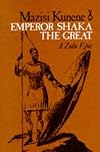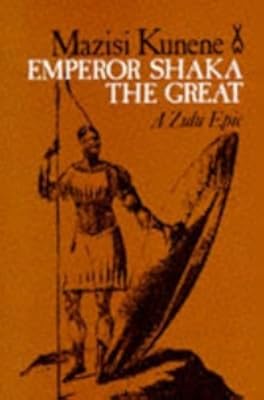
Emperor Shaka the Great: A Zulu Epic
by Mazisi Kunene
On This Page
Description
Mazisi Kunene is the much-celebrated author of epics, such as Emperor Shaka the Great (UNodumehlezi KaMenzi) and Anthem of the Decades (Inhlokomo Yeminyaka), as well as numerous poems, short stories, nursery rhymes and proverbs that amount to a collection of more than 10 000 works. He was born in aMahlongwa in 1930, a small rural village on the South Coast of KwaZulu-Natal in South Africa. As a young man born into Zulu tradition, his calling as an imbongi was taken very seriously by his show more father and grandfather who encouraged him to write. Professor Kunene described this 'calling' to write as 'something [that] is not me, it is the power that rides me like a horse.' Kunene was Professor in African Literature at Stanford University and in African Literature and Languages at the University of California, Los Angeles. On his return to South Africa, he was Professor in African Languages at the University of KwaZulu-Natal. He went into exile in the 1960s for more than 34 years, during which time he established and managed the African National Congress office in London, and later moved to Los Angeles with his family to pursue his academic career. In his epic poem Emperor Shaka the Great (UNodumehlezi KaMenzi), which he wrote during this exile period, he positions Shaka as a legendary thinker, who had great skill as a strategic and military genius. This vision acknowledges and re-imagines Shaka as a unifying cultural and political force that defined the cohesive Zulu nation. Kunene projects Shaka into the mythical ancestral universe that affirms the deep cultural lineage of the African world view. This reprinted English edition is published, along with the isiZulu edition (UNodumehlezi KaMenzi - ISBN 9781869143176) on the tenth anniversary of his death, embracing Kunene's original dream to have his poem published as intended in the original isiZulu form. The symbolic and cultural significance of these publications begins a process of re-evaluating and recontextualising Kunene's writing oeuvre. [Subject: Poetry, Fiction, African Studies] show lessTags
Recommendations





















Member Reviews
There are pages about the author at http://literature.kzn.org.za/lit/14.xml and http://www.pitzer.edu/academics/faculty/masilela/nam/general/essays/kunene.htm ; he was Professor of Linguistics and African Languages at UCLA in the 1970s.
Ratings
Members
- Recently Added By
Author Information
8+ Works 66 Members
Born in Durban, South Africa, Mazisi (Raymond) Kunene was educated at the University of Natal, where he earned an M.A. with one of the earliest studies of literature in African languages. He later spent a year at the School of Oriental and African Studies at the University of London, where he continued his African language and literature studies. show more Although he has published highly competent poetry in English, Kunene is remarkable for his commitment to developing creative writing in his native Zulu language. His Zulu Poems (1970) include his original compositions in Zulu, as well as English recreations or translations. In 1979 he produced a copious poem, Emperor Shaka the Great, in an effort to introduce the Homeric type of epic into the literary repertoire of his mother-tongue. Kunene is currently a professor of linguistics at the University of California. (Bowker Author Biography) show less
Series
Belongs to Publisher Series
Common Knowledge
- Canonical title
- Emperor Shaka the Great: A Zulu Epic
- People/Characters
- Shaka Zulu
Classifications
- Genres
- Fiction and Literature, Poetry
- DDC/MDS
- 896.39 — Literature & rhetoric Literatures of other languages African literatures Niger-Congo languages Bantu languages
- LCC
- PL8844 .K79 .E5 — Language and Literature Languages and literatures of Eastern Asia, Africa, Oceania Languages of Eastern Asia, Africa, Oceania African languages and literature Special languages (alphabetically)
- BISAC
Statistics
- Members
- 39
- Popularity
- 749,611
- Reviews
- 1
- Rating
- (3.00)
- Languages
- English
- Media
- Paper, Ebook
- ISBNs
- 5