On This Page
Description
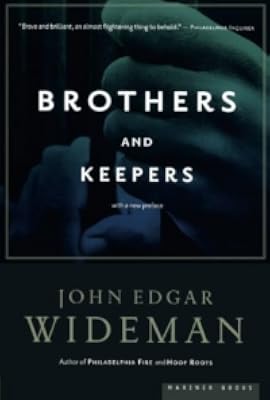
A stunning novel in which "Mr. Wideman returns to the ghetto where he was raised and transforms it into a magical location...and establishes a mythological and symbolic link between character and landscape." --New York Times Book ReviewTags
Recommendations





Member Reviews
John Edgar Wideman's gift is an honest portrayal of African American life in a small fading Northern town.
In this final book of his trilogy, the background and deepest feelings of many characters are explored and evolve.
While the descriptor that 'Men work; women cook, clean and take care of children' sets the pace,
the fact of no jobs, no careers, no trades - nothing but dependence on white men's stopping at the corner -
destroys that balance, with the resultant poverty, depression, alcohol and drug addictions,
and increasing street violence and murders.
Friendships are long-lasting and the author involves us in these, as well as into
simply thinking about Silence. He wants us to pay attention to every little thing,
even repeating them until show more we get it and can't forget it.
From rainbow soap bubbles, to sounds on the train tracks to the slamming screen door and rocking chair,
multiple memorable images are woven into daily lives often dominated by despair and misery,
yet livened by dialogue like French and Wilkes have.
Great to see John French again and Freeda's love for him, plus her entirely different take on The Great Migration
immigrants and their effects on HOMEWOOD. A contrast with Jacob Lawrence. Mize.
Brother's roles - as lover, as a father who should not have trusted the care of Junebug to anyone but himself,
and his unkind betrayal (or was it the dream?) of Wilkes were a surprise.
(Wandering narrators sometimes hard to follow and sure could have lived without the treatment and murder of Junebug.) show less
In this final book of his trilogy, the background and deepest feelings of many characters are explored and evolve.
While the descriptor that 'Men work; women cook, clean and take care of children' sets the pace,
the fact of no jobs, no careers, no trades - nothing but dependence on white men's stopping at the corner -
destroys that balance, with the resultant poverty, depression, alcohol and drug addictions,
and increasing street violence and murders.
Friendships are long-lasting and the author involves us in these, as well as into
simply thinking about Silence. He wants us to pay attention to every little thing,
even repeating them until show more we get it and can't forget it.
From rainbow soap bubbles, to sounds on the train tracks to the slamming screen door and rocking chair,
multiple memorable images are woven into daily lives often dominated by despair and misery,
yet livened by dialogue like French and Wilkes have.
Great to see John French again and Freeda's love for him, plus her entirely different take on The Great Migration
immigrants and their effects on HOMEWOOD. A contrast with Jacob Lawrence. Mize.
Brother's roles - as lover, as a father who should not have trusted the care of Junebug to anyone but himself,
and his unkind betrayal (or was it the dream?) of Wilkes were a surprise.
(Wandering narrators sometimes hard to follow and sure could have lived without the treatment and murder of Junebug.) show less
I began this novel with some trepidation, having previously read and not enjoyed Philadelphia Fire, but reading this turned out to be a very different and very enjoyable experience.
Set in Philadelphia and the Homewood neighborhood where Wideman grew up, you can tell he is in his element writing about this locale and its residents. Three generations of friends and family populate this novel, beginning with the narrator Doot, reaching back to his grandparents John and Freeda French, and focusing primarily on Carl French, Doot's uncle, Brother Tate, Carl's best friend, and Lucy Tate, Carl's on-again, off-again lover who was raised in the Tate house with Brother Tate. Brother Tate is an albino and and his experience along with that of his show more son, Junebug, who is also an albino, growing up in a black neighborhood are central to the story. I thoroughly enjoyed how the relationships, the timeline and how events fit into the timeline were slowly revealed as the story progressed. The writing has a lyrical quality that is the one aspect of Philadelphia Fire that I remembered liking. Race, family, friendship and surviving are constants. I would have liked to have met many of the characters, but certainly John and Freeda French. You can see how the neighborhood and the people change over the three generations, but also they are all tied tightly to one another. show less
Set in Philadelphia and the Homewood neighborhood where Wideman grew up, you can tell he is in his element writing about this locale and its residents. Three generations of friends and family populate this novel, beginning with the narrator Doot, reaching back to his grandparents John and Freeda French, and focusing primarily on Carl French, Doot's uncle, Brother Tate, Carl's best friend, and Lucy Tate, Carl's on-again, off-again lover who was raised in the Tate house with Brother Tate. Brother Tate is an albino and and his experience along with that of his show more son, Junebug, who is also an albino, growing up in a black neighborhood are central to the story. I thoroughly enjoyed how the relationships, the timeline and how events fit into the timeline were slowly revealed as the story progressed. The writing has a lyrical quality that is the one aspect of Philadelphia Fire that I remembered liking. Race, family, friendship and surviving are constants. I would have liked to have met many of the characters, but certainly John and Freeda French. You can see how the neighborhood and the people change over the three generations, but also they are all tied tightly to one another. show less
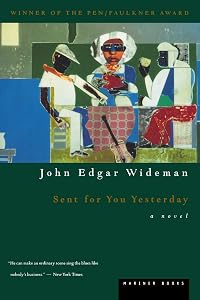
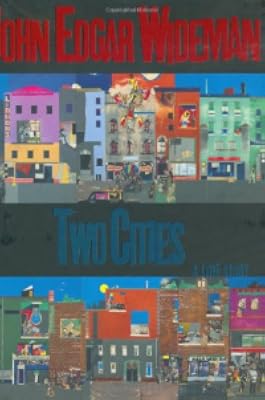
dust jacket
Ratings
Members
- Recently Added By
Lists

Pen/Faulkner Winners and Finalists
178 works; 9 members

AP Lit
363 works; 6 members
Author Information

40+ Works 3,321 Members
Writer John Edgar Wideman was born in Washington, D. C., on June 14, 1941. He graduated from the University of Pennsylvania, studied at Oxford University, and was the second African American to become a Rhodes Scholar. He taught at the University of Pennsylvania and eventually founded and chaired the African American studies department. He also show more taught at the University of Wyoming and the University of Massachusetts at Amherst. Wideman is the author of more than a dozen books. Sent for You Yesterday won a PEN/Faulkner Award in 1984, and Philadelphia Fire received one a decade later. Fatheralong was a finalist for the National Book Award (1994) and Brothers and Keepers was a finalist for the National Book Critics Circle Award (1995). (Bowker Author Biography) show less
Awards and Honors
Awards
Distinctions
Series

Work Relationships
Is contained in
Common Knowledge
- Canonical title
- Sent for You Yesterday
- Alternate titles
- Homewood Blues
Classifications
Statistics
- Members
- 216
- Popularity
- 151,971
- Reviews
- 3
- Rating
- (3.77)
- Languages
- English, French, Spanish
- Media
- Paper
- ISBNs
- 9
- UPCs
- 1
- ASINs
- 2