
The Ugly American
by William J. Lederer, Eugene Burdick
On This Page
Description
Describes the errors and short-comings of the United States foreign policy through a series of short stories around a common plot during the 1950s in South East Asia.Tags
Recommendations





























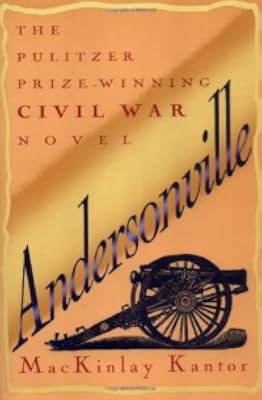

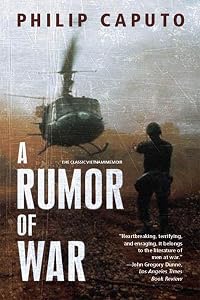




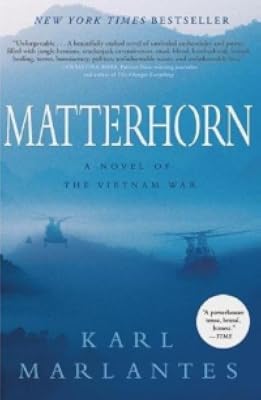


Member Reviews
Yes, a how-to, and how-not-to, manual for winning hearts and minds in the Cold War, but the important point is that it was a brilliant inspiration to present it as a series of fictional vignettes. A genuine manual, or a non-fiction analysis, might have sold a few thousand copies and gathered dust in university libraries; The Ugly American was a multi-million copy bestseller which apparently remains in print. It had significant impact on politicians at the time. A concrete example of its own pragmatic philosophy. Cleverly conceived and entertainingly written. No need to be an admirer of American Imperialism to appreciate the authors' strategic approach.
A connected collection of vignettes, all centered around the fictional Southeast Asian country of Sarkhan and the Americans stationed there by the US government. I honestly didn't think I'd enjoy this one at all, because war and politics are very much not my reading jam, generally. But these stories are so well told, the characters so well drawn, and the point of the authors so well made that, in fact, I loved it. I never would have picked it up had the book not been on the list of banned books I've been working through for ages. It was banned for political reasons, and it's not difficult to see why: Lederer and Burdick wrote the thing to draw attention to the ridiculous attitudes Americans had toward the people in SE Asia, their show more self-isolation once stationed there (all-US cocktail parties and only shopping at the commissaries and such), and the buffoonery of the official decisions and (in)actions that resulted. Very readable and still relevant. show less
This is a collection of related vignettes of the ineptitude of American diplomats and other State Department employees in Asia in the 1950s when Soviet (and Chinese ) communism was an imminent threat to Vietnam, Thailand, Burma and other countries in the region. The authors contrast the professionalism of Soviet diplomats, who always speak the local language and understand the country's history, with American political hacks appointed to serve as ambassadors. In this book, the communists are clever and driven, while the State Department employees, almost without exception, are most interested in where their next cocktail is coming from. Even worse are the French, who, as Southeast Asia is slipping from their grasp, fail to learn any show more tactics that might help them hold on (such as studying Mao's writings on guerrilla warfare.) Interspersed throughout are tales of a few Americans, such as a chicken farmer and an engineer, who engage with the local people, treat them as equals, and achieve significant if un-headline worthy progress, which is inevitably stymied by the State Department bureaucracy, which wants to see money spent on high profile projects such as dams or roads rather than on Rhode Island Reds.
This book is a compelling read, very clearly written, and it certainly draws you into its sense of outrage about how Asia was slipping from America's grasp, with the triumphant victory in World War II having turned into a series of defeats at the hands of the Communists. Though disguised, the authors state that all of this is true, though some stories are composites. There is certainly no reason to doubt that, although it can hardly be called a balanced account. Certainly a few things worked, such as the post-war reconstruction of Japan. And, as time would eventually show, the Communists would start to make mistakes too. I'm sure, however, that many of the behaviors still persist in a few of our foreign representatives today, and that's why even after over 50 years, this book remains a compelling, if somewhat stage-managed, read. show less
This book is a compelling read, very clearly written, and it certainly draws you into its sense of outrage about how Asia was slipping from America's grasp, with the triumphant victory in World War II having turned into a series of defeats at the hands of the Communists. Though disguised, the authors state that all of this is true, though some stories are composites. There is certainly no reason to doubt that, although it can hardly be called a balanced account. Certainly a few things worked, such as the post-war reconstruction of Japan. And, as time would eventually show, the Communists would start to make mistakes too. I'm sure, however, that many of the behaviors still persist in a few of our foreign representatives today, and that's why even after over 50 years, this book remains a compelling, if somewhat stage-managed, read. show less
A very loose collection of episodes detailing the interactions of various parts of the American expatriate community and the diplomatic service of the USA with the people and politics of a fictional south East Asian country, Sarkhan. When you are finished with reading it, you are open to understanding why the vietnamese war followed its course to the American defeat. The coutry that such an exploitive and manipulative alliance felt comfortable in creating, was easily prone to any socialist approach to getting rid of the American prescence ASAP. The book remains a telling critique of the American prescence in the world at large. For the rest of us it is a cautionary tale.
A how-to on winning the Cold War in the Third World by winning "hearts and minds" with brilliant and multilingual American legates who would show the impoverished natives just how wonderful America really is. Reading something by William Appleman Williams such as The Tragedy of American Diplomacy would be a good corrective to the Lederer/Burdick brand of liberal-humanitarian imperialism.
Incidentally, the "Ugly" American was one of the authors' "good guys."
Incidentally, the "Ugly" American was one of the authors' "good guys."
I first encountered this book as part of an undergraduate political science class on American politics. Among other long and dry reading assignments, I found myself thoroughly engaged in the book and looking forward to spending time reading Lederer and Burdick's work. In fact, I'd have to say that it has been my favorite book since that political science class almost 25 years ago.
I have read it at least 20 times in those 25 years (often as a source for a paper I was writing, but also for pleasure). While this is not a typical "beach read" I have re-read it while traveling and at the beach on several occasions. This past week I was on a business trip and sleeping in a hotel room. This combination of factors is usually good for a bout of show more insomnia on my part, and this trip was no different. Lederer and Burdick came to my rescue yet again and provided a thoroughly enjoyable way to pass through several hours of insomnia.
The story(ies) centers on a fictional country in Southeast Asia named Sarkhan. The book's chapters compare and contrast the competence and incompetence on the part of the diplomats, politicos, military officers and ex-pats in Sarkham. Heroes include Ambassador Gilbert McWhite, John Colvin, and Homer Atkins (THE ugly American) -— all men who took the time to learn the culture in which they were being planted.
It is easy (now, with 20/20 hindsight) to see this book as a parable stemming from the Vietnam War. However, the book was written well before American stepped up its involvement in Vietnam (in 1958) and was purportedly read by President Eisenhower and responsible for many of the reforms that he introduced into America's foreign aid programs. The general thesis of the authors was that US diplomats (and other foreign station workers/advisors) who failed to study and adapt to the cultures they were entering, were doomed to failure (or worse). Worse still, the American bureaucracy wasn't interested in the opinions of the Foreign Service staff that did study and understand the cultures into which they were placed.
Given that this book was written at the tail end of the McCarthy era, the insights of Lederer and Burdick are quite exceptional (if fact, some government agencies sought to ban the book in Asia and in many ways that (failed) effort can be seen as one of the last "scenes" of the McCarthy era). Burdick and Lederer are at once, tongue in cheek, cynical and satirical in their views of American foreign policy
Every time that I read this book, I can't put it down. Despite its age, it is still a fine read and certainly has additional significance in today's world as the U.S. fights wars in Iraq and Afghanistan. Although some parts of the book are antiquated (in particular the parochial way the authors treat the few female characters (in particular the Marie MacIntosh character). However that small niggle can be forgiven to a book that retains its readability and relevance 50 years after it was first published. show less
I have read it at least 20 times in those 25 years (often as a source for a paper I was writing, but also for pleasure). While this is not a typical "beach read" I have re-read it while traveling and at the beach on several occasions. This past week I was on a business trip and sleeping in a hotel room. This combination of factors is usually good for a bout of show more insomnia on my part, and this trip was no different. Lederer and Burdick came to my rescue yet again and provided a thoroughly enjoyable way to pass through several hours of insomnia.
The story(ies) centers on a fictional country in Southeast Asia named Sarkhan. The book's chapters compare and contrast the competence and incompetence on the part of the diplomats, politicos, military officers and ex-pats in Sarkham. Heroes include Ambassador Gilbert McWhite, John Colvin, and Homer Atkins (THE ugly American) -— all men who took the time to learn the culture in which they were being planted.
It is easy (now, with 20/20 hindsight) to see this book as a parable stemming from the Vietnam War. However, the book was written well before American stepped up its involvement in Vietnam (in 1958) and was purportedly read by President Eisenhower and responsible for many of the reforms that he introduced into America's foreign aid programs. The general thesis of the authors was that US diplomats (and other foreign station workers/advisors) who failed to study and adapt to the cultures they were entering, were doomed to failure (or worse). Worse still, the American bureaucracy wasn't interested in the opinions of the Foreign Service staff that did study and understand the cultures into which they were placed.
Given that this book was written at the tail end of the McCarthy era, the insights of Lederer and Burdick are quite exceptional (if fact, some government agencies sought to ban the book in Asia and in many ways that (failed) effort can be seen as one of the last "scenes" of the McCarthy era). Burdick and Lederer are at once, tongue in cheek, cynical and satirical in their views of American foreign policy
Every time that I read this book, I can't put it down. Despite its age, it is still a fine read and certainly has additional significance in today's world as the U.S. fights wars in Iraq and Afghanistan. Although some parts of the book are antiquated (in particular the parochial way the authors treat the few female characters (in particular the Marie MacIntosh character). However that small niggle can be forgiven to a book that retains its readability and relevance 50 years after it was first published. show less
I really liked this book! I can't believe that it was written BEFORE our major involvement in Vietnam! The descriptions of American blundering in Southeast Asia are just too amazing, yet true! The authors explain why the American way of doing things wasn't working, and why the Communist way was! Simple things, like speaking the native language, were just not required, and therefore led to a great deal of problems for the Americans working overseas. Shockingly simple! And the idea that no one had read books by Mao, yet could not figure him out - amazing! It's too bad our leaders didn't read (and believe) this book before our troops were committed! Wow.
Members
- Recently Added By
Published Reviews
ThingScore 75
"Still Ugly, After All These Years"
added by booksaplenty1949
Lists

Great American Novels
158 works; 40 members

Favourite Books
1,819 works; 316 members

20th Century Literature
1,161 works; 55 members
Best Political Fiction
92 works; 12 members

1950s
340 works; 22 members

Blue Pyramid 1,276 Best Books of All Time
1,248 works; 32 members

Publisher's Weekly Bestsellers - Part II - 1940 - 1979
355 works; 5 members

Nifty Fifties
129 works; 13 members
Author Information

19+ Works 2,110 Members

11+ Works 2,751 Members
Some Editions
Awards and Honors
Distinctions
Series
Belongs to Publisher Series
Corgi Books (GN 919)
Work Relationships
Has the adaptation
Is abridged in
Common Knowledge
- Canonical title*
- El Americano Feo
- Original title
- The Ugly American
- Alternate titles
- The Deceptive American
- Original publication date
- 1958; 1959
- Important places
- Asia; Southeast Asia; Vietnam
- Important events
- Cold War
- Related movies
- The Ugly American (1963 | IMDb)
- First words
- The Honorable Louis Sears, American Ambassador to Sarkhan, was angry.
- Last words
- (Click to show. Warning: May contain spoilers.)We must, while helping Asia towards self-sufficiency, show by example that America is still the America of freedom and hope and knowledge of law. If we succeed, we cannot lose the struggle.
- Blurbers
- Trumbell, Robert; Michener, James A.
- Original language
- English
- Canonical DDC/MDS
- 823.914
- Canonical LCC
- PS3562.E3
*Some information comes from Common Knowledge in other languages. Click "Edit" for more information.
Classifications
Statistics
- Members
- 1,549
- Popularity
- 14,832
- Reviews
- 27
- Rating
- (3.76)
- Languages
- 5 — Danish, English, French, German, Spanish
- Media
- Paper, Ebook
- ISBNs
- 21
- ASINs
- 63