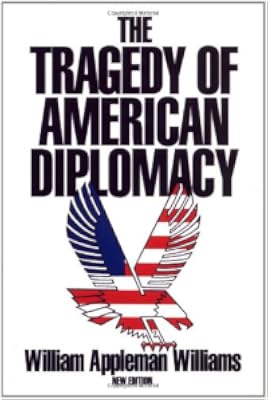
The Tragedy of American Diplomacy
by William Appleman Williams
On This Page
Description
This incisive interpretation of American foreign policy ranks as a classic in American thought. First published in 1959, the book offered an analysis of the wellsprings of American foreign policy that shed light on the tensions of the Cold War and the deeper impulses leading to the American intervention in Vietnam. William Appleman Williams brilliantly explores the ways in which ideology and political economy intertwined over time to propel American expansion and empire in the nineteenth and show more twentieth centuries. The powerful relevance of Williams's interpretation to world politics has only been strengthened by recent events in Central Asia and the Persian Gulf. Williams allows us to see that the interests and beliefs that once sent American troops into Texas and California, or Latin America and East Asia, also propelled American forces into Iraq. show lessTags
Recommendations











Member Reviews
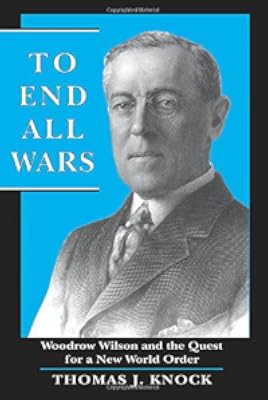
For Williams, Wilson's diplomacy is not merely symptomatic of a larger de-professionalization of diplomacy within a European context. Williams presents Wilson's diplomacy in the Great War in the context of his response to revolutions in Mexico, China, and Russia. Williams focuses on the continuity of Liberal economic thought which Wilson brought with him into the 20th century. Williams argues that in entering WWI, as well as seeking control over the course of revolutions in Asia and Latin America, Wilson sought to steer a course between revolution and reaction. The tragedy of Wilsonianism is, therefore, at the heart of the larger tragedy of American diplomacy, or the inability to accept the fact that other nations, pursuing their own show more revolutions, don't willingly assent to American tutelage. By accepting ideology as a continuous component of foreign policy formulation, as opposed to limiting it to the 20th century, Williams offers satisfying analysis. show less
Williams argues that 20th century US foreign relations are essentially economically motivated. His overall point is not difficult to accept, but he oversells it. His analysis of the Spanish-American War is strong, but his specifics get weaker as he goes. By the time he gets to the Cold War, he has practically no support at all. He sees the Open Door Notes as the essential statement of US policy, but ignores nationalism, democratic ideology, and US exceptionalism. This book is a classic of US foreign policy, but it is limited in its analysis by its particular ideology.
Revised and Enlarged edition
Ratings
Members
- Recently Added By
Published Reviews
William Appleman Williams, The Tragedy of American Diplomacy (1959). Writing at the height of the Cold War, Williams challenged the conventional wisdom that U.S. foreign policy was about the defense of freedom and protection of liberty. He instead contended that it had been driven by the desire for empire and expansion, and he placed the blame for the Cold War as much if not more on the United show more States than on the Soviet Union. Several generations of historians have argued over Williams’ claims, and a half century later his telling of events is dated. Nevertheless, The Tragedy of American Diplomacy remains one of the most consequential histories of the Cold War, greatly shaping how historians on all sides of the subject subsequently approached the topic. show less
added by jasbro
Lists

r/AskHistorians' Recommended Books
1,068 works; 19 members

Books recommended in the history category on FiveBooks.com
329 works; 4 members
Author Information
The leading "revisionist" historian during the years of the cold war, William Appleman Williams played a major role in shaping the perceptions of a generation of young historians. His best-known book, The Tragedy of American Diplomacy (1959), established themes he would pursue throughout his career as a writer and a teacher---the contradictions show more between ideals and "practicality" in the conduct of U.S. foreign policy and the centrality of economic factors in the nation's world outlook. Product of a solidly rural Iowa background and a graduate of the U.S. Naval Academy at Annapolis, Williams nonetheless became a figure of controversy because of his unconventional, often iconoclastic, observations about the American experience and his subjection of capitalism to a searching criticism that borrowed freely from Karl Marx, even as it rejected doctrinaire Marxism. At a time when most historians subscribed to a generally benevolent view of the nation's past and of its role in world affairs, Williams's freewheeling critiques often irritated the older generation of scholars. Yet they also opened the way for younger historians to break from the "consensus" school of history and enter into previously unexplored pathways to the American past. (Bowker Author Biography) show less
Awards and Honors
Notable Lists
Common Knowledge
- Important events
- Cold War
Classifications
- Genres
- Nonfiction, History, General Nonfiction, Politics and Government
- DDC/MDS
- 327.20973 — Society, government, & culture Political science International Relations: Spies Diplomacy Biography And History North America
- LCC
- E744 .W56 — History of the United States United States Twentieth century General Diplomatic history. Foreign and general
- BISAC
Statistics
- Members
- 343
- Popularity
- 92,321
- Reviews
- 3
- Rating
- (4.10)
- Languages
- English
- Media
- Paper, Ebook
- ISBNs
- 5
- ASINs
- 6