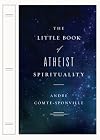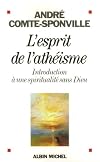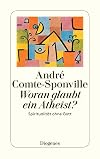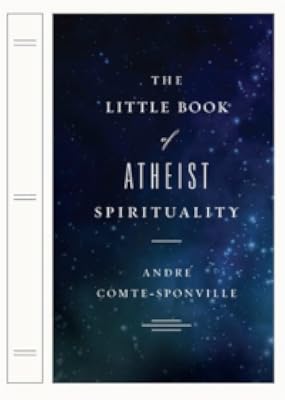
The Book of Atheist Spirituality
by André Comte-Sponville
On This Page
Description
Can we do without religion? Can we have ethics without God? Is there such thing as 'atheistic spirituality'? In this powerful book, the internationally bestselling author Andr� Comte-Sponville presents a philosophical exploration of atheism - and reaches startling conclusions. Atheists, Comte-Sponville argues, are no less interested in a spiritual life than religious believers. But by allowing the concept of spirituality to become intertwined with religion and dogma, humanity has lost show more touch with the nature of a true spiritual existence. Using rigorous, reasoned arguments and clear, concise, and often humorous prose Comte-Sponville draws on both Eastern and Western philosophical traditions to propose the atheistic alternative to religion, based on the human need to connect to each other and to the universe. In doing so, he offers a convincing treatise on a new form of spiritual life. show lessTags
Recommendations
Member Reviews
Because most folks are dualists, the idea of naturalistic spirituality still seems a contradiction in terms. Spirituality is generally thought to involve "higher planes," souls, spirits, and other supernatural phenomena. How can naturalists, including atheists, take spirituality seriously without violating a core tenet of their worldview, that no separate supernatural realm exists? Very easily, as Andre Comte-Sponville artfully argues in The Little Book of Atheist Spirituality. Spirituality properly understood has nothing essentially to do with the supernatural, and is far too important a matter to leave to religionists and new-agers. To do so would have naturalists ignore central questions of life’s meaning and purpose, of how we can show more best live together given the ultimate nature of things, and what our relation to that nature is. None of this requires or implies god.
This book is a delight and inspiration, without the least condescension or self-seriousness, beautifully direct, personal, touching, and profound. Comte-Sponville writes with the ease and assurance of someone who has thought deeply on these matters, and indeed he’s been writing and speaking for years on godless spirituality. The Little Book is the distillation of his wisdom, which is heir to both West (Spinoza, Pascal, Nietzsche, Sartre, Wittgenstein and some modern French philosophers unknown to most American readers) and East (Buddhism, Zen, Taoism, Vedanta). Although he has no animus against faith, so long as it’s not imposed, his primary objectives in the book’s three chapters are to show that 1) we don’t need theistic religion for a viable ethics or community, 2) there are good reasons to believe god, traditionally conceived, doesn’t exist, and 3) spiritual experience is a naturalistically valid mirror of basic existential truths. We are embedded in an impersonal, self-subsistent, untranscendable and value-less reality – Spinoza’s Nature, the All – therefore values and meaning are human-relative affairs. But understanding and feeling that we are rooted in an ultimately mysterious non-human absolute can, by temporarily stripping away the self, afford us the peak spiritual experience of immanent unity. Naturalistic spirituality shows us that our lives, finite, conditioned and purposeful, open into the eternal, unconditioned and purposeless.
Living in the post-modern, irreligious age (at least in France!), we must, he says, avoid the twin temptations of sophistry, that truth has no claim on us, and nihilism, that morality has no claim on us (Nietzsche: “Nothing is true, everything is allowed”). We are therefore enjoined to follow the Enlightenment in its insistence that there are truths and ethics to be had independent of religion. These are secured by fidelity, fidelity to rationalism: “to reason, to mind, to knowledge,” and to a progressive, practical humanism: “Our primary duty…that of living and behaving humanly.” Because impersonal nature affords us no recourse, this is a contingent, fallible project, but for that reason all the more worth pursuing:
Nothing can guarantee the triumph of peace and justice or even any irreversible progress. Is that any reason to stop fighting for these things? Of course not! On the contrary, it is a powerful reason to go on paying the utmost attention to life, peace, justice…and our children. Life is all the more precious for being rare and fragile. Justice and peace are all the more necessary, all the more urgent, because nothing can guarantee their ultimate victory. (54)
Comte-Sponville provides a concise survey of the traditional arguments for god and their insuperable shortcomings, then goes on to give additional reasons for why it’s very likely (although not ultimately provable) that god doesn’t exist: there’s no good evidence he does; the untoward amount of evil and suffering in the world; the sheer mediocrity of the human animal (is such a creature the best god could do?), and the fact that theistic beliefs so patently conform to our deepest wishes. That god is all-good, and provides us with everything we could possibly want, is an excellent reason to suspect he does not exist! Given these reasons for doubt, it’s of the first importance that society keep church and state separate, allowing space for the right not to believe. He ends the second chapter saying:
Freedom of thought is the only good that is perhaps more precious than peace, for the simple reason that, without it, peace would simply be another name for servitude.
The book contains much that’s personal to the author, which makes good reading and good sense. After all, even if they are informed by philosophies and traditions, spiritual matters are deeply personal – they are one’s own grappling with meaning and existence. In the 3rd chapter, he describes a transformative mystical experience that, as he puts it, let him finally understand what as a philosopher he’d been lecturing and writing about all these years. The elements of the experience are described as suspensions – suspensions of thought, of time, of the ego, “the tiny prison of the self.” This permits an opening into the self-less present:
What a relief, when the ego gets out of the way! Nothing remains but the All, with the body, marvelously, inside of it, as if restored to the world and itself. Nothing remains but the enormous thereness of being, nature and the universe, with no one left inside of us to be dismayed or reassured, or at least no one at this particular instant, in this particular body, to worry about dismay and reassurance, anxiety and danger… (149)
He points out that mystical experiences and the spirituality they express and inspire make a personal god, holding out hope for future salvation, unnecessary. Nature, being, the all, the absolute, reality (he says use whichever word suits you) is immediately sufficient, present and perfect, that is, without defect. Faith, belief, dogma, hope and fear play no role, so religion in the traditional sense becomes irrelevant. Nor is there any conflict between our best analytical and empirical modes of knowing – what we can pin down about nature – and the personal existential realizations stemming from experiences of unity. Such spirituality has nothing to fear from science.
All told, Comte-Sponville, a true humanist and universalist, gives us a philosophically and anecdotally rich account of how those without faith can remain authentically ethical and engaged in life, even as it opens onto infinity. The human project is part of reality, but in no sense does it encompass reality, which rather encompasses us in its mystery. We have to make our peace with this, perhaps even find fulfillment in the fact we aren’t the measure of nature. Naturalists looking for enlightenment will find in this book an inspiring, profound expression of the spiritual possibilities inherent in their worldview.
Reviewed by Tom Clark, July, 2008 show less
This book is a delight and inspiration, without the least condescension or self-seriousness, beautifully direct, personal, touching, and profound. Comte-Sponville writes with the ease and assurance of someone who has thought deeply on these matters, and indeed he’s been writing and speaking for years on godless spirituality. The Little Book is the distillation of his wisdom, which is heir to both West (Spinoza, Pascal, Nietzsche, Sartre, Wittgenstein and some modern French philosophers unknown to most American readers) and East (Buddhism, Zen, Taoism, Vedanta). Although he has no animus against faith, so long as it’s not imposed, his primary objectives in the book’s three chapters are to show that 1) we don’t need theistic religion for a viable ethics or community, 2) there are good reasons to believe god, traditionally conceived, doesn’t exist, and 3) spiritual experience is a naturalistically valid mirror of basic existential truths. We are embedded in an impersonal, self-subsistent, untranscendable and value-less reality – Spinoza’s Nature, the All – therefore values and meaning are human-relative affairs. But understanding and feeling that we are rooted in an ultimately mysterious non-human absolute can, by temporarily stripping away the self, afford us the peak spiritual experience of immanent unity. Naturalistic spirituality shows us that our lives, finite, conditioned and purposeful, open into the eternal, unconditioned and purposeless.
Living in the post-modern, irreligious age (at least in France!), we must, he says, avoid the twin temptations of sophistry, that truth has no claim on us, and nihilism, that morality has no claim on us (Nietzsche: “Nothing is true, everything is allowed”). We are therefore enjoined to follow the Enlightenment in its insistence that there are truths and ethics to be had independent of religion. These are secured by fidelity, fidelity to rationalism: “to reason, to mind, to knowledge,” and to a progressive, practical humanism: “Our primary duty…that of living and behaving humanly.” Because impersonal nature affords us no recourse, this is a contingent, fallible project, but for that reason all the more worth pursuing:
Nothing can guarantee the triumph of peace and justice or even any irreversible progress. Is that any reason to stop fighting for these things? Of course not! On the contrary, it is a powerful reason to go on paying the utmost attention to life, peace, justice…and our children. Life is all the more precious for being rare and fragile. Justice and peace are all the more necessary, all the more urgent, because nothing can guarantee their ultimate victory. (54)
Comte-Sponville provides a concise survey of the traditional arguments for god and their insuperable shortcomings, then goes on to give additional reasons for why it’s very likely (although not ultimately provable) that god doesn’t exist: there’s no good evidence he does; the untoward amount of evil and suffering in the world; the sheer mediocrity of the human animal (is such a creature the best god could do?), and the fact that theistic beliefs so patently conform to our deepest wishes. That god is all-good, and provides us with everything we could possibly want, is an excellent reason to suspect he does not exist! Given these reasons for doubt, it’s of the first importance that society keep church and state separate, allowing space for the right not to believe. He ends the second chapter saying:
Freedom of thought is the only good that is perhaps more precious than peace, for the simple reason that, without it, peace would simply be another name for servitude.
The book contains much that’s personal to the author, which makes good reading and good sense. After all, even if they are informed by philosophies and traditions, spiritual matters are deeply personal – they are one’s own grappling with meaning and existence. In the 3rd chapter, he describes a transformative mystical experience that, as he puts it, let him finally understand what as a philosopher he’d been lecturing and writing about all these years. The elements of the experience are described as suspensions – suspensions of thought, of time, of the ego, “the tiny prison of the self.” This permits an opening into the self-less present:
What a relief, when the ego gets out of the way! Nothing remains but the All, with the body, marvelously, inside of it, as if restored to the world and itself. Nothing remains but the enormous thereness of being, nature and the universe, with no one left inside of us to be dismayed or reassured, or at least no one at this particular instant, in this particular body, to worry about dismay and reassurance, anxiety and danger… (149)
He points out that mystical experiences and the spirituality they express and inspire make a personal god, holding out hope for future salvation, unnecessary. Nature, being, the all, the absolute, reality (he says use whichever word suits you) is immediately sufficient, present and perfect, that is, without defect. Faith, belief, dogma, hope and fear play no role, so religion in the traditional sense becomes irrelevant. Nor is there any conflict between our best analytical and empirical modes of knowing – what we can pin down about nature – and the personal existential realizations stemming from experiences of unity. Such spirituality has nothing to fear from science.
All told, Comte-Sponville, a true humanist and universalist, gives us a philosophically and anecdotally rich account of how those without faith can remain authentically ethical and engaged in life, even as it opens onto infinity. The human project is part of reality, but in no sense does it encompass reality, which rather encompasses us in its mystery. We have to make our peace with this, perhaps even find fulfillment in the fact we aren’t the measure of nature. Naturalists looking for enlightenment will find in this book an inspiring, profound expression of the spiritual possibilities inherent in their worldview.
Reviewed by Tom Clark, July, 2008 show less
I thought I was agnostic, but it seems like I'm probably an atheist after all.
A thought-provoking book, although at the beginning it is sometimes simply provoking. However, the author makes it clear that he's not a "God-basher," and the tone of the book is all the better for it.
A thought-provoking book, although at the beginning it is sometimes simply provoking. However, the author makes it clear that he's not a "God-basher," and the tone of the book is all the better for it.
Surprisingly, this book provides precisely what the title promises. It’s in three parts:
I. Can we do without religion?
II. Does God exist?
III. Can there be an atheist spirituality?
In Part I, Andre argues that humanity survives on the same moral, spiritual, and cultural values that religion cultivates, but that religion itself is unnecessary. Religion doesn’t provide the basis for our morals, but rather our morals provide the basis for religion. We do have a foundational need for our spiritual well-being, but Andre shows these basic needs to be communion, fidelity, and love … of which atheists can partake without entering a church building.
Part II you may skip with no feelings of regret. It’s a rehash of various arguments against show more God, and refutations of the common arguments for God, and there is not enough depth nor originality here to bother with.
Part III makes up for the lazy part II, by exposing both the smallness and the awesomeness of our being. Just staring at the stars is a religious experience. Sensing nature in all its immensity helps the spirit break free, at least partially, of the tiny prison of the self. What a relief, when the ego is driven away and nothing remains but the All, the enormous thereness of being!
Why would you need a God? The universe suffices. Why would you need a church? The world suffices. Why would you need faith? Experience suffices. Says Andre, “the certainty that you cannot fall out of the universe, the sense of being at one with the All … never have I experienced anything more powerful, more delightful, more overwhelming and more soothing.”
It turns out that atheist spirituality is as experiential and meaningful as promised, but the training course may be more cerebral than fulfilling. You have to dive below the surface or get trapped in a head bubble, trying to “oppose sophistry with rationalism and nihilism with humanism” or some such similar commandment. I suppose that’s a struggle with any worthwhile philosophy.
Fun book, written with wit and intelligence, and which does indeed titillate your spiritual side without looking to God. show less
I. Can we do without religion?
II. Does God exist?
III. Can there be an atheist spirituality?
In Part I, Andre argues that humanity survives on the same moral, spiritual, and cultural values that religion cultivates, but that religion itself is unnecessary. Religion doesn’t provide the basis for our morals, but rather our morals provide the basis for religion. We do have a foundational need for our spiritual well-being, but Andre shows these basic needs to be communion, fidelity, and love … of which atheists can partake without entering a church building.
Part II you may skip with no feelings of regret. It’s a rehash of various arguments against show more God, and refutations of the common arguments for God, and there is not enough depth nor originality here to bother with.
Part III makes up for the lazy part II, by exposing both the smallness and the awesomeness of our being. Just staring at the stars is a religious experience. Sensing nature in all its immensity helps the spirit break free, at least partially, of the tiny prison of the self. What a relief, when the ego is driven away and nothing remains but the All, the enormous thereness of being!
Why would you need a God? The universe suffices. Why would you need a church? The world suffices. Why would you need faith? Experience suffices. Says Andre, “the certainty that you cannot fall out of the universe, the sense of being at one with the All … never have I experienced anything more powerful, more delightful, more overwhelming and more soothing.”
It turns out that atheist spirituality is as experiential and meaningful as promised, but the training course may be more cerebral than fulfilling. You have to dive below the surface or get trapped in a head bubble, trying to “oppose sophistry with rationalism and nihilism with humanism” or some such similar commandment. I suppose that’s a struggle with any worthwhile philosophy.
Fun book, written with wit and intelligence, and which does indeed titillate your spiritual side without looking to God. show less
This kind of book is necessay. Its central message, that the transcendent and - yes, whisper it - the spiritual can be divorced from the dogma and metaphysical baggage of organised religion is a good one. Unfortunately, books cannot be rated entirely by the necessity of their message - they also have to assessed as something to be read, or, in some cases, endured.
I don't mean to say that the author is a bad writer (quite the opposite in fact); rather, that the subject is inherently indescribable. This becomes most plain in the third section of the book where he gets down to describing the nature of his (non-religious) spiritual experiences. Overly long, this string of 'oceanic-feeling-at-the-centre-of-totality' style statements soon show more becomes tediously repetitive. Actually, to be fair, I did understand what he was talking about. Indeed, at its best, the very experience of reading can itself resemble his description: the melting away of self, of current surroundings, and the total absorbtion into characters, narrative or argument. Ironically, however, the sheer tedium induced by this barrage of gnomic sentences meant I had no chance of actually enjoying the very experience he was describing.
Even so, there was plenty to like about this book, including a very succinct and clear overview of the arguments relating to the existence of god. However, these have all been related in greater detail and with equal clarity elsewhere, and in any case don't really constitute the unique focus of this book. In the end, I find myself in the highly unusual situation of entirely agreeing with the author, while simultaneously having little wish to read his book. show less
I don't mean to say that the author is a bad writer (quite the opposite in fact); rather, that the subject is inherently indescribable. This becomes most plain in the third section of the book where he gets down to describing the nature of his (non-religious) spiritual experiences. Overly long, this string of 'oceanic-feeling-at-the-centre-of-totality' style statements soon show more becomes tediously repetitive. Actually, to be fair, I did understand what he was talking about. Indeed, at its best, the very experience of reading can itself resemble his description: the melting away of self, of current surroundings, and the total absorbtion into characters, narrative or argument. Ironically, however, the sheer tedium induced by this barrage of gnomic sentences meant I had no chance of actually enjoying the very experience he was describing.
Even so, there was plenty to like about this book, including a very succinct and clear overview of the arguments relating to the existence of god. However, these have all been related in greater detail and with equal clarity elsewhere, and in any case don't really constitute the unique focus of this book. In the end, I find myself in the highly unusual situation of entirely agreeing with the author, while simultaneously having little wish to read his book. show less
A "Little Book" perhaps, but not a quick read. This book provides a picture of a spirituality removed from a religious context. The result is elegant and moving. Comte-Sponville is able to put into words experience that is profound.
Innegabilmente le prime due parti sono interessanti, e Compte-Sponville fa quello che gli riesce bene: riassume, sintetizza, con grande conoscenza delle parole che definiscono concetti, e arriva diretto la' dove deve andare.
La terza parte è il festival dei chiasmi e più che una sintesi sembra una scopiazzatura dai testi di filosofia orientale, e un po' di Coelho. Il sito della UAAR da' decisamente ipotesi di spiritualità laica piu' interessanti.
La terza parte è il festival dei chiasmi e più che una sintesi sembra una scopiazzatura dai testi di filosofia orientale, e un po' di Coelho. Il sito della UAAR da' decisamente ipotesi di spiritualità laica piu' interessanti.
This book is divided into three parts, and the first part "Can We Do Without Religion?" is one of the best descriptions of the role religions should play in society - emphasizing community, shared memory (fidelity), and love. Within these confines, even an atheist should grab hold of "religion" (now loosely defined, as he examines it without God) and the role it plays in society.
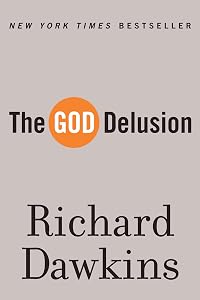
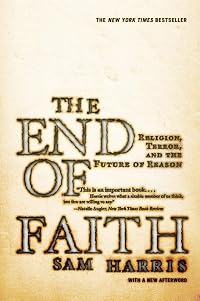
His second part on "Does God Exist?" (his answer is a simple no) is very lucid, although goes over ground more fully explored by Dawkins and Harris.
His third part "Can there be an atheist spirituality?" (to which he answers yes) gets a bit overinflated, but is still a useful discussion and antidote to those who argue that atheism would suck the joy and wonder show more out of existence. Comte-Sponville argues instead atheism should lincrease the joy and wonder we find in our lives - a usuful concept to be sure.
Overall, a well thought out, simply argued, and lucid exploration of the practical effects an atheistic worldview can assume in one person's life and personal philosophy. show less
His second part on "Does God Exist?" (his answer is a simple no) is very lucid, although goes over ground more fully explored by Dawkins and Harris.
His third part "Can there be an atheist spirituality?" (to which he answers yes) gets a bit overinflated, but is still a useful discussion and antidote to those who argue that atheism would suck the joy and wonder show more out of existence. Comte-Sponville argues instead atheism should lincrease the joy and wonder we find in our lives - a usuful concept to be sure.
Overall, a well thought out, simply argued, and lucid exploration of the practical effects an atheistic worldview can assume in one person's life and personal philosophy. show less
Members
- Recently Added By
Lists

Added to collection Sept 2014 - Aug 2015
7 works; 1 member
Author Information

108+ Works 2,421 Members
Andre Comte-Sponville is one of the most important--and certainly the most popular--of the new wave of young French philosophers. Now in his early forties, he teaches at the Sorbonne & is the author of five highly acclaimed scholarly books of classical philosophy as well as the widely popular "A Small Treatise on the Great Virtues", which spent 14 show more months on the French bestseller list & is being translated into 19 languages. Comte-Sponville lives in Paris. (Bowker Author Biography) show less
Some Editions
Awards and Honors
Awards
Series
Belongs to Publisher Series
detebe (24027)
Common Knowledge
- Canonical title
- The Book of Atheist Spirituality
- Original title
- L'esprit de l'atheisme
- Alternate titles
- The Little Book of Atheist Spirituality
- Original publication date
- 2006 (original French) (original French); 2007 (English translation) (English translation)
- Dedication
- This book is dedicated to
the woman who brought it forth. - First words*
- Cominciamo dalle cose più facili. Dio, per definizione, va oltre noi. Le religioni no. Le religioni sono umane.
- Last words*
- (Click to show. Warning: May contain spoilers.)È l'amore, non la speranza, a far vivere; è la verità, non la fede, a liberare.
Noi siamo già nel Regno: l'eternità è adesso. - Original language*
- Francese
- Disambiguation notice
- L'esprit de l'athéisme has been published in English as The Little Book of Atheist Spirituality
*Some information comes from Common Knowledge in other languages. Click "Edit" for more information.
Classifications
Statistics
- Members
- 640
- Popularity
- 45,313
- Reviews
- 16
- Rating
- (3.72)
- Languages
- 8 — Dutch, English, French, German, Italian, Polish, Portuguese, Spanish
- Media
- Paper, Ebook
- ISBNs
- 18
- ASINs
- 8