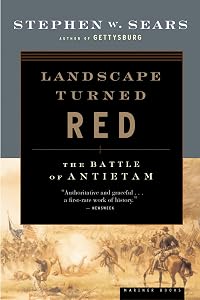
Landscape Turned Red: The Battle of Antietam
by Stephen W. Sears
On This Page
Description
The Civil War battle waged on September 17, 1862, at Antietam Creek, Maryland, was one of the bloodiest in the nation's history: in this single day, the war claimed nearly 23,000 casualties. In Landscape Turned Red, the renowned historian Stephen Sears draws on a remarkable cache of diaries, dispatches, and letters to recreate the vivid drama of Antietam as experienced not only by its leaders but also by its soldiers, both Union and Confederate. Combining brilliant military analysis with show more narrative history of enormous power, Landscape Turned Red is the definitive work on this climactic and bitter struggle. show lessTags
Recommendations


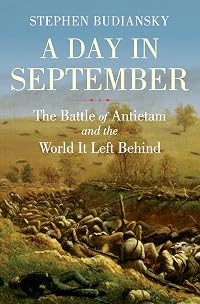

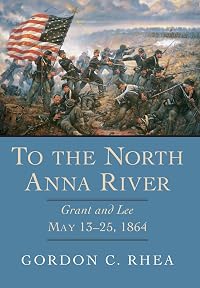


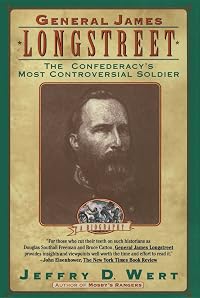

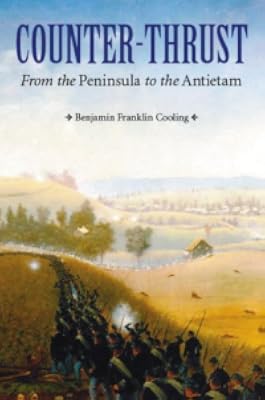




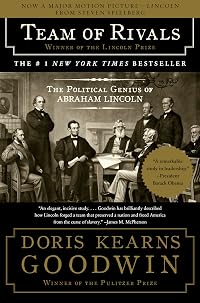

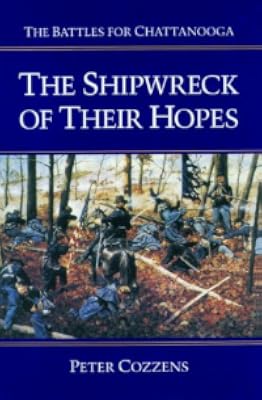
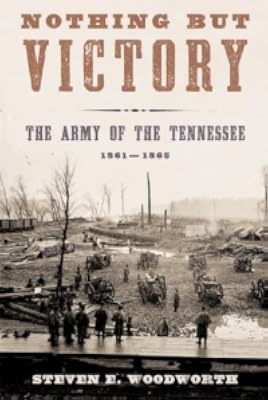
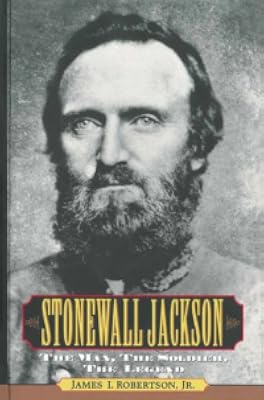

Member Recommendations
Member Reviews
I would recommend someone reading this to start in Chapter 5 and skip the chapters before that. Then end sometime after the fighting is over. Prior to chapter 5, there is a lot of wandering around with no useful result but mostly just learning more than you ever want to know about unsufferable General McClellan.
McClellan thinks he is God's gift to the Union. He believes his Pinkerton spies that the Confederate Army facing him is always larger. For that reason and wanting all to be perfect before he moves he is painfully slow to move his army. The book probably uses all the word combinations of slow regarding his moving the army, with my favorite descriptive word being 'glacial.' My favorite bit is when Lincoln is looking over the army show more spread out below him and saying it was not an army but McClellan's bodyguard.
Even slow but sure may have worked out, but at Antietam he made numerous faults of not scouting the ground, or the apposing forces, or troop movements around his army. He also allowed his forces to go in piecemeal, and didn't properly support his troops. It is painful enough when your side is losing, but much worse when it is because they are playing the game like an idiot. In spite of all those negative factors for the Union, the brave efforts of both sides in the battle makes this part of the book interesting. The blundering effort caused by McClellan is almost enough to make me want to root for the side that had my current home state of North Carolina.
The battle was significant in that it was enough of a victory (turning the confederate forces back), that Lincoln afterwards issued the Emancipation Proclamation. The turn of the battle and the proclamation lead to the European countries not want to back a side that may be the losing side and to show they supported slavery.
If you like any details from the Civil war you will be ok with the whole book, but if you want to skip the less interesting details, as I said start in chapter 5 right after McClellan gets the lost orders, and stop after the battle ends. if you want to learn more, Wikipedia on the Battle of Antietam has all the pertinent details without endless complaints about or puffed up excuses from 'little mac.' show less
McClellan thinks he is God's gift to the Union. He believes his Pinkerton spies that the Confederate Army facing him is always larger. For that reason and wanting all to be perfect before he moves he is painfully slow to move his army. The book probably uses all the word combinations of slow regarding his moving the army, with my favorite descriptive word being 'glacial.' My favorite bit is when Lincoln is looking over the army show more spread out below him and saying it was not an army but McClellan's bodyguard.
Even slow but sure may have worked out, but at Antietam he made numerous faults of not scouting the ground, or the apposing forces, or troop movements around his army. He also allowed his forces to go in piecemeal, and didn't properly support his troops. It is painful enough when your side is losing, but much worse when it is because they are playing the game like an idiot. In spite of all those negative factors for the Union, the brave efforts of both sides in the battle makes this part of the book interesting. The blundering effort caused by McClellan is almost enough to make me want to root for the side that had my current home state of North Carolina.
The battle was significant in that it was enough of a victory (turning the confederate forces back), that Lincoln afterwards issued the Emancipation Proclamation. The turn of the battle and the proclamation lead to the European countries not want to back a side that may be the losing side and to show they supported slavery.
If you like any details from the Civil war you will be ok with the whole book, but if you want to skip the less interesting details, as I said start in chapter 5 right after McClellan gets the lost orders, and stop after the battle ends. if you want to learn more, Wikipedia on the Battle of Antietam has all the pertinent details without endless complaints about or puffed up excuses from 'little mac.' show less
I would start at chapter 4 for South Mountain/ Harper's Ferry narrative. First part of book is alot of sociological info that I did not find particularly interesting. Basically McClellan is a messianic, egomaniacal, self serving fool.
Ch 5 and 6 offers fantastic accounting of the battle. First hand accounts of the savageness of the fighting, along with accounts from commanders involved.
Brutally honest and accurate evaluations of senior leadership
Ch 5 and 6 offers fantastic accounting of the battle. First hand accounts of the savageness of the fighting, along with accounts from commanders involved.
Brutally honest and accurate evaluations of senior leadership
I knew that Antietem, the bloodiest day of the American Civil War was a total cluster. But reading the details, with heavy emphasis on the Union side, was fascinating. No recon, no communication, egotistical leadership, timidity, and procrastination all combined on the Union side to grasp defeat or at least a draw, from the mighty hand of victory. This battle, like others, could have really shortened the Civil War.
Sears has provided a meticulous account of McClellan's foibles.
Sears has provided a meticulous account of McClellan's foibles.
Stephen W. Sears does not need anyone to annunciate any louder the fact that he is a wonderful American Civil War author. His many works alone, including "Landscape Turned Red: The Battle of Antietam" can attest to that.
The narrative which Sears employs is constant and moving. It never seems to bog down for too long a period. His prose keeps the reader engaged, and to use an oft-used expression: he did bring the Battle of Antietam, with all of its movements, locations, and cast of characters alive.
"Landscape Turned Red" is not a difficult book to read and understand. Mr. Sears uses language that most everyone can understand, though he did not write it aimed at catering to the lowest common denominator. It is a very well researched show more work. Sears seems to support his claims in the book with facts, of which there are many, but still keeps the flow of the book moving forward.
An excellent and scholarly read that I would recommend to any and all. show less
The narrative which Sears employs is constant and moving. It never seems to bog down for too long a period. His prose keeps the reader engaged, and to use an oft-used expression: he did bring the Battle of Antietam, with all of its movements, locations, and cast of characters alive.
"Landscape Turned Red" is not a difficult book to read and understand. Mr. Sears uses language that most everyone can understand, though he did not write it aimed at catering to the lowest common denominator. It is a very well researched show more work. Sears seems to support his claims in the book with facts, of which there are many, but still keeps the flow of the book moving forward.
An excellent and scholarly read that I would recommend to any and all. show less
For me, the US Civil War's real turning point comes directly after the Second Battle of Bull Run, when Robert E. Lee becomes convinced that a direct assault on Washington D.C. would be beyond the capacity of the Army of Northern Virginia. Mr. Sears has an excellent account of the events of the two weeks following that revelation. Lee veers away to force a panicked offer of peace and the bloodiest day of US Military history follows. All the dramatic events are revealed and controversies are pointed out in this book. The text is well written but the maps in the paperback that I read were several shades of grey, and not pleasant to consult. There's an order of battle, and many points are footnoted.
Read twice.
Read twice.
Superb book detailing the battle of Antietam in the American Civil War. This battle was one of the bloodiest in American History and the author Stephen Sears draws on a variety of sources including diaries and letters of the participants to produce a definitive work. The book was gripping and Mister Sears displays a mastery of his craft in the writing of this book. He is scathing in his comments on the Union Generals in particular, George McClellan who was too cautious in his handling of the Union battle deployment and who overstated the numbers of the Confederate forces in all correspondence with Washington. The importance of the battle in influencing Lincoln to issue the Emancipation Proclamation is wonderfully illustrated in this show more history. A wonderful addition to my library. show less
Absolutely amazing! The author does a fantastic job of covering an immense amount of detail in such a beautiful way that it does not feel as though you are being pounded by an endless stream of facts and dates. This work most assuredly ranks among my favorite American Civil War books and is probably the best one I have come across that covers just one battle. If you are wanting to learn more about arguably the most important battle in the Civil War and therefore in American history, I highly recommend "Landscape Turned Red" by Stephen W. Sears.
Members
- Recently Added By
Lists

Non-Fiction Worth Reading
1,025 works; 264 members
Author Information

41+ Works 5,766 Members
Stephen W. Sears is the author of many award-winning books on the Civil War, including Gettysburg, Landscape Turned Red, and Chancellorsville, all winners of the Fletcher Pratt Award. He lives in Connecticut.
Awards and Honors
Awards
Common Knowledge
- Canonical title
- Landscape Turned Red: The Battle of Antietam
- Original publication date
- 1983
- People/Characters
- Braxton Bragg; Jefferson Davis; Stonewall Jackson; Evander McIvor Law; Robert E. Lee; George B. McClellan (show all 30); Richard Heron Anderson; Ambrose E. Burnside; Jacob D. Cox; William B. Franklin; John Gibbon; Henry W. Halleck; A. P. Hill; Daniel Harvey Hill; John Bell Hood; Joseph Hooker; Abraham Lincoln; James Longstreet; Lafayette McLaws; Joseph K. F. Mansfield; George Gordon Meade; Dixon S. Miles; John Pope; Fitz-John Porter; John Sedgwick; David Hunter Strother; J. E. B. Stuart; Edwin V. Sumner; John G. Walker; Alpheus S. Williams
- Important places
- USA; Antietam Creek, Pennsylvania-Maryland, USA; Maryland, USA; Sharpsburg, Maryland, USA; Turner's Gap, South Mountain, Maryland, USA; Atlanta, Georgia, USA (show all 15); Crampton's Gap, Maryland, USA; Dunker Church; Fox's Gap, South Mountain, Blue Ridge Mountains, USA; Frederick, Maryland, USA; Harper's Ferry, West Virginia, USA; Maryland Heights, Maryland, USA; Samuel Mumma Farm; Burnside Bridge, Maryland, USA; South Mountain, Blue Ridge Mountains, USA
- Important events
- Battle of Antietam (1862); American Civil War (1861 | 1865); Battle of South Mountain
- Dedication
- For Sally T.
- First words
- INTRODUCTION
Of all the days on all the fields where American soldiers have fought, the most terrible by almost any measure was September 17, 1862.
* PROLOGUE *
THE LAST, BEST HOPE
Charles Francis Adams, Jr., first lieutenant in the 1st Massachusetts cavalry, grandson and great-grandson of presidents, was in Washington to take the national pulse. - Last words
- (Click to show. Warning: May contain spoilers.)[Appendix II: Burnside and His Bridge]
Clearly General Burnside failed to rise to the occasion at Antietam; equally clearly, no other Union officer on the field that day was so badly served by the general commanding. - Blurbers
- McFeely, William S.
Classifications
- Genres
- History, Nonfiction, General Nonfiction
- DDC/MDS
- 973.7336 — History & geography History of North America United States Civil War Era (1857-1865) Abraham Lincoln (1861-1865) Campaign of 1862 concluded Northern Virginia, West Virginia, Maryland, Pennsylvania (3 Sep.-14 Nov.)
- LCC
- E474.65 .S43 — History of the United States United States Civil War period, 1861-1865 The Civil War, 1861-1865
- BISAC
Statistics
- Members
- 1,184
- Popularity
- 21,249
- Reviews
- 17
- Rating
- (4.30)
- Languages
- English, French
- Media
- Paper, Audiobook, Ebook
- ISBNs
- 21
- UPCs
- 2
- ASINs
- 22