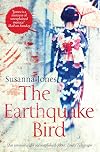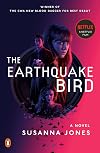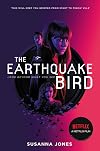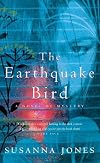
The Earthquake Bird
by Susanna Jones
On This Page
Description
Now a major Netflix film starring Alicia Vikander and Riley Keough, a haunting psychological thriller set in Tokyo probing deep into the mind of a murder suspectThe grisly headline leaves nothing to the imagination: "Woman's torso recovered from Tokyo Bay. Believed to be missing British bartender Lily Bridges." The only suspect is Lucy Fly. Her friend is dead, her lover has disappeared, and as far as anyone is concerned, she's as good as guilty.
Trapped in the interrogation room, Lucy show more begins to unravel two stories. One, for the police, is a spare outline, offering more questions than answers. The other—the real one, if you believe her—is a gripping dive into an obsessive mind, revealing the checkered past that brought her to Japan, her complicated friendship with Lily, and a tempestuous affair with a missing Japanese photographer named Teiji. As she excavates the dangerous secrets—both past and present—that haunt her waking mind, Lucy relates an unsettling life story that spans bustling Tokyo, the British countryside, and remote Japanese islands, each step taking us closer to the chilling truth about Lily's death. An all-consuming crime story like no other, Susanna Jones's mesmerizing debut novel is a neo-noir thriller as shocking as it is exquisitely composed.
"Novels of psychological suspense hang on the delicacy of the writer's touch—that feathery brushstroke that darkens a mood, heightens an action and brings a revealing word to a character's lips—and Susanna Jones has the touch."—Marilyn Stasio, The New York Times. Literature. Thriller. Fiction. Mystery. show less
Tags
Recommendations







































Member Recommendations


Member Reviews
As this book opens Lucy Fly is taken to a Japanese police station under suspicion of the murder of a fellow British girl, Lily. As we go back through Lucy's memories we definitely get the impression that she is capable of killing. This is not a comfortable read and Lucy's habit of referring to herself in the third person adds a certain degree of distance. Indeed she is a strange woman.
For a debut novel I found this a very atmospheric read. The descriptions of Japan and Lucy's reasons for living there are fully realised. I must say that Lucy is not a likeable character and, possibly, unreliable as a narrator. As the story unfolded I found myself wanting to know what happened to Lily. Is she the dismembered corpse or has something else show more happened to her? Did Lucy kill her?
Even though certain things made me uncomfortable I think that the way Susanna Jones writes is beautiful. The style of prose fits the story and I am interested to read more from this author. show less
For a debut novel I found this a very atmospheric read. The descriptions of Japan and Lucy's reasons for living there are fully realised. I must say that Lucy is not a likeable character and, possibly, unreliable as a narrator. As the story unfolded I found myself wanting to know what happened to Lily. Is she the dismembered corpse or has something else show more happened to her? Did Lucy kill her?
Even though certain things made me uncomfortable I think that the way Susanna Jones writes is beautiful. The style of prose fits the story and I am interested to read more from this author. show less
How would you react if you were arrested for murder?
Would you be angry? Frightened? Horrified? Or would you reflect on the prevalence of earthquakes in your adopted city? If the latter sounds like you then you might get along very well with Lucy Fly, English-born, Tokyo-based and newly minted murder suspect.
What's it about?
Within the first few pages of this mystery, Lucy is arrested for the murder of a friend. Did she do it? While the police attempt to interrogate her, she sits quietly, sifting through her memories, sharing with the reader her family history and relating the development of two recent relationships - including her connection to the murder victim.
What's it like?
Although this is presented as a murder mystery, and there is show more a focus on solving the crime, this is a psychological drama rather than a police procedural. As I read, I was drawn into Lucy's world to such an extent that it was a fresh shock each time I was returned to the police station and the ineffectual remarks of the policemen. This feels like a character study or a fictional memoir and readers will want to know - Who is Lucy? What made her this way? Is she really capable of taking a life? As the novel develops we see death stalk Lucy and it seems horribly plausible, almost logical, that she might graduate to carrying it out. Taking her psychological portrait is the reader's ultimate aim.
Perhaps simply to heighten to the sense of strangeness, Jones has Lucy regularly refer to herself in the third person. For instance: 'Lucy hasn't always had a happy relationship with trees but it isn't fair to condemn all for the crimes of one.' On reflection, that would be a pretty strange sentence even if it were written in the first person, but I found the switching between first and third made the narration feel slightly disjointed. This is appropriate as Lucy does seem out of joint with her surroundings and the unusual narrative tic may be designed to show us how distant she is from herself, never mind other people. Lucy is an intriguing character who regularly reveals more to the reader than she herself may understand, though she does not believe herself to be naive. She shares a number of attributes with the murder victim, suggesting that she is also a victim of a kind.
Jones writes very carefully and deliberately so it feels like every detail could be significant in some way, from the earthquake that opens the story to the ripples in the puddle Teiji photographs. This helped to make the story feel powerful and engrossing, imbuing every moment with potential weight. Lucy works as a translator and seems to exist as an observer of society rather than a participant, giving the reader an insight into Japanese culture and Tokyo's georgraphy as she reflects on her experiences in detail. ('We discussed the cake, the wagashi. The soft, sticky bun was wrapped in a leaf. I didn't know what tree it was picked from but it tasted sharp and sweet.') The descriptive details evoke a world that is at once different and familiar: ladies sip tea, girls sit in noodle bars. Although this tale of obsession could be set anywhere, Jones firmly roots it in Tokyo, presumably with accuracy as the author has lived and worked there.
Final thoughts
Although I didn't find the opening gripping in the manner implied by the blurb, I soon found Lucy's character intriguing and read the story quickly with enjoyment. The ending is ambiguous with much left unresolved but there is a clear sense of conclusion and the reader is left pondering rather than wondering. Jones' descriptions of Japan's landscapes, customs, people and language are clear and interesting. Characters and details are convincing. It's beautifully written in lean, easy-to-read prose with occasional deft touches of humour. At 253 pages it's a relatively short read and is so compelling that you might find yourself staying up late to finish it in one sitting.
This is Jones' debut novel and I am really looking forward to reading the novels she has written since - 'Water Lily', 'The Missing Person's Guide to Love' and 'When Nights Were Cold'.
Highly recommended. show less
Would you be angry? Frightened? Horrified? Or would you reflect on the prevalence of earthquakes in your adopted city? If the latter sounds like you then you might get along very well with Lucy Fly, English-born, Tokyo-based and newly minted murder suspect.
What's it about?
Within the first few pages of this mystery, Lucy is arrested for the murder of a friend. Did she do it? While the police attempt to interrogate her, she sits quietly, sifting through her memories, sharing with the reader her family history and relating the development of two recent relationships - including her connection to the murder victim.
What's it like?
Although this is presented as a murder mystery, and there is show more a focus on solving the crime, this is a psychological drama rather than a police procedural. As I read, I was drawn into Lucy's world to such an extent that it was a fresh shock each time I was returned to the police station and the ineffectual remarks of the policemen. This feels like a character study or a fictional memoir and readers will want to know - Who is Lucy? What made her this way? Is she really capable of taking a life? As the novel develops we see death stalk Lucy and it seems horribly plausible, almost logical, that she might graduate to carrying it out. Taking her psychological portrait is the reader's ultimate aim.
Perhaps simply to heighten to the sense of strangeness, Jones has Lucy regularly refer to herself in the third person. For instance: 'Lucy hasn't always had a happy relationship with trees but it isn't fair to condemn all for the crimes of one.' On reflection, that would be a pretty strange sentence even if it were written in the first person, but I found the switching between first and third made the narration feel slightly disjointed. This is appropriate as Lucy does seem out of joint with her surroundings and the unusual narrative tic may be designed to show us how distant she is from herself, never mind other people. Lucy is an intriguing character who regularly reveals more to the reader than she herself may understand, though she does not believe herself to be naive. She shares a number of attributes with the murder victim, suggesting that she is also a victim of a kind.
Jones writes very carefully and deliberately so it feels like every detail could be significant in some way, from the earthquake that opens the story to the ripples in the puddle Teiji photographs. This helped to make the story feel powerful and engrossing, imbuing every moment with potential weight. Lucy works as a translator and seems to exist as an observer of society rather than a participant, giving the reader an insight into Japanese culture and Tokyo's georgraphy as she reflects on her experiences in detail. ('We discussed the cake, the wagashi. The soft, sticky bun was wrapped in a leaf. I didn't know what tree it was picked from but it tasted sharp and sweet.') The descriptive details evoke a world that is at once different and familiar: ladies sip tea, girls sit in noodle bars. Although this tale of obsession could be set anywhere, Jones firmly roots it in Tokyo, presumably with accuracy as the author has lived and worked there.
Final thoughts
Although I didn't find the opening gripping in the manner implied by the blurb, I soon found Lucy's character intriguing and read the story quickly with enjoyment. The ending is ambiguous with much left unresolved but there is a clear sense of conclusion and the reader is left pondering rather than wondering. Jones' descriptions of Japan's landscapes, customs, people and language are clear and interesting. Characters and details are convincing. It's beautifully written in lean, easy-to-read prose with occasional deft touches of humour. At 253 pages it's a relatively short read and is so compelling that you might find yourself staying up late to finish it in one sitting.
This is Jones' debut novel and I am really looking forward to reading the novels she has written since - 'Water Lily', 'The Missing Person's Guide to Love' and 'When Nights Were Cold'.
Highly recommended. show less
"It seems to Lucy now that the photograph marks the start of the trouble. I could look at the picture and think, this is the moment where it all went wrong, the point at which it was already too late."
This is a quiet suspense story. Lucy is a translator in Japan. Originally from England, she doesn't like to think or talk about home. She doesn't seem to talk much. She just takes in her surroundings and lets very little get to her.
But now she's in an interrogation room. She used to have a boyfriend but he's gone. She used to have a new friend but she is also gone, assumed murdered - by Lucy. The story unravels slowly, through Lucy going back to the beginning and then told through tidbits between Lucy being interrogated and giving nothing show more to the police. It was a fast read that kept me curious. Lucy's world is so different from mine - very quiet, filled with solitude. The ending was well done and so good. show less
This is a quiet suspense story. Lucy is a translator in Japan. Originally from England, she doesn't like to think or talk about home. She doesn't seem to talk much. She just takes in her surroundings and lets very little get to her.
But now she's in an interrogation room. She used to have a boyfriend but he's gone. She used to have a new friend but she is also gone, assumed murdered - by Lucy. The story unravels slowly, through Lucy going back to the beginning and then told through tidbits between Lucy being interrogated and giving nothing show more to the police. It was a fast read that kept me curious. Lucy's world is so different from mine - very quiet, filled with solitude. The ending was well done and so good. show less
This eerie, literaryish crime novel is told in first person by Lucy Fly, a British expat living in Tokyo, who works as a translator of technical instructions. The novel opens with Lucy being taken in for questioning about her friend Lily's recent murder. Woven between the questioning scenes are flashbacks to Lucy's childhood, as well as flashbacks to the weeks leading up to Lily's murder. This is atmospheric and very well done. Lucy is an intriguing character, and Jones creates a powerful sense of loneliness and isolation that had quite an effect on me. There's also a side story involving Lucy's boyfriend (for lack of a better term) Teiji, who has an odd relationship with photography. Recommended!
This wonderfully atmospheric book had me turning the pages at lightning speed, finishing in less than 24 hours. A shortish book but not a sentence is wasted. This is clearly an author who understands how to make the reader interested in her characters, and how to move the plot along rapidly whilst maintaining suspense.
In the novel, we meet Lucy, a thirtysomethig Brit living in Tokyo. She has moved to Japan following an unhappy upbringing, has learned the language and immersed herself in Japanese culture. She is a natural loner, comfortable with her 'strangeness'. At the start of the story we learn she is the chief suspect in the murder of another Brit living in Tokyo, a sometime friend of hers. The reader feels Lucy may well be capable show more of murder, but did she do it...?
This novel is beautifully crafted like a piece of origami or a bonsai, and it teaches a little about Japanese life and language along the way. I had not previously heard of this author but will definitely seek out more of her work. show less
In the novel, we meet Lucy, a thirtysomethig Brit living in Tokyo. She has moved to Japan following an unhappy upbringing, has learned the language and immersed herself in Japanese culture. She is a natural loner, comfortable with her 'strangeness'. At the start of the story we learn she is the chief suspect in the murder of another Brit living in Tokyo, a sometime friend of hers. The reader feels Lucy may well be capable show more of murder, but did she do it...?
This novel is beautifully crafted like a piece of origami or a bonsai, and it teaches a little about Japanese life and language along the way. I had not previously heard of this author but will definitely seek out more of her work. show less
Not particularly well written and a bit self-indulgent - some good ideas - but a good job it was short or I wouldn't have finished. The first/third person swapping was intriguing the first time it happened but just annoying thereafter and the twists in the tale were predictable. A first novel so there may well be better to come.
Lucy Fly left home as soon as she was able and found herself in Japan, as far away as one can get from England. She lives and works there as a translator. As the novel opens, Lucy is arrested on suspicion of murder. As the police interrogates her, Lucy narrates her life story to the reader.
She left immediately after college, without bothering to inform her family. Not that they cared anyway; her mother was expecting another boy and lost interest when she saw that her newest child was a girl. Lucy was a ghost in the household. Her brothers followed their mother's example and ignored her, except for the times when they made cruel sport of her.
This was how she accidentally caused the death of one of her brothers.
In Tokyo, Lucy finds work, show more an irregular set of friends and a boyfriend who is obsessed with taking photographs. Teiji is a puzzle to her, but it is a comfortable bed-buddy arrangement. Then, Lily entered the picture.
Lily is from the same part of England as Lucy. The little piece of home unsettles Lucy and her new friend's personality sometimes grate on her nerves, but somehow they became friends. It was Lily's disappearance and recovery of a woman's torso that led the police to arrest Lucy.
Similar names in the same story annoy me because I have to look twice to make sure I didn't mistake one for another. It didn't help that they were both 4-letter names starting with an L.
It also didn't help that Lucy is a little peculiar. In the middle of a narration, she starts referring to herself in the third person, which doesn't help with keeping track of both women. However, it does show that there's something wrong with her and her take on what happened may not be what really happened.
Author Susanna Jones lived in Japan for a number of years, and brings the Japanese culture and society to life in her novel, although thankfully, she didn't thrown in unnecessary details that may overwhelm the reader.
The Earthquake Bird is one of those quiet mysteries where it's all already happened, and what's left to do is follow the road that led them there.
(2006) show less
She left immediately after college, without bothering to inform her family. Not that they cared anyway; her mother was expecting another boy and lost interest when she saw that her newest child was a girl. Lucy was a ghost in the household. Her brothers followed their mother's example and ignored her, except for the times when they made cruel sport of her.
This was how she accidentally caused the death of one of her brothers.
In Tokyo, Lucy finds work, show more an irregular set of friends and a boyfriend who is obsessed with taking photographs. Teiji is a puzzle to her, but it is a comfortable bed-buddy arrangement. Then, Lily entered the picture.
Lily is from the same part of England as Lucy. The little piece of home unsettles Lucy and her new friend's personality sometimes grate on her nerves, but somehow they became friends. It was Lily's disappearance and recovery of a woman's torso that led the police to arrest Lucy.
Similar names in the same story annoy me because I have to look twice to make sure I didn't mistake one for another. It didn't help that they were both 4-letter names starting with an L.
It also didn't help that Lucy is a little peculiar. In the middle of a narration, she starts referring to herself in the third person, which doesn't help with keeping track of both women. However, it does show that there's something wrong with her and her take on what happened may not be what really happened.
Author Susanna Jones lived in Japan for a number of years, and brings the Japanese culture and society to life in her novel, although thankfully, she didn't thrown in unnecessary details that may overwhelm the reader.
The Earthquake Bird is one of those quiet mysteries where it's all already happened, and what's left to do is follow the road that led them there.
(2006) show less
Members
- Recently Added By
Author Information

5 Works 434 Members
She was born in 1967 & grew up in Yorkshire. Her interest in Japan began when she was at London University where, as part of her drama degree, she studied Japanese Noh theatre. This interest took her to Japan where she lived & worked for years. She received a M. A. in writing at Manchester University. She currently lives in Brighton, where she show more continues to study Japanese. (Bowker Author Biography) show less
Awards and Honors
Series
Belongs to Publisher Series
rororo (23228)
Common Knowledge
- Canonical title
- The Earthquake Bird
- Original title
- The earthquake bird
- Original publication date
- 2001-01-01
- People/Characters
- Lucy Fly; Lily Bridges; Teiji Matsuda
- Important places*
- Tokio, Japan
- First words
- Early this morning, several hours before my arrest, I was woken by an earth tremor.
- Last words
- (Click to show. Warning: May contain spoilers.)It is going to be difficult.
*Some information comes from Common Knowledge in other languages. Click "Edit" for more information.
Classifications
Statistics
- Members
- 276
- Popularity
- 117,413
- Reviews
- 10
- Rating
- (3.42)
- Languages
- 12 — Danish, Dutch, English, Finnish, French, German, Hungarian, Italian, Norwegian (Bokmål), Spanish, Swedish, Turkish
- Media
- Paper, Audiobook, Ebook
- ISBNs
- 34
- ASINs
- 7