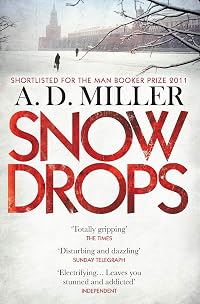
Snowdrops
by A. D. Miller
On This Page
Description
SHORTLISTED for the 2011 Man Booker Prize for Fiction
An intense psychological drama that echoes sophisticated entertainments like Gorky Park and The Talented Mr. Ripley.
Nick Platt is a British lawyer working in Moscow in the early 2000s—a place where the cascade of oil money, the tightening grip of the government, the jostling of the oligarchs, and the loosening of Soviet social mores have led to a culture where corruption, decadence, violence, and betrayal define everyday life. Nick show more doesn’t ask too many questions about the shady deals he works on—he’s too busy enjoying the exotic, surreally sinful nightlife Moscow has to offer.
One day in the subway, he rescues two willowy sisters, Masha and Katya, from a would-be purse snatcher. Soon Nick, the seductive Masha, and long-limbed Katya are cruising the seamy glamour spots of the city. Nick begins to feel something for Masha that he is pleased to think is... show less
Tags
Recommendations






















Member Recommendations

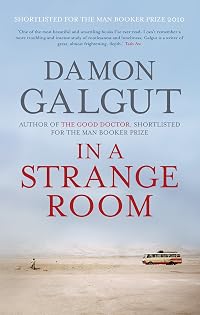
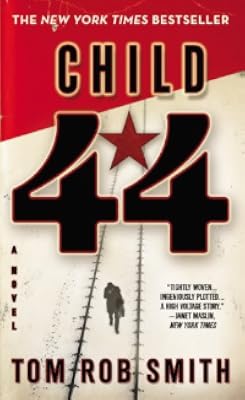
Limelite Shares the same atmospherics and feeling of foreboding while more action-packed and less cerebral than "Snowdrops."

Member Reviews
Thank god the font was big and the lines were almost double-spaced.
This story is really about Moscow. The people-characters are just props; the real characters are the city and the weather and the lawless society.
“The characters are flat, stereotypical creatures, but I havent figured out if this is an intended character flaw of the narrator, or if it is the author's intention as an auteur to convey something deeper or so far hidden, or if it just simply represents workmanlike craft, and is what it is.” Thats what I wrote about this book after reading the first few pages. I’ve figured out now that there’s nothing complicated here. It’s not even workmanlike craft, it’s more like the craft of an awkward apprentice.
It’s as show more if the author, A.D. Miller, who lived in Moscow himself for a few years as a correspondent for The Economist, wanted to think of a story, any kind of story, that he could drop into the set of Russia. This is understandable, since he had lived there and likely wanted to share his experiences. Russia the place is the main character -- the most developed and well described, compared with the people characters. The narrative arc wearily stumbles through the Moscow cold, numbing the reader’s interest, perked up only by energetic bursts of descriptions (most often yet another way to describe how cold it was).
The Moscow cold, the Moscow criminals, the Moscow daily life, the Moscow way of doing things. These are clearly the real main interest of the author, but it seems he felt he needed to create a conventional story that would give him license to provide that backdrop. The girls Masha and Katya are set props, dressing.
Why did the narrator Nick, an ex-pat lawyer, fall so hard for Masha? There is nothing in the story, not a smidgin, to explain it, to make it plausible. Did he fall for her because of her exquisite other-world beauty? She has hard red fingernails, dresses like a prostitute. That’s it? Is it because of the incredibly hot sex and the fiery passion she ignites in him? Don’t know, there are just some vague tepid references to a bit of carnal activity, occasionally slightly exhibitionist. There’s certainly no hint of any intellectual vigour, not in Masha or any of the other characters for that matter, including the narrator. There’s no hint of any meeting-of-the-souls kind of chemistry. And without any of that, the story just isn’t plausible.
The book is ostensibly the narrator relating to his fiancee the story of what happened to him in Moscow, but it is a clumsy artificial device. It is employed half-heartedly and sporadically, and so is all the more intrusive and annoying when it does appear.
The book is a decent start for a first novel, but I am absolutely stymied as to how it came even close for consideration to be on the Booker longlist, let alone the shortlist. show less
This story is really about Moscow. The people-characters are just props; the real characters are the city and the weather and the lawless society.
“The characters are flat, stereotypical creatures, but I havent figured out if this is an intended character flaw of the narrator, or if it is the author's intention as an auteur to convey something deeper or so far hidden, or if it just simply represents workmanlike craft, and is what it is.” Thats what I wrote about this book after reading the first few pages. I’ve figured out now that there’s nothing complicated here. It’s not even workmanlike craft, it’s more like the craft of an awkward apprentice.
It’s as show more if the author, A.D. Miller, who lived in Moscow himself for a few years as a correspondent for The Economist, wanted to think of a story, any kind of story, that he could drop into the set of Russia. This is understandable, since he had lived there and likely wanted to share his experiences. Russia the place is the main character -- the most developed and well described, compared with the people characters. The narrative arc wearily stumbles through the Moscow cold, numbing the reader’s interest, perked up only by energetic bursts of descriptions (most often yet another way to describe how cold it was).
The Moscow cold, the Moscow criminals, the Moscow daily life, the Moscow way of doing things. These are clearly the real main interest of the author, but it seems he felt he needed to create a conventional story that would give him license to provide that backdrop. The girls Masha and Katya are set props, dressing.
Why did the narrator Nick, an ex-pat lawyer, fall so hard for Masha? There is nothing in the story, not a smidgin, to explain it, to make it plausible. Did he fall for her because of her exquisite other-world beauty? She has hard red fingernails, dresses like a prostitute. That’s it? Is it because of the incredibly hot sex and the fiery passion she ignites in him? Don’t know, there are just some vague tepid references to a bit of carnal activity, occasionally slightly exhibitionist. There’s certainly no hint of any intellectual vigour, not in Masha or any of the other characters for that matter, including the narrator. There’s no hint of any meeting-of-the-souls kind of chemistry. And without any of that, the story just isn’t plausible.
The book is ostensibly the narrator relating to his fiancee the story of what happened to him in Moscow, but it is a clumsy artificial device. It is employed half-heartedly and sporadically, and so is all the more intrusive and annoying when it does appear.
The book is a decent start for a first novel, but I am absolutely stymied as to how it came even close for consideration to be on the Booker longlist, let alone the shortlist. show less
A.D. Miller’s first novel, Snowdrops, has been shortlisted for the 2011 Man Booker Prize, one of the British Commonwealth’s most prestigious writing awards. It’s a fine novel, telling a story that hasn’t been told elsewhere: what Moscow looked like, felt like, how it did business and how it was criminal in the days just after the fall of the Soviet Union.
The first person narrator, Nick Platt, is a British lawyer who has lived in Moscow for four years at the time the story starts. The book is his explanation to his fiancée about his time in Russia:
"You’re always saying that I never talk about my time in Moscow or about why I left. You’re right, I’ve always made excuses, and soon you’ll understand why. But you’ve gone show more on asking me, and for some reason lately I keep thinking about it – I can’t stop myself. Perhaps it’s because we’re only three months away from “the big day,” and that somehow seems a sort of reckoning. I feel like I need to tell someone about Russia, even if it hurts. Also that probably you should know, since we’re going to make these promises to each other, and maybe even keep them. I think you have a right to know all of it. I thought it would be easier if I wrote it down. You won’t have to make an effort to put a brave face on things, and I won’t have to watch you."
Combined with the appearance of a corpse as the book opens – a “snowdrop,” a body hidden by the snow that becomes obvious only in the spring thaw – this is perfect foreshadowing for what follows. The reader cannot read a single page without a sense of foreboding, wondering what happened and when, who the corpse is, what Nick did (is he a murderer?), until one is in the middle of a brutally cold Moscow winter with Nick, almost helplessly acting as an accomplice to a crime or two. Nick is not a nice man, it seems, but neither is he evil; he is simply weak.
The source of his weakness is Maria Kovalenko – Masha, as she is called by her friends. In a chance meeting in the subway, Nick rescues Masha and her sister, Katya, from a purse snatcher. Nick is immediately attracted to Masha, even though their meeting is brief. He begins wondering whether she is “the one” from his first sight of her. Why? That he can’t seem to explain, though he admires her irony, he says: “She had an air that suggested she already knew how it would end, and almost wanted me to know that too.” The fact that she is beautiful certainly helps.
Masha and Katya introduce Nick to their aunt, Tatiana Vladimirovna, an old widow who is a relic of the Soviet system down to her bowl-cut hair – and especially to her lovely apartment, given to her for services to the Fatherland. Tatiana is soon to retire, and is considering moving to a smaller apartment in the country. Masha and Katya ask Nick to help Tatiana with the papers necessary to the apartment swap; and that’s where things start to get ugly.
There is a subplot involving a Cossack who seeks financing from Nick’s banking and investment clients. Just as we can tell from the beginning that Nick’s romance with Masha is doomed, we can see from the outset that the Cossack is basically a crime lord. Does Nick see this from the beginning, or is this so obvious only in retrospect? Does Nick really care? He refers to those days in Russia as a “gold rush,” a time when Russia was wide open to both capitalism and crime and the two were indistinguishable. Everything is about money. Indeed, an acquaintance of Nick’s, a reporter who fell in love with Russia and has never left, says to him, “In Russia, there are no business stories. And there are no politics stories. There are no love stories. There are only crime stories.”
The frigid Moscow winter, as Miller describes it, is an analogy to the frigid principal characters in Snowdrops. This is a dark and depressing novel, a snapshot of a time and place so foreign that it is almost past understanding. The hapless Nick is in love not only with Masha, but with the energy of this new, lawless Russia. Nick can only partake of this energy passively, sadly; he has lost who he is with the melting snow. Nick is himself a “snowdrop.”
One doesn’t exactly enjoy Snowdrops; it is too dark for that. It combines the Russian bleakness of Anton Chekhov with the English bleakness of Thomas Hardy. But one must admire Miller’s writing. The sights and especially the smells; the bite of the cold and the heat of the sauna; the food and the sex are all described sparingly, yet vividly. The plotting is strong, with the story opening up to meet the foreshadowing with precision. It is more assured than one expects a writer’s first novel to be. show less
The first person narrator, Nick Platt, is a British lawyer who has lived in Moscow for four years at the time the story starts. The book is his explanation to his fiancée about his time in Russia:
"You’re always saying that I never talk about my time in Moscow or about why I left. You’re right, I’ve always made excuses, and soon you’ll understand why. But you’ve gone show more on asking me, and for some reason lately I keep thinking about it – I can’t stop myself. Perhaps it’s because we’re only three months away from “the big day,” and that somehow seems a sort of reckoning. I feel like I need to tell someone about Russia, even if it hurts. Also that probably you should know, since we’re going to make these promises to each other, and maybe even keep them. I think you have a right to know all of it. I thought it would be easier if I wrote it down. You won’t have to make an effort to put a brave face on things, and I won’t have to watch you."
Combined with the appearance of a corpse as the book opens – a “snowdrop,” a body hidden by the snow that becomes obvious only in the spring thaw – this is perfect foreshadowing for what follows. The reader cannot read a single page without a sense of foreboding, wondering what happened and when, who the corpse is, what Nick did (is he a murderer?), until one is in the middle of a brutally cold Moscow winter with Nick, almost helplessly acting as an accomplice to a crime or two. Nick is not a nice man, it seems, but neither is he evil; he is simply weak.
The source of his weakness is Maria Kovalenko – Masha, as she is called by her friends. In a chance meeting in the subway, Nick rescues Masha and her sister, Katya, from a purse snatcher. Nick is immediately attracted to Masha, even though their meeting is brief. He begins wondering whether she is “the one” from his first sight of her. Why? That he can’t seem to explain, though he admires her irony, he says: “She had an air that suggested she already knew how it would end, and almost wanted me to know that too.” The fact that she is beautiful certainly helps.
Masha and Katya introduce Nick to their aunt, Tatiana Vladimirovna, an old widow who is a relic of the Soviet system down to her bowl-cut hair – and especially to her lovely apartment, given to her for services to the Fatherland. Tatiana is soon to retire, and is considering moving to a smaller apartment in the country. Masha and Katya ask Nick to help Tatiana with the papers necessary to the apartment swap; and that’s where things start to get ugly.
There is a subplot involving a Cossack who seeks financing from Nick’s banking and investment clients. Just as we can tell from the beginning that Nick’s romance with Masha is doomed, we can see from the outset that the Cossack is basically a crime lord. Does Nick see this from the beginning, or is this so obvious only in retrospect? Does Nick really care? He refers to those days in Russia as a “gold rush,” a time when Russia was wide open to both capitalism and crime and the two were indistinguishable. Everything is about money. Indeed, an acquaintance of Nick’s, a reporter who fell in love with Russia and has never left, says to him, “In Russia, there are no business stories. And there are no politics stories. There are no love stories. There are only crime stories.”
The frigid Moscow winter, as Miller describes it, is an analogy to the frigid principal characters in Snowdrops. This is a dark and depressing novel, a snapshot of a time and place so foreign that it is almost past understanding. The hapless Nick is in love not only with Masha, but with the energy of this new, lawless Russia. Nick can only partake of this energy passively, sadly; he has lost who he is with the melting snow. Nick is himself a “snowdrop.”
One doesn’t exactly enjoy Snowdrops; it is too dark for that. It combines the Russian bleakness of Anton Chekhov with the English bleakness of Thomas Hardy. But one must admire Miller’s writing. The sights and especially the smells; the bite of the cold and the heat of the sauna; the food and the sex are all described sparingly, yet vividly. The plotting is strong, with the story opening up to meet the foreshadowing with precision. It is more assured than one expects a writer’s first novel to be. show less
Interesting read about a London banker living in the recently "opened" economy of Moscow. But I struggled with the book's treatment of women. First, the concept that the protagonist, back home in London, is telling his fiancée about his time in Moscow, including his love for Masha.....including details of their sex life. The arrogance of that man to expect her to deal with such details about another woman. And the Russian women in the novel were lying con artists in mini-skirts, gullible old ladies or strippers. So there wasn't much here I could identify with. On the bright side, the protagonist Nick does seem to come to question what is really happening in Moscow even as he fails to act on his knowledge. So, this one character has show more some nuance and depth. show less
In terms of feeling the cut and thrust of Moscow in the early 2000's, there is no better book. The squalor, the deception, the cold, the compromises .. all expertly portrayed.
There were, however, two things I did not like about the novel. First, the notional person to whom the tale is being told adds nothing to the book and sometimes comes across as silly. This type of framing device can work, but in "Snowdrops" Miller does not make it work. Second, there were rather arbitrary time shifts which again, added nothing to the plot. Why fast forward two hours in a narrative only to come back later to fill in? I start to suspect that Miller is having trouble staging the plot so he resorts to "devices" which come off as gimmicky. Apart from show more that, masterful description. show less
There were, however, two things I did not like about the novel. First, the notional person to whom the tale is being told adds nothing to the book and sometimes comes across as silly. This type of framing device can work, but in "Snowdrops" Miller does not make it work. Second, there were rather arbitrary time shifts which again, added nothing to the plot. Why fast forward two hours in a narrative only to come back later to fill in? I start to suspect that Miller is having trouble staging the plot so he resorts to "devices" which come off as gimmicky. Apart from show more that, masterful description. show less
I loved this book, but I think most of my love comes from the fact that I have always been intrigued by Russia and studied abroad there while in college. Many of the words, places and events were already familiar to me, and the overall feel (which captured 90s Russia perfectly) really took me back. Another reviewer favorably compared the feel to Tom Rob Smith's [Child 44], and I agree with that assessment -- Snowdrops is even better, even more compelling, even more able to capture what Russia felt like for a foreigner during the 90s. I loved that about the book.
All this said, I don't think readers who aren't as enamored with Russia (or even with reading about it) will be nearly so engaged. There are parts of the story that kind of show more meander, and none of the characters are ever drawn clearly enough to understand their motivations. (I think this is on purpose, since our narrator doesn't understand who Masha, Katya, or even Tatiana really are, but readers hoping for clearly drawn characters won't care for them.) Similarly, mystery readers expecting everything to be tied up neatly at the end, with no unknown details remaining, will hate the ending. I myself was hoping for more. But readers who enjoy intriguing literary fiction with mysterious characters and perhaps the most enigmatic setting of all -- Russia! -- will thoroughly enjoy this novel. show less
All this said, I don't think readers who aren't as enamored with Russia (or even with reading about it) will be nearly so engaged. There are parts of the story that kind of show more meander, and none of the characters are ever drawn clearly enough to understand their motivations. (I think this is on purpose, since our narrator doesn't understand who Masha, Katya, or even Tatiana really are, but readers hoping for clearly drawn characters won't care for them.) Similarly, mystery readers expecting everything to be tied up neatly at the end, with no unknown details remaining, will hate the ending. I myself was hoping for more. But readers who enjoy intriguing literary fiction with mysterious characters and perhaps the most enigmatic setting of all -- Russia! -- will thoroughly enjoy this novel. show less
Framed as a letter to a woman he is going to marry, this book details a winter in the life of one lawyer in Moscow who falls into a crime that he suspects but does nothing about.
Published in 2011, this is a Moscow that is rife with corruption, crime and the moneyed making more money; little has changed. Citizens were given their flats when the end of communism happened and this was a gift for the scammers and criminals who could get their hands on to prime pieces of estate leaving the original owner homeless.
We see everything through Nicholas, the British lawyer's eyes, where most of the time they were blinkered. On the metro one evening he saves a young woman, Masha, from having her handbag snatched and goes for a drink with her and show more her sister. He falls in love with her and this leads him blindly to do things he knew he shouldn't which would end up removing an old woman from her home.
The loss of innocence
In spring as the snow starts to melt, sometimes bodies are discovered, known as snowdrops as they come out in the spring, and outside Nicholas' flat there is one. It is the body of a man he half looked for when begged by a neighbour. It seems this man, too, was conned out of his flat with someone else moving in and so the loss of innocence is not just that of Nicholas but also of Russia in the move from the USSR to the present day.
Crime, business, politics, spookery - the usual Russian merry-go-round.
p80
Nicholas is unbelievably naive throughout the book until the end when he articulates what has happened. He allows love to colour the way he views events, always finding a positive or believable persuasion to them even when warned by the man he works for.
There are debauched nightclubs, shady men, one known as the Cossack, and a string of difficult taxi drivers which is the same the world over. But what is portrayed exteremely well is Moscow including the various stages of snow that you get throughout the winter and then during the thaw.
What is the genre of this book?
Written by a journalist who spent three years in Moscow it is no wonder that elements of the book are very good but this is not a psychological drama nor a chilling love story as billed. It is the story of con artists and a man who wanted to believe in them because they were beautiful who then tries to explain himself away to his bride to be.
I am not sure I would marry him after this. show less
Published in 2011, this is a Moscow that is rife with corruption, crime and the moneyed making more money; little has changed. Citizens were given their flats when the end of communism happened and this was a gift for the scammers and criminals who could get their hands on to prime pieces of estate leaving the original owner homeless.
We see everything through Nicholas, the British lawyer's eyes, where most of the time they were blinkered. On the metro one evening he saves a young woman, Masha, from having her handbag snatched and goes for a drink with her and show more her sister. He falls in love with her and this leads him blindly to do things he knew he shouldn't which would end up removing an old woman from her home.
The loss of innocence
In spring as the snow starts to melt, sometimes bodies are discovered, known as snowdrops as they come out in the spring, and outside Nicholas' flat there is one. It is the body of a man he half looked for when begged by a neighbour. It seems this man, too, was conned out of his flat with someone else moving in and so the loss of innocence is not just that of Nicholas but also of Russia in the move from the USSR to the present day.
Crime, business, politics, spookery - the usual Russian merry-go-round.
p80
Nicholas is unbelievably naive throughout the book until the end when he articulates what has happened. He allows love to colour the way he views events, always finding a positive or believable persuasion to them even when warned by the man he works for.
There are debauched nightclubs, shady men, one known as the Cossack, and a string of difficult taxi drivers which is the same the world over. But what is portrayed exteremely well is Moscow including the various stages of snow that you get throughout the winter and then during the thaw.
What is the genre of this book?
Written by a journalist who spent three years in Moscow it is no wonder that elements of the book are very good but this is not a psychological drama nor a chilling love story as billed. It is the story of con artists and a man who wanted to believe in them because they were beautiful who then tries to explain himself away to his bride to be.
I am not sure I would marry him after this. show less
Thank god the font was big and the lines were almost double-spaced.
This story is really about Moscow. The people-characters are just props; the real characters are the city and the weather and the lawless society.
“The characters are flat, stereotypical creatures, but I havent figured out if this is an intended character flaw of the narrator, or if it is the author's intention as an auteur to convey something deeper or so far hidden, or if it just simply represents workmanlike craft, and is what it is.” Thats what I wrote about this book after reading the first few pages. I’ve figured out now that there’s nothing complicated here. It’s not even workmanlike craft, it’s more like the craft of an awkward apprentice.
It’s as show more if the author, A.D. Miller, who lived in Moscow himself for a few years as a correspondent for The Economist, wanted to think of a story, any kind of story, that he could drop into the set of Russia. This is understandable, since he had lived there and likely wanted to share his experiences. Russia the place is the main character -- the most developed and well described, compared with the people characters. The narrative arc wearily stumbles through the Moscow cold, numbing the reader’s interest, perked up only by energetic bursts of descriptions (most often yet another way to describe how cold it was).
The Moscow cold, the Moscow criminals, the Moscow daily life, the Moscow way of doing things. These are clearly the real main interest of the author, but it seems he felt he needed to create a conventional story that would give him license to provide that backdrop. The girls Masha and Katya are set props, dressing.
Why did the narrator Nick, an ex-pat lawyer, fall so hard for Masha? There is nothing in the story, not a smidgin, to explain it, to make it plausible. Did he fall for her because of her exquisite other-world beauty? She has hard red fingernails, dresses like a prostitute. That’s it? Is it because of the incredibly hot sex and the fiery passion she ignites in him? Don’t know, there are just some vague tepid references to a bit of carnal activity, occasionally slightly exhibitionist. There’s certainly no hint of any intellectual vigour, not in Masha or any of the other characters for that matter, including the narrator. There’s no hint of any meeting-of-the-souls kind of chemistry. And without any of that, the story just isn’t plausible.
The book is ostensibly the narrator relating to his fiancee the story of what happened to him in Moscow, but it is a clumsy artificial device. It is employed half-heartedly and sporadically, and so is all the more intrusive and annoying when it does appear.
The book is a decent start for a first novel, but I am absolutely stymied as to how it came even close for consideration to be on the Booker longlist, let alone the shortlist. show less
This story is really about Moscow. The people-characters are just props; the real characters are the city and the weather and the lawless society.
“The characters are flat, stereotypical creatures, but I havent figured out if this is an intended character flaw of the narrator, or if it is the author's intention as an auteur to convey something deeper or so far hidden, or if it just simply represents workmanlike craft, and is what it is.” Thats what I wrote about this book after reading the first few pages. I’ve figured out now that there’s nothing complicated here. It’s not even workmanlike craft, it’s more like the craft of an awkward apprentice.
It’s as show more if the author, A.D. Miller, who lived in Moscow himself for a few years as a correspondent for The Economist, wanted to think of a story, any kind of story, that he could drop into the set of Russia. This is understandable, since he had lived there and likely wanted to share his experiences. Russia the place is the main character -- the most developed and well described, compared with the people characters. The narrative arc wearily stumbles through the Moscow cold, numbing the reader’s interest, perked up only by energetic bursts of descriptions (most often yet another way to describe how cold it was).
The Moscow cold, the Moscow criminals, the Moscow daily life, the Moscow way of doing things. These are clearly the real main interest of the author, but it seems he felt he needed to create a conventional story that would give him license to provide that backdrop. The girls Masha and Katya are set props, dressing.
Why did the narrator Nick, an ex-pat lawyer, fall so hard for Masha? There is nothing in the story, not a smidgin, to explain it, to make it plausible. Did he fall for her because of her exquisite other-world beauty? She has hard red fingernails, dresses like a prostitute. That’s it? Is it because of the incredibly hot sex and the fiery passion she ignites in him? Don’t know, there are just some vague tepid references to a bit of carnal activity, occasionally slightly exhibitionist. There’s certainly no hint of any intellectual vigour, not in Masha or any of the other characters for that matter, including the narrator. There’s no hint of any meeting-of-the-souls kind of chemistry. And without any of that, the story just isn’t plausible.
The book is ostensibly the narrator relating to his fiancee the story of what happened to him in Moscow, but it is a clumsy artificial device. It is employed half-heartedly and sporadically, and so is all the more intrusive and annoying when it does appear.
The book is a decent start for a first novel, but I am absolutely stymied as to how it came even close for consideration to be on the Booker longlist, let alone the shortlist. show less
Members
- Recently Added By
Lists

Booker Prize
491 works; 62 members

Best books read in 2011
200 works; 51 members

Man Booker Prize Longlist 2011
13 works; 2 members

Books Read in 2017
4,249 works; 130 members

Booker Prize Shortlist: Titles Not Yet Read
161 works; 4 members
Talk Discussions
Past Discussions
Snowdrops by A.D. Miller in Booker Prize (September 2011)
Author Information

9+ Works 1,169 Members
Andrew Miller was born in 1974 in London. He is a British journalist and author. He studied literature at Cambridge and Princeton. He worked as a television producer before joining The Economist to write about British politics and culture. In 2004 he was appointed the Economist's Moscow correspondent, and covered, among other things, the Orange show more Revolution in Ukraine. He returned to the UK in 2007 and took over as The Economist's British political editor. From then until July 2010 he wrote the magazine's Bagehot column. In 2006, he wrote The Earl of Petticoat Lane, a family memoir about immigration, class, the Blitz, love, memory and the underwear industry. Miller's novel Snowdrops was nominated for the Man Booker Prize in 2011. In 2015 his title The Faithful Couple made The New Zealand Best Seller List. (Bowker Author Biography) show less
Awards and Honors
Awards
Common Knowledge
- Canonical title
- Snowdrops
- Original publication date
- 2011
- People/Characters
- Nick Platt; Katya; Masha; Tatiana
- Important places
- Moscow, Russia; Russia
- Epigraph
- Snowdrop. 1. An early-flowering bulbous plant, having a white pendent flower. 2. Moscow slang. A corpse that lies buried or hidden in the winter snows, emerging only in the thaw.
- Dedication
- For Arkady, Becky, Guy, Mark and especially Emma.
- First words
- I smelled it before I saw it.
- Last words
- (Click to show. Warning: May contain spoilers.)I miss Moscow.
- Blurbers
- Dimbleby, Jonathon; Montefiore, Simon Sebag
Classifications
Statistics
- Members
- 1,045
- Popularity
- 24,717
- Reviews
- 68
- Rating
- (3.30)
- Languages
- 7 — Dutch, English, French, German, Hebrew, Norwegian (Bokmål), Portuguese
- Media
- Paper, Audiobook, Ebook
- ISBNs
- 33
- UPCs
- 1
- ASINs
- 4