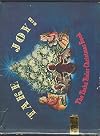
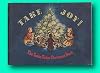
Take Joy! The Tasha Tudor Christmas Book
by Tasha Tudor
On This Page
Description
A collection of poems, carols, stories, legends, Christmas recipes and decorations taken from a wide range of sources.Tags
Recommendations





















Member Reviews
12 Books of Christmas
#10 Home
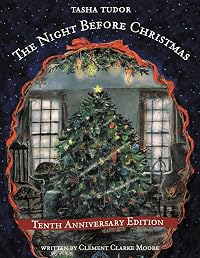
Tascha Tudor personifies Christmas. If you accept historian Stephen Nissenbaum’s definition of Christmas as the “quintessential American family holiday,” then you will not find a better representative than Tascha Tudor. Witness: her illustrations to The Night Before Christmas (1975 and 1999), especially the earlier rendition, are the best yet. For one thing, she’s true to the poem: St. Nicholas is an elf, his eight reindeer are tiny, and the sleigh is a miniature one. As popular as her work has been, regrettably her Santa has not won out over Thomas Nast’s yet. He should. ( Cf. my review of that book.)
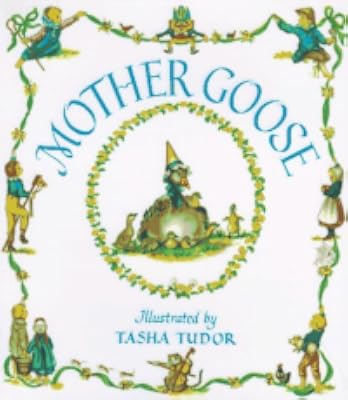
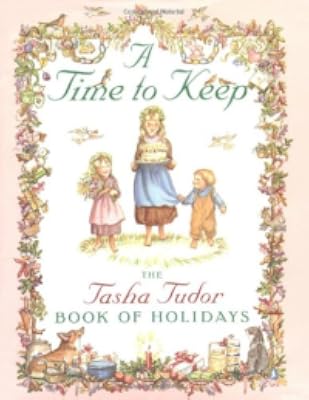
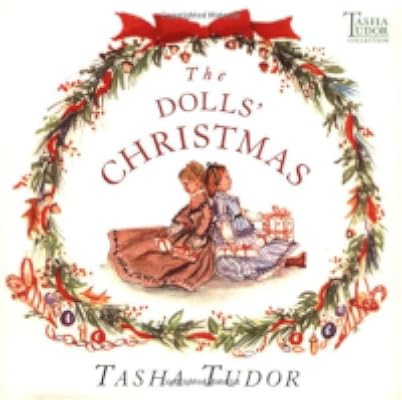
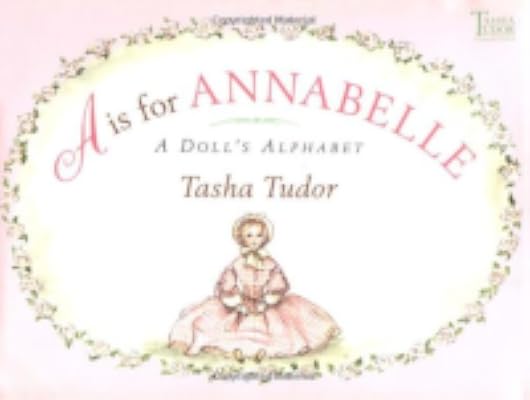
Tudor was a prolific illustrator of children’s books, noted for her work with such classics as show more A Child’s Garden of Verses, The Secret Garden, The Little Princess, and Wind in the Willows as well as her own texts; for example, The Dolls’ Christmas, A Is for Annabelle, 1 is One, and A Time to Keep. Many of her books feature her four children, Bethany, Seth, Thomas, and Efner, her celebrated corgis, and her beloved New England home.
One such book, a Christmas miscellany, is Take Joy! (World, 1966). The title is lifted from her first selection, a kind of epigram to the whole book, an A.D. 1513 letter from Fra Giovanni:
"The gloom of the world is but a shadow; behind it, yet, within our reach is joy. Take Joy."
As the dust jacket proclaims, the book contains songs, stories, poems [and] things to do for a family Christmas. And, indeed, there is a wealth of all four: by my count, eight stories, eight poems, twenty-eight carols (with words and music for all of them), nine legends, and . . . but, I’ll get to the last section, her signature, later.
Some of the stories are familiar ones (Andersen’s “The Fir Tree,” an excerpt from Dickens’ Christmas Carol, O. Henry’s “Gift of the Magi”); the legends less so, for they represent folklore from around the world: for example, Santa Lucia’s birthday on December 13 in Sweden. But it isn’t so much her selection of contents that has won so many adherents for this work: it’s her illustrations.
From the chickadees on the double-page title spread, to the final page, which features children opening their gifts under the candlelit Tudor tree, with their corgis and cat in welcome attendance. A fire is blazing cheerily in the large stone fireplace, the mantelpiece is lined with candles and greenery, and – true to the custom presented in her text – there is a miniature crèche the old-fashioned open oven in the fireplace. It’s a cozy early American home with darling children looking positively angelic. Tudor’s trademark.
Many of the illustrations are full-color, full-page prints of Tudor’s detailed water colors, but the black and white drawings scattered throughout the text are just as fetching. As attractive as her children are, it’s the craggy older persons and the plain commoners who show Tudor’s mastery of human figure and face: the old grandma in Selma Lagerlöf’s “Holy Night,” the plain young wife in “Gift of the Magi,” and the old puppetmaster in Rachel Field’s “Dog Toby,”
If anything her animals are even better, and the best of all are the street scenes and the spreading Christmas trees. Yes, as some critics have charged, her children all look very innocent, very clean, very chipper, and very European, and adult characters are often represented by the young and the childlike. The stunning Virgin Mary, illustrating the “Silent Night” carol, is very beautiful, very blond, and very young, maybe twelvish.
The pencil drawings are equally appealing, perhaps a tad more realistic. Her angels sweep across the page, and one can almost hear their wings and their trumpets. The borders on many pages, especially the carols, show Tudor’s fascination with natural objects (fruit, twigs, flowers, holly, oak leaves and acorns, birds, small animals). The paintings and drawings are soft, but detailed, dreamlike but realistic in background.
But, no, it isn’t even the illustrations that give this book its special character. It is Tudor’s final section, headed “Christmas at the Tudors’ Farm.” According to the introduction, “The Tudors live in a rambling seventeen-room farmhouse in the heart of the New Hampshire hills, The red frame house, built in 1789, was bought by the Tudors from the grandson of the original builder, so it has had only two families living in it.” Customs that warm the house include the Advent calendar, Kriss Kringle (an anonymous giver), the Advent wreath, making and filling cornucopias, bringing in the tree, hanging the stockings, providing for the animals – and the birds, the marionette show, the gingerbread castle, the dolls’ Christmas, and the crèche in the oven. And scattered among the customs are one recipe after another: fruit cake, of course; fudge and toffee, the gingerbread, roast turkey, cranberry sauce, and pumpkin pie.
As Christmas moved inside from the streets over a century ago, as rowdy wassailing gave way to cheerful caroling, as hooligans were ignored and children elevated to a royal height, Christmas was domesticated. It donned an apron. The women of the family became its guiding spirits. The emphasis was on good food, on (non-alcoholic) punch and eggnog, ornaments and home decoration, wreaths and candles, revived or invented traditions, Christmas cards and treats and music.
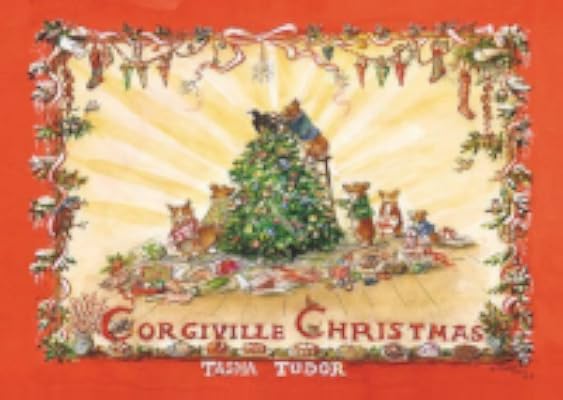
Tasha Tudor’s delicate art work, her childlike characters, her ideal home scenes, even her corgis fit in just fine. Her last book, before her death in 2008, was Corgiville Christmas. Fitting,isn’t it? Take Joy! represents Tudor the artist and the Tudors, the family, at their best. “So hallow’d and so gracious is the time,”
" I greet you, with the prayer that for you, now and forever, the day breaks and the shadows flee away." (Fra Giovanni) show less
#10 Home
Tascha Tudor personifies Christmas. If you accept historian Stephen Nissenbaum’s definition of Christmas as the “quintessential American family holiday,” then you will not find a better representative than Tascha Tudor. Witness: her illustrations to The Night Before Christmas (1975 and 1999), especially the earlier rendition, are the best yet. For one thing, she’s true to the poem: St. Nicholas is an elf, his eight reindeer are tiny, and the sleigh is a miniature one. As popular as her work has been, regrettably her Santa has not won out over Thomas Nast’s yet. He should. ( Cf. my review of that book.)
Tudor was a prolific illustrator of children’s books, noted for her work with such classics as show more A Child’s Garden of Verses, The Secret Garden, The Little Princess, and Wind in the Willows as well as her own texts; for example, The Dolls’ Christmas, A Is for Annabelle, 1 is One, and A Time to Keep. Many of her books feature her four children, Bethany, Seth, Thomas, and Efner, her celebrated corgis, and her beloved New England home.
One such book, a Christmas miscellany, is Take Joy! (World, 1966). The title is lifted from her first selection, a kind of epigram to the whole book, an A.D. 1513 letter from Fra Giovanni:
"The gloom of the world is but a shadow; behind it, yet, within our reach is joy. Take Joy."
As the dust jacket proclaims, the book contains songs, stories, poems [and] things to do for a family Christmas. And, indeed, there is a wealth of all four: by my count, eight stories, eight poems, twenty-eight carols (with words and music for all of them), nine legends, and . . . but, I’ll get to the last section, her signature, later.
Some of the stories are familiar ones (Andersen’s “The Fir Tree,” an excerpt from Dickens’ Christmas Carol, O. Henry’s “Gift of the Magi”); the legends less so, for they represent folklore from around the world: for example, Santa Lucia’s birthday on December 13 in Sweden. But it isn’t so much her selection of contents that has won so many adherents for this work: it’s her illustrations.
From the chickadees on the double-page title spread, to the final page, which features children opening their gifts under the candlelit Tudor tree, with their corgis and cat in welcome attendance. A fire is blazing cheerily in the large stone fireplace, the mantelpiece is lined with candles and greenery, and – true to the custom presented in her text – there is a miniature crèche the old-fashioned open oven in the fireplace. It’s a cozy early American home with darling children looking positively angelic. Tudor’s trademark.
Many of the illustrations are full-color, full-page prints of Tudor’s detailed water colors, but the black and white drawings scattered throughout the text are just as fetching. As attractive as her children are, it’s the craggy older persons and the plain commoners who show Tudor’s mastery of human figure and face: the old grandma in Selma Lagerlöf’s “Holy Night,” the plain young wife in “Gift of the Magi,” and the old puppetmaster in Rachel Field’s “Dog Toby,”
If anything her animals are even better, and the best of all are the street scenes and the spreading Christmas trees. Yes, as some critics have charged, her children all look very innocent, very clean, very chipper, and very European, and adult characters are often represented by the young and the childlike. The stunning Virgin Mary, illustrating the “Silent Night” carol, is very beautiful, very blond, and very young, maybe twelvish.
The pencil drawings are equally appealing, perhaps a tad more realistic. Her angels sweep across the page, and one can almost hear their wings and their trumpets. The borders on many pages, especially the carols, show Tudor’s fascination with natural objects (fruit, twigs, flowers, holly, oak leaves and acorns, birds, small animals). The paintings and drawings are soft, but detailed, dreamlike but realistic in background.
But, no, it isn’t even the illustrations that give this book its special character. It is Tudor’s final section, headed “Christmas at the Tudors’ Farm.” According to the introduction, “The Tudors live in a rambling seventeen-room farmhouse in the heart of the New Hampshire hills, The red frame house, built in 1789, was bought by the Tudors from the grandson of the original builder, so it has had only two families living in it.” Customs that warm the house include the Advent calendar, Kriss Kringle (an anonymous giver), the Advent wreath, making and filling cornucopias, bringing in the tree, hanging the stockings, providing for the animals – and the birds, the marionette show, the gingerbread castle, the dolls’ Christmas, and the crèche in the oven. And scattered among the customs are one recipe after another: fruit cake, of course; fudge and toffee, the gingerbread, roast turkey, cranberry sauce, and pumpkin pie.
As Christmas moved inside from the streets over a century ago, as rowdy wassailing gave way to cheerful caroling, as hooligans were ignored and children elevated to a royal height, Christmas was domesticated. It donned an apron. The women of the family became its guiding spirits. The emphasis was on good food, on (non-alcoholic) punch and eggnog, ornaments and home decoration, wreaths and candles, revived or invented traditions, Christmas cards and treats and music.
Tasha Tudor’s delicate art work, her childlike characters, her ideal home scenes, even her corgis fit in just fine. Her last book, before her death in 2008, was Corgiville Christmas. Fitting,isn’t it? Take Joy! represents Tudor the artist and the Tudors, the family, at their best. “So hallow’d and so gracious is the time,”
" I greet you, with the prayer that for you, now and forever, the day breaks and the shadows flee away." (Fra Giovanni) show less
An excellent anthology with fine illustrations by Tasha Tudor and a section on her family Christmas celebrations.
Ratings
Members
- Recently Added By
Lists

Under The Chinaberry Tree
194 works; 1 member

Books Read in 2021
5,361 works; 114 members

Books Read in 2015
3,299 works; 129 members

Books Read in 2005
185 works; 7 members

1980s
356 works; 23 members

BOOKS READ IN 1980's and 1990's
52 works; 4 members
Author Information

67+ Works 8,924 Members
Author and illustrator Tasha Tudor was born in Boston, Massachusetts on August 28, 1915. Her first book, Pumpkin Moonshine, was published in 1938. Since then she has written or illustrated almost 100 books including her most recent title Corgiville Christmas, which was published in 2003. She won numerous awards throughout her lifetime including show more the Catholic Library Association's Regina Medal, the Walter Cerf Award for Lifetime Achievements in the Arts from the Vermont Arts Council, and Caldecott Honors for Mother Goose in 1945 and 1 Is One in 1957. She also created Christmas cards for the Irene Dash Greeting Card Company. She died on June 18, 2008. (Bowker Author Biography) show less
Classifications
- Genre
- Children's Books
- DDC/MDS
- 394.268 — Society, government, & culture Customs, etiquette & folklore General customs Special Occasions Holidays Holidays of Specific Kinds
- LCC
- PN6110 .C5 .T8 — Language and Literature Literature (General) Literature (General) Collections of general literature German Poetry
- BISAC
Statistics
- Members
- 402
- Popularity
- 77,716
- Reviews
- 2
- Rating
- (4.82)
- Languages
- English
- Media
- Paper
- ISBNs
- 9
- ASINs
- 12