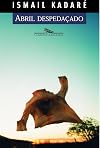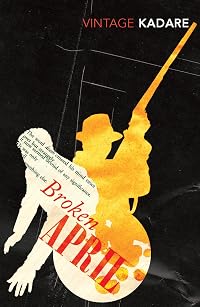
Broken April
by Ismaïl Kadaré
On This Page
Description
Two destinies intersect in Broken April. The first is that of Gjor, a young mountaineer who (much against his will) has just killed a man in order to avenge the death of his older brother, and who expects to be killed himself in keeping with the provisions of the Code that regulates life in the highlands. The second is that of a young couple on their honeymoon who have come to study the age-old customs of the place, including the blood feud. While the story is set in the early twentieth show more century, life on the high plateaus of Albania takes life back to the Dark Ages. The bloody shirt of the latest victim is hung up by the bereaved for all to see-until the avenger in turn kills his man with a rifle shot. For the young bride, the shock of this unending cycle of obligatory murder is devastating. The horror becomes personified when she catches a glimpse of Gjor as he wanders about the countryside, waiting for the truce of thirty days to end, and life with it. That momentary vision of the hapless murderer provokes in her a violent act of revulsion and contrition. Her life will be marked by it always. show lessTags
Recommendations








Member Recommendations
Member Reviews
Nominated for the Nobel Prize for Literature fifteen times, Ismaïl Kadaré was Albania's foremost author for decades. In order to evade censorship (three of his books were banned and many works were censored), Kadaré became adept at using history and folklore to disguise his commentary upon the present. In 1967 Kadaré was exiled to the countryside for two years. In 1990 he defected to France, but returned to Tirana prior to his death earlier this year.
Broken April is the story of Gjorg, a 26-year-old man living on the High Plateau of northern Albania in the 1930s. His family and the Kryeqyqes family have been trapped in a blood feud for generations. Twenty-two members of each family has been murdered in turn. Now it is Gjorg's turn show more to avenge the death of his brother. Bessian, a writer from Tirana, is honeymooning in the High Plateau with his wife Diana. He is enamored with the tragedy and beauty of the Kanun, the Albanian code that controls all aspects of mountain life and tries to enlighten his bride. Mark Ukacierra is the steward of the blood, the man responsible for the economics of the blood feud. He collects the blood tax and monitors the "health" of the system. Together they present different aspects of the responsibilities of hospitality and the business of revenge killing.
Written in an almost bardic style, Broken April is both a historical novel and a commentary on capitalism, the conflict of tradition with modernity, and the limits of free will in a society that is sharply controlled. It is hauntingly beautiful, and I was swept up in the depictions of both the landscape and the fates of the characters. I have read two other novels by Kadaré (Doruntine and Chronicles in Stone), but this is my favorite. show less
Broken April is the story of Gjorg, a 26-year-old man living on the High Plateau of northern Albania in the 1930s. His family and the Kryeqyqes family have been trapped in a blood feud for generations. Twenty-two members of each family has been murdered in turn. Now it is Gjorg's turn show more to avenge the death of his brother. Bessian, a writer from Tirana, is honeymooning in the High Plateau with his wife Diana. He is enamored with the tragedy and beauty of the Kanun, the Albanian code that controls all aspects of mountain life and tries to enlighten his bride. Mark Ukacierra is the steward of the blood, the man responsible for the economics of the blood feud. He collects the blood tax and monitors the "health" of the system. Together they present different aspects of the responsibilities of hospitality and the business of revenge killing.
Written in an almost bardic style, Broken April is both a historical novel and a commentary on capitalism, the conflict of tradition with modernity, and the limits of free will in a society that is sharply controlled. It is hauntingly beautiful, and I was swept up in the depictions of both the landscape and the fates of the characters. I have read two other novels by Kadaré (Doruntine and Chronicles in Stone), but this is my favorite. show less
Kadare looks into the strange world of the High Plateau in the north of Albania, described by one of his characters as the only place which, while being part of a modern European state, has rejected the idea of a modern legal system and adopted a quasi-feudal code, the Kanun, which regulates every aspect of life, but whose most distinctive and destructive component is the blood-feud.
The story, set at some unspecified moment in the 20th century, probably around the 1920s, follows a man called Gjorg, who has just, reluctantly, performed the killing that is required of him by custom. He now has an agreed truce-period of thirty days before the designated member of the dead man's family will be allowed to shoot him in turn. Crossing Gjorg's show more path during this time are a writer from the big city, honeymooning in the "romantic" mountains with his new wife; an expert on Kanun-law, the judge Ali Binak, who travels the country settling disputes; and the Steward of the Blood, the man who is responsible for collecting the murder-tax that is the main source of income of the ruling prince of the region. Each gives us a slightly different perspective on the craziness of the system where feuds can never end until all the men of one or other of the contending families are wiped out, and on the people who have an interest in keeping this system alive.
Concise, clear-sighted, and very strange. show less
The story, set at some unspecified moment in the 20th century, probably around the 1920s, follows a man called Gjorg, who has just, reluctantly, performed the killing that is required of him by custom. He now has an agreed truce-period of thirty days before the designated member of the dead man's family will be allowed to shoot him in turn. Crossing Gjorg's show more path during this time are a writer from the big city, honeymooning in the "romantic" mountains with his new wife; an expert on Kanun-law, the judge Ali Binak, who travels the country settling disputes; and the Steward of the Blood, the man who is responsible for collecting the murder-tax that is the main source of income of the ruling prince of the region. Each gives us a slightly different perspective on the craziness of the system where feuds can never end until all the men of one or other of the contending families are wiped out, and on the people who have an interest in keeping this system alive.
Concise, clear-sighted, and very strange. show less
"People on the road who bear the mark of death, like trees marked for felling", 6 Dec. 2015
This review is from: Broken April (Paperback)
Set in the remote Northern Highlands of Albania, the novel opens with a young man lying in wait to avenge the murder of his brother. But this 'honour killing' will just perpetuate the blood feud between the two families as after a month's truce, they will be lying in wait to kill him, and so on indefinitely... This is not anarchy but the law of the Kanun.
Kadare starts the work by following Gyorgy after the death, his awareness of the approaching end of the truce: "Everyone had a whole April, while his was amputated, cut off" and his journey to the Castle of Orosh to pay the compulsory blood-tax.
Then show more into the story come a well-to-do honeymooning couple from Tirana. The groom is eager to show his wife the romantic world of the blood feud, but she reacts somewhat differently...
We also see the custom from the point of view of the 'steward of the blood', responsible for collecting the blood-tax, and for whom, therefore, the killings are a thing to be encouraged. This point is brought out in a later conversation, with political connotations:
-Blood has been turned into merchandise.
-That is an incontestable truth.
-Have you read Marx? show less
This review is from: Broken April (Paperback)
Set in the remote Northern Highlands of Albania, the novel opens with a young man lying in wait to avenge the murder of his brother. But this 'honour killing' will just perpetuate the blood feud between the two families as after a month's truce, they will be lying in wait to kill him, and so on indefinitely... This is not anarchy but the law of the Kanun.
Kadare starts the work by following Gyorgy after the death, his awareness of the approaching end of the truce: "Everyone had a whole April, while his was amputated, cut off" and his journey to the Castle of Orosh to pay the compulsory blood-tax.
Then show more into the story come a well-to-do honeymooning couple from Tirana. The groom is eager to show his wife the romantic world of the blood feud, but she reacts somewhat differently...
We also see the custom from the point of view of the 'steward of the blood', responsible for collecting the blood-tax, and for whom, therefore, the killings are a thing to be encouraged. This point is brought out in a later conversation, with political connotations:
-Blood has been turned into merchandise.
-That is an incontestable truth.
-Have you read Marx? show less
'Broken April' is a short novel examining the Kanun, a set of traditional laws that dominate life in the Albanian mountains. They codify nearly all interpersonal behaviour, including the pretexts for and progression of blood feuds. I've no idea to what extent Kadare fictionalised a set of laws that genuinely existed, but the consequences of the Kanun as depicted are blood-curdling. The narrative gives the perspectives of several characters, whose lives intersect only briefly. The first is Gjorg, a man embroiled in a blood feud which started due to no action of his family and has already claimed 44 lives when the book begins. After murdering the man who killed his brother, Gjorg travels to pay the blood tax. He views the Kanun as one show more trapped by its most brutal dictates and unable to break free. The next perspectives are external, from a couple who have travelled into the mountains for their honeymoon. Both have read about the Kanun, but not seen it in practise before. Despite their social distance from what they observe, both are more moved by practical reality of blood feuds than they can articulate to themselves, let alone each other. The briefest perspective, yet for me the most memorable, is that of Mark Ukacierra, steward of the blood. His role reminded me very much of [b:The Gormenghast Novels|39058|The Gormenghast Novels (Gormenghast, #1-3)|Mervyn Peake|https://i.gr-assets.com/images/S/compressed.photo.goodreads.com/books/1362402890l/39058._SX50_.jpg|38776]. He collects the blood tax and worries that murders and thus revenue have declined. While he attempts to repress awareness of the appalling inhumanity of his job, this emerges via symptoms of physical illness.
The plot of the novel is slender, although it is bookended by violent deaths. There are no twists or surprises, as the Kanun renders events inexorable. Kadare explores with great delicacy how an ostensibly horrific legal system can be understood and upheld. Here, the newly married couple discuss guesthood:
And the steward of the blood contemplating his work:
This is a bleak, haunting, and beautifully written novel. It read to me as a fable, but could be closer to historical fiction than I'd like to think. show less
The plot of the novel is slender, although it is bookended by violent deaths. There are no twists or surprises, as the Kanun renders events inexorable. Kadare explores with great delicacy how an ostensibly horrific legal system can be understood and upheld. Here, the newly married couple discuss guesthood:
"A guest is really a demi-god," he went on after a while, "and the fact that any one at all can suddenly become a guest does not diminish but rather accentuates his divine character. The fact that this divinity is acquired suddenly, in a single night simply by knocking at a door, makes it even more authentic. The moment a humble wayfarer, his pack on his shoulder, knocks at your door and gives himself up to you as your guest, he is instantly transformed into an extraordinary being, an inviolable sovereign, a law-maker, the light of the world. And the suddenness of the transformation is absolutely characteristic of the nature of the divine. Did not the gods of the ancient Greeks make their appearance suddenly and in the most unpredictable manner? That is just the way the guest appears at an Albanian's door. Like the gods he is an enigma, and he comes directly from the realms of destiny or fate - call it what you will. A knock at the door can bring about the survival or extinction of whole generations. That is what the guest is to the Albanians of the mountains."
"But that's terrible," she said.
He pretended not to have heard her and simply smiled, but with the cold smile of someone who intends to skirt what might well be the real subject of discussion.
And the steward of the blood contemplating his work:
At times, Mark had thought of mad things that he dare not confess to anyone. Oh, if only the women as well as the men were subject to the rules of blood-letting. Then he was ashamed, even terrified - but that seldom happened, only sometimes at the end of the month or quarter, when he felt despondent because of the figures in the ledger. Weary as he was, he would try to put those ideas from him, but his mind could find no respite and he went back to them. But this time, in going back to them, it was not to blaspheme the Kanun but simply to give vent to his astonishment. He thought it very strange that weddings, which were usually occasions for joy, often brought about quarrels which led to feuding, while funerals, which were necessarily sad, never led to anything of the kind. That led him to compare the ancient blood-feuds with those of recent times. On both sides of the comparison, there was both good and bad.
This is a bleak, haunting, and beautifully written novel. It read to me as a fable, but could be closer to historical fiction than I'd like to think. show less
In the remote mountains of Albania, communities live by the ancient rule of the Kanun, a code of conduct that governs every aspect of their lives. The most important part of the Kanun is the rules for blood feuding, which is an integral part of mountain life. Such feuds can endure for centuries and affect every aspect of the community. At the beginning of this novel, Gyorg is lying in wait to kill the man who killed his brother, in accordance with the dictates of the blood feud. But once he kills the man, his own life will be forfeit after a 30-day truce. Now living under a sentence of death, Gyorg travels throughout the countryside musing on the Kanun, fate, and his own impending death. Meanwhile, newlyweds Bessian and Diana have show more (unconventionally) decided to honeymoon in the wild Albanian mountains, to learn more about this harsh, rule-governed way of life. But while they start out as tourists, their exposure to the rules of the Kanun eventually changes them both in unexpected ways.
This is a very slow-paced, meditative novel that focuses entirely on the Kanun and the different characters' responses to it. The visitors, especially Bessian, simultaneously romanticize the practice of blood feuding and regard it as a quaint, outdated custom. Gyorg, whose life is more directly affected, wishes he could somehow survive but views the Kanun as inevitable and unchangeable. I liked how Kadare shows the custom from these varying perspectives, so that the reader gets a fuller picture of what it actually means for the people involved. Something else I found particularly fascinating is that the novel is set between the two World Wars, when Albania was a monarchy, but Kadare wrote it in the 1970s, when the country was under Soviet control. So perhaps his exploration of the Kanun is indirectly a critical examination of a different set of harsh, all-encompassing laws. All in all, I found this book a very interesting window into a foreign (to me) culture, and I'd recommend it to people who find the premise interesting. show less
This is a very slow-paced, meditative novel that focuses entirely on the Kanun and the different characters' responses to it. The visitors, especially Bessian, simultaneously romanticize the practice of blood feuding and regard it as a quaint, outdated custom. Gyorg, whose life is more directly affected, wishes he could somehow survive but views the Kanun as inevitable and unchangeable. I liked how Kadare shows the custom from these varying perspectives, so that the reader gets a fuller picture of what it actually means for the people involved. Something else I found particularly fascinating is that the novel is set between the two World Wars, when Albania was a monarchy, but Kadare wrote it in the 1970s, when the country was under Soviet control. So perhaps his exploration of the Kanun is indirectly a critical examination of a different set of harsh, all-encompassing laws. All in all, I found this book a very interesting window into a foreign (to me) culture, and I'd recommend it to people who find the premise interesting. show less
He tried to call to mind families that were not involved in the blood feud, and he found no special signs of happiness in them. It even seemed to him that, sheltered from taht danger, they hardly knew the value of life, and were only the more unhappy for that. (p. 34)
The people of the High Plateau of Albania are governed by the Kanun (http://en.wikipedia.org/wiki/Kanun), a set of laws passed down from generation to generation. Broken April deals with the aspects of the Kanun pertaining to murder, which often lead to blood feuds lasting many years. The main character, Gjorg, has just killed a man, as required to avenge his brother's death in a 70-year-long blood feud with another family. Now Gjorg has 30 days' truce to spend as he show more wishes, before he is either sequestered in a tower or loses his own life. But first, he must travel a long way to pay the "blood tax" required after a killing. En route to paying the tax, he encounters a young newly-married couple travelling in the region. He is captivated by the young bride, and she is appalled by the brutal customs in this part of her country.
Kadare also reveals the economic engine of the blood feuds. In one particularly disturbing segment, the Steward of the Blood is reviewing official records, noting that killings had occurred daily for nearly two centuries. On the day Gjorg committed murder, there was only one killing -- but this narrowly averted a crisis for the Steward of the Blood. The local economy depended on the tax revenues, and far too many disputes were settled with violent means.
Broken April was suspenseful, disturbing, and oddly compelling. As I approached the end of the book I found myself setting it aside every few pages to digest the deeper meaning of the story. Highly recommended; a thought-provoking read. show less
The people of the High Plateau of Albania are governed by the Kanun (http://en.wikipedia.org/wiki/Kanun), a set of laws passed down from generation to generation. Broken April deals with the aspects of the Kanun pertaining to murder, which often lead to blood feuds lasting many years. The main character, Gjorg, has just killed a man, as required to avenge his brother's death in a 70-year-long blood feud with another family. Now Gjorg has 30 days' truce to spend as he show more wishes, before he is either sequestered in a tower or loses his own life. But first, he must travel a long way to pay the "blood tax" required after a killing. En route to paying the tax, he encounters a young newly-married couple travelling in the region. He is captivated by the young bride, and she is appalled by the brutal customs in this part of her country.
Kadare also reveals the economic engine of the blood feuds. In one particularly disturbing segment, the Steward of the Blood is reviewing official records, noting that killings had occurred daily for nearly two centuries. On the day Gjorg committed murder, there was only one killing -- but this narrowly averted a crisis for the Steward of the Blood. The local economy depended on the tax revenues, and far too many disputes were settled with violent means.
Broken April was suspenseful, disturbing, and oddly compelling. As I approached the end of the book I found myself setting it aside every few pages to digest the deeper meaning of the story. Highly recommended; a thought-provoking read. show less
This is vintage Kadare: a gripping story on its own but also an allegory for life under the totalitarian regime of communist Albania, or any of its unfortunate ilk. The novel starts with Gjorg, a young man living in the High Plateau of mountains in Albania, killing another man to avenge his own brother’s death as part of a blood feud between families, the origin of which is lost in the mists of time, but the strictures of which impose iron bands that dictate life and death, to the point where forty-four men from the two families have died over three generations. Gjorg had only wounded his target the first time, a tragedy that he could not repeat: “His family had had great trouble paying the fine for the first wound, and a second show more fine would ruin them. But there was no penalty for death.”
Gjorg is able to move about freely only during the 30-day period of bessa, a time when no one can harm him. But Gjorg is a hunted man the minute the bessa expires and he becomes the living dead: “Eternal time, that was no longer his, without days, without seasons, without years, without a future, abstract time, to which he had no attachments of any kind. Wholly alien, it would no longer give him any sign, any hint, not even about the day when he would meet his punishment, which was somewhere in front of him, at a date and place unknown, and which would come to him by a hand equally unknown.”
Much of the novel deals with the demands of the Kanun, ancient customs written down and enforced by the Steward of the Blood and various arbitrators interpret the “constitution of death” to settle disputes. Enter Bessian Vorpsi and his new wife, Diana. They are from Triana, and Bessian has made a name for himself writing about the Kanun in terms that some describe as naïve while others give more credence. Bessian and Diana are on their honeymoon to the High Plateau. Completely out-of-place, they are observers who are burned by touching that which they do not understand and can never really be part of. Their lives intersect in the briefest of moments with that of Gjorg for whom the contact is a glimpse of lives and life that he cannot comprehend beyond sensing a freedom that will never be his; for Diana, the contact changes the direction of her life because of its glimpse of a searing reality that contrasts with the superficiality she now perceives in Bessian.
The allegories abound and it is through these that Kadare comments on, and criticizes, the communist regime. The Steward of the Blood broods that the High Plateau is the only part of the world that, “was the permissible one, normal and reasonable. The other part of the world, ‘down there,’ was a marshy hollow in the earth that gave off foul vapors and the atmosphere of degeneracy”---exactly as a regime like that in Albania (or today’s North Korea) portrays itself vis-à-vis the outside world. The Steward is terrified that one day the only murder recorded is that committed by Gjorg; this is frightening because it speaks to a lack of fervor, perhaps winds of change in adherence to the Kanun; he resolves to travel throughout the countryside to ferret out, expose and expel those who might question continued adherence to the Kanun---a witch hunt we do not see in the novel, but which would parallel a communist regime’s constant demand for public, ideological commitment and the continuous search for enemies that justify its existence. There are “towers of refuge”, said to house a thousand men in total, where those marked for death can survive in relative safety as they await a possible change in a blood feud with a payment or some other resolution, waiting perhaps for years or the rest of their lives, losing health and eyesight in the perpetual gloom of the towers ---not unlike the suspension of life for those arrested and in the camps of the regime.
A novel more complex than it seems on the surface; intriguing. show less
Gjorg is able to move about freely only during the 30-day period of bessa, a time when no one can harm him. But Gjorg is a hunted man the minute the bessa expires and he becomes the living dead: “Eternal time, that was no longer his, without days, without seasons, without years, without a future, abstract time, to which he had no attachments of any kind. Wholly alien, it would no longer give him any sign, any hint, not even about the day when he would meet his punishment, which was somewhere in front of him, at a date and place unknown, and which would come to him by a hand equally unknown.”
Much of the novel deals with the demands of the Kanun, ancient customs written down and enforced by the Steward of the Blood and various arbitrators interpret the “constitution of death” to settle disputes. Enter Bessian Vorpsi and his new wife, Diana. They are from Triana, and Bessian has made a name for himself writing about the Kanun in terms that some describe as naïve while others give more credence. Bessian and Diana are on their honeymoon to the High Plateau. Completely out-of-place, they are observers who are burned by touching that which they do not understand and can never really be part of. Their lives intersect in the briefest of moments with that of Gjorg for whom the contact is a glimpse of lives and life that he cannot comprehend beyond sensing a freedom that will never be his; for Diana, the contact changes the direction of her life because of its glimpse of a searing reality that contrasts with the superficiality she now perceives in Bessian.
The allegories abound and it is through these that Kadare comments on, and criticizes, the communist regime. The Steward of the Blood broods that the High Plateau is the only part of the world that, “was the permissible one, normal and reasonable. The other part of the world, ‘down there,’ was a marshy hollow in the earth that gave off foul vapors and the atmosphere of degeneracy”---exactly as a regime like that in Albania (or today’s North Korea) portrays itself vis-à-vis the outside world. The Steward is terrified that one day the only murder recorded is that committed by Gjorg; this is frightening because it speaks to a lack of fervor, perhaps winds of change in adherence to the Kanun; he resolves to travel throughout the countryside to ferret out, expose and expel those who might question continued adherence to the Kanun---a witch hunt we do not see in the novel, but which would parallel a communist regime’s constant demand for public, ideological commitment and the continuous search for enemies that justify its existence. There are “towers of refuge”, said to house a thousand men in total, where those marked for death can survive in relative safety as they await a possible change in a blood feud with a payment or some other resolution, waiting perhaps for years or the rest of their lives, losing health and eyesight in the perpetual gloom of the towers ---not unlike the suspension of life for those arrested and in the camps of the regime.
A novel more complex than it seems on the surface; intriguing. show less
Members
- Recently Added By
Lists

Best of World Literature
437 works; 52 members

Top Five Books of 2014
1,064 works; 398 members

Five star books
1,767 works; 110 members

Books Read in 2014
2,344 works; 86 members

1,001 BYMRBYD Concensus
723 works; 27 members

Reading Globally
136 works; 16 members

Undiscovered Classics to Read
70 works; 15 members

Schwob Nederland
207 works; 2 members

Books written in uncommon languages
97 works; 8 members
Author Information

180+ Works 7,898 Members
Ismail Kadare is the most prominent of contemporary Albanian writers. He has written poetry, short stories, literary criticism, and seven novels. His works have been translated and published in more than two dozen countries. An internationally known figure, he has visited and lectured in many countries. He was also a representative to Albania's show more People's Assembly. In 1990 Kadare left Albania for Paris where he became openly dissident. (Bowker Author Biography) show less
Some Editions
Awards and Honors
Awards
Distinctions
Series
Belongs to Publisher Series
Harvill (99)
Work Relationships
Has the adaptation
Inspired
Common Knowledge
- Canonical title
- Broken April
- Original title
- Prilli i thyer
- Original publication date
- 1982 (original Albanian) (original Albanian); 1990 (English translation) (English translation); 1983 (French translation) (French translation)
- People/Characters
- Gjorg Berisha; Diane Vorpsi; Bessan Vorpsi
- Important places
- Albania; Orosh, Albania; Brezftoht, Albania; Rrafsh, Albania
- Related movies
- Abril Despedaçado (2001 | IMDb)
- First words
- Telkens als hij de kou in zijn benen voelde en zijn knieën wat bewoog, hoorde hij het klagende geknerp van de kiezelstenen onder zich.
His feet were cold, and each time he moved his numbed legs a little he heard the desolate grazing of pebbles under his shoes. - Last words
- (Click to show. Warning: May contain spoilers.).He lost consciousness for a moment, then he heard the footsteps again, and again it seemed to him that they were his own, that it was himself and no one else who was running now, leaving behind, sprawled on the road, his own body that he had just struck down.
- Original language
- Albanian
Classifications
- Genres
- Fiction and Literature, General Fiction
- DDC/MDS
- 891.9913 — Literature & rhetoric Literatures of other languages East Indo-European and Celtic literatures Baltic and other Indo-European languages Other Indo-European languages Albanian Albanian fiction
- LCC
- PG9621 .K3 .A9613 — Language and Literature Slavic languages and literatures. Baltic languages. Albanian language Slavic. Baltic. Albanian Albanian
- BISAC
Statistics
- Members
- 825
- Popularity
- 33,574
- Reviews
- 33
- Rating
- (3.89)
- Languages
- 18 — Albanian, Czech, Danish, Dutch, English, Estonian, Finnish, French, German, Hungarian, Italian, Japanese, Norwegian (Bokmål), Portuguese (Portugal), Romanian, Slovenian, Spanish, Swedish
- Media
- Paper, Ebook
- ISBNs
- 51
- ASINs
- 7