On This Page
Description
The first scholarly edition of a classic science fiction novel.Tags
Recommendations











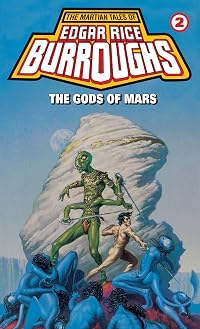


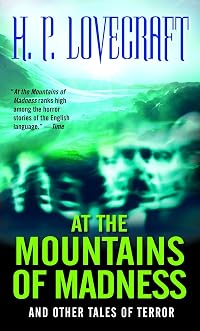


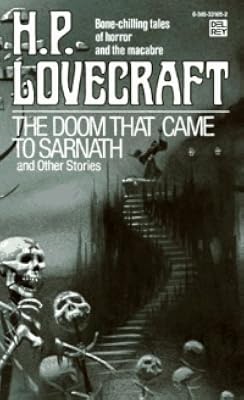


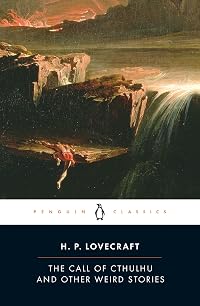


Member Recommendations

Z-Ryan Faust was clearly influenced by A. Merritt's "Lost World fantasies" in writing this novel.
Member Reviews
This is another expedition into the past of popular literature. Abraham Merritt, whose byline is nearly always A. Merritt, was a popular author who wasn’t even best known in his own time for his fiction. Rather, he was a celebrity journalist, making enough money to travel widely and pursue arcane hobbies.
The Moon Pool is the work I usually see cited as typical of Merritt’s work, and it is listed in Gary Gygax’s “Appendix N” as an influence on Dungeons and Dragons. Let’s dive into the Moon Pool and see what happens!
The Moon Pool is a lush work of prose. It isn’t quite my style, but I am reminded of something that the late Jerry Pournelle said about Ivanhoe; the point of the long descriptions was to transport people to show more places they had never been, in a era when you couldn’t immediately find an image of any place you wanted to see. Photography was well established in the 1920s, so that was perhaps less important than in Sir Walter Scott’s day, but nonetheless most of the audience of Merritt’s stories probably had never traveled far from their homes or seen the broad range of environments that Merritt had.
Whenever I delve into a work of this era, it almost always takes me a while to get into the groove with the prose, and not just because of the aforementioned verbose style. With popular works like this, I find that the word choice, phrasing, and background assumptions are just different enough to throw me off. The worst example of this was King – of the Khyber Rifles, Talbot Mundy’s 1916 adventure, which almost lost me in some early dialogue. Since I find the 1911 Encyclopedia Britannica perfectly comprehensible, it clearly has something to do with how formal, academic language changes more slowly than everyday speech.
A stylistic choice I appreciated was that while Merritt did include some amount of science fantasy in the story, the detailed descriptions of the fantastic technologies had been redacted so as not to provide too much information to the Russians. In this way, 1919 was sufficiently like 2020 to help me connect with the story.
The Moon Pool as a story is a lost world adventure, inspired by the monumental ruins of Nan Madol in the South Pacific, which also inspired Lovecraft’s lost city of Ryloth. Merritt’s description of the South Pacific is evocative, and I enjoyed his ability to accurately describe the vast numbers of unusual people who populated the tramp steamers of the day. Out of that itinerant population, Goodwin, the narrator, assembles a band of adventurers [here is where I really see the D&D influence] as he seeks to rescue his friend Throckmartin from the Dweller in the Moon Pool.
The mix in this pulp classic is a little different, as no one knew or cared about the genres we are used to almost 100 years later. There is some cosmic horror, some science fantasy, some romance, and some political intrigue. Merritt pulls all this together into one grand adventure that is very much worth the price of entry. With Hollow Earth style stories like this I find it a bit harder to generate the needed suspension of disbelief, but I also know that this is a time-bound phenomenon, as nothing ages faster than science fiction [even when it is really good]. I’ve read Campbellian scifi from the 50s that was more unbelievable to me, and I know that some of my favorite books now will probably seem a little odd 100 years from now, so I suggest that the effort needed to see someone else’s favorite story with new eyes is worth the effort.
One of the things that got me into reading pulp classics like The Moon Pool was an interest in seeing popular literature from an age where Christian belief was taken for granted, along with an interest in seeing the fictional influences of Dungeons and Dragons in a new light.. C. L. Moore’s short stories in particular struck me as being explicitly Christian, along with Poul Anderson’s works, but The Moon Pool was almost a little scandalous.
At this point I intend to move into spoiler territory, so if you care about spoilers in a 100 year old book, you should skip this part.
What I mean by this is that early on in the book, one of the merry band of adventurers assembled by Goodwin is moved to abandon his Christian beliefs when the Dweller in the Moon Pool steals his wife and daughter. Olaf Huldricksson apostatizes in favor of the warlike gods of his ancestors when a horror from the deep kidnaps his family. I was honestly a little shocked, but it is all comprehensible to me. Merritt’s work is just a little different than Three Hearts and Three Lions, where the mere name of Jesus is enough to send wicked things reeling.
When that doesn’t work for Huldricksson, he turns to Thor instead. I honestly have no idea whether that would have been scandalous to his audience, but it was scandalous to me. However, at the end, Huldricksson gets his revenge, but perishes in the attempt, bringing to mind Matthew 26:52 “Then Jesus said to him, “Put your sword back into its sheath, for all who take the sword will perish by the sword.” And then I wasn’t so sure.
That unexpected complexity is exactly what I came for, and I am happy that I found it. While the The Moon Pool is very much not in the modern style, it is a great read, and worth a look if you’ve never had a chance. show less
The Moon Pool is the work I usually see cited as typical of Merritt’s work, and it is listed in Gary Gygax’s “Appendix N” as an influence on Dungeons and Dragons. Let’s dive into the Moon Pool and see what happens!
The Moon Pool is a lush work of prose. It isn’t quite my style, but I am reminded of something that the late Jerry Pournelle said about Ivanhoe; the point of the long descriptions was to transport people to show more places they had never been, in a era when you couldn’t immediately find an image of any place you wanted to see. Photography was well established in the 1920s, so that was perhaps less important than in Sir Walter Scott’s day, but nonetheless most of the audience of Merritt’s stories probably had never traveled far from their homes or seen the broad range of environments that Merritt had.
Whenever I delve into a work of this era, it almost always takes me a while to get into the groove with the prose, and not just because of the aforementioned verbose style. With popular works like this, I find that the word choice, phrasing, and background assumptions are just different enough to throw me off. The worst example of this was King – of the Khyber Rifles, Talbot Mundy’s 1916 adventure, which almost lost me in some early dialogue. Since I find the 1911 Encyclopedia Britannica perfectly comprehensible, it clearly has something to do with how formal, academic language changes more slowly than everyday speech.
A stylistic choice I appreciated was that while Merritt did include some amount of science fantasy in the story, the detailed descriptions of the fantastic technologies had been redacted so as not to provide too much information to the Russians. In this way, 1919 was sufficiently like 2020 to help me connect with the story.
The Moon Pool as a story is a lost world adventure, inspired by the monumental ruins of Nan Madol in the South Pacific, which also inspired Lovecraft’s lost city of Ryloth. Merritt’s description of the South Pacific is evocative, and I enjoyed his ability to accurately describe the vast numbers of unusual people who populated the tramp steamers of the day. Out of that itinerant population, Goodwin, the narrator, assembles a band of adventurers [here is where I really see the D&D influence] as he seeks to rescue his friend Throckmartin from the Dweller in the Moon Pool.
The mix in this pulp classic is a little different, as no one knew or cared about the genres we are used to almost 100 years later. There is some cosmic horror, some science fantasy, some romance, and some political intrigue. Merritt pulls all this together into one grand adventure that is very much worth the price of entry. With Hollow Earth style stories like this I find it a bit harder to generate the needed suspension of disbelief, but I also know that this is a time-bound phenomenon, as nothing ages faster than science fiction [even when it is really good]. I’ve read Campbellian scifi from the 50s that was more unbelievable to me, and I know that some of my favorite books now will probably seem a little odd 100 years from now, so I suggest that the effort needed to see someone else’s favorite story with new eyes is worth the effort.
One of the things that got me into reading pulp classics like The Moon Pool was an interest in seeing popular literature from an age where Christian belief was taken for granted, along with an interest in seeing the fictional influences of Dungeons and Dragons in a new light.. C. L. Moore’s short stories in particular struck me as being explicitly Christian, along with Poul Anderson’s works, but The Moon Pool was almost a little scandalous.
At this point I intend to move into spoiler territory, so if you care about spoilers in a 100 year old book, you should skip this part.
What I mean by this is that early on in the book, one of the merry band of adventurers assembled by Goodwin is moved to abandon his Christian beliefs when the Dweller in the Moon Pool steals his wife and daughter. Olaf Huldricksson apostatizes in favor of the warlike gods of his ancestors when a horror from the deep kidnaps his family. I was honestly a little shocked, but it is all comprehensible to me. Merritt’s work is just a little different than Three Hearts and Three Lions, where the mere name of Jesus is enough to send wicked things reeling.
When that doesn’t work for Huldricksson, he turns to Thor instead. I honestly have no idea whether that would have been scandalous to his audience, but it was scandalous to me. However, at the end, Huldricksson gets his revenge, but perishes in the attempt, bringing to mind Matthew 26:52 “Then Jesus said to him, “Put your sword back into its sheath, for all who take the sword will perish by the sword.” And then I wasn’t so sure.
That unexpected complexity is exactly what I came for, and I am happy that I found it. While the The Moon Pool is very much not in the modern style, it is a great read, and worth a look if you’ve never had a chance. show less
When a book has a chapter titled "Yolara, Priestess of the Shining One", it isn't generally a good sign. When it crams three or more adjectives into almost every sentence and delights in words like "supernal", you may well be wary. But, in the case of THE MOON POOL, you would be mistaken. In the hands of A. Merritt, you don't have time to dwell on stuff like that. Instead you are held in thrall by a strange narrative that combines Edgar Rice Burroughs' science fiction, a bit of Robert E. Howard, and a dash of H.P. Lovecraft. But even in such company, Merritt achieves an effect quite his own. Despite the florid passages, of which there are many, he still succeeds in doing more showing than telling. Your brain will strain at the images he show more fills it with of a strange world below the surface of a Pacific Island, inhabited by an ancient race and by a creation gone terribly wrong--the Shining One.
The heroes are a scientist, who has come to the island to discover the facts behind the strange tale told him by an old friend, who fell victim to the Shining One, losing his wife and the other members of his exploration party in the process. Luckily, the doctor happens upon a downed Irish-American Royal Air Force fighter pilot calmly floating on the wreckage of his sea plane. Together with a giant Norseman who has lost his wife and child to the Shining One, they proceed to the underworld to see what they can do about it.
Guess what? They meet some beautiful women, though one of them is only beautiful on the outside. The men, however, tend to be dwarves and gigantic frogs. You just have to read it, believe me.
Even if you have read adventure books like this from the 1920s and 1930s, you will be grandly entertained by the many twists in this story, but mainly by the gallantry of the characters Merritt presents and the magical, mystical, colorful world they inhabit. You might even learn something. I thought I was somewhat educated, but I had never heard of the incredible ruins in the Pacific (now part of the Federated States of Micronesia) where the story begins.
Though Merritt can't avoid using the conventions and cliches of this type of story in terms of language, characterization, and plotting, he also rises far above them to present a tale that you won't soon forget. (Although the Irishman's ravings about leprechauns and other Irish beings gets more than a little old after a while.) And after all the build up, the book doesn't disappoint in the end, either, leaving us with a conclusive but poignant finale. show less
The heroes are a scientist, who has come to the island to discover the facts behind the strange tale told him by an old friend, who fell victim to the Shining One, losing his wife and the other members of his exploration party in the process. Luckily, the doctor happens upon a downed Irish-American Royal Air Force fighter pilot calmly floating on the wreckage of his sea plane. Together with a giant Norseman who has lost his wife and child to the Shining One, they proceed to the underworld to see what they can do about it.
Guess what? They meet some beautiful women, though one of them is only beautiful on the outside. The men, however, tend to be dwarves and gigantic frogs. You just have to read it, believe me.
Even if you have read adventure books like this from the 1920s and 1930s, you will be grandly entertained by the many twists in this story, but mainly by the gallantry of the characters Merritt presents and the magical, mystical, colorful world they inhabit. You might even learn something. I thought I was somewhat educated, but I had never heard of the incredible ruins in the Pacific (now part of the Federated States of Micronesia) where the story begins.
Though Merritt can't avoid using the conventions and cliches of this type of story in terms of language, characterization, and plotting, he also rises far above them to present a tale that you won't soon forget. (Although the Irishman's ravings about leprechauns and other Irish beings gets more than a little old after a while.) And after all the build up, the book doesn't disappoint in the end, either, leaving us with a conclusive but poignant finale. show less
This is the story of a botanist who witnesses something strange and terrifying, tries - with the help of companions met along the way - to save the life of a friend gone missing, and ends up in a bromance for the ages. It's a fun read as a pulp adventure, provided you don't mind the completely over-the-top florid prose (see the author's quotes page for some examples). All the right stuff is here: a hidden, underground civilization; powerful artifacts of lost, ancient science; a beguiling but devilish priestess; a powerful entity of unspeakable evil; a quest for revenge; a stereotyped Irishman; Bolsheviks!
However, it apparently comes from a time when science fiction meant that science could be pure fiction. All the "scientific" show more explanations are positively eye roll-inducing, and at times go on for so long that one feels one's somehow ended up in the whaling chapters from Moby Dick. I mean, I know this is "early" SF, but I'm fairly certain that by 1919, when AFAIK this was first published, no one believed in transmission of energy through the aether any more, nor that the chemical composition of the moon changes the nature of the light it reflects. I really think I'd have enjoyed this more if I hadn't approached it as SF, but instead as a pure pulp novel, a la [b:King Solomon's Mine|23814|King Solomon's Mines (Allan Quatermain, #1)|H. Rider Haggard|https://d202m5krfqbpi5.cloudfront.net/books/1389152178s/23814.jpg|575986]. show less
However, it apparently comes from a time when science fiction meant that science could be pure fiction. All the "scientific" show more explanations are positively eye roll-inducing, and at times go on for so long that one feels one's somehow ended up in the whaling chapters from Moby Dick. I mean, I know this is "early" SF, but I'm fairly certain that by 1919, when AFAIK this was first published, no one believed in transmission of energy through the aether any more, nor that the chemical composition of the moon changes the nature of the light it reflects. I really think I'd have enjoyed this more if I hadn't approached it as SF, but instead as a pure pulp novel, a la [b:King Solomon's Mine|23814|King Solomon's Mines (Allan Quatermain, #1)|H. Rider Haggard|https://d202m5krfqbpi5.cloudfront.net/books/1389152178s/23814.jpg|575986]. show less
Pulp Ediciones (También conocida como Río Henares Producciones Gráficas) fue una editorial que, a principios de siglo, destacó por recuperar clásicos del pulp anglosajón, difíciles de encontrar en España en aquella época. Sin embargo, su legado se vio empañado cuando se descubrió que casi todas sus traducciones eran plagios y que habían publicado títulos sin consentimiento ni autorización de los autores.
En este contexto, publicaron —o piratearon— una obra de uno de los mejores escritores del pulp. Sin ser su mejor obra (al menos me parecen superiores La nave de Ishtar y ¡Arde, bruja, arde!), se trata de un libro ameno y con un ritmo trepidante.
El libro empieza como un relato de horror sobrenatural muy al gusto de la show more época para después convertirse en un relato de aventuras que, como se comenta en el prólogo, recuerda a Las minas del Rey Salomón, y en el que los protagonistas se lanzan a la exploración de un mundo perdido y se verán envueltos en una trama repleta de intrigas, luchas sin cuartel y criaturas sobrenaturales. Aunque los personajes no dejan de ser arquetipos (el aventurero, la princesa, el científico, la mujer fatal etc.), Merritt consigue por momentos dotarles de cierta personalidad, especialmente en el caso del doctor Goodwin, que hace que se les tome cierto aprecio. Pero quizás lo más interesante sea el aspecto de proto-SF que hace que Merritt intente mostrarnos que todo cuando se ve tiene una explicación que se sugiere que es más científica que mágica. También es de agradecer el ingenioso método que se emplea para evitarnos farragosas explicaciones que además habrían hecho que la novela envejeciera peor de lo que lo ha hecho. Como apunte histórico es de destacar la lograda ambientación y la descripción de un entorno que nos demuestra que Lovecraft no se inventó tantas cosas como creemos a veces los aficionados (Aunque hay que reconocer que él nunca pretendió tal cosa, siempre reconoció sus influencias sin problema)
Dicho todo esto, es mejor no olvidar que, como se ha dicho, se trata de una novela pulp, y sufre por la mencionada limitación en la caracterización de los personajes y la redundancia en las descripciones, llegando al extremo de que algunos personajes repiten su retrato cada vez que aparecen. Por otra parte, el cambio de estilo entre el prólogo y el cuerpo principal de la obra es demasiado brusco. Esta brusquedad hace que cueste un poco meterse en la obra, aunque una vez que se coge el ritmo se devora hasta el final.
Respecto a la traducción —plagiada o no— es funcional, pero peca de modismos actuales excesivos, quizá para compensar la pérdida de los acentos originales de los personajes.
En resumen: una obra muy recomendable para aficionados al pulp, ideal como introducción al subgénero, pero también un recordatorio del escándalo de plagios que llevó al cierre de la editorial. show less
En este contexto, publicaron —o piratearon— una obra de uno de los mejores escritores del pulp. Sin ser su mejor obra (al menos me parecen superiores La nave de Ishtar y ¡Arde, bruja, arde!), se trata de un libro ameno y con un ritmo trepidante.
El libro empieza como un relato de horror sobrenatural muy al gusto de la show more época para después convertirse en un relato de aventuras que, como se comenta en el prólogo, recuerda a Las minas del Rey Salomón, y en el que los protagonistas se lanzan a la exploración de un mundo perdido y se verán envueltos en una trama repleta de intrigas, luchas sin cuartel y criaturas sobrenaturales. Aunque los personajes no dejan de ser arquetipos (el aventurero, la princesa, el científico, la mujer fatal etc.), Merritt consigue por momentos dotarles de cierta personalidad, especialmente en el caso del doctor Goodwin, que hace que se les tome cierto aprecio. Pero quizás lo más interesante sea el aspecto de proto-SF que hace que Merritt intente mostrarnos que todo cuando se ve tiene una explicación que se sugiere que es más científica que mágica. También es de agradecer el ingenioso método que se emplea para evitarnos farragosas explicaciones que además habrían hecho que la novela envejeciera peor de lo que lo ha hecho. Como apunte histórico es de destacar la lograda ambientación y la descripción de un entorno que nos demuestra que Lovecraft no se inventó tantas cosas como creemos a veces los aficionados (Aunque hay que reconocer que él nunca pretendió tal cosa, siempre reconoció sus influencias sin problema)
Dicho todo esto, es mejor no olvidar que, como se ha dicho, se trata de una novela pulp, y sufre por la mencionada limitación en la caracterización de los personajes y la redundancia en las descripciones, llegando al extremo de que algunos personajes repiten su retrato cada vez que aparecen. Por otra parte, el cambio de estilo entre el prólogo y el cuerpo principal de la obra es demasiado brusco. Esta brusquedad hace que cueste un poco meterse en la obra, aunque una vez que se coge el ritmo se devora hasta el final.
Respecto a la traducción —plagiada o no— es funcional, pero peca de modismos actuales excesivos, quizá para compensar la pérdida de los acentos originales de los personajes.
En resumen: una obra muy recomendable para aficionados al pulp, ideal como introducción al subgénero, pero también un recordatorio del escándalo de plagios que llevó al cierre de la editorial. show less
Forests of tree-high mosses spangled over with blooms of every conceivable shape and colour; cataracts and clusters, avalanches and nets of blossoms in pastels, in dulled metallics, in gorgeous flamboyant hues; some of them phosphorescent and shining like living jewels; some sparkling as though with dust of opals, of sapphires, of rubies and topazes and emeralds; thickets of convolvuli like the trumpets of the seven archangels of Mara, king of illusion, which are shaped from the bows of splendours arching his highest heaven!
I really liked the other Merritt i've read [b:The Face in the Abyss|952307|The Face in the Abyss|A. Merritt|https://i.gr-assets.com/images/S/compressed.photo.goodreads.com/books/1456617424l/952307._SY75_.jpg|937218], show more but this one... My main issue with pulps normally is the lack of descriptive writing, hence my liking the previous Merritt i read, as he's a far better writer than the likes of Burroughs.
I like my prose as purple as possible... but there are limits! and Merritt blew those limits to pieces in this one. Take a look at the example above. There are dozens of sentences like that one, most of which have some allusions to ancient sumerian legend or Navajo myth or something like the "trumpets of the seven archangels of Mara, king of illusion" above. Its so much... Also no matter how much description was used i still found it very difficult to picture what was being described.
But the prose is only one problem, the plot only really starts about a third of the way through. We begin with frankly a more interesting setup and group of characters than the ones we get stuck with.
The entire middle section is the most pulpy bit but actually remarkably little happens in it, there is a distinct lack of incident. Then we have several chapters of exposition before a rushed and pretty jeopardy free ending.
There are plenty of interesting ideas but not enough to save it for me, still 2-stars i'll admit is being a bit harsh.
Notes:
I've noticed that Merritt includes elements of Lovecraft but also creatures which should be Lovecraftian but arn't. If Lovecrafts Deep Ones, appeared in a Merritt tale they'd probably be the good guys which is quite interesting.
Made available by the Merril Collection. I had to alternate between reading and a Librivox recording to get through it.
Edit: Having perused other reviews it seems like anyone who likes other Merritt books hates this one, which is comforting, since i have more Merritt on my to-do list :) . show less
I really liked the other Merritt i've read [b:The Face in the Abyss|952307|The Face in the Abyss|A. Merritt|https://i.gr-assets.com/images/S/compressed.photo.goodreads.com/books/1456617424l/952307._SY75_.jpg|937218], show more but this one... My main issue with pulps normally is the lack of descriptive writing, hence my liking the previous Merritt i read, as he's a far better writer than the likes of Burroughs.
I like my prose as purple as possible... but there are limits! and Merritt blew those limits to pieces in this one. Take a look at the example above. There are dozens of sentences like that one, most of which have some allusions to ancient sumerian legend or Navajo myth or something like the "trumpets of the seven archangels of Mara, king of illusion" above. Its so much... Also no matter how much description was used i still found it very difficult to picture what was being described.
But the prose is only one problem, the plot only really starts about a third of the way through. We begin with frankly a more interesting setup and group of characters than the ones we get stuck with.
The entire middle section is the most pulpy bit but actually remarkably little happens in it, there is a distinct lack of incident. Then we have several chapters of exposition before a rushed and pretty jeopardy free ending.
There are plenty of interesting ideas but not enough to save it for me, still 2-stars i'll admit is being a bit harsh.
Notes:
I've noticed that Merritt includes elements of Lovecraft but also creatures which should be Lovecraftian but arn't. If Lovecrafts Deep Ones, appeared in a Merritt tale they'd probably be the good guys which is quite interesting.
Made available by the Merril Collection. I had to alternate between reading and a Librivox recording to get through it.
Edit: Having perused other reviews it seems like anyone who likes other Merritt books hates this one, which is comforting, since i have more Merritt on my to-do list :) . show less
Many will already know the much-anthologised short fantasy story by Merritt called 'The Moon Pool'. This is its extension into his first full length 'pulp' novel.
The short story took us to the point where we felt the mystery of what is later revealed as the Shining One or the Dweller. Once again, as so often with Merritt, we get pre-emptive shades of H.P. Lovecraft.
Merritt writes at a peculiar point in fantasy history where the half-educated reader might reasonably dream of the reality of lost worlds in still scarcely explored territories.
It was a period when science could be happily mangled into speculative fiction that could still thrill but which is much less plausible as science to the more modern reader.
The full length novel is show more less interesting precisely because Merritt has to stop being merely suggestive and give us tale which bamboozles us with a dated mix of outmoded science and anthropology.
Once the details of the world of the Moon Pool are filled in, the magic starts to disappear despite the evident good and evil luscious lovelies and the chaste yet erotic sexual sub-plots that evoke pulp covers.
Understanding is also not helped by archaic language and sentence construction and mental images that suggest the world of Flash Gordon and Dale Arden.
Finally, a propensity to over-egg the sensory pudding with detailed pseudo-synaesthetic description weakens what could have been a powerful narrative, one that might have matched Stapledon for cosmic strangeness.
What we have in the end is an imaginative tour de force but one that is over-written and over-acted with too little narrative clarity and too much local colour. The mystery disappears under the weight of it all. show less
The short story took us to the point where we felt the mystery of what is later revealed as the Shining One or the Dweller. Once again, as so often with Merritt, we get pre-emptive shades of H.P. Lovecraft.
Merritt writes at a peculiar point in fantasy history where the half-educated reader might reasonably dream of the reality of lost worlds in still scarcely explored territories.
It was a period when science could be happily mangled into speculative fiction that could still thrill but which is much less plausible as science to the more modern reader.
The full length novel is show more less interesting precisely because Merritt has to stop being merely suggestive and give us tale which bamboozles us with a dated mix of outmoded science and anthropology.
Once the details of the world of the Moon Pool are filled in, the magic starts to disappear despite the evident good and evil luscious lovelies and the chaste yet erotic sexual sub-plots that evoke pulp covers.
Understanding is also not helped by archaic language and sentence construction and mental images that suggest the world of Flash Gordon and Dale Arden.
Finally, a propensity to over-egg the sensory pudding with detailed pseudo-synaesthetic description weakens what could have been a powerful narrative, one that might have matched Stapledon for cosmic strangeness.
What we have in the end is an imaginative tour de force but one that is over-written and over-acted with too little narrative clarity and too much local colour. The mystery disappears under the weight of it all. show less
The Moon Pool by A. Merritt Classic work **** With a caution -- recommended only for those who are interested in the history of SF/Fantasy!
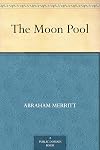
The copy I read is a 1919 edition from the Sterling E. Lanier library with a plain black cover. However the lurid drawing (and this one is not quite the most lurid) is most appropriate as The Moon Pool features several women characters who are scantily clad, very much a 'must' for books of this type, then and now. I can't categorize it as it hovers between genres blending nearly non-stop action, imaginative re-purposing of an obscure and genuinely intriguing archaeological site in the Caroline Islands of the Pacific (near Papua New Guinea) known as 'the Venice of the Pacific,' (Check out 'Nan Madol' show more ), impressive use of known theoretical physics of the time (including relativity and ftl and something v v much like an inside-out singularity), irish myth (leprachauns, banshee, songs and brogue from the Irish hero), nordic myth (Asgard etc), botany, dwarves, the lost continent of Mu, oh and a whole underground space full of living beings formerly of Mu -- among them the Akka, giant and intelligent warrior frogs living in the space left when the moon parted company with earth. (The moon having a special relationship yet with this space..... ). If you are interested in the history of fantasy and science fiction, and in how the genre developed, this one is a must - a classic. I can see why, for all it isn't much on character development and it has some of the racism of the day (although milder than some I've encountered) - it's an intelligent and impressive blending of information with some daft but wild imaginings of the first water. It is narrated by a scientist, a serious Botanist, Goodwin, who stumbles into an adventure on his way home from a collecting expedition. He and his Irish friend, must save the world from the folks down below who want to re-emerge on the surface of the earth...... show less
The copy I read is a 1919 edition from the Sterling E. Lanier library with a plain black cover. However the lurid drawing (and this one is not quite the most lurid) is most appropriate as The Moon Pool features several women characters who are scantily clad, very much a 'must' for books of this type, then and now. I can't categorize it as it hovers between genres blending nearly non-stop action, imaginative re-purposing of an obscure and genuinely intriguing archaeological site in the Caroline Islands of the Pacific (near Papua New Guinea) known as 'the Venice of the Pacific,' (Check out 'Nan Madol' show more ), impressive use of known theoretical physics of the time (including relativity and ftl and something v v much like an inside-out singularity), irish myth (leprachauns, banshee, songs and brogue from the Irish hero), nordic myth (Asgard etc), botany, dwarves, the lost continent of Mu, oh and a whole underground space full of living beings formerly of Mu -- among them the Akka, giant and intelligent warrior frogs living in the space left when the moon parted company with earth. (The moon having a special relationship yet with this space..... ). If you are interested in the history of fantasy and science fiction, and in how the genre developed, this one is a must - a classic. I can see why, for all it isn't much on character development and it has some of the racism of the day (although milder than some I've encountered) - it's an intelligent and impressive blending of information with some daft but wild imaginings of the first water. It is narrated by a scientist, a serious Botanist, Goodwin, who stumbles into an adventure on his way home from a collecting expedition. He and his Irish friend, must save the world from the folks down below who want to re-emerge on the surface of the earth...... show less
Members
- Recently Added By
Lists

The 5 Parsec Shelf
50 works; 7 members

Books Read in 2018
4,360 works; 110 members
Author Information

27+ Works 2,243 Members
Some Editions
Awards and Honors
Series

Belongs to Publisher Series
Work Relationships
Common Knowledge
- Canonical title
- The Moon Pool
- Original title
- The Moon Pool
- Original publication date
- 1919
- People/Characters
- Walter Goodwin; Dr. David Throckmartin; Edith Throckmartin
- Important places
- Ponape Isl, Pacifica; Nan-Tauach Isl, Pacifica
- Dedication
- To
Robert H Davis
In appreciation, among other things, for Larry O'Keefe's faith in the fairies. - First words
- For two months I had been on the d'Entrecasteaux Islands gathering data for the concluding chapters of my book upon the flora of the volcanic islands of the South Pacific.
- Last words
- (Click to show. Warning: May contain spoilers.)And there, for me, the world ended.
Classifications
Statistics
- Members
- 629
- Popularity
- 46,535
- Reviews
- 25
- Rating
- (3.27)
- Languages
- 6 — Czech, English, French, German, Polish, Spanish
- Media
- Paper, Audiobook, Ebook
- ISBNs
- 97
- ASINs
- 59