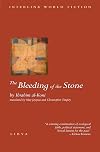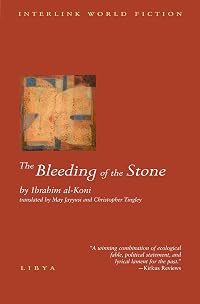
The Bleeding of the Stone
by Ibrahim al-Koni
On This Page
Description
The moufflon, a wild sheep prized for its meat, continues to survive in the remote mountain desert of southern Libya. Only Asouf, a lone bedouin who cherishes the desert and identifies with its creatures, knows exactly where it is to be found. Now he and the moufflon together come under threat from hunters who have already slaughtered the once numerous desert gazelles. The novel combines pertinent ecological issues with a moving portrayal of traditional desert life and of the power of the show more human spirit to resist. show lessTags
Recommendations












Member Reviews
“The desert is a true treasure
for him who seeks refuge
from men and the evil of men.
In it is contentment,
In it is death and all you seek.”
This muwwal, a traditional song, performed by the Sufis in the community at Uwaynat is quoted by Asouf’s father in Ibrahim al-Koni’s novel “The Bleeding of the Stone”. And this muwwal seems indeed to express perfectly what the desert means to the hero’s father.
Asouf grows up somewhere in the Libyan desert, living the traditional life of Bedouins who are the only inhabitants of this great landscape that seems so hostile to any outsiders and that is therefore the perfect place for people like Asouf’s father, a loner. When some other bedu families move to their valley, he forces his own show more family to move to an even more remote place simply because he can’t stand the vicinity of other people, much to the regret of Asouf’s mother who seems to be considerably more sociable and probably also to Asouf himself, who never had other children to play with and who is of an age where his interest in girls is growing. But the Tamba sandals that Asouf is receiving as a present and that are “embellished by the nimble fingers of the girls of Tamanrasset, who poured into the designs their passion and their longing to meet the knight of their dreams”- that’s as close as he ever comes to a girl.
Asouf is taught by his father how to survive in the desert, how to hunt, how to always treat his camel with respect and even tenderness, and how to spare water and bullets. “In the desert, he’d go on, water and bullets were like air, the very foundation of life. If you ran out of the first, you’d die of thirst, and if you ran out of the second, some enemy, man or beast or snake, would strike you down. Water and bullets were the life blood of a lone man.” Hunting is not s sport in this traditional society – it is simply necessary to survive. To kill more animals than necessary, or to kill a pregnant animal, is therefore out of the question. Asouf’s father, as a true Sufi, admires the beauty of the gazelle and he is suffering from the fact that he sometimes has to kill one of these creatures because it is necessary for the survival of his family.
Also with the waddan, a kind of desert moufflon, he has a special mystical relationship and one of the worst moments of his life is the moment when he has to kill a waddan because his family is starving and the meat of the waddan the only available food. The waddan is also instrumental in the death of Asouf’s father who would see in this outcome probably the deserved fate of someone who broke his oath to never hunt and kill a waddan.
Asouf is at the time of his father’s death already a young man who knows the secrets of the desert. He is tending his goats and knows the places where the rare waddan, already extinct in most other regions where it used to live, is hiding. Asouf has become a vegetarian, a true son of his Sufi father. But his quiet pastoral lifestyle is threatened: “civilization” and its agents are slowly trickling into Southern Libya (the Italian war against Abyssinia is mentioned, so the story is taking place in the 1930s as it seems). Government officials arrive and declare Asouf to be from now on the custodian of the prehistoric rock paintings that have started to raise some interest from the side of archeologists and other scientists; small tourist groups from abroad start to visit the place. Asouf sees these visitors and their (to him) very strange behavior with some interest but he keeps a careful distance, partly because of his great shyness. He hides his blushing and embarrassment behind his veil, one of the typical adornments of the male dress in the traditional Tuareg culture. The government employees are surprised that Asouf is rejecting their salary – but for Asouf, money is worthless because everything he needs he can find in the desert.
These mild “clashes of civilizations” are unfortunately only the harbinger of worse things to come: one day two hunters with a big hunger for meat – they take pride in having killed the last gazelles in the north just for the fun of it - are arriving with their jeep and ask from Asouf to help them to find and hunt the waddan…the reader can already imagine how this encounter between a traditional culture and a “modern” civilization will end – with the victory of the party that has the bigger firepower and no moral qualms on its side, i.e. with the victory of the “modern” and “more advanced” party.
The desert is the setting of most of the works of Ibrahim al-Koni, and it is of course also a metaphor for (amongst other things) the human power to resist. This novel also raises ecological questions, questions related to the lessons we can learn from traditional societies in terms of how to lead a sustainable life that is not based on the short-sighted over-exploitation of natural resources. It is a book that breathes the air of the desert and the deep respect the people living traditionally in this habitat feel for everything that lives and even for the stones and sand that is surrounding them.
Ibrahim al-Koni was born 1948 in Southern Libya and grew up in a traditional Tuareg family. He started to learn Arabic at the age of 12 and studied later literature at the Maxim Gorki Institute in Moscow. After having worked as a journalist in Russia and Poland, he is living since many years in Switzerland.
For those who don’t know his work, “The Bleeding of a Stone” is an excellent opportunity to discover this extraordinary author. It’s a wonderful book.
See also my blog: www.mytwostotinki.com show less
for him who seeks refuge
from men and the evil of men.
In it is contentment,
In it is death and all you seek.”
This muwwal, a traditional song, performed by the Sufis in the community at Uwaynat is quoted by Asouf’s father in Ibrahim al-Koni’s novel “The Bleeding of the Stone”. And this muwwal seems indeed to express perfectly what the desert means to the hero’s father.
Asouf grows up somewhere in the Libyan desert, living the traditional life of Bedouins who are the only inhabitants of this great landscape that seems so hostile to any outsiders and that is therefore the perfect place for people like Asouf’s father, a loner. When some other bedu families move to their valley, he forces his own show more family to move to an even more remote place simply because he can’t stand the vicinity of other people, much to the regret of Asouf’s mother who seems to be considerably more sociable and probably also to Asouf himself, who never had other children to play with and who is of an age where his interest in girls is growing. But the Tamba sandals that Asouf is receiving as a present and that are “embellished by the nimble fingers of the girls of Tamanrasset, who poured into the designs their passion and their longing to meet the knight of their dreams”- that’s as close as he ever comes to a girl.
Asouf is taught by his father how to survive in the desert, how to hunt, how to always treat his camel with respect and even tenderness, and how to spare water and bullets. “In the desert, he’d go on, water and bullets were like air, the very foundation of life. If you ran out of the first, you’d die of thirst, and if you ran out of the second, some enemy, man or beast or snake, would strike you down. Water and bullets were the life blood of a lone man.” Hunting is not s sport in this traditional society – it is simply necessary to survive. To kill more animals than necessary, or to kill a pregnant animal, is therefore out of the question. Asouf’s father, as a true Sufi, admires the beauty of the gazelle and he is suffering from the fact that he sometimes has to kill one of these creatures because it is necessary for the survival of his family.
Also with the waddan, a kind of desert moufflon, he has a special mystical relationship and one of the worst moments of his life is the moment when he has to kill a waddan because his family is starving and the meat of the waddan the only available food. The waddan is also instrumental in the death of Asouf’s father who would see in this outcome probably the deserved fate of someone who broke his oath to never hunt and kill a waddan.
Asouf is at the time of his father’s death already a young man who knows the secrets of the desert. He is tending his goats and knows the places where the rare waddan, already extinct in most other regions where it used to live, is hiding. Asouf has become a vegetarian, a true son of his Sufi father. But his quiet pastoral lifestyle is threatened: “civilization” and its agents are slowly trickling into Southern Libya (the Italian war against Abyssinia is mentioned, so the story is taking place in the 1930s as it seems). Government officials arrive and declare Asouf to be from now on the custodian of the prehistoric rock paintings that have started to raise some interest from the side of archeologists and other scientists; small tourist groups from abroad start to visit the place. Asouf sees these visitors and their (to him) very strange behavior with some interest but he keeps a careful distance, partly because of his great shyness. He hides his blushing and embarrassment behind his veil, one of the typical adornments of the male dress in the traditional Tuareg culture. The government employees are surprised that Asouf is rejecting their salary – but for Asouf, money is worthless because everything he needs he can find in the desert.
These mild “clashes of civilizations” are unfortunately only the harbinger of worse things to come: one day two hunters with a big hunger for meat – they take pride in having killed the last gazelles in the north just for the fun of it - are arriving with their jeep and ask from Asouf to help them to find and hunt the waddan…the reader can already imagine how this encounter between a traditional culture and a “modern” civilization will end – with the victory of the party that has the bigger firepower and no moral qualms on its side, i.e. with the victory of the “modern” and “more advanced” party.
The desert is the setting of most of the works of Ibrahim al-Koni, and it is of course also a metaphor for (amongst other things) the human power to resist. This novel also raises ecological questions, questions related to the lessons we can learn from traditional societies in terms of how to lead a sustainable life that is not based on the short-sighted over-exploitation of natural resources. It is a book that breathes the air of the desert and the deep respect the people living traditionally in this habitat feel for everything that lives and even for the stones and sand that is surrounding them.
Ibrahim al-Koni was born 1948 in Southern Libya and grew up in a traditional Tuareg family. He started to learn Arabic at the age of 12 and studied later literature at the Maxim Gorki Institute in Moscow. After having worked as a journalist in Russia and Poland, he is living since many years in Switzerland.
For those who don’t know his work, “The Bleeding of a Stone” is an excellent opportunity to discover this extraordinary author. It’s a wonderful book.
See also my blog: www.mytwostotinki.com show less
A completely and totally different work than New Waw, which was the first book of his that I read. That book was dense, not easy to follow (for me), and a genuine challenge—although I enjoyed it a great deal. Symbolic, mythic, indirect…and compelling. This one, however, is apparently his first book and it reads like a very straightforward, easy-to-read, story. The story weaves elements of nomadic life in the remote deserts of Libya with Sufism, mysticism, traditional beliefs, as well as environmental issues. As someone on goodreads wrote, al-Koni argues that “the natural world and humans share a common soul; and that in destroying the natural world we destroy ourselves. Al-Koni creates this common soul by depicting a world in show more which the boundary between nature and humans is porous.” Accurate, I think. But for a thin volume, he manages to provide a great deal of food for thought. If you’ve never read al-Koni before, this is a good entry point. show less
"I tell you. Be patient. How can you live in the desert without patience? The man who was never granted its contentment will never be happy there. I tell you. Use patience and cunning, they're the secrets of the desert...."
"Only through dust will the son of Adam be filled."
This little book was translated from Arabic, the author was born in the Fezzan region of Libya and grew up in the Sahara desert, only learning to read and write when he was 12. Al-Koni is of the Tuareg people, a Berber group who traditionally live a semi-nomadic life and are sometimes called “the blue people” because of the indigo dyed clothing they wear which stains their skin. He was a finalist for the Man Booker International Prize in 2015 (for his work in show more general).
This story, set presumably in the 1930s and 40s, is about Asouf, a shepherd who grows up in the desert isolation of Massak Satfak in the Hasawna Mountains, in Fezzan, the southern province of Libya. His job is also to be guardian of the Wadi Matkhandoush with its mysterious cave art that his parents tell him was made by the jinn. He also is the self appointed protector of the waddan (the moufflon) a breed of wild mountain sheep which can stand up to 110cm tall at the shoulder. According to the book, it is the oldest animal in the Sahara and came to extinction in Europe In the 17th century. The story comes to a climax when greedy men come to his part of the desert trying to find gazelle that they have shot almost to extinction and determined to find the mysterious waddan. This book reads like a Bedouin folk tale, blending mysticism, Sufism, Islam, the Old Testament, and traditional beliefs. It has a strong environmental message and paints a picture of life in the desert. I found it to be somewhat mysterious but a short, not unpleasant read. show less
"Only through dust will the son of Adam be filled."
This little book was translated from Arabic, the author was born in the Fezzan region of Libya and grew up in the Sahara desert, only learning to read and write when he was 12. Al-Koni is of the Tuareg people, a Berber group who traditionally live a semi-nomadic life and are sometimes called “the blue people” because of the indigo dyed clothing they wear which stains their skin. He was a finalist for the Man Booker International Prize in 2015 (for his work in show more general).
This story, set presumably in the 1930s and 40s, is about Asouf, a shepherd who grows up in the desert isolation of Massak Satfak in the Hasawna Mountains, in Fezzan, the southern province of Libya. His job is also to be guardian of the Wadi Matkhandoush with its mysterious cave art that his parents tell him was made by the jinn. He also is the self appointed protector of the waddan (the moufflon) a breed of wild mountain sheep which can stand up to 110cm tall at the shoulder. According to the book, it is the oldest animal in the Sahara and came to extinction in Europe In the 17th century. The story comes to a climax when greedy men come to his part of the desert trying to find gazelle that they have shot almost to extinction and determined to find the mysterious waddan. This book reads like a Bedouin folk tale, blending mysticism, Sufism, Islam, the Old Testament, and traditional beliefs. It has a strong environmental message and paints a picture of life in the desert. I found it to be somewhat mysterious but a short, not unpleasant read. show less
I read this book because I wanted to read more books from authors of different nationalities written about their native countries. This book is by a prominent Libyan author who grew up in the deserts of southern Libya and this book takes place in that region.
The story follows a man living in the desert and his relationship with the mouflon, a wild sheep that is becoming rare. It touches on issues of changing times, the solitary nature of life on the desert, and the mystical relationship between humans and animals.
This wasn't really my type of book. It was a little too mystical for my taste, and I'm not sure the translation was really that great. I got a little bit of a flavor of the culture of southern Libya, but was hoping for more.
The story follows a man living in the desert and his relationship with the mouflon, a wild sheep that is becoming rare. It touches on issues of changing times, the solitary nature of life on the desert, and the mystical relationship between humans and animals.
This wasn't really my type of book. It was a little too mystical for my taste, and I'm not sure the translation was really that great. I got a little bit of a flavor of the culture of southern Libya, but was hoping for more.
A decent read. Very good metaphor for animal extinction caused by man's reckless slaughter. Some good descriptive passages, but otherwise nothing of special note here.
Roccia, sangue, sterco (di gazzella).
Nel deserto roccioso del sud della Libia.
Il ciclo delle pitture rupestri si chiude (per ripetersi?) anticipando, inglobando e superando il cristianesimo e l'islam sufi.
Una bella forma di scarno realismo magico dalla penna di un autore libico scoperto solo perché quest'anno qualcuno ne ha fatto il nome nel toto-nomine per il Nobel 2010.
Nel deserto roccioso del sud della Libia.
Il ciclo delle pitture rupestri si chiude (per ripetersi?) anticipando, inglobando e superando il cristianesimo e l'islam sufi.
Una bella forma di scarno realismo magico dalla penna di un autore libico scoperto solo perché quest'anno qualcuno ne ha fatto il nome nel toto-nomine per il Nobel 2010.
Og nu til noget helt andet: Her fortælles om en tuaregisk eneboer, der lever som gedehyrde i det sydlige Libyen og den besjælede ørken og pagten mellem mennesket og gazellen, som brydes af den grådige 'Adams søn'.
Det er en fascinerende og billedrig beretning om noget ganske anderledes end det vante. Det er smukt og godt, men bliver en gang imellem lige lovlig patetisk for mig, dér hvor selve sproget kammer lidt over. Selve historien er der intet galt med.
Det er en fascinerende og billedrig beretning om noget ganske anderledes end det vante. Det er smukt og godt, men bliver en gang imellem lige lovlig patetisk for mig, dér hvor selve sproget kammer lidt over. Selve historien er der intet galt med.
Feb 24, 2010Danish
Members
- Recently Added By
Author Information

49+ Works 455 Members
Born in 1948 to a nomadic Saharan family, Ibrahim Al-Koni is an award-winning Arabic-language novelist and has already published more than seventy volumes. A Tuareg whose mother tongue is Tamasheq, he was educated in Moscow and, after many years in Switzerland, now lives in Spain. He is one of the prime authorities on Tuareg culture and folklore. show more William M. Hutchins, Professor in the Philosophy and Religion Department at Appalachian State University, has translated numerous works of Arabic literature into English, including four novels by the Nobel Prize laureate Naguib Mahfouz. He has received two grants from the National Endowment for the Arts for literary translation, both for works by Ibrahim al-Koni. He was co-winner of the 2013 Saif Ghobash Banipal Prize for Arabic Literary Translation for A Land Without Jasmine by Wajdi al-Ahdal. show less
Some Editions
Awards and Honors
Series
Belongs to Publisher Series
Common Knowledge
- Canonical title
- The Bleeding of the Stone
- Original title
- Nazief al-hadjar
- Original publication date
- 1990
- Important places
- Libya; Southwest Libya
Classifications
- Genres
- Fiction and Literature, General Fiction
- DDC/MDS
- 892.7 — Literature & rhetoric Literatures of other languages Afro-Asiatic literatures Arabic (Egypt, Lebanon, Palestine, Saudi Arabia, Sudan)
- LCC
- PJ7842 .U54 .N3913 — Language and Literature Oriental languages and literatures Oriental philology and literature Arabic Arabic literature Individual authors or works
- BISAC
Statistics
- Members
- 95
- Popularity
- 339,962
- Reviews
- 7
- Rating
- (3.63)
- Languages
- 6 — Danish, Dutch, English, German, Italian, Swedish
- Media
- Paper, Ebook
- ISBNs
- 9
- UPCs
- 1