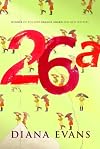
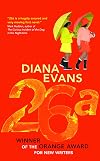
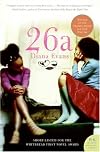
26a
by Diana Evans
On This Page
Description
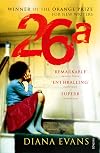
"Identical twins Georgia and Bessi live in the loft of 26 Waiver Avenue. It is a place of beanbags, nectarines and secrets, and visitors must always knock before entering. Down below there is not such harmony. Their Nigerian mother puts cayenne pepper on her Yorkshire pudding, and has mysterious ways of dealing with homesickness; their father angrily roams the streets of Neasden, prey to the demons of his Derbyshire upbringing. Forced to create their own identities, the Hunter children build show more a separate universe. Older sister Bel discovers sex, high heels and organic hairdressing, the twins plan a flapjack empire, and baby sister Kemy learns to moonwalk for Michael Jackson. It is when reality comes knocking that the fantasies of childhood start to give way. How will Georgia and Bessi cope in a world of separateness and solitude, and which of them will be stronger?"--BOOK JACKET. show lessTags
Recommendations













Member Recommendations
Member Reviews
Evans skilfully weaves the narrative of diasporic identity through two main themes: blackness and twinness. Black skin and black hair are the first layer of diasporic identity. Their visibility is what makes blackness unavoidable for those who encounter it. A second layer of diasporic identity comes in the shape of hybridity, which Evans portrays in the character of the twins, Georgia and Bessie, who embody
The discourse on blackness in the book traces its roots to Nigeria, which Ida runs away from to escape marriage. However, she is not able to shake off her roots, which she carries into London via her relationship with food and magic. Ida’s strange eating habits, such as wanting to warm up everything she eats, highlight her difficulty in acclimatising to the cold climate of England. Ida brings with her traces of magic from Nigeria: the carving of an old spirit woman which she places opposite the mirror in her home “…so that you could see it if you saw yourself…”, underlining the British-Nigerian identities of herself and her family members. Despite these evident struggles in adapting to life in diaspora, Ida is able to build a home of sorts in London: “…home had a way of shifting…Home was homeless. It could exist anywhere, because its only substance was familiarity”. It is not only Ida for whom blackness becomes a struggle. Her daughters, with their natural black hair, run into difficulties at hairdressers, who simply do not know how to handle afros, and whose “torrential grief” causes Bel to become a chemical-free hairdresser dealing specifically with black hair. The hairdresser incident is a microcosm of a larger issue, of the English being reluctant to co-exist with ‘other’ people. Thus, in Bel’s career choice we see another instance of the characters navigating their agency in the face of the problems posed by their blackness, and building a “home” for themselves.
One is immediately captivated by the character of the twins, Bessie and Georgia, but Evans has managed to deepen and problematise ‘twinness’ as we understand it, by linking it to diasporic identity. Initially, the twins are seen as two parts of one whole, but an event in Nigeria changes the trajectory of their “twoness in oneness”. Georgia is sexually harassed by a servant at their house in Nigeria, a fact that traumatises her and changes the entire trajectory of her life, sending her spiralling into depression, and eventually, suicide. She hides this fact from her twin: “It was the first time ever, in this land of twoness in oneness, that something had seemed unsayable”. She loses her childhood in one evening “There was something lost. The nowness of things”, and spends the rest of her life dealing with the consequences of that evening. She begins to think of herself and Bessie as opposites: “You are light, I am shade”. I believe it is this kind of thinking which eventually leads Georgia to taking her own life. Bessie is split in two ways – in terms of her Nigerian-British identity, as well as by embodying a half-Bessie-half-Georgia identity in an almost otherworldly manner hearkening back to the magical story Ida’s Baba told of the twins Ode and Onia. Bessie’s becoming one contains elements of diasporic identity, too. Living in diaspora requires some of the doubling that occurs, to be curbed and incorporated into one, which Evans has expertly shown through the character of twinness (Bessie-Georgia) becoming oneness (Bessie).
There was a lot of very skilled writing in this book - particularly the middle sections, when the twins were in their teens - I particularly loved the forced 'coolness' of the two suitors Errol and Dean ('What ya sayin'' !!!), and the evocation of Nigeria was masterly. I also admired the way the author very subtly showed the differences between the twins - hardly any at first, and gradually widening to a gulf. They were set within a believable family - their father Aubrey 'had come to realise that there was a part of him that was a stranger to the world and everything in it, and was therefore supremely incapable of succeeding as a human being'. Brilliant - I sympathised utterly.
The author signals from an early stage the likely outcome show more of the novel, but in such a way that you aren't entirely sure how it will pan out and want to read on.
Things I didn't like as much - the early chapters where the twins were very young. A personal thing, really, child's-view whimsy ('Girls with umbrellas skipped across the wallpaper and Georgia and Bessi could hear them laughing') tend to have me reaching for the sick bag. The last chapter.....some elements of it were great (JP and his acquisitive whiskers were a particular highlight), but given that most of the novel is rooted firmly in the real world, elements of this final part required the reader to take a step sideways into the metaphysical which I wasn't sure I was ready for. The last chapter also sets out on a headlong rush of events which seems odd given the evidence of the reader's own eye - there are hardly any pages left!
Trying to decide what the overall theme of the novel is - growing up, multi-culturalism, being twins - I have to conclude that it is being twins, though the twins' Nigerian heritage, and the folklore of that country, is an important element of the story. In a way, this made it a little less enjoyable for me as its twinny themes are less relevant to the majority of us who are not twins.
I almost defied the blurb on the back - by reaching the very end without shedding a tear. Almost, but not quite. show less
The author signals from an early stage the likely outcome show more of the novel, but in such a way that you aren't entirely sure how it will pan out and want to read on.
Things I didn't like as much - the early chapters where the twins were very young. A personal thing, really, child's-view whimsy ('Girls with umbrellas skipped across the wallpaper and Georgia and Bessi could hear them laughing') tend to have me reaching for the sick bag. The last chapter.....some elements of it were great (JP and his acquisitive whiskers were a particular highlight), but given that most of the novel is rooted firmly in the real world, elements of this final part required the reader to take a step sideways into the metaphysical which I wasn't sure I was ready for. The last chapter also sets out on a headlong rush of events which seems odd given the evidence of the reader's own eye - there are hardly any pages left!
Trying to decide what the overall theme of the novel is - growing up, multi-culturalism, being twins - I have to conclude that it is being twins, though the twins' Nigerian heritage, and the folklore of that country, is an important element of the story. In a way, this made it a little less enjoyable for me as its twinny themes are less relevant to the majority of us who are not twins.
I almost defied the blurb on the back - by reaching the very end without shedding a tear. Almost, but not quite. show less
I started this book hot on the heels of finishing up a Jodi Picoult - and found the huge contrast in writing style difficult to get to grips with at first. This isn’t just a book that tells a story in simple straightforward English - this book is full of beautiful and at times almost lyrical prose. Here’s an example from early on:
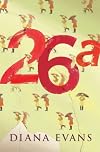
On the outside of their front door Georgia and Bessi had written in chalk ‘26a’, and on the inside ‘G+B’, at eye level, just above the handle. This was the extra dimension. The one above sight, sound, smell, touch and taste where the world multiplied and exploded because it was the sum of two people. Bright was twice as bright. All the colours were extra. Girls with umbrellas skipped across the show more wallpaper and Georgia and Bessi could hear them laughing.
In simple terms this novel looks into the lives of a family and tells a tale of people who don’t fit, of twins who struggle to decide whether they are half of one, or two separate individuals, an incident that changes the way life is viewed, and of depression and the way it affects a life.
But it’s not a simple novel - Evans weaves a tapestry of colours and events that all come together to reflect on the heartbreaking effects of depression and the effects it has on the individual and the people around them.
I started out rating this book a 3 and felt bad for it - as I’m writing this review I feel perhaps a 4 would be more suitable - but I really struggled with this book - I can see why it won a prize, and on some level I can appreciate it for the masterpiece it is - but I just didn’t *get it* - not in the way it was intended anyway. I think this is a book that needs to be mulled over and perhaps that’s what I must do to fully appreciate it. It’s the kind of book that would be perfectly suited to a Book Club discussion as there are many themes that can be covered. show less
On the outside of their front door Georgia and Bessi had written in chalk ‘26a’, and on the inside ‘G+B’, at eye level, just above the handle. This was the extra dimension. The one above sight, sound, smell, touch and taste where the world multiplied and exploded because it was the sum of two people. Bright was twice as bright. All the colours were extra. Girls with umbrellas skipped across the show more wallpaper and Georgia and Bessi could hear them laughing.
In simple terms this novel looks into the lives of a family and tells a tale of people who don’t fit, of twins who struggle to decide whether they are half of one, or two separate individuals, an incident that changes the way life is viewed, and of depression and the way it affects a life.
But it’s not a simple novel - Evans weaves a tapestry of colours and events that all come together to reflect on the heartbreaking effects of depression and the effects it has on the individual and the people around them.
I started out rating this book a 3 and felt bad for it - as I’m writing this review I feel perhaps a 4 would be more suitable - but I really struggled with this book - I can see why it won a prize, and on some level I can appreciate it for the masterpiece it is - but I just didn’t *get it* - not in the way it was intended anyway. I think this is a book that needs to be mulled over and perhaps that’s what I must do to fully appreciate it. It’s the kind of book that would be perfectly suited to a Book Club discussion as there are many themes that can be covered. show less
Disappointing. This is the second Orange Award book I have read, and I'm starting to wonder if my literary tastes are simply so American than I cannot share a British literary sensibility.
This dreamy, half-magical/half-brutal novel follows identical twins Bessi and Georgia from pre-birth to young adulthood. Their twin-bond is so powerful that it creates an idiosyncratic universe shared only by two; a source of joy and wonder at first, but later an increasing source of pain and wounds. Evans is a skillful writer who evokes the girls' dream-world with ease, and she is equally skilled at painting the real world they live in: their depressed mother, alcoholic father, the struggles of the small family. I wanted to like the book, because I show more liked some things about it. But ultimately, the whole magical bond between the twins - the whole point of the novel - became simply tedious for me. I liked the characters less and less, and cared less and less about what happened to them; by the end, I was rolling my eyes. Never good. show less
This dreamy, half-magical/half-brutal novel follows identical twins Bessi and Georgia from pre-birth to young adulthood. Their twin-bond is so powerful that it creates an idiosyncratic universe shared only by two; a source of joy and wonder at first, but later an increasing source of pain and wounds. Evans is a skillful writer who evokes the girls' dream-world with ease, and she is equally skilled at painting the real world they live in: their depressed mother, alcoholic father, the struggles of the small family. I wanted to like the book, because I show more liked some things about it. But ultimately, the whole magical bond between the twins - the whole point of the novel - became simply tedious for me. I liked the characters less and less, and cared less and less about what happened to them; by the end, I was rolling my eyes. Never good. show less
Another long-term TBR. 26 is the house of the Hunters, an Anglo-Nigerian family. Aubrey has four daughters, Bel, Kemy and twins, Bessie and Georgie. Bessie and Georgie are more than twins, they are twinned souls, they need each other more than anyone else. They plan their money making scheme together, and are coming through puberty together. Their closeness is also their Achilles' heel, their togetherness is not understood by others and sometimes makes it harder for them to relate to others. With their sisters, Kemy and Bel, they stick together growing up with two very different cultures.
Their mother is from Nigeria, in touch with her spiritual side, whereas Aubrey is a fairly staid Englishman. Their life is spent in the U.K. with a show more brief spell in Nigeria, which impacts their lives long after they return. Both sides are evident in the book, a very English childhood with spiritual contacts with their mum's Nigerian world.
Evans brings together family drama, with a touch of the exotic, adding up to a page-turning novel which will stay with you after you turn the final page. Good, but, perhaps inevitably, sad. show less
Their mother is from Nigeria, in touch with her spiritual side, whereas Aubrey is a fairly staid Englishman. Their life is spent in the U.K. with a show more brief spell in Nigeria, which impacts their lives long after they return. Both sides are evident in the book, a very English childhood with spiritual contacts with their mum's Nigerian world.
Evans brings together family drama, with a touch of the exotic, adding up to a page-turning novel which will stay with you after you turn the final page. Good, but, perhaps inevitably, sad. show less
Sweet sad spiritual magical story of twins growing up near London. Loved the writing, and phrases such as when the characters "touch eyes".... I'm not one to mark up a book but found myself wanting to highlight pieces of this one.
This is a remarkable piece of writing from this debut author and it deserves the recognition it has received. The story follows the early lives of twins Georgia and Bessie and their lives in the streets of Neasden, London. They are born to Nigerian mother Ida and English father Aubrey. The title 26a is the refers to their attic room at the top of the house.
The characters in this book are beautifully crafted and it soon becomes clear that this book has real heart.
A check on the net reveals that this book follows closely the lives of the author and her twin sisters. A wonderful evocation of growing up in London during the eighties and also recounts a childs view of a living in Nigeria for a few years.
It will be interesting to see what show more else is produced from this pen. show less
The characters in this book are beautifully crafted and it soon becomes clear that this book has real heart.
A check on the net reveals that this book follows closely the lives of the author and her twin sisters. A wonderful evocation of growing up in London during the eighties and also recounts a childs view of a living in Nigeria for a few years.
It will be interesting to see what show more else is produced from this pen. show less
Members
- Recently Added By
Lists

Best Books With Sisters
130 works; 30 members
Author Information

5+ Works 949 Members
Some Editions
Awards and Honors
Awards
Distinctions
Notable Lists
Common Knowledge
- Canonical title
- 26a
- Original title
- 26a: A Novel
- Original publication date
- 2005-09-06
- People/Characters
- Georgia Hunter; Bessi Hunter; Kemy Hunter; Ida Hunter; Aubrey Hunter; Bel Hunter
- Important places
- Neasden; London, England, UK; Nigeria
- Dedication
- To Paula
- First words
- Before they were born, Georgia and Bessi experienced a moment of indecision.
- Quotations
- In 1967, Bel was born. Isabel. She surprised them both for the canyons of love a child can throw open. She had Ida’s temper and Judith’s green eyes. ‘My eyes, fancy that! She’s a cute one, oh, she is!’ Judith said w... (show all)hen she hurried down from Bakewell for the christening (the others couldn’t make it). Ida had only met Aubrey’s mother twice before, once at the wedding and then a few months afterwards when she had stayed for the weekend and given Ida cookery lessons covering Sunday roasts (including Yorkshire pudding) and shepherd’s pie. ‘Got to keep our men happy, haven’t we,’ Judith said slowly, for they had trouble understanding each other’s accents. Ida found that Judith made her tired, even over the telephone, when she called to check that Aubrey was being looked after properly, and to let Ida know she would be happy to provide more cookery lessons whenever she wanted. Ida told Aubrey, ‘Your motha fuss too much, it’s not right,’ upon which Aubrey flew to Judith’s defence, a little hysterically, Ida thought. Judith made Ida miss her own mother even more. As she watched her the day of Bel’s christening, fussing over the cradle in her old-fashioned pearl earrings, she wished it was Nne-Nne standing there instead. She wished it so hard that she saw it. Nne-Nne, in an orange wrapper and headwrap, in this lonely house in Neasden, gazing down at her new granddaughter. ‘Welcome, sweet girl,’ Nne-Nne said, ‘to our hearts and our home.’
- Last words
- (Click to show. Warning: May contain spoilers.)I'll meet you by the evergreen tree, said Georgia.
Classifications
Statistics
- Members
- 513
- Popularity
- 58,807
- Reviews
- 14
- Rating
- (3.59)
- Languages
- 11 — Chinese, Danish, Dutch, English, French, German, Italian, Norwegian (Bokmål), Norwegian, Serbian, Spanish
- Media
- Paper, Audiobook, Ebook
- ISBNs
- 33
- ASINs
- 8