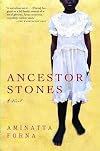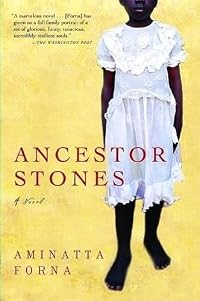
Ancestor Stones
by Aminatta Forna
On This Page
Description
Abie follows the arc of a letter from London back to Africa to a coffee plantation that now could be hers if she wants it. Standing among the ruined groves she strains to hear the sound of the past, but the layers of years are too many. Thus begins the gathering of her family's history through the tales of her aunts - four women born to four different wives of a wealthy plantation owner, her grandfather. Asana, Mariama, Hawa and Serah: theirs is the story of a nation, a family and four show more women's attempts to alter the course of her own destiny. show lessTags
Recommendations









Member Recommendations

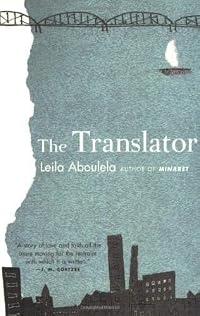
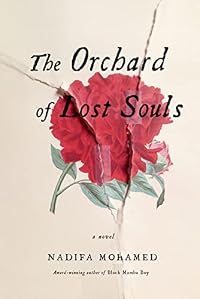
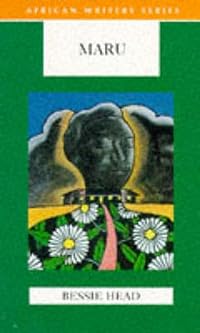
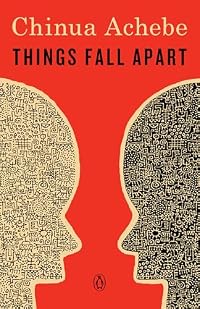
whymaggiemay Forna's first book about the civil war, told by four women.

Member Reviews
I found this book stunning. Told through the lives of four women, sisters with the same father and different mothers, we see the phenomenal changes that occur in Sierra Leone through the twentieth century and into the early twenty-first century. We also see how the women make a place for themselves within the culture.
Abie asks her aunties - Asana, Hawa, Mariama, and Serah - the story of their lives, growing up the daughters of the wives of a wealthy, African plantation owner. Spanning almost 80 years, I was fully immersed in not only their culture but their country's history. Watching as Islam and Christianity infringe on their Pagan beliefs, as wives wrestled with (or settled into) their roles and hierarchy, as daughters battled expectations and modern choices. I love multi-generational stories, especially those that center women and the myriad joys and challenges inherent to womanhood; Ancestor Stones captivated this reader. The ending was magical and perfect.
4 stars
(And I look forward to reading more by Forna.)
Seeds
"I know it was after Haidera. show more But how long after, this I cannot tell you - a day, a month, a year; these measures of time change constantly when you are a child. Sometimes a day is longer than a year. Sometimes a month is shorter than an hour. I wish I could remember." (Mariama, "Stones")
"When a cat bites you, it's a sure sign somebody out there is trying to change your luck for the worse." (Hawa, "Fish")
"You can picture a person easily, no trouble - right up to the time when you try to remember their face. Ah, then you can sit and stare at a wall all day if you like. Until you give up. And suddenly, there they are, as clearly as if they were standing before you." (Hawa, "Fish")
Dreams
"But what is a legend if not a story so great it has survived the retelling of countless generations?" (Mariama, "Kassila the Sea God")
Secrets
"And now I look at the change in you and I feel happy. For I know what it is to forget who you are. To feel the pieces falling away. To look for yourself and see only the stares of strangers. To search for yourself in circles until you're exhausted. And I wonder if my story means something to you. If perhaps what happened to me, little by little, isn't the same you felt happening to you. The very thing that brought you back home." (Mariama, "Other Side of the Road")
"It was nothing dramatic. I let the men of the society come to me. I let it be known that I would consider relinquishing the birthright of womanhood in exchange for the liberty of a man. And in time they found me. After all, there are few women who would choose such a life. Naturally, there were those things I missed, mostly the company of other women. But I had made the life I dreamed of, and it suited me. I had taken my own path, neither right nor left." (Asana, "Mambore")
Consequences
"I know, it's the oldest story in the world. The fresh spirit who frees one that has been bottled too long." (Asana, "The Box")
"No, life isn't a straight line. It is a circle, whose slow and gentle bend we fail to spot, until we realise we are back where we started." (Mariama, "Twelfth Night") show less
4 stars
(And I look forward to reading more by Forna.)
Seeds
"I know it was after Haidera. show more But how long after, this I cannot tell you - a day, a month, a year; these measures of time change constantly when you are a child. Sometimes a day is longer than a year. Sometimes a month is shorter than an hour. I wish I could remember." (Mariama, "Stones")
"When a cat bites you, it's a sure sign somebody out there is trying to change your luck for the worse." (Hawa, "Fish")
"You can picture a person easily, no trouble - right up to the time when you try to remember their face. Ah, then you can sit and stare at a wall all day if you like. Until you give up. And suddenly, there they are, as clearly as if they were standing before you." (Hawa, "Fish")
Dreams
"But what is a legend if not a story so great it has survived the retelling of countless generations?" (Mariama, "Kassila the Sea God")
Secrets
"And now I look at the change in you and I feel happy. For I know what it is to forget who you are. To feel the pieces falling away. To look for yourself and see only the stares of strangers. To search for yourself in circles until you're exhausted. And I wonder if my story means something to you. If perhaps what happened to me, little by little, isn't the same you felt happening to you. The very thing that brought you back home." (Mariama, "Other Side of the Road")
"It was nothing dramatic. I let the men of the society come to me. I let it be known that I would consider relinquishing the birthright of womanhood in exchange for the liberty of a man. And in time they found me. After all, there are few women who would choose such a life. Naturally, there were those things I missed, mostly the company of other women. But I had made the life I dreamed of, and it suited me. I had taken my own path, neither right nor left." (Asana, "Mambore")
Consequences
"I know, it's the oldest story in the world. The fresh spirit who frees one that has been bottled too long." (Asana, "The Box")
"No, life isn't a straight line. It is a circle, whose slow and gentle bend we fail to spot, until we realise we are back where we started." (Mariama, "Twelfth Night") show less
“[A] certain giddiness had come over my aunts as if the time spent remembering the girls and women they once had been had invigorated the spirits. They'd lifted the past from their own shoulders and handed it to me. I didn't see it as a burden, not at all. Rather a treasure trove of memories, of lives lived and lessons learned, of terrors faced and pleasures tasted.” – Aminatta Forna, Ancestor Stones
Set in Sierra Leone, this book tells the stories of four women, half-sisters, as they relate significant events in their lives to their niece, Abie. The four women share the same father, who eventually had eleven wives. It takes place over the majority of the 20th century (1926-1999), as the country evolves through colonialism, civil show more war, and sovereignty. Abie travels from her current home in England to west Africa to her family’s coffee plantation, where she traces the family history through the lives of these four aunts.
The narrative is rich in details of the Sierra Leone’s culture and natural environment. It is a patchwork of various stories that provide an overall impression of the history and changes over time within the country from the female perspective. It occasionally feels fragmented due to the many shifts in perspectives and time periods. This is my second novel by Aminatta Forna and I am turning into an enthusiastic fan. Her writing style is richly textured with details while not losing sight of the larger picture. show less
Set in Sierra Leone, this book tells the stories of four women, half-sisters, as they relate significant events in their lives to their niece, Abie. The four women share the same father, who eventually had eleven wives. It takes place over the majority of the 20th century (1926-1999), as the country evolves through colonialism, civil show more war, and sovereignty. Abie travels from her current home in England to west Africa to her family’s coffee plantation, where she traces the family history through the lives of these four aunts.
The narrative is rich in details of the Sierra Leone’s culture and natural environment. It is a patchwork of various stories that provide an overall impression of the history and changes over time within the country from the female perspective. It occasionally feels fragmented due to the many shifts in perspectives and time periods. This is my second novel by Aminatta Forna and I am turning into an enthusiastic fan. Her writing style is richly textured with details while not losing sight of the larger picture. show less
This a beautiful, thoughtful piece of work to be read and savored. The protagonist, Albie, has moved from Sierra Leone with her family to settle in the UK. She receives a letter from Sierra Leone informing her that her grandfather's coffee plantation is now hers and is waiting for her. Compelled by her curiosity, she travels back to Africa to find out more.
Her journey takes her into the lives of her family. She sits at the feet of four of her paternal aunts, hearing their stories as they relive their lives through the decades. Polygamy is the order of the day in this society, so the aunts share a father, but each has a different mother. This is an oral storytelling society, so the women are skilled in spinning tales that captivate and show more paint a distinctive picture of life in Africa. References to the sun and the wind, the grass and the trees, the moon and the shadows abound, and hold intrinsic value for these people. When they declare that, "the air was heavy and wrapped itself around" them, and "the shadows were short and black black black", or refer to the "steely-grey light of the morning", we see how close they are to nature and how its aura has a bearing on their daily lives.
Forna's luxurious writing makes the reader feel present in Africa: You can hear the trader calling his wares in the marketplace; sense the twittering birds hiding in trees from the warm afternoon sun; and watch the clear river water running as the women bathe and revel in its coolness. I love the wisdom and the spirit of these women who forge lives for themselves, without complaint. They take control and shape their own destinies; and, in the telling, they seem to share their disappointments and triumphs with equal vigor. Their stories span almost ninety years—from the 1920s to the present in Sierra Leone—and provide an outline of the country's social and political history as the four characters face the challenges of being women in a male-dominated society and coping with colonisation, subsequent independence, voting for the first time, new and corrupt political leaders, and civil war.
Each woman's narrative is unique, with a few subtle overlaps between stories. I would have enjoyed seeing the individuals, as sisters, interact even more in their stories. Forna is an outstanding writer and this is an accomplished novel. Read it!
This review was initially published in the launch issue of Belletrista: http://www.belletrista.com/2009/issue1/reviews_16.html show less
Her journey takes her into the lives of her family. She sits at the feet of four of her paternal aunts, hearing their stories as they relive their lives through the decades. Polygamy is the order of the day in this society, so the aunts share a father, but each has a different mother. This is an oral storytelling society, so the women are skilled in spinning tales that captivate and show more paint a distinctive picture of life in Africa. References to the sun and the wind, the grass and the trees, the moon and the shadows abound, and hold intrinsic value for these people. When they declare that, "the air was heavy and wrapped itself around" them, and "the shadows were short and black black black", or refer to the "steely-grey light of the morning", we see how close they are to nature and how its aura has a bearing on their daily lives.
Forna's luxurious writing makes the reader feel present in Africa: You can hear the trader calling his wares in the marketplace; sense the twittering birds hiding in trees from the warm afternoon sun; and watch the clear river water running as the women bathe and revel in its coolness. I love the wisdom and the spirit of these women who forge lives for themselves, without complaint. They take control and shape their own destinies; and, in the telling, they seem to share their disappointments and triumphs with equal vigor. Their stories span almost ninety years—from the 1920s to the present in Sierra Leone—and provide an outline of the country's social and political history as the four characters face the challenges of being women in a male-dominated society and coping with colonisation, subsequent independence, voting for the first time, new and corrupt political leaders, and civil war.
Each woman's narrative is unique, with a few subtle overlaps between stories. I would have enjoyed seeing the individuals, as sisters, interact even more in their stories. Forna is an outstanding writer and this is an accomplished novel. Read it!
This review was initially published in the launch issue of Belletrista: http://www.belletrista.com/2009/issue1/reviews_16.html show less
I discovered Aminatta Forna when I read her memoir of her childhood in Sierra Leone as the daughter of a Temne doctor and a Scottish mother as well as the search for what happened to her father, who went into politics but refused to be corrupted and who subsequently disappeared. After the civil war which nearly destroyed the country, Forna went back to Sierra Leone to visit her family and research her father’s fate. It was getting to know the women in her father’s family that inspired her to write this book, which, though not set specifically in Sierra Leone, clearly chronicles the experiences of four aunts (sisters with different mothers) of Abie, an African woman who lives in London married to a white man but returning to her show more native country to revitalize the family farming business. The body of the book consists of 16 sections, four each in the voices of the four sisters as they tell their stories to Abie. The earliest story is dated 1926 and the latest 1999. The earlier stories chronicle life in a tribal village that’s relatively untouched by the contemporary world; the later ones chronicle terrifying experiences during the civil war.The novel does have some problems, primarily with the structure that holds it together. It’s difficult keeping the sisters straight. There’s a family tree printed at the beginning of the book and I found myself referring to it often to see how the various characters were related. I also found myself flipping back again and again to remind myself of the past of the sister I was reading. It was also sometimes difficult to recognize that each of the sisters is talking to Abie. I’d run into a “you” and wonder who she was talking to until I remembered the frame of the novel. That said, by the second set of stories, I found myself hooked on the characters, anxious to know what would happen to them, looking forward to seeing how they would survive the war years. Nothing I have ever read has brought me closer to understanding the lives of African women. When Serah chronicles her loneliness and isolation at a teacher's training college in London, I feel her frustration, not only with the cold and dark but with the lack of color and of human interaction: no one looks at her as she walks through a bigger city than she's ever known, with more people than she has ever seen before at one time, all avoiding eye contact.The experience of these women is rich and full, and the process of reading their stories is the process of living an African life and coming to problems of the modern world from a cultural experience totally unlike that of women raised in the US. It gave me more insights into African life than two years living in Sierra Leone as a Peace Corps volunteer. Incidentally it clarified for me why African-Americans were even more “at sea” than I was in that culture. I at least did not expect to “belong”. The main character, Abie, and her counterpart, the author, Aminatta Forna, had to pay cultural dues in order to belong. We see it in how the sisters view Abie, in how their attitudes toward her change, and in how she herself in the end gives up indoor showers in favor of bathing in the river. A bit of an awkward symbol but significant nonetheless. show less
Ancestor Stones is a sensually and beautifully written character-driven story about five women from two generations whose lives have remained tied to West Africa, even though three of them have traveled far from home. Aminatta Forna does an excellent job of giving individual voices to each of these women.
Abie returns from England to West Africa with her young family to the coffee estate begun by her grandfather, a polygamist Muslim, who had 11 wives and more than 36 children. She is greeted by four of her Aunts, Asana, Maryiama, Hawa, and Serah, each a daughter of the grandfather by a different mother. Ancestor Stones is essentially a story of West African post-colonial problems told through the lives of the four Aunties.
Asana says of show more herself “You never knew my name was Yankay, the firstborn. That I was once a twin. That I had a brother Alusani, the other half of my soul. Or that I grew jealous of him and longed for my mother to look at me, without knowing what it was I wished for. And how I watched a man with skin like the shadows of the moon collecting the souls of lost children in the forest.” Abie says of her “Asana, daughter of Ya Namina, my grandfather’s senior wife: a magnificent hauteur flowed like river water from the mother’s veins through the daughter’s.”
Maryiama of whom Abie says “Gentle Mary, from whom foolish children ran in fright but who braided my hair, cared for me like I was her own and talked of the sea and stars.” Mary says “I returned home the way I departed. I stood on the deck watching the coastline widen in front of me, felt the sea breeze, the molecules of air, salt and water attaching themselves to my skin. Even the whiff of fish and oil at the dock was like a perfume. And the people! The pride in them as they looked and never looked away. For the first time in a long while I saw myself again, reflected in their eyes.”
Hawa who says “This is what I think about luck. Luck is like adjoining pools of water, each flowing into the other. One pool might be dry, the next pool overflowing. It’s the same with luck. Some people have everything. Other people have nothing. The people who have plenty just seem to get it all, all the luck that ought by rights to belong to someone else. That’s the way it was with me. Always the luck just seems to drain out of my pool and into somebody else’s.” Abie says of Hawa “Hawa, whose face wore the same expression I remembered from my childhood — of disappointment already foretold. Not even a smile to greet me.”
Serah says “And the first thing I feel is guilty. Guilty. A mental checklist of offences committed and undetected. As though the appearance of dozens of people in the dead of night might be something we have brought upon ourselves. For practising swear words when we were alone. For holding spitting competition. For someone’s doves we accidentally set free; they flew up to the branches of an orange free and broadcast their freedom with thunderous coos. We didn’t try to catch them. We ran away.” Abie says of Serah “Serah, belly sister of my father, who spoke to me in a way no other adult ever had — as though I might one day become her equal.”
This is a book which stayed with me during the day when I was away from it. It made me want to read it faster to find out how each was fairing as time went on and the country became more unstable. show less
Abie returns from England to West Africa with her young family to the coffee estate begun by her grandfather, a polygamist Muslim, who had 11 wives and more than 36 children. She is greeted by four of her Aunts, Asana, Maryiama, Hawa, and Serah, each a daughter of the grandfather by a different mother. Ancestor Stones is essentially a story of West African post-colonial problems told through the lives of the four Aunties.
Asana says of show more herself “You never knew my name was Yankay, the firstborn. That I was once a twin. That I had a brother Alusani, the other half of my soul. Or that I grew jealous of him and longed for my mother to look at me, without knowing what it was I wished for. And how I watched a man with skin like the shadows of the moon collecting the souls of lost children in the forest.” Abie says of her “Asana, daughter of Ya Namina, my grandfather’s senior wife: a magnificent hauteur flowed like river water from the mother’s veins through the daughter’s.”
Maryiama of whom Abie says “Gentle Mary, from whom foolish children ran in fright but who braided my hair, cared for me like I was her own and talked of the sea and stars.” Mary says “I returned home the way I departed. I stood on the deck watching the coastline widen in front of me, felt the sea breeze, the molecules of air, salt and water attaching themselves to my skin. Even the whiff of fish and oil at the dock was like a perfume. And the people! The pride in them as they looked and never looked away. For the first time in a long while I saw myself again, reflected in their eyes.”
Hawa who says “This is what I think about luck. Luck is like adjoining pools of water, each flowing into the other. One pool might be dry, the next pool overflowing. It’s the same with luck. Some people have everything. Other people have nothing. The people who have plenty just seem to get it all, all the luck that ought by rights to belong to someone else. That’s the way it was with me. Always the luck just seems to drain out of my pool and into somebody else’s.” Abie says of Hawa “Hawa, whose face wore the same expression I remembered from my childhood — of disappointment already foretold. Not even a smile to greet me.”
Serah says “And the first thing I feel is guilty. Guilty. A mental checklist of offences committed and undetected. As though the appearance of dozens of people in the dead of night might be something we have brought upon ourselves. For practising swear words when we were alone. For holding spitting competition. For someone’s doves we accidentally set free; they flew up to the branches of an orange free and broadcast their freedom with thunderous coos. We didn’t try to catch them. We ran away.” Abie says of Serah “Serah, belly sister of my father, who spoke to me in a way no other adult ever had — as though I might one day become her equal.”
This is a book which stayed with me during the day when I was away from it. It made me want to read it faster to find out how each was fairing as time went on and the country became more unstable. show less
Abie is an African woman married to a Scotsman and living in London. One day she receives a letter telling her that her grandfather's West African coffee plantation is hers if she wishes it. Abie goes to Africa where she is reunited with four elderly aunts, who gradually share their life stories with Abie over the course of her stay.
Abie's aunts were raised in a polygamous, nominally Muslim family. All of the women share the same father, but each one has a different mother. Each aunt's story is told in four parts, with the first three installments telling in turn of their childhood and memories of their mothers, their young adulthood and hopes for the future, and their adult years and the realities of their lives. In the book's final show more section, each woman recounts her perspective of the country's civil war.
Aside from the brief introduction and epilogue, we learn very little about Abie in the book, nor do we view anything from the perspective of any of the men who play a part in these women's lives -- their father, brothers, husbands, and sons. This is a story of the generation of West African women who weathered the societal upheavals of the 20th century. All four women are survivors. At the end of their lives, they find, if not exactly happiness, at least peace in their childhood home, and in passing their memories on to the next generation.
I highly recommend this book to readers who enjoy novels about women, family, and/or Africa and its 20th century history. This novel would be a good selection for a women's book group. show less
Abie's aunts were raised in a polygamous, nominally Muslim family. All of the women share the same father, but each one has a different mother. Each aunt's story is told in four parts, with the first three installments telling in turn of their childhood and memories of their mothers, their young adulthood and hopes for the future, and their adult years and the realities of their lives. In the book's final show more section, each woman recounts her perspective of the country's civil war.
Aside from the brief introduction and epilogue, we learn very little about Abie in the book, nor do we view anything from the perspective of any of the men who play a part in these women's lives -- their father, brothers, husbands, and sons. This is a story of the generation of West African women who weathered the societal upheavals of the 20th century. All four women are survivors. At the end of their lives, they find, if not exactly happiness, at least peace in their childhood home, and in passing their memories on to the next generation.
I highly recommend this book to readers who enjoy novels about women, family, and/or Africa and its 20th century history. This novel would be a good selection for a women's book group. show less
Members
- Recently Added By
Author Information

12+ Works 2,253 Members
Awards and Honors
Awards
Series
Belongs to Publisher Series
Common Knowledge
- Canonical title
- Ancestor Stones
- Original title
- Ancestor Stones
- Original publication date
- 2006
- People/Characters
- Asana; Mariama; Hawa; Serah; Abie
- Important places
- Rofathane, Sierra Leone; Freetown, Sierra Leone
- Dedication
- For Yabome, oya ka mi
- First words
- I see her sometimes, usually when I least expect it: a reminder of her.
- Quotations
- She went, leaving behind everything, even her name. So I wrapped it in longing and kept it for her.
- Last words
- (Click to show. Warning: May contain spoilers.)'Listen to the noise they make,' she replied. 'It sounds like they're talking.'
- Original language
- English
Classifications
Statistics
- Members
- 331
- Popularity
- 95,254
- Reviews
- 22
- Rating
- (3.84)
- Languages
- 7 — Dutch, English, German, Italian, Polish, Portuguese, Spanish
- Media
- Paper, Audiobook, Ebook
- ISBNs
- 17
- ASINs
- 3