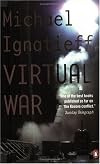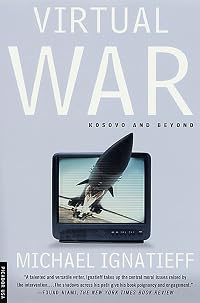
Virtual War
by Michael Ignatieff
On This Page
Description
In this moving exploration of the war in Kosovo, Ignatieff combines reportage, theory and analysis to produce a definitive study of a new type of warfare, the virtual war where the watching nation is mobilized as a television audience and instead of victory there is only an uncertain endgame.Tags
Recommendations









Member Reviews
This is another example of a review of book 'in hindsight'. This was written in 2000 by a leading Anglo-Canadian intellectual and later politician (Michael Ignatieff) in the heat of the political battle over liberal interventionism in Kosovo.
The 'hindsight' comes from what interventionism was to became in the hands of a superpower and its acolyte in Iraq and from alternative destabilisation strategies targeting Russia, Iran and other States unloved in Washington. Syria now gives us a fresh perspective.
I was of the anti-intervention camp in 1999 and my own views are pretty well summarised at http://positionreserved.blogspot.co.uk/2015/10/the-failures-of-liberal.html but I am in no mood to crow that Ignatieff got it so wrong (in my view) show more over a decade and a half ago.
In fact, this is a highly intelligent book (as you would expect) from a decent and thoughtful human being who perhaps failed to understand that liberal interventionism in the hands of Power would be less circumspect, measured and considered than it would be in his. He over-estimates the capacity of the West to act well even if it wished.
The centre-piece is a rather acrimonious debate between himself and Lord Skidelsky that I recall at the time. Ignatieff's deontological sentiment proves to be far more articulate than that of his opponent who cannot think in terms of the sorts of consequence that were obvious to others of us (and which became fact later).
Ignatieff puts his case in such a way that, even after this long period, the book is worth reading as much for the insight into the liberal mind faced with its own impotence in the face of horror and grasping at the straw of state power as for any other reason.
The mistakes of the last decade, which hinged on the malign personality of Prime Minister Blair, required faith in the benignity and capability of a hegemonic military system. An almost religious fervour that 'something must be done' then fuelled the rest. Liberals were to provide the unwitting claque for what became state terror.
Ignatieff sometimes seems blind to the way that crises like Kosovo do not come out of the blue but are manipulated by all the actors involved and that includes the Kosovan emigres and gangsters. The deeply unpleasant Milosevic was only one of many unpleasant manipulative players in this theatre of atavism.
He is driven in the end by sentiment, served by reason, based initially on the recent failure by the 'international community' (which has never been a community but merely a soup of competing interests) to save the victims of massacre in Rwanda - a horror with a complex history that degenerated into a simpler tale of good and evil.
His sentimental commitment is compounded by a predisposition to see the world through the eyes of his class, cosmopolitan intellectuals (hence his frustration that Serbs of his class fail to see what he sees) and his feeling and touching the reality of the border camps. Misreadings of the Nazi hell loom unstated over such liberal activism.
However, a very fine rational mind argues here not merely for liberal interventionism as polemic. He shows an equally fine sense of problems and risks but is thrown bodily by his own lived experience into the 'something must be done' camp ultimately abandoning 'consequence'. He has a theory, tortures himself on that theory and then 'commits'.
By the end of the book, I am informed about a great deal - how 'on the hoof' American diplomacy works, the unpreparedness of the liberal West for humanitarian crisis on its doorstep, how the military make decisions, the politics of international justice, the incompatibility of combatant world views - but remain unpersuaded.
The final chapter in which he worries that the risk that precision wafare conducted virtually will increase the chances of populations accepting war as an instrument of policy before diplomatic and political measures have been tried has proved to be wrong but the fears were reasonable at the time.
In fact, populations proved not so passive and not so liberal internationalist as their intelligentsia. Not the first time the intellectual class had become detached from its base. Liberal humanitarians commanded the heights of culture by the late 1990s but their bluff was to be called by a population that does not like war.
Ernie Bevan put it well in 1945: "There has never been a war yet which if the facts had been put calmly before the ordinary folk could not have been prevented. The common man is the greatest protection against war."
The common man got very edgy about the filmed bombing of civilians in Iraq in the early 1990s and in Belgrade in 1999 and it is equally edgy today about drone warfare that takes out wedding parties. It may empathise with people in camps but equally empathises with people obliterated by remote control.
The attempt by the military to control information through 'psychological operations' is now more noticeable for the distrust it creates than for its success. Half the population may be suckers for authority but half the population are not. The liberal militarists have repeatedly failed to make their case.
To wage war effectively a State must have a nation behind it. The self-evident manipulation of data before every neo-conservative and liberal internationalist foreign policy action of the last two decades has built a constituency of resistance of formidable size. The public has become inoculated as Cameron found on Syrian intervention.
We are perhaps living through the final stage of liberal failure with the type case of Syria. Russia not only has, self-evidently, the support of its own nation in a defensive narrative but has considerable sympathy in the Western street for being effective at destroying a threat where our military appeared to show incompetence.
The flow of refugees represent an important element of that threat to large Western constituencies questioning the competence of their elites just as significant minorities question why Western expansion was permitted to bring us to the edge of the nuclear abyss over a gangster state like Ukraine.
Today, liberals plead for humanity deontologically and experientially from the front line of migrant camps just as Ignatieff once did in Kosovo and they still command the mainstream liberal media - but a counter-narrative flows through the street and social media and builds support for not only national populists but a revived socialism.
And, finally, the strategy of holding massive military force over the heads of 'dictators' (now increasingly seen as forces for order amidst chaos) to bring them to heel has collapsed. The West's bluff has been called and massive human misery has resulted from the detabilisation of a whole region through Western interventions formal and informal.
There would be more to say on Syria but this would take us too far from this still useful book. The book is not a polemic in itself (except in the debate with Skidelsky which can be read as of its time and place) but is a reasoned position that just required better responses than Skidelsky provided.
History eventually answered Ignatieff with far more force than the noble Lord but at a dreadful cost in lives, destroyed property and the revival of long-lost atavistic and brutal obscurantisms. To have engineered the revival of autocratic Russian power in itself was an own goal by traditional liberalism of staggering proportions.
I suspect that historians will consider Ignatieff's texts to be important foundational stones for understanding the ideology of liberal humanitarian interventionism. He will continue to be contested and studied throughout the twenty-first century. I think he was wrong then and is wrong now but you may not. show less
The 'hindsight' comes from what interventionism was to became in the hands of a superpower and its acolyte in Iraq and from alternative destabilisation strategies targeting Russia, Iran and other States unloved in Washington. Syria now gives us a fresh perspective.
I was of the anti-intervention camp in 1999 and my own views are pretty well summarised at http://positionreserved.blogspot.co.uk/2015/10/the-failures-of-liberal.html but I am in no mood to crow that Ignatieff got it so wrong (in my view) show more over a decade and a half ago.
In fact, this is a highly intelligent book (as you would expect) from a decent and thoughtful human being who perhaps failed to understand that liberal interventionism in the hands of Power would be less circumspect, measured and considered than it would be in his. He over-estimates the capacity of the West to act well even if it wished.
The centre-piece is a rather acrimonious debate between himself and Lord Skidelsky that I recall at the time. Ignatieff's deontological sentiment proves to be far more articulate than that of his opponent who cannot think in terms of the sorts of consequence that were obvious to others of us (and which became fact later).
Ignatieff puts his case in such a way that, even after this long period, the book is worth reading as much for the insight into the liberal mind faced with its own impotence in the face of horror and grasping at the straw of state power as for any other reason.
The mistakes of the last decade, which hinged on the malign personality of Prime Minister Blair, required faith in the benignity and capability of a hegemonic military system. An almost religious fervour that 'something must be done' then fuelled the rest. Liberals were to provide the unwitting claque for what became state terror.
Ignatieff sometimes seems blind to the way that crises like Kosovo do not come out of the blue but are manipulated by all the actors involved and that includes the Kosovan emigres and gangsters. The deeply unpleasant Milosevic was only one of many unpleasant manipulative players in this theatre of atavism.
He is driven in the end by sentiment, served by reason, based initially on the recent failure by the 'international community' (which has never been a community but merely a soup of competing interests) to save the victims of massacre in Rwanda - a horror with a complex history that degenerated into a simpler tale of good and evil.
His sentimental commitment is compounded by a predisposition to see the world through the eyes of his class, cosmopolitan intellectuals (hence his frustration that Serbs of his class fail to see what he sees) and his feeling and touching the reality of the border camps. Misreadings of the Nazi hell loom unstated over such liberal activism.
However, a very fine rational mind argues here not merely for liberal interventionism as polemic. He shows an equally fine sense of problems and risks but is thrown bodily by his own lived experience into the 'something must be done' camp ultimately abandoning 'consequence'. He has a theory, tortures himself on that theory and then 'commits'.
By the end of the book, I am informed about a great deal - how 'on the hoof' American diplomacy works, the unpreparedness of the liberal West for humanitarian crisis on its doorstep, how the military make decisions, the politics of international justice, the incompatibility of combatant world views - but remain unpersuaded.
The final chapter in which he worries that the risk that precision wafare conducted virtually will increase the chances of populations accepting war as an instrument of policy before diplomatic and political measures have been tried has proved to be wrong but the fears were reasonable at the time.
In fact, populations proved not so passive and not so liberal internationalist as their intelligentsia. Not the first time the intellectual class had become detached from its base. Liberal humanitarians commanded the heights of culture by the late 1990s but their bluff was to be called by a population that does not like war.
Ernie Bevan put it well in 1945: "There has never been a war yet which if the facts had been put calmly before the ordinary folk could not have been prevented. The common man is the greatest protection against war."
The common man got very edgy about the filmed bombing of civilians in Iraq in the early 1990s and in Belgrade in 1999 and it is equally edgy today about drone warfare that takes out wedding parties. It may empathise with people in camps but equally empathises with people obliterated by remote control.
The attempt by the military to control information through 'psychological operations' is now more noticeable for the distrust it creates than for its success. Half the population may be suckers for authority but half the population are not. The liberal militarists have repeatedly failed to make their case.
To wage war effectively a State must have a nation behind it. The self-evident manipulation of data before every neo-conservative and liberal internationalist foreign policy action of the last two decades has built a constituency of resistance of formidable size. The public has become inoculated as Cameron found on Syrian intervention.
We are perhaps living through the final stage of liberal failure with the type case of Syria. Russia not only has, self-evidently, the support of its own nation in a defensive narrative but has considerable sympathy in the Western street for being effective at destroying a threat where our military appeared to show incompetence.
The flow of refugees represent an important element of that threat to large Western constituencies questioning the competence of their elites just as significant minorities question why Western expansion was permitted to bring us to the edge of the nuclear abyss over a gangster state like Ukraine.
Today, liberals plead for humanity deontologically and experientially from the front line of migrant camps just as Ignatieff once did in Kosovo and they still command the mainstream liberal media - but a counter-narrative flows through the street and social media and builds support for not only national populists but a revived socialism.
And, finally, the strategy of holding massive military force over the heads of 'dictators' (now increasingly seen as forces for order amidst chaos) to bring them to heel has collapsed. The West's bluff has been called and massive human misery has resulted from the detabilisation of a whole region through Western interventions formal and informal.
There would be more to say on Syria but this would take us too far from this still useful book. The book is not a polemic in itself (except in the debate with Skidelsky which can be read as of its time and place) but is a reasoned position that just required better responses than Skidelsky provided.
History eventually answered Ignatieff with far more force than the noble Lord but at a dreadful cost in lives, destroyed property and the revival of long-lost atavistic and brutal obscurantisms. To have engineered the revival of autocratic Russian power in itself was an own goal by traditional liberalism of staggering proportions.
I suspect that historians will consider Ignatieff's texts to be important foundational stones for understanding the ideology of liberal humanitarian interventionism. He will continue to be contested and studied throughout the twenty-first century. I think he was wrong then and is wrong now but you may not. show less
Why read a 10 year old book written before, during and after the Kosovo bombing campaign? For Ignatieff's prophetic insights, e.g., "In virtual war, citizens are not only divested of their power to give consent. they are demobilized." He would not agree but as I read Ignatieff, nonviolent intervention is the best way to deal with major human rights problems in other countries.
Ratings
Members
- Recently Added By
Author Information

52+ Works 3,315 Members
Michael Ignatieff, born in Toronto in 1947. But at the age of 11, Ignatieff was sent to Toronto to attend Upper Canada College as a boarder in 1959. At UCC, Ignatieff was elected a school prefect as Head of Wedd's House, was the captain of the varsity soccer team, and served as editor-in-chief of the school's yearbook. As well, Ignatieff show more volunteered for the Liberal Party during the 1965 federal election by canvassing the York South riding. He resumed his work for the Liberal Party in 1968, as a national youth organizer and party delegate for the Pierre Elliott Trudeau party leadership campaign. He then went on to continue his education at the University of Toronto and Harvard and Cambridge universities. In 1976, Ignatieff completed his Ph.D in History at Harvard University. He was granted a Cambridge M.A. by incorporation in 1978 on taking up a fellowship at King's College there. Michael Ignatieff has written television programs for the BBC, novels, and works of nonfiction. He has also authored essays and reviews for several publications including The New York Times. From 1990-93, he wrote a weekly column on international affairs for The Observer. His family memoir, The Russian Album, received Canada's Governor General Award in 1988. His second novel, Scar Tissue, was short-listed for the Booker Prize in 1993. Other nonfiction works include A Just Measure of Pain, the Penitentiary in the Industrial Revolution and the Warrior's Honor: Ethic War and the Modern Conscience. (Bowker Author Biography) show less
Awards and Honors
Awards
Common Knowledge
- Canonical title
- Virtual War
- Original publication date
- 2000
- Important places
- Kosovo; Serbia
- Important events
- Kosovo War (1998 | 1999)
- Disambiguation notice
- Full title (2000): Virtual war : Kosovo and beyond / Michael Ignatieff
Classifications
- Genres
- Nonfiction, History, General Nonfiction, Politics and Government
- DDC/MDS
- 949.7103 — History & geography History of Europe Greece, Albania, Yugoslavia, Serbia, Romania, Bulgaria Former Yugoslavia (Bosnia and Herzegovina ∙ Croatia ∙ Kosovo ∙ Montenegro ∙ Macedonia ∙ Serbia ∙ Slovenia) [formerly also Bulgaria] Serbia; Kosovo
- LCC
- DR2087 .I37 — History of Europe, Asia, Africa and Oceania Balkan Peninsula History of Balkan Peninsula Yugoslavia Local history and description Serbia Kosovo
- BISAC
Statistics
- Members
- 173
- Popularity
- 189,483
- Reviews
- 2
- Rating
- (3.25)
- Languages
- 5 — English, Serbian, Croatian, Spanish, Swedish
- Media
- Paper
- ISBNs
- 12