
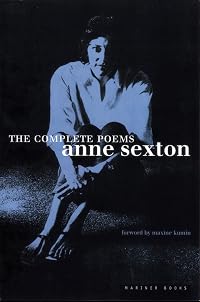
The Complete Poems: Anne Sexton
by Anne Sexton 
On This Page
Description
From the joy and anguish of her own experience, Sexton fashioned poems that told truths about the inner lives of men and women. This book comprises Sexton's ten volumes of verse, including the Pulitzer Prize-winner Live or Die, as well as seven poems form her last years.Tags
Recommendations

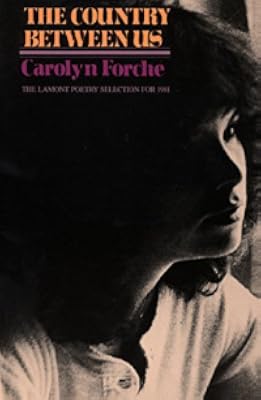

Member Recommendations

Member Reviews
There was a period of my life where I was like, "OOH NO POETRY!", convinced I didn't like the stuff at all. Very slowly I emerged from this state of mind, and one of the poems that got me out of it was Anne Sexton's "The Truth the Dead Know," which I read in a 20th-century American literature survey class as an undergraduate. A semester later, when I had to read a poem aloud in an English education class, it was the one I picked, and my professor praised me for the feeling of my reading. It continues to be in my top five favorite poems, a great poem about grief and human isolation. So sometime around then I went out and bought a copy of Sexton's Complete Poems, but it wasn't until over ten years later that I finally read through the show more whole thing. Sexton's poetry is still top-notch (my habit when I read a book of poetry is to fold over the corner of pages of poems I particularly like, and there are dozens of such folds in my book now). It was interesting to see her transformation; without knowing much about her actual life, you can see a lot of youthful poems about romance and sex, which give way to ones that feel less overtly personal, religious poems and transformations of fairy tales, before circling back around to the personal again, but in a more retrospective way. I could probably write lots about this book, but to focus myself, I'll pick three of my favorites at random (excerpting from each), and then conclude with my second-favorite.
"The Gold Key" from Transformations (1971)
He turns the key.
Presto!
It opens this book of odd tales
which transform the Brothers Grimm.
Transform?
As if an enlarged paper clip
could be a piece of sculpture.
(And it could.)
Transformations is Sexton's book of fairy tale adaptations, and there's a lot to like in it: her takes on Snow White, Rapunzel, Cinderella, "One-Eye, Two-Eyes, and Three-Eyes," Hansel and Gretel, and Sleeping Beauty were all highlights for me. I was also really struck, though, by the last few lines of the book's opening poem, which sets up the book's whole project of twisting fairy tales. There's something really captivating in that final image of adaptation as taking a large paper clip and claiming it's a sculpture, which the poem simultaneously disparages ("As if") and affirms ("it could") the truth of.
"Rats Live on No Evil Star" from The Death Notebooks (1974)
Thus Eve gave birth.
In this unnatural act
she gave birth to a rat.
It slid from her like a pearl.
It was ugly, of course,
but Eve did not know that
and when it died before its time
she placed its tiny body
on that piece of kindergarten called STAR.
To be honest, I don't entirely know what to make of this one, which fuses Garden of Eden imagery with ideas inspired by a "palindrome seen on the side of a barn in Ireland." What is Sexton saying about the fruit of the Tree of Knowledge here, about humanity, about human happiness? I'm not sure, but I'm on the edges of understanding, something about the ugliness of humanity and our need to overlook it (as in the poem below, I guess) if we're ever going to be happy. But who knows what kindergarten has got to do with it.
"After Auschwitz" from The Awful Rowing Toward God (1975)
Let man never again raise his teacup.
Let man never again write a book.
Let man never again put on his shoe.
Let man never again raise his eyes,
on a soft July night.
Never. Never. Never. Never. Never.
I say these things aloud.
I beg the Lord not to hear.
There's something about how the speaker confronts the enormity of the Holocaust in this poem that I found very striking. The Holocaust is, of course, indefensible. But Sexton finds the whole human race indefensible after the Holocaust, even in great actions like writing a book or in minor actions like putting on a shoe, and the poem ends (as I've excerpted) essentially without resolution. There is no and can be no defense of humankind, and so the most the speaker can do is ask God not pass judgment, for if He did we would all be found guilty.
"The Boat" from The Book of Folly (1972)
Suddenly
a wave that we go under.
Under. Under. Under.
We are daring the sea.
We have parted it.
We are scissors.
Here in the green room
the dead are very close.
Here in the pitiless green
where there are no keepsakes
or cathedrals an angel spoke:
You have no business.
No business here.
Give me a sign,
cries Father,
and the sky breaks over us.
This is from a cycle of six poems called "The Death of the Fathers," and it's about a speaker riding in her father's speedboat with her mother off the coast of Maine. On one level it's always resonated with me because around the time I first read it was when my own father was becoming obsessed with boating, and I can see something of his pride in the way the speaker describes her own father: "Father / (he calls himself / 'old sea dog'), / in his yachting cap..." My father would never wear a yachting cap or call himself a "sea dog," but the sentiment is similar, the idea that when you drive a boat you command the world.
But pride leads to humbling, and that's the bit I really like (even though this bears no resemblance to any of my boating experiences): the Go Too III plunges beneath the waves and enters another world entirely hostile to humanity, one full of "the dead" and "pitiless" and without monuments built by humans. The ocean is inimical to human life, and will forever remain so on some level-- the poem reminds us that no matter what we might think we command, there are some things in nature that will always hold dominion over us, and if we survive them, it is only a temporary reprieve. show less
"The Gold Key" from Transformations (1971)
He turns the key.
Presto!
It opens this book of odd tales
which transform the Brothers Grimm.
Transform?
As if an enlarged paper clip
could be a piece of sculpture.
(And it could.)
Transformations is Sexton's book of fairy tale adaptations, and there's a lot to like in it: her takes on Snow White, Rapunzel, Cinderella, "One-Eye, Two-Eyes, and Three-Eyes," Hansel and Gretel, and Sleeping Beauty were all highlights for me. I was also really struck, though, by the last few lines of the book's opening poem, which sets up the book's whole project of twisting fairy tales. There's something really captivating in that final image of adaptation as taking a large paper clip and claiming it's a sculpture, which the poem simultaneously disparages ("As if") and affirms ("it could") the truth of.
"Rats Live on No Evil Star" from The Death Notebooks (1974)
Thus Eve gave birth.
In this unnatural act
she gave birth to a rat.
It slid from her like a pearl.
It was ugly, of course,
but Eve did not know that
and when it died before its time
she placed its tiny body
on that piece of kindergarten called STAR.
To be honest, I don't entirely know what to make of this one, which fuses Garden of Eden imagery with ideas inspired by a "palindrome seen on the side of a barn in Ireland." What is Sexton saying about the fruit of the Tree of Knowledge here, about humanity, about human happiness? I'm not sure, but I'm on the edges of understanding, something about the ugliness of humanity and our need to overlook it (as in the poem below, I guess) if we're ever going to be happy. But who knows what kindergarten has got to do with it.
"After Auschwitz" from The Awful Rowing Toward God (1975)
Let man never again raise his teacup.
Let man never again write a book.
Let man never again put on his shoe.
Let man never again raise his eyes,
on a soft July night.
Never. Never. Never. Never. Never.
I say these things aloud.
I beg the Lord not to hear.
There's something about how the speaker confronts the enormity of the Holocaust in this poem that I found very striking. The Holocaust is, of course, indefensible. But Sexton finds the whole human race indefensible after the Holocaust, even in great actions like writing a book or in minor actions like putting on a shoe, and the poem ends (as I've excerpted) essentially without resolution. There is no and can be no defense of humankind, and so the most the speaker can do is ask God not pass judgment, for if He did we would all be found guilty.
"The Boat" from The Book of Folly (1972)
Suddenly
a wave that we go under.
Under. Under. Under.
We are daring the sea.
We have parted it.
We are scissors.
Here in the green room
the dead are very close.
Here in the pitiless green
where there are no keepsakes
or cathedrals an angel spoke:
You have no business.
No business here.
Give me a sign,
cries Father,
and the sky breaks over us.
This is from a cycle of six poems called "The Death of the Fathers," and it's about a speaker riding in her father's speedboat with her mother off the coast of Maine. On one level it's always resonated with me because around the time I first read it was when my own father was becoming obsessed with boating, and I can see something of his pride in the way the speaker describes her own father: "Father / (he calls himself / 'old sea dog'), / in his yachting cap..." My father would never wear a yachting cap or call himself a "sea dog," but the sentiment is similar, the idea that when you drive a boat you command the world.
But pride leads to humbling, and that's the bit I really like (even though this bears no resemblance to any of my boating experiences): the Go Too III plunges beneath the waves and enters another world entirely hostile to humanity, one full of "the dead" and "pitiless" and without monuments built by humans. The ocean is inimical to human life, and will forever remain so on some level-- the poem reminds us that no matter what we might think we command, there are some things in nature that will always hold dominion over us, and if we survive them, it is only a temporary reprieve. show less
I listened to an interview in which Madonna mentioned that Anne Sexton's poetry influenced her. I was intrigued enough to research Anne Sexton because I'd never heard of her. Once I read a little about Sexton, I knew I needed to read her poetry, if for no other reason than to see if I could learn anything from her work that would help my own poetry writing. So I decided to buy The Complete Poems: Anne Sexton by Anne Sexton. I opted to take my time and only read a few poems a day when I started The Complete Poems: Anne Sexton. I wanted to think about the poems, to really internalize them, to study style, to learn from them. Some days it was tempting to read several. Other days I found it a struggle to read even one. Sexton played with show more words and social norms in ways that I can only imagine upset people when they were published. Her poems ripped into fairy tales and religion with the same irreverence in a way I found refreshing at times and uncomfortable at others, but those poems always made me think as good poetry should. She tackled life head-on in some poems and wrote all around topics in others. I found myself relating to her need to both expose and hide. Certain poems resonated with me on a deep level. Others had me scrambling for meaning. Still others inspired me to try new ideas in my own poetry. As I consciously and slowly worked my way through the over 600 pages of poems, I discovered some limits I didn't know I had. I thought how I'd never feel comfortable writing about some of the topics Sexton covered, but I also discovered a desire to push my work in different directions. The thing that's always interesting about a complete work is its range. There are poems in this book that will appeal to many as well as poems people will find offensive. And, while it shows a great deal of insight into the human condition, there are times when it feels incredibly, personally voyeuristic. I love poems that go to the depths of human experience, so this appealed to me. show less
I received an advance copy of this book from the publisher through NetGalley in exchange for an honest review and I got so much more than I bargained for.
As an English major I read more than my fair share of poetry. Mostly by guys, really. Coleridge, Keats, Shelley, Byron, Milton, Wordsworth, William Carlos Williams. They were all showing me the nature of God, or perhaps god in nature. Beauty is Truth and Truth is Beauty---Keats was telling me what he thought I needed to know. While beautiful, It was all rather Didactic, I felt, and to a large extent, left me cold.
I was not prepared for Anne Sexton. She scares the crap out of me. I read the reviews of other reviewers who were familiar with her work, who already had their own favorite show more poems or lines. I am the newby. It makes me wonder how in the world did I major in English at a major university and not read her poetry. Is it because I (and almost all of my teachers) are men? Seriously, how can any survey of modern poetry not include Sexton’s work? Especially for the young. If I would have read her in my late teens or early 20’s I would have continued to read and re-read her all my life, just as these other reviewers have. I envy them having read and re-read her work.
If you haven’t read her and are willing to open your mind (and especially your heart) you need to get this collection. Reading it is like reading an autobiography of a brilliant, tortured yet often joyful, self aware genius, and as I said earlier, I was not prepared for her. From the very beginning I felt my heart in my throat. Her poetry is so different from what I have read before. I found myself thinking of the sheer pain some of these poems must have caused in their creation. I have never felt such suffering combined with such beauty. Yet through it all was, like Keats would have said, a beauty and truth---and the beauty was IN the truth. Whether she was telling the stories of her ancestors crossing to the new world, eulogizing a lost loved one, either a beloved aunt or an aborted child, or painfully working her way back from Bedlam to sanity, there is truth in these poems. Truth that makes your hair stand on end as she performs an autopsy on her body and soul. Her poems are so devastatingly personal that I was uncomfortable. It was hard knowing that much, seeing that deeply into another’s suffering and most embarrassing thoughts, or her fears, or her anguish---she is the most honest writer I have ever read. Is there anything held back? I never felt that there was an author hiding behind a veil. Anne Sexton opens up herself to the reader and to read her poetry changes you, I think.
This book stays near at hand and should be read over and over again. show less
As an English major I read more than my fair share of poetry. Mostly by guys, really. Coleridge, Keats, Shelley, Byron, Milton, Wordsworth, William Carlos Williams. They were all showing me the nature of God, or perhaps god in nature. Beauty is Truth and Truth is Beauty---Keats was telling me what he thought I needed to know. While beautiful, It was all rather Didactic, I felt, and to a large extent, left me cold.
I was not prepared for Anne Sexton. She scares the crap out of me. I read the reviews of other reviewers who were familiar with her work, who already had their own favorite show more poems or lines. I am the newby. It makes me wonder how in the world did I major in English at a major university and not read her poetry. Is it because I (and almost all of my teachers) are men? Seriously, how can any survey of modern poetry not include Sexton’s work? Especially for the young. If I would have read her in my late teens or early 20’s I would have continued to read and re-read her all my life, just as these other reviewers have. I envy them having read and re-read her work.
If you haven’t read her and are willing to open your mind (and especially your heart) you need to get this collection. Reading it is like reading an autobiography of a brilliant, tortured yet often joyful, self aware genius, and as I said earlier, I was not prepared for her. From the very beginning I felt my heart in my throat. Her poetry is so different from what I have read before. I found myself thinking of the sheer pain some of these poems must have caused in their creation. I have never felt such suffering combined with such beauty. Yet through it all was, like Keats would have said, a beauty and truth---and the beauty was IN the truth. Whether she was telling the stories of her ancestors crossing to the new world, eulogizing a lost loved one, either a beloved aunt or an aborted child, or painfully working her way back from Bedlam to sanity, there is truth in these poems. Truth that makes your hair stand on end as she performs an autopsy on her body and soul. Her poems are so devastatingly personal that I was uncomfortable. It was hard knowing that much, seeing that deeply into another’s suffering and most embarrassing thoughts, or her fears, or her anguish---she is the most honest writer I have ever read. Is there anything held back? I never felt that there was an author hiding behind a veil. Anne Sexton opens up herself to the reader and to read her poetry changes you, I think.
This book stays near at hand and should be read over and over again. show less
Poetry could possibly be my biggest passion in life and Anne Sexton defiantly gets a lot of credit for making that happen. Her poetry is very well thought out, one can tell it was a big passion of hers as well. The intensity of her words will hit anyone at home, the way she presents her emotions is bone chilling and her underlying feminism shows not only the period she was brought up in but makes you think about how the world really works, even now. I believe anyone can read her poetry and find something to relate to, which is a huge bullet point under the heading "great poet". If you love poetry, or even just great writing, this is something you must own.
"Loneliness is just an exile from God."
-Anne Sexton, April 1,1963
Writing poems, for me, is simply a way to express what cannot be expressed any other way. This is also how Anne was as a Confessional poet and as someone who began writing in therapy, her poems were an extension of her psychoanalysis but she went much further: she became an artist. So much of her work is the process, the process, the process- of throwing clay to make a jar.
these are my favorites -
Her Kind
The Farmer's Wife
Unknown Girl in the Maternity Ward
The Truth the Dead Know
The Starry Night
The Abortion
With Mercy for the Greedy
Housewife
For Eleanor Boylan Talking with God
The Black Art
Just Once
Man and Wife
The entire book of "The Awful Rowing Toward God" is what I consider show more to be her masterpiece
Just Once
Just once I knew what life was for.
In Boston, quite suddenly, I understood;
walked there along the Charles River,
watched the lights copying themselves,
all neoned and strobe-hearted, opening
their mouths as wide as opera singers;
counted the stars, my little campaigners,
my scar daisies, and knew that I walked my love
on the night green side of it and cried
my heart to the eastbound cars and cried
my heart to the westbound cars and took
my truth across a small humped bridge
and hurried my truth, the charm of it, home
and hoarded these constants into morning
only to find them gone. show less
-Anne Sexton, April 1,1963
Writing poems, for me, is simply a way to express what cannot be expressed any other way. This is also how Anne was as a Confessional poet and as someone who began writing in therapy, her poems were an extension of her psychoanalysis but she went much further: she became an artist. So much of her work is the process, the process, the process- of throwing clay to make a jar.
these are my favorites -
Her Kind
The Farmer's Wife
Unknown Girl in the Maternity Ward
The Truth the Dead Know
The Starry Night
The Abortion
With Mercy for the Greedy
Housewife
For Eleanor Boylan Talking with God
The Black Art
Just Once
Man and Wife
The entire book of "The Awful Rowing Toward God" is what I consider show more to be her masterpiece
Just Once
Just once I knew what life was for.
In Boston, quite suddenly, I understood;
walked there along the Charles River,
watched the lights copying themselves,
all neoned and strobe-hearted, opening
their mouths as wide as opera singers;
counted the stars, my little campaigners,
my scar daisies, and knew that I walked my love
on the night green side of it and cried
my heart to the eastbound cars and cried
my heart to the westbound cars and took
my truth across a small humped bridge
and hurried my truth, the charm of it, home
and hoarded these constants into morning
only to find them gone. show less
Anne Sexton had an extraordinary impact on me when I was first introduced to her poetry in my teenage years. Although she differs greatly from Emily Dickinson, the subject matter of death is one that transfixed them both, as well as me. Sexton may seem an odd next transition after Dickinson, but it SO worked for me. To this day, her poetry still hits me viscerally and I'm stunned by her intimacy. "Her Kind" is still my favorite poem of all.
Before, I really dug Anne Sexton. But now she feels like a part of me.
This text includes all seven of her published books (To Bedlam and Part Way Back; All My Pretty Ones; Live or Die; Love Poems; Transformations; The Book of Folly; The Death Notebooks; The Awful Rowing Toward God), two posthumously published books (45 Mercy Street and Words For Doctor Y), as well as half a dozen previously unpublished poems.
I posted about Anne Sexton fairly recently, over the summer, when I was a bit more than half-way through the book, and commented that I seem to be drawn to the confessional poets. I think I remarked then that it was predictable and typical of me.
But Anne is different. At least, she is to me now. I'm not sure I could make it through show more over 600 pages of Berryman's poetry, or Ginsberg's, or Plath's.
Morrissey said that "(Anne Sexton) died for you, you know. And for me." but quite frankly I am, as of late, entirely unable to view suicide as something romantic or selfless and this sentiment rings shallow. Don't tell me she died for us. Her corpse left us no poetry. show less
This text includes all seven of her published books (To Bedlam and Part Way Back; All My Pretty Ones; Live or Die; Love Poems; Transformations; The Book of Folly; The Death Notebooks; The Awful Rowing Toward God), two posthumously published books (45 Mercy Street and Words For Doctor Y), as well as half a dozen previously unpublished poems.
I posted about Anne Sexton fairly recently, over the summer, when I was a bit more than half-way through the book, and commented that I seem to be drawn to the confessional poets. I think I remarked then that it was predictable and typical of me.
But Anne is different. At least, she is to me now. I'm not sure I could make it through show more over 600 pages of Berryman's poetry, or Ginsberg's, or Plath's.
Morrissey said that "(Anne Sexton) died for you, you know. And for me." but quite frankly I am, as of late, entirely unable to view suicide as something romantic or selfless and this sentiment rings shallow. Don't tell me she died for us. Her corpse left us no poetry. show less
Members
- Recently Added By
Lists

Female Author
1,235 works; 67 members

Lit Lattes Ep 001
9 works; 1 member

Books Featured on Gilmore Girls
307 works; 21 members

The Complete Rory Gilmore Reading List
506 works; 5 members

Poetry volumes by single author
121 works; 8 members

el
1,139 works; 1 member
Author Information

116+ Works 6,349 Members
Anne Sexton (1928-1974) is one of the most influential & frequently discussed American poets. She lived all her life in the Boston area. (Publisher Provided) Poet Anne Sexton was born in Newton, Massachusetts in 1928. She attended Garland Junior College for a year and at nineteen, married Alfred Muller Sexton II. After the birth of her first show more daughter in 1953 and her second daughter in 1955, Sexton suffered mental breakdowns, which included attempting suicide on her birthday in 1955. She had been diagnosed with postpartum depression. Both times she was hospitalized at Westwood Lodge and it was there that her doctor got her to pursue her interest in writing poetry. She enrolled in a poetry workshop at the Boston Center for Adult Education in 1957, which is where she met fellow poet, and soon to be close friend, Maxine Kumin. Sexton then wrote "To Bedlam and Part Way Back" (1960), "All My Pretty Ones" (1962), and in 1966, Sexton won the Pulitzer Prize for poetry for "Live or Die." Sexton wrote about controversial subjects, which included abortion and drug addiction. As with many other "confessional" poets, Sexton wrote of emotional anguish which came from her battle with mental illness. In 1974, she lost that battle and committed suicide. (Bowker Author Biography) show less
Anne Sexton has a Legacy Library. Legacy libraries are the personal libraries of famous readers, entered by LibraryThing members from the Legacy Libraries group.
All Editions
Awards and Honors
Notable Lists
Series
Belongs to Publisher Series
Work Relationships
Contains
Common Knowledge
- Canonical title*
- Anne Sexton The Complete Poems
- Original publication date
- 1981
- First words*
- You, Doctor Martin, walk
from breakfast to madness. - Last words*
- (Click to show. Warning: May contain spoilers.)the whip is adoring its human triumph
while the flies wait, blow by blow,
straight from United Fruit, Inc. - Original language*
- English
- Canonical DDC/MDS
- 811.54
- Canonical LCC
- PS3537.E915
*Some information comes from Common Knowledge in other languages. Click "Edit" for more information.
Classifications
Statistics
- Members
- 2,231
- Popularity
- 9,015
- Reviews
- 20
- Rating
- (4.32)
- Languages
- English, French, Multiple languages, Spanish
- Media
- Paper, Ebook
- ISBNs
- 9
- UPCs
- 2
- ASINs
- 11