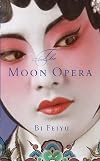
The Moon Opera
by Bi Feiyu
On This Page
Description
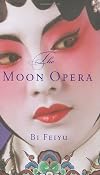
The debut novel of one of China's rising young literary talents--a gem of a book that takes a piercing look into the world of Chinese opera and its female stars In a fit of diva jealousy, Xiao Yanqiu, star of The Moon Opera, disfigures her understudy with boiling water. Spurned by the troupe, she turns to teaching. Twenty years later, a rich cigarette-factory boss offers to underwrite a restaging of the cursed opera, but only on the condition that Xiao Yanqiu return to the role of Chang'e. show more So she does, this time believing she has fully become the immortal moon goddess. Set against the drama, intrigue, jealousy, retribution, and redemption of backstage Peking opera, The Moon Opera is a stunning portrait of women in a world that simultaneously reveres and restricts them. Bi Feiyu, one of China's young literary stars, re-creates all the temptations and triumphs of the stage the world over in this gem of a novel. show lessTags
Recommendations
















Member Reviews
A diva of the Peking Opera House, more notably the star of the "Moon Opera," attacks a rival, and in the fallout, she subsequently retreats to just teaching. Twenty years later a very wealthy factory manager offers to underwrite a new production of the same opera, but only if that specific diva will return and take the lead role. Xiao Yanqiu, our volatile diva, now married and with a child, accepts the position, and thus our dramatic (somewhat crazy) story begins.
It took me a chapter or two to settle into this story, and get to know our diva, Yanqui, who is a diva by both definitions of the word: "a famous female singer of the the opera" and "a self-important person who is temperamental and difficult to please" (let the games begin!)
A show more relatively quick read at 177 small pages; but an entertaining introduction to Chinese opera… with all it’s drama. show less
It took me a chapter or two to settle into this story, and get to know our diva, Yanqui, who is a diva by both definitions of the word: "a famous female singer of the the opera" and "a self-important person who is temperamental and difficult to please" (let the games begin!)
A show more relatively quick read at 177 small pages; but an entertaining introduction to Chinese opera… with all it’s drama. show less
Before anything can be said about the story, it must first be remembered that this is first and foremost a translation. This one fact makes it almost difficult to properly review the book, because so much is lost in translation. What may be very flowing verse and storyline in Chinese comes out a little clunky in English, but as the book is short, and fairly straight forward, it does not take away from the story. One thing that I did enjoy were the very Chinese sayings/maxims/whatever one wants to call them. Like little mini haiku's interspersed throughout the otherwise slightly awkward translation, it was refreshing, and reminded me of what the rest of the writing would most likely be like in its original.
The story itself, once you show more get past the preliminary set up, is sad, and as full of yearning as can be expressed. It is the story of an Opera singer, who, after passing her prime, has been called back to her starring role. After months of doubt, trying to prepare herself and make herself into the young woman she once was, she realizes that the only time she is herself, is when becoming lead in the infamous "Moon Opera." But when this is taken from her at the end, what can she do? show less
The story itself, once you show more get past the preliminary set up, is sad, and as full of yearning as can be expressed. It is the story of an Opera singer, who, after passing her prime, has been called back to her starring role. After months of doubt, trying to prepare herself and make herself into the young woman she once was, she realizes that the only time she is herself, is when becoming lead in the infamous "Moon Opera." But when this is taken from her at the end, what can she do? show less
Although this book was a bit difficult for me to get into at the start, I think it was worthwhile. I thought it was actually a little bit heartbreaking - the story was about Xiao Yanqiu, an actress who is well past her prime, and is self-destructively trying to cling to her past glory. I suppose I was a little put off by the prose in the beginning; I was very conscious of the fact I was reading a translation. Nevertheless, the book is worth the time it takes to read it, especially since it's so short (123 pages).
Perhaps the story went this way. Once upon a time, back when myths were true and the gods walked and stalked on the face of the earth, a woman named Chang’e or perhaps it was Heng’e (the sources differ on this matter) felt a great longing for immortality. Or perhaps she had once been immortal and wished to return to that state (again the sources differ). In the grip of this longing she turned to her husband the great archer and hero Yi, who may have been tyrant instead of a hero or Chang’e’s husband (once more the sources differ) and begged him to bring her the elixir of immortality, or perhaps it was a pill, (and yes no agreement exists about this detail either). So the great archer hero/tyrant Yi went to Queen Mother of the show more West, a goddess (her deity being undisputed by any of the sources) and begged of her the elixir or pill of immortality, which she granted him. Perhaps she told him to divide the substance in half or perhaps not (oh how those source differ). At any rate, he returned home with the whatever it was of immortality safely stowed in a box, which he gave to Chang’e for safe-keeping . . .
Read the rest of the review at Club Balzac. show less
Read the rest of the review at Club Balzac. show less
Ratings
Members
- Recently Added By
Author Information

Some Editions
Awards and Honors
Awards
Common Knowledge
- Original title
- 青衣
- Original publication date
- 2007 ; 2009-01-29 (eng.) (eng.)
- People/Characters
- Xiao Yanqiu; Bi Feiyu
- Important places
- Beijing, China
- First words
- For Qiao Bingzhang the dinner party was like a blind date, and it was half over before he learned that the man sitting across from him ran a cigarette factory.
- Original language
- Chinese
Classifications
- Genres
- Fiction and Literature, General Fiction, Historical Fiction
- DDC/MDS
- 895.1352 — Literature & rhetoric Literatures of other languages Literatures of East and Southeast Asia Chinese Chinese fiction Modern period 1912–2010 1949–2010
- LCC
- PL2931.5 .I18 .M66 — Language and Literature Languages and literatures of Eastern Asia, Africa, Oceania Languages of Eastern Asia, Africa, Oceania Chinese language and literature Chinese literature Individual authors and works
- BISAC
Statistics
- Members
- 118
- Popularity
- 276,691
- Reviews
- 4
- Rating
- (3.45)
- Languages
- 5 — Chinese, Dutch, English, French, German
- Media
- Paper, Ebook
- ISBNs
- 11
- ASINs
- 4