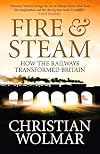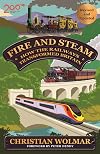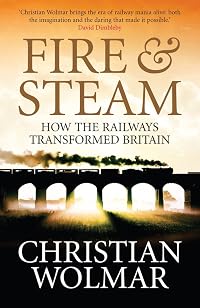
Fire & Steam: How the Railways Transformed Britain
by Christian Wolmar
On This Page
Description
"A new and updated edition of the classic history of the British railway, published to coincide with the 200th anniversary of train travel in 2025. The opening of the pioneering Stockton and Darlington railway, the world's first passenger line, in 1825 marked the beginning of the railways' vital role in changing the face of Britain. Fire and Steam celebrates the vision and determination of the ambitious Victorian pioneers who developed this revolutionary transport system and the navvies who show more cut through the land to enable a country-wide network to emerge. From the early days of steam to electrification, via the railways' magnificent contribution in two world wars, the chequered history of British Rail and the disaster of privatization, Fire and Steam examines the social and economical importance of the railway and how it helped form the Britain of today."-- show lessTags
Recommendations






















Member Reviews
Few inventions did more to change life in Britain than the railways. Since the establishment of the first steam-powered lines in the early 19th century, they demolished locality, lowered the cost of goods, and made cheap travel a reality for millions of Britons. Yet as Christian Wolmar shows, this transformation was hardly a smooth one, shaped first by numerous growing pains and then the vagaries of government policy. This history, and its role in shaping Britain’s railway system today, is the subject of his book, which describes both how the railways changed Britain and how Britons, in turn changed the railways.
Wolmar’s scope is a broad one, ranging back to the early gravity- and horse-drawn routes of the 17th century. Yet it is show more not until steam engines are introduced that the railways emerge as a prominent mode of transportation. While initially envisioned primarily as a means of moving freight, Wolmar notes that railways soon found transporting passengers to be their most lucrative source of revenue. Soon railways sprang up throughout Britain, and by the start of the twentieth century lines reached nearly every corner of the island. Yet dominance bred complacency, and the railways were slow to respond to the challenge posed by the emergence of road haulage in the early twentieth century. Hobbled by under-investment during the two world wars and handicapped by successive (and sometimes conflicting) government mandates, Britain’s railway network was in decline by the second half of the twentieth century. Yet for all of these problems Wolmar is optimistic about the future of railways, arguing that despite continued dithering over investment in its infrastructure, technological innovation promises to deliver improvements in performance that can ensure the survival of railways for another century.
A journalist and self-styled "transport commentator", Wolmar’s passion for his subject shines through on every page. He writes in a light and readable style that conveys well his extensive knowledge of Britain’s railways without burdening his readers with minutiae. This combination makes his book a superb starting point for anyone seeking to learn more about Britain’s railways and the country’s long, oftentimes troubled, yet always fascinating relationship with them. show less
Wolmar’s scope is a broad one, ranging back to the early gravity- and horse-drawn routes of the 17th century. Yet it is show more not until steam engines are introduced that the railways emerge as a prominent mode of transportation. While initially envisioned primarily as a means of moving freight, Wolmar notes that railways soon found transporting passengers to be their most lucrative source of revenue. Soon railways sprang up throughout Britain, and by the start of the twentieth century lines reached nearly every corner of the island. Yet dominance bred complacency, and the railways were slow to respond to the challenge posed by the emergence of road haulage in the early twentieth century. Hobbled by under-investment during the two world wars and handicapped by successive (and sometimes conflicting) government mandates, Britain’s railway network was in decline by the second half of the twentieth century. Yet for all of these problems Wolmar is optimistic about the future of railways, arguing that despite continued dithering over investment in its infrastructure, technological innovation promises to deliver improvements in performance that can ensure the survival of railways for another century.
A journalist and self-styled "transport commentator", Wolmar’s passion for his subject shines through on every page. He writes in a light and readable style that conveys well his extensive knowledge of Britain’s railways without burdening his readers with minutiae. This combination makes his book a superb starting point for anyone seeking to learn more about Britain’s railways and the country’s long, oftentimes troubled, yet always fascinating relationship with them. show less
I’m a railway enthusiast, fan, anorak or whatever you want to call it, so perhaps my view on this book is slightly tainted? But, why would you read a book that is clearly about rail history if you’re not already interested in the subject?
So, from that position, yes this is a marvellous book. Going from the earliest days of the colliery lines, Trevithick, Stephenson and forward through the 20th century. It’s thorough, perhaps overly in places, but it rewards perseverance. If you were to read only one book on rail history generally, then make it this.
So, from that position, yes this is a marvellous book. Going from the earliest days of the colliery lines, Trevithick, Stephenson and forward through the 20th century. It’s thorough, perhaps overly in places, but it rewards perseverance. If you were to read only one book on rail history generally, then make it this.
This is undoubtedly a useful book: there simply aren't any other recent, comprehensive overviews of British railway history around, and Wolmar has made a serious effort to fill that evident gap. It's a lively and very readable account, it avoids getting bogged down in technicalities, and it presents an unsentimental, critical account of the failings of the industry as well as its successes. Unusually for such a recently-written book, it's also remarkably well-edited and free from conspicuous errors. Sadly, it's also relatively free from maps and illustrations, although the few that are included are mostly well-chosen.
On the other hand, it demonstrates fairly effectively why other writers have shied away from this particular challenge. show more There is simply too much subject-matter in 200 years of British railway history to cover it all effectively in this sort of single-volume study. Wolmar has a tendency to focus on the bits of the story that make "good television": we get Fanny Kemble on the footplate with Stephenson, for the umpteenth time, but we don't get a clear picture of how the promoters of the early railway companies developed the mechanisms for raising the necessary capital, or where the civil and mechanical engineering skills came from. It would have been nice to see a bit more discussion of how railways used the know-how developed in the construction of turnpikes and canals, and what they had to add to it. At an even more basic level, he spends quite some time on the difficulties that companies like the Liverpool & Manchester had in getting parliamentary approval, but never explains why they needed it, or what that process involved: for the target readership of a book like this, I would have thought that those would be basic questions to address. I know I was very puzzled about that sort of thing when I first started reading about railway history.
A very positive point is that throughout the book he draws attention to the role of the railways as employers, and spends at least some time discussing the development of the rail unions and their relations with management - although again it would have been nice to have more. He draws on Helena Wojtczak's recent work on railwaywomen when discussing the two world wars, but says little or nothing about the role of women on the railways at other periods.
Something that impressed me was Wolmar's refusal to accept the conventional notion of a "golden age" of the railways, either in the late Edwardian period or in the thirties. As he makes clear, the industry was in considerable trouble during both these periods, and any impression we have of the contrary comes from clever advertising campaigns and the nostalgia of earlier historians.
The last couple of chapters, discussing British Rail and privatisation, are extremely condensed, and amount to little more than a blatant plug for Wolmar's other book on the Great Privatisation Scandal. It is a pity that he didn't have space to do more, although obviously the opinions in this part of the book are likely to get stale as soon as we have the benefit of a bit more hindsight.
Wolmar draws mostly on secondary sources, but he makes it clear what comes from where, and includes a comprehensive bibliography that should be a good start for further reading.
All in all, this probably isn't a tremendously interesting book unless you are a complete newcomer to the subject, but it does provide a useful modern alternative to the likes of Hamilton Ellis and O.S. Nock for those have developed an interest in railways and want to move on to something a bit more challenging. show less
On the other hand, it demonstrates fairly effectively why other writers have shied away from this particular challenge. show more There is simply too much subject-matter in 200 years of British railway history to cover it all effectively in this sort of single-volume study. Wolmar has a tendency to focus on the bits of the story that make "good television": we get Fanny Kemble on the footplate with Stephenson, for the umpteenth time, but we don't get a clear picture of how the promoters of the early railway companies developed the mechanisms for raising the necessary capital, or where the civil and mechanical engineering skills came from. It would have been nice to see a bit more discussion of how railways used the know-how developed in the construction of turnpikes and canals, and what they had to add to it. At an even more basic level, he spends quite some time on the difficulties that companies like the Liverpool & Manchester had in getting parliamentary approval, but never explains why they needed it, or what that process involved: for the target readership of a book like this, I would have thought that those would be basic questions to address. I know I was very puzzled about that sort of thing when I first started reading about railway history.
A very positive point is that throughout the book he draws attention to the role of the railways as employers, and spends at least some time discussing the development of the rail unions and their relations with management - although again it would have been nice to have more. He draws on Helena Wojtczak's recent work on railwaywomen when discussing the two world wars, but says little or nothing about the role of women on the railways at other periods.
Something that impressed me was Wolmar's refusal to accept the conventional notion of a "golden age" of the railways, either in the late Edwardian period or in the thirties. As he makes clear, the industry was in considerable trouble during both these periods, and any impression we have of the contrary comes from clever advertising campaigns and the nostalgia of earlier historians.
The last couple of chapters, discussing British Rail and privatisation, are extremely condensed, and amount to little more than a blatant plug for Wolmar's other book on the Great Privatisation Scandal. It is a pity that he didn't have space to do more, although obviously the opinions in this part of the book are likely to get stale as soon as we have the benefit of a bit more hindsight.
Wolmar draws mostly on secondary sources, but he makes it clear what comes from where, and includes a comprehensive bibliography that should be a good start for further reading.
All in all, this probably isn't a tremendously interesting book unless you are a complete newcomer to the subject, but it does provide a useful modern alternative to the likes of Hamilton Ellis and O.S. Nock for those have developed an interest in railways and want to move on to something a bit more challenging. show less
Wolmar gives a comprehensive overview of the development of Britain's railway system. It's very interesting, particularly the section on privatisation which I was too young to fully understand when it happened. I also hadn't realised how heavily the railways were used during the wars and the impact these two periods had on the system - no investment or real repair work happening despite the unprecedented levels of use, and a similar story in the immediate post-war years. Most interesting was the number of missed opportunities and the wrong emphasis in policy that stopped trains from effectively competing with cars/lorries. As Wolmar writes, government 'expenditure on roads has always been deemed to be investment, while rail spending has show more been classified as subsidy'.
My only criticism is that I don't think the book does actually explain properly 'how the railways transformed Britain'. He does touch on the development of towns and suburbs because of the railway, the new leisure opportunitites that opened up to the working class and the development of railway unions. But I think much more could have been included such as personal accounts of people using trains for the first time and perhaps a case study of an area that was transformed, rather than a brief mention of several locations where this happened. I accept Wolmar's explanation that there is much missing from the book because the subject is so large, but the book is only 318 pages long so I think there was room for more social history show less
My only criticism is that I don't think the book does actually explain properly 'how the railways transformed Britain'. He does touch on the development of towns and suburbs because of the railway, the new leisure opportunitites that opened up to the working class and the development of railway unions. But I think much more could have been included such as personal accounts of people using trains for the first time and perhaps a case study of an area that was transformed, rather than a brief mention of several locations where this happened. I accept Wolmar's explanation that there is much missing from the book because the subject is so large, but the book is only 318 pages long so I think there was room for more social history show less
Christian Wolmar has branched out from journalism with a transport specialisation into producing topical books about the British railway system. His excellent and well received Subterranean Railway about the history of London's underground opened up a new genre. It emerged that there was a steady market for good general histories of things rail. This book was the first in a series of follow-ups that have covered the United States, the role of rail at war and the latest on the trans-Siberian Railway.
Fire and Steam takes a birds eye view of the development of railways in Britain. This is a fascinating history not only for those with a romantic (or obsessive!) history of railways but also for anyone interested in how this vital technology show more has changed the world. It is a narrative history, so probably doesn't include the level of specialist empirical content desired by those trying to understand this key component of the so-called Industrial Revolution in Britain. That said the story is well told, and it reveals the importance of individuals and politics in driving this innovation forward. Its also an early opportunity to see the growing conflict between the new industrial wealth and the growth of a working class, and the old privileged aristocracy. This is evidenced both in the challenges obtaining permission to run over landed estates, and in the surprisingly slow process of making rail travel affordable for the masses.
The book is only 318 not very dense pages and 125,000 words long and there is certainly a lot more detail that could be told. Wolmar reminds us in the introduction that over 25,000 books have been published on Britain's railways. I think he strikes the right level of detail for most and provides references a-plenty for those who wish to dig deeper. show less
Fire and Steam takes a birds eye view of the development of railways in Britain. This is a fascinating history not only for those with a romantic (or obsessive!) history of railways but also for anyone interested in how this vital technology show more has changed the world. It is a narrative history, so probably doesn't include the level of specialist empirical content desired by those trying to understand this key component of the so-called Industrial Revolution in Britain. That said the story is well told, and it reveals the importance of individuals and politics in driving this innovation forward. Its also an early opportunity to see the growing conflict between the new industrial wealth and the growth of a working class, and the old privileged aristocracy. This is evidenced both in the challenges obtaining permission to run over landed estates, and in the surprisingly slow process of making rail travel affordable for the masses.
The book is only 318 not very dense pages and 125,000 words long and there is certainly a lot more detail that could be told. Wolmar reminds us in the introduction that over 25,000 books have been published on Britain's railways. I think he strikes the right level of detail for most and provides references a-plenty for those who wish to dig deeper. show less
Useful overall history. Compressed. Opinionated. Readable.
An easy to read quite detailed history of railways in Britain by a man who loves railways.
Members
- Recently Added By
Lists

Library Non-Fiction
165 works; 1 member
Author Information

32+ Works 1,999 Members
Common Knowledge
- Original publication date
- 2007
- People/Characters
- Trains
Classifications
- Genres
- Nonfiction, History, General Nonfiction, Technology
- DDC/MDS
- 385.0941 — Society, government, & culture Commerce, communications & transportation regulations Railroad transportation Subdivisions History, geographic treatment, biography Europe British Isles - UK, Great Britain, Scotland, Ireland
- LCC
- HE3018 .W656 — Social sciences Transportation and communications Transportation and communications Railroads. Rapid transit systems
- BISAC
Statistics
- Members
- 284
- Popularity
- 113,391
- Reviews
- 8
- Rating
- (3.86)
- Languages
- English
- Media
- Paper, Audiobook, Ebook
- ISBNs
- 12
- ASINs
- 7