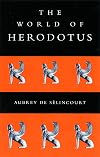
The World of Herodotus
by Aubrey De Sélincourt
On This Page
Description
Herodotus's Histories provides the basis for this strong account of the Greek world from the 8th to the 5th centuries B.C.--both the geography that he saw during his travels and the thoughts, feelings, and tradition crystallized in his writings. "...stimulating..."--San Francisco Chronicle.Tags
Recommendations

























Member Reviews
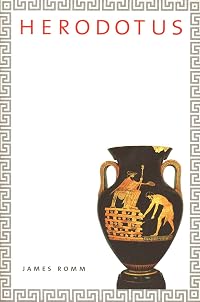
This book was recommended as in introduction to Herodotus’s Histories. I don’t think it fulfills that task as well as the more recent volume by James Romm (Yale University Press, 1998).
What Sélincourt’s treatment offers instead is a tour d’horizon of Greek culture in antiquity. The main interest here is the author’s dissent from consensus opinions about the ancient Greeks, based on his thorough knowledge and love of the literature. The achievement of his Greeks was, in many ways, admirable, but they were not, as some maintain, our betters in all aspects of civilization. Their matter-of-fact cruelty and mendacity, indeed, their overall “self-regarding ethics,” to use Sélincourt’s phrase, mean there is no need to show more idealize them. Unfortunately, Sélincourt doesn’t trust the reader to remember this insight the first, second, or third time he shares it.
This book was also useful in helping me to realize that we oversimplify when we refer in a general way to “the ancient Greeks.” Are we talking about the dim antiquity of the Trojan War? Of Homer’s gathering and shaping of legends of it centuries later? Of the flowering of science and philosophy on the Ionian coast? Of Periclean Athens? There was continuity, but also change. One example of change (not for the better) is in the position of women in society, which seems to have been better in earlier days.
In addition to overselling the author’s central insight, the book suffers in general from being wordy and repetitive. Phrases such as “as I have said” and “as we shall see” abound. I savored in particular, “it bears repeating.” My interest sagged in the middle of the book when the author retells material Herodotus reports; for that, I’d rather get it from the original. Sélincourt’s love of Greek lyric poetry, however, is infectious, and he is especially good on Plato. So on balance, I’m glad I stuck it out. He convinces me of the greatness of Sappho, makes me want to reread Homer and Sophocles, and try some more Plato, For this, I’m grateful. show less
What Sélincourt’s treatment offers instead is a tour d’horizon of Greek culture in antiquity. The main interest here is the author’s dissent from consensus opinions about the ancient Greeks, based on his thorough knowledge and love of the literature. The achievement of his Greeks was, in many ways, admirable, but they were not, as some maintain, our betters in all aspects of civilization. Their matter-of-fact cruelty and mendacity, indeed, their overall “self-regarding ethics,” to use Sélincourt’s phrase, mean there is no need to show more idealize them. Unfortunately, Sélincourt doesn’t trust the reader to remember this insight the first, second, or third time he shares it.
This book was also useful in helping me to realize that we oversimplify when we refer in a general way to “the ancient Greeks.” Are we talking about the dim antiquity of the Trojan War? Of Homer’s gathering and shaping of legends of it centuries later? Of the flowering of science and philosophy on the Ionian coast? Of Periclean Athens? There was continuity, but also change. One example of change (not for the better) is in the position of women in society, which seems to have been better in earlier days.
In addition to overselling the author’s central insight, the book suffers in general from being wordy and repetitive. Phrases such as “as I have said” and “as we shall see” abound. I savored in particular, “it bears repeating.” My interest sagged in the middle of the book when the author retells material Herodotus reports; for that, I’d rather get it from the original. Sélincourt’s love of Greek lyric poetry, however, is infectious, and he is especially good on Plato. So on balance, I’m glad I stuck it out. He convinces me of the greatness of Sappho, makes me want to reread Homer and Sophocles, and try some more Plato, For this, I’m grateful. show less
Aubrey de Selincourt was a Greek scholar, educated at Oxford, who was a fighter pilot in WW1, shot down and taken prisoner until the war's end. He then completed his degree, and became a school teacher, then translator of Greek and Latin for the Penquin classics series. He did a translation of Herodotus in 1954, This book was published in 1962, as a companion to Herodotus, to explain Greek culture and history at the time Herodotus wrote. The book discusses first Herodotus as a historian, his credulity and biases, and the general feeling of Greeks for history that interweaves myth and incident. The long middle of the book goes over the history that Herodotus wrote about, so much so that I questioned if I should just be reading the show more original Histories. The final two parts review Greek literature, including lyric poems, epics and drama, and finally discusses Athenian or Greek democracy and institutions. Selincourt has a near worshipful view of Herodotus, and a fluid style, but I sometimes struggled to keep interested. show less
This odd project from 1962 is a discussion and analysis of Herodotus. Herodotus is fairly straightforward to read and the author mentions most of his stories just as an outline while adding his opinionated (and now dated) commentary on ancient Greek history and culture. A final segment of the book adds discussion of Greek literature in general with large quoted extracts. About 30% of the way into the book, one wonders whether it would be better to read one of the annotated translations of Herodotus directly (e.g. The Landmark edition).
Ratings
Members
- Recently Added By
Author Information

34+ Works 281 Members
Work Relationships
Reference guide/companion to
Common Knowledge
- Original publication date
- 1962
- Epigraph
- In winter, on your soft couch by the fire, full of food, drinking sweet wine and cracking nuts, say this to the chance traveller at your door: 'What is your name, my good friend? Where do you live? How many years can you numb... (show all)er? How old were you when the Persians came . . .?'
Xenophanes - Dedication
- TO MY WIFE
Classifications
Statistics
- Members
- 168
- Popularity
- 194,779
- Reviews
- 3
- Rating
- (4.25)
- Languages
- Dutch, English, German
- Media
- Paper
- ISBNs
- 2
- ASINs
- 7