On This Page
Description
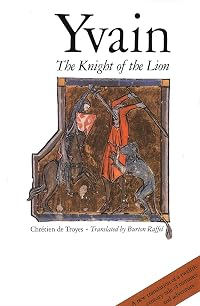
A twelfth-century poem by the creator of the Arthurian romance describes the courageous exploits and triumphs of a brave lord who tries to win back his deserted wife's love.Tags
Recommendations


























Member Reviews
The great thing about classics like this one is that we’ve gained this great reverence for them, maybe just by virtue of how old and enduring they are, but so often if you actually take the time to read them you find they’re quite entertaining. To people in Chrétien de Troyes’ time, the idea of studying “low entertainment” like this would’ve been absurd—and yet I’m writing an essay on this very book for my Western Classics in Translation class.
When you get past the pretence that capital-C Classics are complicated books for big-brained lit majors, there’s a lot of fun to be had. Like Yvain, in which our titular knight really just manufactures his own problems and then laments them. He kills a giant, adopts a lion, and show more fights a bunch of people but for seemingly no other reason than that it’s something to do. And there’s this side plot about Love and the pain of losing it and whatever but the only reason Yvain’s lover broke up with him is because he couldn’t bring himself to stop jousting all the goddamn time. It’s fun and it’s dumb and I love that I was so apprehensive about reading a twelfth century French chivalric romance only for it to turn out to be little more than a rollicking bedtime story. show less
When you get past the pretence that capital-C Classics are complicated books for big-brained lit majors, there’s a lot of fun to be had. Like Yvain, in which our titular knight really just manufactures his own problems and then laments them. He kills a giant, adopts a lion, and show more fights a bunch of people but for seemingly no other reason than that it’s something to do. And there’s this side plot about Love and the pain of losing it and whatever but the only reason Yvain’s lover broke up with him is because he couldn’t bring himself to stop jousting all the goddamn time. It’s fun and it’s dumb and I love that I was so apprehensive about reading a twelfth century French chivalric romance only for it to turn out to be little more than a rollicking bedtime story. show less
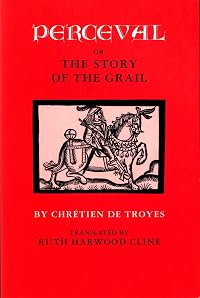
I found Yvain in my public library when I was in middle school, and fell in love with it. The edition I read then, and the one I still favor, was translated by Ruth Harwood Cline, whose translations still amuse and amaze me. First, the translation is in rhymed couplets, which I consider a great (if occasionally annoying) feat. I find it easy to imagine this translation recited orally. The story itself is my favorite of Cretien de Troyes' romances, and remains one of my favorite medieval romances. It's got some cool courtly love themes, adventure, magic, madness, gory bits. What more could you want, really?
I don't want to give too much away (although the plot is so rich and the characters so varied that I could tell you everything and it would still be worth reading), but needless to say there is a lot of knightly adventure, chivalrous quests, and moral lessons in this romance. It is amazing to read something written over 800 years ago that still seems so fresh and with characters (including female characters) who have flaws and motivations that don't seem that different from people today.
The translator purposefully discards the original meter and rhyme of the Old French version, which would be nearly impossible to recreate in English, at least in any readable way, and instead gives us a metered but unrhymed modern English translation show more that (as far as I know) retains the tone and metaphors of the original. This edition also includes a well-written afterward by Joseph J. Duggan that puts the book into its cultural context, gives biographical information on Chrétien de Troyes, and discusses his many known and probable inspirations and sources for the romance.
[full review here: http://spacebeer.blogspot.com/2009/04/yvain-knight-of-lion-ca-1177.html ] show less
The translator purposefully discards the original meter and rhyme of the Old French version, which would be nearly impossible to recreate in English, at least in any readable way, and instead gives us a metered but unrhymed modern English translation show more that (as far as I know) retains the tone and metaphors of the original. This edition also includes a well-written afterward by Joseph J. Duggan that puts the book into its cultural context, gives biographical information on Chrétien de Troyes, and discusses his many known and probable inspirations and sources for the romance.
[full review here: http://spacebeer.blogspot.com/2009/04/yvain-knight-of-lion-ca-1177.html ] show less
Storage 2025
different cover
different cover
Storage 2025
EL CABALLERO DEL LEON
El Caballero del León es, sin duda, una
de las obras más perfectas de Chrétien
de Troyes. Su autor (ca. 1135-1190),
quizá el mejor y más representativo de
los escritores de una época de auge y
vitalidad creativa, nos adentra con un
encanto extraordinario en la atmósfera
mágica y fascinante de las aventuras
de los caballeros del rey Arturo.
Su argumento -una historia de amor
al gusto de la civilización
cortés - reinterpreta, con gran habilidad
narrativa, esquemas míticos
provenientes de los relatos célticos
difundidos oralmente y, a su vez,
adaptados al ambiente y la moral
caballeresca.
Así, el caballero Yvain,
símbolo de la caballería cristiana,
ayudado por un león, realizará, a través
de todas las pruebas show more iniciáticas que
atraviesa, una intima alianza con la
Dama de la Fuente, que le llevará a la
Fuente más sagrada y secreta, donde
manan perennemente todos los poderes
de la vida.
Chrétien de Troyes, creador
indiscutible de la novela europea, es
también, en cierto sentido, como dijo
una vez Jean Frappier, «el Ovidio
de una mitología en desintegración», show less
El Caballero del León es, sin duda, una
de las obras más perfectas de Chrétien
de Troyes. Su autor (ca. 1135-1190),
quizá el mejor y más representativo de
los escritores de una época de auge y
vitalidad creativa, nos adentra con un
encanto extraordinario en la atmósfera
mágica y fascinante de las aventuras
de los caballeros del rey Arturo.
Su argumento -una historia de amor
al gusto de la civilización
cortés - reinterpreta, con gran habilidad
narrativa, esquemas míticos
provenientes de los relatos célticos
difundidos oralmente y, a su vez,
adaptados al ambiente y la moral
caballeresca.
Así, el caballero Yvain,
símbolo de la caballería cristiana,
ayudado por un león, realizará, a través
de todas las pruebas show more iniciáticas que
atraviesa, una intima alianza con la
Dama de la Fuente, que le llevará a la
Fuente más sagrada y secreta, donde
manan perennemente todos los poderes
de la vida.
Chrétien de Troyes, creador
indiscutible de la novela europea, es
también, en cierto sentido, como dijo
una vez Jean Frappier, «el Ovidio
de una mitología en desintegración», show less
Apr 11, 2024Spanish
Ma hot take à moi: le Table Ronde-verse est le meilleur univers de super-héros. J'aime trop ces romans de chevaliers, avec des greens flags ambulant (calmons-nous quand même), mais c'est ça, la vrai masculinité... Comme quoi les goûts ont pas tant changé que ça... Yvain ou le Chevalier au Lion, dans cette version, me paraît un peu court, assez bref dans les évènements, et globalement assez simplifié... Mais pour moi on a ici une incroyable histoire de chevaliers, de la fantasy comme on en a rarement faite, j'aime bien comment la religion est mise en arrière-plan quasi tout le long, ou en tout cas, qu'elle est dépeinte plus comme une religion fictive dans un univers de fantasy, que comme ce qui régit vraiment la vie des show more gens... L'histoire en soi est pleine de rebondissements, et pour le coup, je trouve, bien plus intéressante qu'une histoire de super-héros classique. On a ici, pour moi, une masterclass absolue, qui mériterait une vraie traduction, complète, et qui va me pousser à me plonger dans la "matière de la Bretagne", ces romans et chansons chevaleresques sur les Chevaliers de la Table Ronde et autres, Merlin, Morgane..! show less
Jul 13, 2026French
Members
- Recently Added By
Lists

Best Arthurian Fiction
104 works; 33 members

Books translated from Romance Languages into English
102 works; 7 members

Harold Bloom - The Western Canon: A. The Theocratic Age
97 works; 13 members

Books Read in 2016
4,666 works; 197 members

Western Canon
206 works; 2 members
Author Information

61+ Works 7,105 Members
Author of early Arthurian romances, Chrétien de Troyes was born in France around 1150. Little is known about this medieval writer. His poems cannot be dated, except to say that they were written sometime in the second half of the twelfth century. His most famous works include Erec; Cligès; Lancelot, ou Le Chevalier à la Charrette; Yvain, ou Le show more Chevalier au Lion; Perceval, ou Le Conte du Graal, and Guillaume d'Angleterre. He also composed a version of Tristan and Isolde. During his life, he enjoyed the patronage of Marie de Champagne, the daughter of Philip of Flanders and Eleanor of Aquitaine. Although it is not confirmed, it is believed that he died in Paris in 1190. (Bowker Author Biography) show less
Some Editions
Series

Belongs to Publisher Series
Work Relationships
Is contained in
Srednevekovyi roman i povest': Ivein,ili so l'vom. roman o tristane i Izol'de. Okassen i Nikoletta. Partsifal'. Bednyi by Kret'en de Trua; Vol'fram fon Eshenbakh; Gartman f
Contains
Common Knowledge
- Canonical title
- Yvain, the Knight of the Lion
- Original title
- Yvain ou le Chevalier au Lion
- Alternate titles*
- Le chevalier au lion
- Original publication date
- 1176
- People/Characters
- Ywain
- Original language*
- Frans
*Some information comes from Common Knowledge in other languages. Click "Edit" for more information.
Classifications
Statistics
- Members
- 1,108
- Popularity
- 22,967
- Reviews
- 17
- Rating
- (3.82)
- Languages
- 12 — Catalan, Danish, Dutch, English, French, French (Middle), Old French, German, Italian, Norwegian (Bokmål), Spanish, Swedish
- Media
- Paper, Ebook
- ISBNs
- 80
- ASINs
- 17