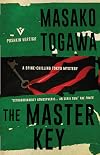
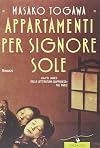
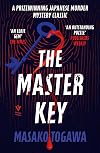
The Master Key
by Masako Togawa
On This Page
Description
The K Apartments for Ladies are occupied by over a hundred unmarried women, once young and lively, now grown and old - and in some cases, evil. Their residence conceals a secret, a secret connecting the unsolved kidnapping in 1951 of four-year-old George Kraft to the clandestine burial of a child's body in the basement bath-house. So, when news comes that the building must be moved to make way for a road-building project, more than one tenant waits with apprehension for the grisly revelation show more that will follow. Then the master key is lost, stolen and re-stolen, and suddenly no-one feels safe. show lessTags
Recommendations













Member Reviews
A stolen violin. A missing boy. A manuscript which may not exist. A boy buried under a building. A man dying in woman's clothes. A missing key. A cult. A moving building. A letter. A death. Pieces of a puzzle.
The novel never runs linearly - we see different characters at different times adding different pieces of information that do not make sense on their own but can be connected into a whole puzzle. Until a piece does no fit and you need to go back and figure out which piece is not where it belongs and rebuild the puzzle again and again. And just when you catch a glimpse of the whole picture, you find yourself with a piece that does not fit again - and the whole thing shifts.
It is a cleverly designed puzzle mystery centered around show more an apartment building that was once used for young ladies and that had grown old, together with its occupants. As the years passed, secrets and eccentricities grew and evolved and when we finally meet the occupants of the building, they seem to have their own motives for their silences. Add an unreliable narrator and the puzzle gets even harder.
And just when you think you know what happened, the epilogue closes the last open thread, removing the last piece of the puzzle - the one that would have never fit because it did not belong to start with.
I enjoyed this novel more than I expected to - I am not a big fan of clever designs and it is different from most mysteries I had read but it has its internal logic that actually worked and the glimpses of post-WWII Japan are fascinating and add a layer to the whole story. And once you are given the key to unravel the whole story, things fall into place neatly. show less
The novel never runs linearly - we see different characters at different times adding different pieces of information that do not make sense on their own but can be connected into a whole puzzle. Until a piece does no fit and you need to go back and figure out which piece is not where it belongs and rebuild the puzzle again and again. And just when you catch a glimpse of the whole picture, you find yourself with a piece that does not fit again - and the whole thing shifts.
It is a cleverly designed puzzle mystery centered around show more an apartment building that was once used for young ladies and that had grown old, together with its occupants. As the years passed, secrets and eccentricities grew and evolved and when we finally meet the occupants of the building, they seem to have their own motives for their silences. Add an unreliable narrator and the puzzle gets even harder.
And just when you think you know what happened, the epilogue closes the last open thread, removing the last piece of the puzzle - the one that would have never fit because it did not belong to start with.
I enjoyed this novel more than I expected to - I am not a big fan of clever designs and it is different from most mysteries I had read but it has its internal logic that actually worked and the glimpses of post-WWII Japan are fascinating and add a layer to the whole story. And once you are given the key to unravel the whole story, things fall into place neatly. show less
The Master Key most reminds me of not a mystery novel — although it has its elements of mystery — but of a film, The Usual Suspects, which shares a chameleon-like shiftiness. The novel begins as a mystery — the son of an American Army major in Japan and his Japanese wife disappears — at the same time as a schoolteacher buries a dead child.
But Masako Togawa’s masterpiece shifts to a character study of the residents of the five-floor K Apartments for Ladies. And then it shifts again. And again. And yet again. The ending was like a punch to the solar plexus — it was that unexpected! No wonder I found it on a list of highly recommended off-beat mysteries.
But Masako Togawa’s masterpiece shifts to a character study of the residents of the five-floor K Apartments for Ladies. And then it shifts again. And again. And yet again. The ending was like a punch to the solar plexus — it was that unexpected! No wonder I found it on a list of highly recommended off-beat mysteries.
* I would like to thank NetGalley and the publisher for the opportunity to review an advance copy of this book. *
The K Apartments are a tower of residences reserved for single women. The young ladies in residence since the war, and the staff, have now grown to become old maids.
The book's opening recounts a car accident in which someone is killed outside the K Apartments. Surprisingly the victim, dressed as a woman, turns out to be a man. What was a man doing in the K Apartments dressed as a woman?
Togawa twists this initial mystery as he introduces us to a series of unhappy women who were involved in this scandal and its aftermath. Resentments and jealousies between them lead to acts which compound the scandal, all of it set against a show more backdrop of an impending construction project that may reveal the grim secret of the K Apartments.
This is an unusual crime story. There is no central investigator character and the plot gets developed through the agency of several characters who gradually learn more about what is going on. For most of the book I felt that this was pretty mundane, but Togawa pulled off some plot twists towards the end that totally reversed my opinion. I'm definitely going to seek out more of his work.
This book is being released in a new series of international crime novels from Pushkin Vertigo. I've read this one and Emma Viskic's Resurrection Bay and both were very good, so it looks like this imprint is worth keeping an eye out for. show less
The K Apartments are a tower of residences reserved for single women. The young ladies in residence since the war, and the staff, have now grown to become old maids.
The book's opening recounts a car accident in which someone is killed outside the K Apartments. Surprisingly the victim, dressed as a woman, turns out to be a man. What was a man doing in the K Apartments dressed as a woman?
Togawa twists this initial mystery as he introduces us to a series of unhappy women who were involved in this scandal and its aftermath. Resentments and jealousies between them lead to acts which compound the scandal, all of it set against a show more backdrop of an impending construction project that may reveal the grim secret of the K Apartments.
This is an unusual crime story. There is no central investigator character and the plot gets developed through the agency of several characters who gradually learn more about what is going on. For most of the book I felt that this was pretty mundane, but Togawa pulled off some plot twists towards the end that totally reversed my opinion. I'm definitely going to seek out more of his work.
This book is being released in a new series of international crime novels from Pushkin Vertigo. I've read this one and Emma Viskic's Resurrection Bay and both were very good, so it looks like this imprint is worth keeping an eye out for. show less
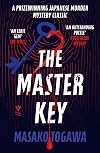
The front cover of the new edition from Pushkin Vertigo boldly states this is 'A Prize-Winning Japanese Murder Mystery Classic'. For me, it's more of a mystery, with very strong gothic/Shirley Jackson vibes. The premise is set up fro the start as two women bury the body of a child in the basement of a building, unaware that they are being watched. As one of the women leaves the apartment block something happens which jolts the whole scenario askew, and from then on we are in an eerie, creepy and sinister series of connecting character stories, all linked by their living in a Tokyo boarding house for single women. The building itself is being moved - literally. In order to make way for a new highway the buildings foundations have been show more dug up and the building is to be physically moved. The lives of everyone in the building are, literally, in upheaval!
As the book progresses, and we go back and forward in time, the lives of everyone in the building get more and more complex, as connections and secrets are revealed. It's impossible to go into plot details without spoiling it, but let's just say that there are at least two plot twists that you will not see coming, and the ending will leave you wondering just what the heck you have read.
Superbly crafted, with a cast of characters that is oddly endearing, this is also a book of fascinating cultural importance. Written in 1962, the status of single women in Japan, and the wider Japanese society post-WW2 and Westernisation, set a backdrop which many will find of interest.
Just a joy to read, and a superb example of a genre-defying classic. 5 stars. show less
As the book progresses, and we go back and forward in time, the lives of everyone in the building get more and more complex, as connections and secrets are revealed. It's impossible to go into plot details without spoiling it, but let's just say that there are at least two plot twists that you will not see coming, and the ending will leave you wondering just what the heck you have read.
Superbly crafted, with a cast of characters that is oddly endearing, this is also a book of fascinating cultural importance. Written in 1962, the status of single women in Japan, and the wider Japanese society post-WW2 and Westernisation, set a backdrop which many will find of interest.
Just a joy to read, and a superb example of a genre-defying classic. 5 stars. show less
This is the book that got me into Japanese lit, not just mysteries. It's a strange story, and as a mystery it won't fit easily into any category. I read it straight through. Translator did a great job! As much as I don't like "twists" and authors' "gotchyas!" in mystery writing, I have to say that this one worked for me. The rich storylines of the truly interesting characters is what hooked me.
This is set in Tokyo, at the K Apartments for Ladies. I didn't write down enough of the mentions of exact years to be 100% sure, but the book's "present" is probably the late 1950s.
The K Apartments for Ladies were originally meant to help "Japanese women emancipate themselves" (17). All of the women who live there are unmarried. Men are only allowed into the building if they check in first, after which they're escorted to whichever apartment they plan to visit. All the rents are frozen at wartime levels, so it's a cheap place to live. In the book's present, the entire building is about to be moved four meters in order to make room for a road-widening project. This can supposedly be done without disturbing any of the building's show more residents, who have all opted to stay inside until the project is finished.
Togawa gives readers glimpses into the particular stories and secrets of several of the building residents. In every instance, the weight of their secrets either begins to overwhelm them as the date of the move nears, or there's a strong possibility that the move will force their secrets into the light. Some of the residents mentioned include: Chikako Ueda, who once worked with a male accomplice to bury a dead child in an unused communal bathroom in the building's basement; Toyoko Munekata, who is supposedly hard at work correcting her late husband's manuscripts; Noriko Ishiyama, who has taken to living like a mouse, existing off of others' scraps; Suwa Yatabe, a violin instructor; and Yoneko Kimura, a retired teacher who spends her days writing letters to every single one of her former students.
I heard about this via a list on Goodreads. Although it's been tagged as a mystery, it's not really a traditional mystery, and readers who approach it as one are likely to be disappointed. There are certainly plenty of crimes mentioned - kidnapping, murder, arson, theft - but it's only in the last half of the book or so that anything like sleuthing happens, as Yoneko investigates one of her fellow residents on behalf of a former student.
Even then (I'm trying to avoid spoilers), there is the issue of appearances and reality. Some readers may love the twists at the end, while others may feel like the author cheated. I fall somewhere in between. I admired the way Togawa set things up so that readers would expect that they were dealing with one set of rules when they were actually dealing with a completely different set. She managed this without, as far as I could tell, ever really lying to readers, although I suppose that could depend upon your definition of "lie."
That said, the revelation concerning one particular character really bugged me. It required the character to be completely and utterly bound up in the building, the residents, and all their stories, to the point that that was their personal story. My suspension of disbelief was severely strained. I also had trouble believing that this person could do everything they would have had to have done without anyone ever being the wiser.
I thought that Togawa was going to end the book with a few "realistically" loose threads, and I was fully prepared to be mad at her for that. Instead, she included a short epilogue that answered that last question and left me feeling absolutely furious at one of the characters, the only one who'd escaped the story completely unscathed. I'm actually angrier at that character than I am at the one who literally murdered another character.
I'm not really sure how I feel about this book. The structure was a bit strange, the timeline and characters weren't always easy to keep track of, I disliked a lot of the revelations in the chapter just before the epilogue, and there were parts that were ridiculous enough to make me wonder whether this could be considered a black comedy. Still, it was fascinating seeing characters' stories get tangled up together. I'd probably be willing to try another one of the author's works.
Additional Comments:
This translation seemed decent enough, although potentially a bit over-localized. I wonder, was the spirit medium really named "Thumbelina" in the original, or was that just the closest approximation the translator could come up with? Thumbelina was repeatedly described as being dressed in "a white robe with loose red trousers" (15) or something similar. I figured that she probably looked very much like a miko, not that there were translator's notes mentioning this (and the word miko was never used - the translator's choice, I'm guessing, because I doubt the original Japanese text would have gone out of its way to avoid using the word).
Names were almost always in Western order, given name first and then family name. I noticed one or two instances of the translator messing up and using the Japanese order, which unfortunately contributed a bit to my difficulty with keeping track of all the characters' names.
(Original review posted on A Library Girl's Familiar Diversions.) show less
The K Apartments for Ladies were originally meant to help "Japanese women emancipate themselves" (17). All of the women who live there are unmarried. Men are only allowed into the building if they check in first, after which they're escorted to whichever apartment they plan to visit. All the rents are frozen at wartime levels, so it's a cheap place to live. In the book's present, the entire building is about to be moved four meters in order to make room for a road-widening project. This can supposedly be done without disturbing any of the building's show more residents, who have all opted to stay inside until the project is finished.
Togawa gives readers glimpses into the particular stories and secrets of several of the building residents. In every instance, the weight of their secrets either begins to overwhelm them as the date of the move nears, or there's a strong possibility that the move will force their secrets into the light. Some of the residents mentioned include: Chikako Ueda, who once worked with a male accomplice to bury a dead child in an unused communal bathroom in the building's basement; Toyoko Munekata, who is supposedly hard at work correcting her late husband's manuscripts; Noriko Ishiyama, who has taken to living like a mouse, existing off of others' scraps; Suwa Yatabe, a violin instructor; and Yoneko Kimura, a retired teacher who spends her days writing letters to every single one of her former students.
I heard about this via a list on Goodreads. Although it's been tagged as a mystery, it's not really a traditional mystery, and readers who approach it as one are likely to be disappointed. There are certainly plenty of crimes mentioned - kidnapping, murder, arson, theft - but it's only in the last half of the book or so that anything like sleuthing happens, as Yoneko investigates one of her fellow residents on behalf of a former student.
Even then (I'm trying to avoid spoilers), there is the issue of appearances and reality. Some readers may love the twists at the end, while others may feel like the author cheated. I fall somewhere in between. I admired the way Togawa set things up so that readers would expect that they were dealing with one set of rules when they were actually dealing with a completely different set. She managed this without, as far as I could tell, ever really lying to readers, although I suppose that could depend upon your definition of "lie."
That said, the revelation concerning one particular character really bugged me. It required the character to be completely and utterly bound up in the building, the residents, and all their stories, to the point that that was their personal story. My suspension of disbelief was severely strained. I also had trouble believing that this person could do everything they would have had to have done without anyone ever being the wiser.
I thought that Togawa was going to end the book with a few "realistically" loose threads, and I was fully prepared to be mad at her for that. Instead, she included a short epilogue that answered that last question and left me feeling absolutely furious at one of the characters, the only one who'd escaped the story completely unscathed. I'm actually angrier at that character than I am at the one who literally murdered another character.
I'm not really sure how I feel about this book. The structure was a bit strange, the timeline and characters weren't always easy to keep track of, I disliked a lot of the revelations in the chapter just before the epilogue, and there were parts that were ridiculous enough to make me wonder whether this could be considered a black comedy. Still, it was fascinating seeing characters' stories get tangled up together. I'd probably be willing to try another one of the author's works.
Additional Comments:
This translation seemed decent enough, although potentially a bit over-localized. I wonder, was the spirit medium really named "Thumbelina" in the original, or was that just the closest approximation the translator could come up with? Thumbelina was repeatedly described as being dressed in "a white robe with loose red trousers" (15) or something similar. I figured that she probably looked very much like a miko, not that there were translator's notes mentioning this (and the word miko was never used - the translator's choice, I'm guessing, because I doubt the original Japanese text would have gone out of its way to avoid using the word).
Names were almost always in Western order, given name first and then family name. I noticed one or two instances of the translator messing up and using the Japanese order, which unfortunately contributed a bit to my difficulty with keeping track of all the characters' names.
(Original review posted on A Library Girl's Familiar Diversions.) show less
The titular key belongs to the K Apartment House, a building intended exclusively for women to live in. The building has existed since the end of the Second World War and some of the occupants have been there since the beginning. A lot of neurosis hangs in the air, and a lot of secrets lurk behind closed doors. The storytelling is, as the Goodreads summary has it, “spare” and “unembellished”, which comes through in Simon Grove’s translation. The story is told in a slightly non-linear way, beginning with the present day, when the entire apartment house is being movedm and then jumping back seven years to bring the reader up to speed on the secrets and the lives of the women who live in the building. Each chapter is clearly show more marked with the time (e.g., “Four months before the building is moved”) and tends to follow one occupant of the building. I found this a very quick read, and I did not anticipate how one of the storylines would play out. Recommended if you’re interested in Japanese crime fiction. show less
Members
- Recently Added By
Lists

Noirvember: The Best Noir
113 works; 56 members

Books Read in 2024
4,623 works; 124 members
Author Information

10+ Works 603 Members
Some Editions
Awards and Honors
Awards
Series
Belongs to Publisher Series
Ariadne Krimi (1010)
Pushkin Vertigo (17)
Common Knowledge
- Canonical title
- The Master Key
- Original title
- 大いなる幻影
- Alternate titles*
- Residenza per signore sole
- Original publication date
- 1962 (original Japanese) (original Japanese); 1962; 1984 (English: Grove) (English: Grove)
- People/Characters
- Katsuko Tojo; Chikako Ueda; Kaneko Tamara; Toyoko Munekata; Noriko Ishiyama; Yoneko Kimura (show all 7); Keiko Kawauchi
- Important places
- Tokyo, Japan
- First words
- On that day, the snow (unusual for April) which had fallen on the night before was still half an inch deep in the morning.
- Last words
- (Click to show. Warning: May contain spoilers.)Major Kraft looked up, and saw George's school teacher leading his son towards him by the scruff of his neck.
- Original language*
- Japanisch
*Some information comes from Common Knowledge in other languages. Click "Edit" for more information.
Classifications
- Genres
- Fiction and Literature, Mystery
- DDC/MDS
- 895.6 — Literature & rhetoric Literatures of other languages Literatures of East and Southeast Asia Japanese
- LCC
- PL862 .O3 .O413 — Language and Literature Languages and literatures of Eastern Asia, Africa, Oceania Languages of Eastern Asia, Africa, Oceania Japanese language and literature Japanese literature Individual authors and works
- BISAC
Statistics
- Members
- 301
- Popularity
- 106,437
- Reviews
- 16
- Rating
- (3.61)
- Languages
- 6 — English, French, German, Italian, Japanese, Spanish
- Media
- Paper, Ebook
- ISBNs
- 14
- ASINs
- 2