On This Page
Tags
Recommendations























Member Reviews
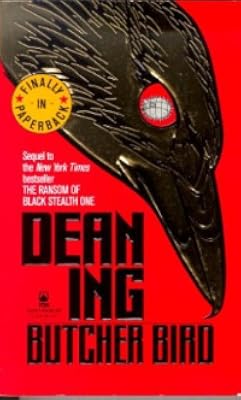
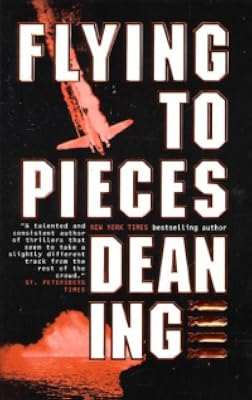
As Spider Robinson once noted in a review of a Ing work, he’s something of a moral writer. And there’s no doubt about the main moral of this story. It’s right there on the front page quote in the original Ace paperback:
“Governments across the globe ducked for cover. Long-drilled and partly prepared, millions of RUS urbanites sealed themselves into subway tunnels, then slid blast-and-firestorm-proof hatches into place to ride out the blast-furnace interval. Most Americans were asleep, and in any case had only the sketchiest notion of adequate shelter. A few city dwellers – the smaller the city, the better their chances – sped beyond their suburbs before freeway arterials became clots of blood and machinery.
“The American show more public had by turns ignored and ridiculed its Cassandras, who had warned against our increasing tendency to crowd into our cities. We had always found some solution to our problems, often at the last minute. Firmly anchored in most Americans was the tacit certainty that, even to the problem of nuclear war against population centers, there must be a uniquely American solution; we would find it.
“The solution was sudden death. A hundred million Americans found it.”
But this isn’t a Third World War fought with nukes. It’s the Fourth World War fought with nukes.
This is a geopolitical sequel of sorts to a popular book of the late 1970s: Sir John Hackett’s The Third World War: August 1985 which pitted NATO against the USSR and memorably culminated in a the nuking of Birmingham, UK and Minsk, USSR in a chapter which I. F. Clarke’s Voices Prophesying War considered the ultimate point in the evolution of the future war story. It’s not necessary to read Hackett’s book before Ing’s.
But, in August 1996, it’s the Sino-Ind alliance versus the Allies which include Russia and the United States.
Our hero is Ted Quantrill, fifteen years old when the novel starts. If the name Quantrill sounds familiar, it was the surname of infamous Confederate guerilla leader William Quantrill who led a massacre of civilians in Lawrence, Kansas during the American Civil War. It’s an entirely appropriate name given that Ted will become a killer in this series, including a killer of innocents. (Ing seems to like surnames with associations. The eponymous protagonist of his last novel, It’s Up to Charlie Hardin shares a surname with gunfighter John Wesley Hardin.)
Quantrill is out on a scouting trip when war breaks out, but it isn’t just the war that molds the man he’ll become. His education on the way the world works starts out with a dispute among the Boy Scouts which Ing explicitly presents as sort of a smaller version of the global conflict about to let loose. Intervening to help a friend being bullied by older scouts, Ted learns those in charge aren’t always interested in learning the truth, that the weak invite bullying, and gratitude isn’t to be expected.
We also, in a fight Ted has with those bullies, learn that he is what we might term a sociopath today though Ing doesn’t use the term. He’s calm in combat, strong, able to analyze tactical options quickly, and has what will later be called “gunsel” reflexes or, as the horrified scout leader notes, “all wire and ice-water”.
But his killing doesn’t start until later after he meets a woman fleeing from the paraanthrax already loose on the Eastern Seaboard. He helps her evade checkpoints and ambushes on the road as they flee from near Raleigh, North Carolina to the Oak Ridge National Laboratory where she works and lives part time. It’s with her he’ll have his first sexual experience. And, to avenge her death at the hands of the survivalists that have taken over the facility, he first kills.
The novel follows his journey from Tennessee to Texas and his joining the army of the new “Streamlined America”, the new name of a country that has lost everything east of the Mississippi to bioweapon plagues, some of its northern tier states to a Canadian protectorate, and some of its southern lands to Alta Mexico. His talents are recognized as too valuable to waste as cannon fodder in an invasion of China. He’s recruited into an elite intelligence unit that is, in effect, a hit squad operating under the cover of the government’s Search and Rescue organization. In the words of its head, it will “need to search out treason and rescue the system”.
Streamlined America is, in effect, a Mormon theocracy since Mormons, given their teachings on self-reliance and building communities, survived the war best. Some of Quantrill’s targets are dissident Mormons.
And lest any of the agents of the T (as in “terminate”) section of Search and Rescue get any qualms or ideas about defecting, there’s the “critic”, an explosive mastoid implant in all its agents that overhears all their conversations, provides real time advice, monitors their vital signs, and can be detonated remotely.
This being Ing, the plotting of the trilogy is strange, but it’s fairly standard in this book.
Quantrill intersects with several other characters who will play parts in the following books. Nine-year-old Sandy and her strange protector -- a huge, fiendishly clever Russian boar named Baal tended by her father who worked at an agricultural research station before dying from radiation -- have their parts to play. Like Quantrill, Banton Mills is a sociopath though with no great physical gifts. A US Navy officer, he’s not above betraying his country for personal gain no matter how many people die. There’s Eve Simpson, a very attractive teenager and nymphomaniac who, like Mills, happens to be an expert in media manipulation. And, of course, there are the other agents, leaders, and trainers of T-Section.
But Ing doesn’t just focus on the personal stories. There are several wide-screen chapters about the war around the world with individual set pieces including an old P-43 of the Confederate Air Force tangling with a modern Indian fighter above the skies of San Marcos, Texas.
It’s interesting to see, from the perspective of 1981, what geopolitical and technological developments thought plausible by Ing, a high tech enthusiast and engineer, in 1996
I’ve read most of Ing’s novels, and this is my favorite despite its dated aspect. I’ve read it at least twice, maybe three times, and I rarely re-read novels.
The Fourth World War is mostly over by 1997, and Ted Quantrill has begun his career as a government assassin. It will continue in the next book, Single Combat. show less
“Governments across the globe ducked for cover. Long-drilled and partly prepared, millions of RUS urbanites sealed themselves into subway tunnels, then slid blast-and-firestorm-proof hatches into place to ride out the blast-furnace interval. Most Americans were asleep, and in any case had only the sketchiest notion of adequate shelter. A few city dwellers – the smaller the city, the better their chances – sped beyond their suburbs before freeway arterials became clots of blood and machinery.
“The American show more public had by turns ignored and ridiculed its Cassandras, who had warned against our increasing tendency to crowd into our cities. We had always found some solution to our problems, often at the last minute. Firmly anchored in most Americans was the tacit certainty that, even to the problem of nuclear war against population centers, there must be a uniquely American solution; we would find it.
“The solution was sudden death. A hundred million Americans found it.”
But this isn’t a Third World War fought with nukes. It’s the Fourth World War fought with nukes.
This is a geopolitical sequel of sorts to a popular book of the late 1970s: Sir John Hackett’s The Third World War: August 1985 which pitted NATO against the USSR and memorably culminated in a the nuking of Birmingham, UK and Minsk, USSR in a chapter which I. F. Clarke’s Voices Prophesying War considered the ultimate point in the evolution of the future war story. It’s not necessary to read Hackett’s book before Ing’s.
But, in August 1996, it’s the Sino-Ind alliance versus the Allies which include Russia and the United States.
Our hero is Ted Quantrill, fifteen years old when the novel starts. If the name Quantrill sounds familiar, it was the surname of infamous Confederate guerilla leader William Quantrill who led a massacre of civilians in Lawrence, Kansas during the American Civil War. It’s an entirely appropriate name given that Ted will become a killer in this series, including a killer of innocents. (Ing seems to like surnames with associations. The eponymous protagonist of his last novel, It’s Up to Charlie Hardin shares a surname with gunfighter John Wesley Hardin.)
Quantrill is out on a scouting trip when war breaks out, but it isn’t just the war that molds the man he’ll become. His education on the way the world works starts out with a dispute among the Boy Scouts which Ing explicitly presents as sort of a smaller version of the global conflict about to let loose. Intervening to help a friend being bullied by older scouts, Ted learns those in charge aren’t always interested in learning the truth, that the weak invite bullying, and gratitude isn’t to be expected.
We also, in a fight Ted has with those bullies, learn that he is what we might term a sociopath today though Ing doesn’t use the term. He’s calm in combat, strong, able to analyze tactical options quickly, and has what will later be called “gunsel” reflexes or, as the horrified scout leader notes, “all wire and ice-water”.
But his killing doesn’t start until later after he meets a woman fleeing from the paraanthrax already loose on the Eastern Seaboard. He helps her evade checkpoints and ambushes on the road as they flee from near Raleigh, North Carolina to the Oak Ridge National Laboratory where she works and lives part time. It’s with her he’ll have his first sexual experience. And, to avenge her death at the hands of the survivalists that have taken over the facility, he first kills.
The novel follows his journey from Tennessee to Texas and his joining the army of the new “Streamlined America”, the new name of a country that has lost everything east of the Mississippi to bioweapon plagues, some of its northern tier states to a Canadian protectorate, and some of its southern lands to Alta Mexico. His talents are recognized as too valuable to waste as cannon fodder in an invasion of China. He’s recruited into an elite intelligence unit that is, in effect, a hit squad operating under the cover of the government’s Search and Rescue organization. In the words of its head, it will “need to search out treason and rescue the system”.
Streamlined America is, in effect, a Mormon theocracy since Mormons, given their teachings on self-reliance and building communities, survived the war best. Some of Quantrill’s targets are dissident Mormons.
And lest any of the agents of the T (as in “terminate”) section of Search and Rescue get any qualms or ideas about defecting, there’s the “critic”, an explosive mastoid implant in all its agents that overhears all their conversations, provides real time advice, monitors their vital signs, and can be detonated remotely.
This being Ing, the plotting of the trilogy is strange, but it’s fairly standard in this book.
Quantrill intersects with several other characters who will play parts in the following books. Nine-year-old Sandy and her strange protector -- a huge, fiendishly clever Russian boar named Baal tended by her father who worked at an agricultural research station before dying from radiation -- have their parts to play. Like Quantrill, Banton Mills is a sociopath though with no great physical gifts. A US Navy officer, he’s not above betraying his country for personal gain no matter how many people die. There’s Eve Simpson, a very attractive teenager and nymphomaniac who, like Mills, happens to be an expert in media manipulation. And, of course, there are the other agents, leaders, and trainers of T-Section.
But Ing doesn’t just focus on the personal stories. There are several wide-screen chapters about the war around the world with individual set pieces including an old P-43 of the Confederate Air Force tangling with a modern Indian fighter above the skies of San Marcos, Texas.
It’s interesting to see, from the perspective of 1981, what geopolitical and technological developments thought plausible by Ing, a high tech enthusiast and engineer, in 1996
I’ve read most of Ing’s novels, and this is my favorite despite its dated aspect. I’ve read it at least twice, maybe three times, and I rarely re-read novels.
The Fourth World War is mostly over by 1997, and Ted Quantrill has begun his career as a government assassin. It will continue in the next book, Single Combat. show less
Ratings
Members
- Recently Added By
Author Information

35+ Works 2,407 Members
Some Editions
Series

Classifications
Statistics
- Members
- 209
- Popularity
- 155,535
- Reviews
- 1
- Rating
- (3.67)
- Languages
- English
- Media
- Paper, Ebook
- ISBNs
- 4
- ASINs
- 3