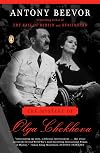
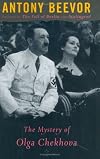
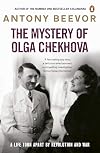
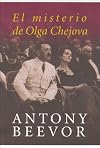
The Mystery of Olga Chekhova
by Antony Beevor
On This Page
Description
"This is the extraordinary tale of how one family survived the Russian Revolution, the civil war, the rise of Hitler, the Stalinist Terror and the Nazi invasion of the Soviet Union." "There have been many tantalizing rumours about Olga Chekhova, the niece of Anton Chekhov. She left Russia for Germany and became a film star honoured by the Nazis yet secretly worked for Soviet intelligence. Some of her closest relatives joined her in Berlin; the rest remained in Moscow." "Young and beautiful show more yet with nothing of value but a smuggled diamond ring, Olga Chekhova left Moscow in 1920 to escape starvation and degradation. In Berlin, by making the most of her Chekhov name, she obtained a part in a silent movie. Success followed quickly and she eventually became Hitler's favourite film star." "Olga's brother, Lev Knipper, was a composer who had fought with the White Army during the civil war. When he returned to Russia in 1921 he was forced to work for Soviet intelligence. His controllers sent him abroad to spy on Russian emigres and, in Germany, Lev recruited his sister as a 'sleeper'. Later, at the height of the war, plans were made for the two of them to launch a suicidal attack right at the heart of the Nazi regime." "In putting together this dramatic story, Antony Beevor shows how people lived under the terrible pressures of a totalitarian age. It reveals a confusion of courage, idealism, fear, self-sacrifice, opportunism and betrayal. The astonishing part of the epic tale is that both Olga and Lev survived the most murderous era know in history. What they had to do to stay alive may have left deep but hidden scars."--BOOK JACKET. show lessTags
Recommendations




Member Reviews
I very much enjoyed reading this book during the several weeks before, and after my holiday. The title and cover of the book are somewhat misleading, suggesting a kind of high profile espionage book. While some of that is featured in the book, and the connections between Olga Chekhova and various Nazi leaders plays an important role, the book offers a much more interesting glimpse into the lives of a family of artists and their unique and protected position from the years before the Russian revolution through the Second World War, until after the death of Stalin.
Protected by its artistic prominence and potential usefulness at the hands of the secret service, members of the family of Chekhov, survive the Revolution, the War and the show more Terror, while the giant ogres of Hitler, Stalin and Beria are hovering in the background. The book presents detailed biographies of the actress Olga Knipper, one of the original members of the Moscow Art Theatre, who married Anton Chekhov, her brother, the composer Lev Knipper, and most prominently her niece, Olga Chekhova who went on to a life-long career as a film actress in Germany, well into the 1970s.
The book threw a new light on the art scene in Russia, especially the theatre and music between 1915 and 1950, making me yearn for my copy of Chekhov plays (which I could never retrieve), and instead making me revel in memories of all the famed Chekhov plays I have seen performed.
The sinister story of the war, life in Nazi Germany as well as Communist Russia, and the machinations of the leaders of that time, all courting the arts, gives the book a magic twinkle. Very readable, and interesting. show less
Protected by its artistic prominence and potential usefulness at the hands of the secret service, members of the family of Chekhov, survive the Revolution, the War and the show more Terror, while the giant ogres of Hitler, Stalin and Beria are hovering in the background. The book presents detailed biographies of the actress Olga Knipper, one of the original members of the Moscow Art Theatre, who married Anton Chekhov, her brother, the composer Lev Knipper, and most prominently her niece, Olga Chekhova who went on to a life-long career as a film actress in Germany, well into the 1970s.
The book threw a new light on the art scene in Russia, especially the theatre and music between 1915 and 1950, making me yearn for my copy of Chekhov plays (which I could never retrieve), and instead making me revel in memories of all the famed Chekhov plays I have seen performed.
The sinister story of the war, life in Nazi Germany as well as Communist Russia, and the machinations of the leaders of that time, all courting the arts, gives the book a magic twinkle. Very readable, and interesting. show less
I didn't think twice when I encountered this book at a book store - anything relating to the great Russian writer should be worthy of reading. And it was. Even though Anton Chekhov is hardly mentioned - but the extended family, with Olga Chekhova in the center (she was his wife's niece and married for a short while to his nephew actor Mikhail Chekhov) - is given a thorough description starting in the early 1900s.
At first I was taken aback by sort of distant objectivity and what seemed like lack of passion on the writer's part, but then, as I continued reading, I felt that it was the right approach. His research was meticulous. If, for the lack of historical record, there was something unclear, Antony Beevor didn't assume the facts, and show more even if he did, he admitted that it was an assumption. Olga Chekhova, a known actress, does remain a mystery - as far as her cooperation, while in Germany, with the Soviet government, and probable spying. But after reading this book, I am inclined to think that the idea was overblown: there might have been an intention to use her in that way, seeing how she appeared close to Hitler and Goebbels, but it never came to pass.
I discovered quite a few interesting historical moments in the period described which were news to me. And I owe a huge word of gratitude to this writer - for not butchering the spelling of Russian names, patronymics, and surnames (even up to the correct gender endings in the last names), of Russian street names and phrases. In so many books it's not the case, unfortunately. Mr. Beevor must have had a great Russian editor. show less
At first I was taken aback by sort of distant objectivity and what seemed like lack of passion on the writer's part, but then, as I continued reading, I felt that it was the right approach. His research was meticulous. If, for the lack of historical record, there was something unclear, Antony Beevor didn't assume the facts, and show more even if he did, he admitted that it was an assumption. Olga Chekhova, a known actress, does remain a mystery - as far as her cooperation, while in Germany, with the Soviet government, and probable spying. But after reading this book, I am inclined to think that the idea was overblown: there might have been an intention to use her in that way, seeing how she appeared close to Hitler and Goebbels, but it never came to pass.
I discovered quite a few interesting historical moments in the period described which were news to me. And I owe a huge word of gratitude to this writer - for not butchering the spelling of Russian names, patronymics, and surnames (even up to the correct gender endings in the last names), of Russian street names and phrases. In so many books it's not the case, unfortunately. Mr. Beevor must have had a great Russian editor. show less
This is an account of the colourful life of the niece of the famous author and playwright and his theatre actress wife Olga Knipper-Chekhova . A minor theatre and early film actress before the Russian revolution, she fled to Germany in 1920 at the age of 23. Her career took off there and she became a star of early German cinema in the 1920s and 1930s and was to a degree (though to what degree is open to debate) feted by Hitler and Goebbels. At the same time, though, she was a sleeper agent for the Soviet OGPU/NKVD, recruited through her brother Lev, an ex-White Guardist turned loyal Communist, though she herself was neither a Communist nor a Nazi. During the war she made patriotic films for her adopted homeland, but after the Soviet show more capture of Berlin she was treated with kid gloves by the occupying forces. Her postwar career in West Germany was rather quieter though she continued to play in films and started a cosmetics company, believed to have been financed by the Soviets. A controversial character, she was often subject to salacious rumours and gossip, but did not help herself by embroidering her past in her own memoirs, in particular claiming to have been a member of the pre-Revolution Moscow Art Theatre and to have personally trained by Stanislavsky. A fascinating life. show less
The Mystery of Olga Chekhova is an interesting book, although it is less about Chekhova herself (whose life remains shrouded in some mystery), than it is of the times, i.e. pre- and post-Russian revolution, the convoluted and murderous period of the Russian civil war following the revolution, the diaspora of white Russians to Europe, the stifling of any initiative or free-thinking under the Soviets, and the confusing and conflicting fluctuations in relations between the Soviet Union and Nazi Germany that culminated in war.
Checkova, a niece by marriage of Anton Checkov, grew up in a theatrical family closely tied to the fortunes of Moscow Art Theatre; her first husband, Misha, was a famous lead actor in the group. Checkova left for show more Germany after the revolution and became the leading actor in that country in the years leading up to, and even through, the war. All told, between 1917 and 1974, she appeared in 144 films, which has to be impressive by just about anyone's measure. There is a picture of her sitting beside Hitler at a reception, and she was often invited to evenings by Goebbels and others all of which led to the impression that she had strong connections in the Nazi hierarchy. At the same time, it appears, she was a "sleeper" agent for the NKVD; sleeper in the sense that she was not actively engaged in espionage, but was seen as someone who might be useful some day because of her connections. It is clear that her brother, Lev, was an active NKVD agent, and it is probably thanks to him, that Checkova enjoyed very benign treatment after the war, at the hands of the Soviets, despite having lived for so many years in Germany. But, by all accounts, her influence with the Nazi elite was more a product of wishful thinking by others, rather than a reflection of reality. It is, however, interesting that Beevor mentions a couple of times that a number of files related to Checkova remain firmly sealed and are unlikely to be opened. One wonders what they could hold after all these years that could make any substantial difference today.
Checkova remains something of an enigma, perhaps best summed up by Beevor in this way:
"This again begs the question of whether she had been an ‘adventuress'...or a dedicated agent of the Soviet Union. As is so often the case, neither alternative tells the whole truth. Olga Checkhova had accepted the invitations to Nazi receptions partly to safeguard her career and partly out of curiosity. She was neither a Nazi nor a Communist....her politics belonged to the pre-Nazi era. Like her mother, she despised Hitler and his entourage, but she knew that she had to work with them. She genuinely loathed their anti-Semitism...The simple answer is that Olga Checkova, ever since the collapse of her marriage to Misha Checkov [nephew of Anton], had been a determined survivor, prepared to make whatever compromises were necessary. She had a number of failings, particularly her relationship with the truth, yet she remained a brave and resourceful woman whose main priority was to protect her family and close friends."
Interesting to note that the Knipper family that Anton Checkov married into, had as a family motto, per adrua ad astra, which translates as "through adversity to the stars". This is also the motto of the Royal Canadian Air Force!
(Mar/06) show less
Checkova, a niece by marriage of Anton Checkov, grew up in a theatrical family closely tied to the fortunes of Moscow Art Theatre; her first husband, Misha, was a famous lead actor in the group. Checkova left for show more Germany after the revolution and became the leading actor in that country in the years leading up to, and even through, the war. All told, between 1917 and 1974, she appeared in 144 films, which has to be impressive by just about anyone's measure. There is a picture of her sitting beside Hitler at a reception, and she was often invited to evenings by Goebbels and others all of which led to the impression that she had strong connections in the Nazi hierarchy. At the same time, it appears, she was a "sleeper" agent for the NKVD; sleeper in the sense that she was not actively engaged in espionage, but was seen as someone who might be useful some day because of her connections. It is clear that her brother, Lev, was an active NKVD agent, and it is probably thanks to him, that Checkova enjoyed very benign treatment after the war, at the hands of the Soviets, despite having lived for so many years in Germany. But, by all accounts, her influence with the Nazi elite was more a product of wishful thinking by others, rather than a reflection of reality. It is, however, interesting that Beevor mentions a couple of times that a number of files related to Checkova remain firmly sealed and are unlikely to be opened. One wonders what they could hold after all these years that could make any substantial difference today.
Checkova remains something of an enigma, perhaps best summed up by Beevor in this way:
"This again begs the question of whether she had been an ‘adventuress'...or a dedicated agent of the Soviet Union. As is so often the case, neither alternative tells the whole truth. Olga Checkhova had accepted the invitations to Nazi receptions partly to safeguard her career and partly out of curiosity. She was neither a Nazi nor a Communist....her politics belonged to the pre-Nazi era. Like her mother, she despised Hitler and his entourage, but she knew that she had to work with them. She genuinely loathed their anti-Semitism...The simple answer is that Olga Checkova, ever since the collapse of her marriage to Misha Checkov [nephew of Anton], had been a determined survivor, prepared to make whatever compromises were necessary. She had a number of failings, particularly her relationship with the truth, yet she remained a brave and resourceful woman whose main priority was to protect her family and close friends."
Interesting to note that the Knipper family that Anton Checkov married into, had as a family motto, per adrua ad astra, which translates as "through adversity to the stars". This is also the motto of the Royal Canadian Air Force!
(Mar/06) show less
La vida de la actriz Olga Chejova, sobrina del gran dramaturgo ruso Anton Chejov, es tan intrigante y apasionada como la que pudiera inventarse el novelista más imaginativo para un arquetipo de ficción. Nacida en la Rusia de los zares, Olga Chejova consiguió sobrevivir al vendaval de la Revolución rusa y a las penalidades de la guerra civil para escapar a Berlín en 1920 huyendo de la miseria y la degradación. Allí empezó a trabajar en el cine mudo de los Lang, los Murnau o los Lubitsch hasta convertirse en la estrella favorita de Hitler y de la corte del Tercer Reich. Pero tras su título de "Actriz del Estado", concedido por el mismísimo Führer, Olga Chejova escondía su condición de espía en la sombra de los servicios de show more inteligencia soviéticos. A caballo siempre de dos mundos irreconciliables, pero igualmente feroces, la saga de Olga Chejova, de su hermano Liev y de toda su familia, grandes actores del Teatro del Arte de Moscú que vivieron el terror estalinista y la invasión nazi de la Unión Soviética, nos muestra, quizá como ninguna otra, todo lo que es capaz de hacer el ser humano cuando se enfrenta a su propia supervivencia. show less
Jul 18, 2022Spanish
La vida de la actriz Olga Chejova, sobrina del gran dramaturgo ruso Antón Chéjov, es tan intrigante y apasionada como la que pudiera crear el novelista más imaginativo para un arquetipo de ficción. Nacida en la Rusia de los zares, Olga Chejova consiguió sobrevivir al vendaval de la Revolución rusa y a las penalidades de la guerra civil para escapar a Berlín en 1920 huyendo de la miseria y la degradación. Allí empezó a trabajar en el cine mudo de los Lang, los Murnau o los Lubitsch hasta convertirse en la estrella favorita de Hitler y de la corte del Tercer Reich. Pero Olga Chejova era espía en la sombra de los servicios soviéticos de inteligencia.. Antony Beevor , ha descubierto la extraordinaria historia de una gran show more desconocida que desvela en este libro con la pericia de un Nabokov y el aliento épico de un Pasternak. show less
Nov 4, 2010Spanish
Members
- Recently Added By
Author Information

British historian Antony Beevor was born on December 14, 1946. He was educated at Winchester College and Sandhurst and studied under the well-known World War Two historian, John Keegan. Beevor was an officer with the 11th Hussars for five years before becoming a writer. His works have received awards including the Runciman Prize, the Samuel show more Johnson Prize, the Wolfson Prize for History, and the Hawthornden Prize for Literature. The French government made him a Chevalier de l'Ordre des Arts et des Lettres in 1997, and in 2008 the president of Estonia awarded him the Order of the Cross of Terra Mariana. In 1999 Beevor was elected a Fellow of the Royal Society of Literature. He received the 2014 Pritzker Military Museum and Library Literature Award for Lifetime Achievement in Military Writing. In 2015 he made The New Zealand Best Seller List with his title Ardennes 1944: Hitler's Last Gamble. (Bowker Author Biography) show less
All Editions
Some Editions
Common Knowledge
- Canonical title*
- Le mystère Olga Tchekhova
- Original title
- The mystery of Olga Chekhova
- People/Characters
- Olga Chekhova; Adolf Hitler; Anton Chekhov
- Important places
- Deutschland; Soviet Union
- Important events
- World War II (1939 | 1945); Russian Revolution
- Dedication
- For Artemis
- First words
- During the night of 8 May 1945, lights stayed on all over Moscow.
- Last words
- (Click to show. Warning: May contain spoilers.)Olga Chekhova was part of that ancient fascination between Russia and Germany, a dangerous borderland of shifting frontiers and loyalties.
- Original language
- English
- Canonical DDC/MDS
- 792.028092
- Canonical LCC
- PN2728.T8
*Some information comes from Common Knowledge in other languages. Click "Edit" for more information.
Classifications
- Genres
- History, Nonfiction, Biography & Memoir, General Nonfiction
- DDC/MDS
- 792.028092 — Arts & recreation Recreation, sports, and performing arts Stage presentations modified standard subdivisions Techniques, procedures, apparatus, equipment, materials, miscellany Acting and Performance modified standard subdivisions History, geographic treatment, biography Biography
- LCC
- PN2728 .T8 — Language and Literature Literature (General) Literature (General) Drama Dramatic representation. The theater Special regions or countries
- BISAC
Statistics
- Members
- 382
- Popularity
- 81,730
- Reviews
- 7
- Rating
- (3.38)
- Languages
- 12 — Dutch, English, Estonian, Finnish, French, German, Hebrew, Norwegian (Bokmål), Portuguese (Portugal), Russian, Spanish, Swedish
- Media
- Paper, Audiobook, Ebook
- ISBNs
- 25
- ASINs
- 6