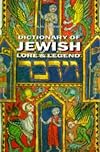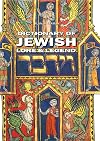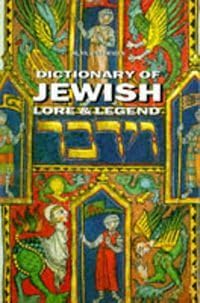
Dictionary of Jewish Lore & Legend
by Alan Unterman
On This Page
Description
The Dictionary of Jewish Lore and Legend provides a clear and systematic guide to a rich heritage of legend, folklore and tradition that is crucial to understanding Judaism. It describes the main characters and the tales that have grown up around them; Jewish methods of Biblical interpretation; the framework of Jewish law, literature and poetry; the festivals of the Jewish Year; the different languages and sub-groups within the Jewish community; and the many countries in which Jews have show more lived, as well as the importance of the Holy Land. A mystical world is revealed -- one populated by angels and demons, sages and Kabbalists. The result is an indispensable companion for anyone seeking to understand the Jewish world and it's intriguing cultural history. show lessTags
Recommendations
















Member Reviews
I think someone wanted this book to be a lot smaller.
The first hint, at least in my copy, is the incredibly small type -- about seven point. Combine that with rather bright paper and it is an instant recipe for eyestrain. Most people, I suppose, haven't tried to read it continuously, but I find that the most I can read at one go is about a page and a half.
But if you're only supposed to read individual articles, not the whole book, shouldn't there be more documentation?
There are three problems with the contents. One will apply only to Gentile readers; it assumes far too much knowledge of the workings of Judaism (admit it, non-Jews: Do you know what an AMIDAH is? A SIYYUM?). Of course, the book might be intended only for Jews -- but it show more seems to me that its educational value would be much better if it were opened up to Gentiles.
The second problem, which really grated on me, was the unstated but pretty obvious belief that only the Orthodox are real Jews -- Conservative and Reform views are not merely wrong, they don't even bear consideration.
But it's the third problem that really restricts the value of this work, and that's the refusal to say what the source of any information comes from. Very (very, very, very) broadly speaking, Jewish culture consists of the Torah or Written Law (the Hebrew Bible or "Old Testament"), the Oral Law, commentaries by the Rabbis on the Written and Oral Laws, and pure folklore. These have, of course, varying degrees of value -- the Written Torah is at the very center, although by the time the Rabbis got done with it, you might not recognize it. The Talmud is next in importance. Recent rabbinic commentary is helpful but has no inherent doctrinal significance. And folklore is interesting and fun and has no authority whatsoever.
But Unterman never tells us which is which. A random example: He says that, when Israel went into Egypt, Judah was sent before his brothers so that he could set up academies to study Torah. One part of this is actually from the Written Torah: Genesis 46:28 says that Judah did go ahead of the rest of the family. But the rest... well, the Torah hadn't been given yet, since Moses wasn't even born! And there were only seventy members of the Israelite families who went into Egypt. How many academies did they need, and exactly who would be the teachers? The claim is patently ridiculous. So is it Talmud, speculation, folklore? No way to know.
This comes up constantly. The book never says what authority any of its pronouncements has. As a result, any statement it makes must be verified elsewhere. The material in this book is fascinating, extensive -- and almost useless. Depressing, given that a slight leavening of additional information would have made it so helpful that I might even have forgiven it for twisting my eyes in knots. show less
The first hint, at least in my copy, is the incredibly small type -- about seven point. Combine that with rather bright paper and it is an instant recipe for eyestrain. Most people, I suppose, haven't tried to read it continuously, but I find that the most I can read at one go is about a page and a half.
But if you're only supposed to read individual articles, not the whole book, shouldn't there be more documentation?
There are three problems with the contents. One will apply only to Gentile readers; it assumes far too much knowledge of the workings of Judaism (admit it, non-Jews: Do you know what an AMIDAH is? A SIYYUM?). Of course, the book might be intended only for Jews -- but it show more seems to me that its educational value would be much better if it were opened up to Gentiles.
The second problem, which really grated on me, was the unstated but pretty obvious belief that only the Orthodox are real Jews -- Conservative and Reform views are not merely wrong, they don't even bear consideration.
But it's the third problem that really restricts the value of this work, and that's the refusal to say what the source of any information comes from. Very (very, very, very) broadly speaking, Jewish culture consists of the Torah or Written Law (the Hebrew Bible or "Old Testament"), the Oral Law, commentaries by the Rabbis on the Written and Oral Laws, and pure folklore. These have, of course, varying degrees of value -- the Written Torah is at the very center, although by the time the Rabbis got done with it, you might not recognize it. The Talmud is next in importance. Recent rabbinic commentary is helpful but has no inherent doctrinal significance. And folklore is interesting and fun and has no authority whatsoever.
But Unterman never tells us which is which. A random example: He says that, when Israel went into Egypt, Judah was sent before his brothers so that he could set up academies to study Torah. One part of this is actually from the Written Torah: Genesis 46:28 says that Judah did go ahead of the rest of the family. But the rest... well, the Torah hadn't been given yet, since Moses wasn't even born! And there were only seventy members of the Israelite families who went into Egypt. How many academies did they need, and exactly who would be the teachers? The claim is patently ridiculous. So is it Talmud, speculation, folklore? No way to know.
This comes up constantly. The book never says what authority any of its pronouncements has. As a result, any statement it makes must be verified elsewhere. The material in this book is fascinating, extensive -- and almost useless. Depressing, given that a slight leavening of additional information would have made it so helpful that I might even have forgiven it for twisting my eyes in knots. show less
Ratings
Members
- Recently Added By
Author Information

9+ Works 351 Members
Common Knowledge
- Original publication date
- 1991
- Dedication
- For Doudi Wachsstock
to whom the legendary past
spoke in clear terms - First words
- Introduction
Since the period of the Enlightenment, when the ghetto alls began to crumble and Jews started to adopt Western culture, it has been customary to depict Jewish religion in terms of its more rational elem... (show all)ents.
Classifications
Statistics
- Members
- 158
- Popularity
- 207,177
- Reviews
- 1
- Rating
- (2.67)
- Languages
- English, Hungarian, Polish, Portuguese (Portugal)
- Media
- Paper, Ebook
- ISBNs
- 10
- ASINs
- 2