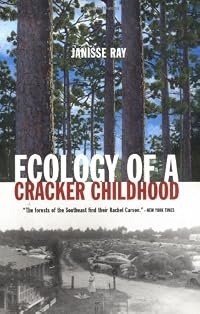
Ecology of a Cracker Childhood
by Janisse Ray
On This Page
Description
Janisse Ray grew up in a junkyard along U.S. Highway 1, hidden from Florida-bound vacationers by the hedge at the edge of the road and by hulks of old cars and stacks of blown-out tires. Ecology of a Cracker Childhood tells how a childhood spent in rural isolation and steeped in religious fundamentalism grew into a passion to save the almost vanished longleaf pine ecosystem that once covered the South. In language at once colloquial, elegiac, and informative, Ray redeems two Souths. show more "Suffused with the same history-haunted sense of loss that imprints so much of the South and its literature.". show lessTags
Recommendations







Member Reviews
Janisse Ray grew up in rural Georgia, surrounded by an overflowing junkyard. Surrounding the junkyard was a Long Leaf Pine forest, where she found solace in plant life, trees, insects, birds and wild animals. When she got older, the logging companies arrived, threatening her family’s land.
It’s hard to describe what this book meant to me. It’s about family, ecological activism, the history of one's place, and coming of age. It is both heartbreaking and joyous. Part memoir, part nature writing, it succeeds on both counts. It is personal, political. I loved it, deep deep down.
“I drink old-growth forest like water. This is the homeland that built us. Here I walk shoulder to shoulder with history - my history. I am in the presence of show more something ancient and venerable, perhaps of time itself, its unhurried passing marked by immensity and stolidity, each year purged by fire, cinched by a ring. Here mortality’s roving hands grapple with air. I can see my place as human in a natural order more grand, whole, and functioning than I’ve ever witnessed, and I am humbled, not frightened by it. Comforted. It is as if a round table springs up in the cathedral of pines and God graciously pulls out a chair for me, and I no longer have to worry about what happens to souls.” show less
It’s hard to describe what this book meant to me. It’s about family, ecological activism, the history of one's place, and coming of age. It is both heartbreaking and joyous. Part memoir, part nature writing, it succeeds on both counts. It is personal, political. I loved it, deep deep down.
“I drink old-growth forest like water. This is the homeland that built us. Here I walk shoulder to shoulder with history - my history. I am in the presence of show more something ancient and venerable, perhaps of time itself, its unhurried passing marked by immensity and stolidity, each year purged by fire, cinched by a ring. Here mortality’s roving hands grapple with air. I can see my place as human in a natural order more grand, whole, and functioning than I’ve ever witnessed, and I am humbled, not frightened by it. Comforted. It is as if a round table springs up in the cathedral of pines and God graciously pulls out a chair for me, and I no longer have to worry about what happens to souls.” show less
This book was intended for research for my 5th novel, but it was the best, most fun, and interesting "research" I've done in a while! I think I'd have read it anyway - even if it didn't deal with south Georgia where a good chunk of my next book is set simply because her story seemed very interesting. Ray's book reminded me a little bit of "Educated" (Westover), just a deep south version of it. But in addition, I found Ray's story more plausible. There were some areas of "Educated" that made me wonder about the truth of it.
Ray's father was something of a mechanical genius (reminded me of my own dad) and he ran a junkyard, and could find anything in it - even though it was this vast expanse of land filled with . . . junk. I thoroughly show more enjoyed how she wrote about all of her family, from her father, her mother, her grandmothers, her grandfather, her brothers, and so on. I loved reading the parts where she and her brothers would play in junkyard cars, how their imaginations were in overdrive. They played a lot like my brother and I did. The Rays didn't have TV, she couldn't wear pants, and she couldn't show skin above her elbows or above her knees. (fundamentalist upbringing)
I think what I loved about CRACKER most was Ray's conversational way of writing the chapters that were from her naturalist/environmentalist background. It was interesting to find out about pitcher plants, the savanna, salamanders, red-cockaded woodpeckers, and the myriad of other fascinating species that live there. I learned about fire keeping down hardwood growth that destroys this delicate environment. How many long leaf pines there used to be, and how many there are now. (not much) I learned how it's not right to simply plant trees in a row, crowding out the sunlight that's needed to sustain plants and animals alike, and many other ways we impact nature without a clue. It was truly eye-opening.
I'm glad she wrote this book, and I'm glad I read it. show less
Ray's father was something of a mechanical genius (reminded me of my own dad) and he ran a junkyard, and could find anything in it - even though it was this vast expanse of land filled with . . . junk. I thoroughly show more enjoyed how she wrote about all of her family, from her father, her mother, her grandmothers, her grandfather, her brothers, and so on. I loved reading the parts where she and her brothers would play in junkyard cars, how their imaginations were in overdrive. They played a lot like my brother and I did. The Rays didn't have TV, she couldn't wear pants, and she couldn't show skin above her elbows or above her knees. (fundamentalist upbringing)
I think what I loved about CRACKER most was Ray's conversational way of writing the chapters that were from her naturalist/environmentalist background. It was interesting to find out about pitcher plants, the savanna, salamanders, red-cockaded woodpeckers, and the myriad of other fascinating species that live there. I learned about fire keeping down hardwood growth that destroys this delicate environment. How many long leaf pines there used to be, and how many there are now. (not much) I learned how it's not right to simply plant trees in a row, crowding out the sunlight that's needed to sustain plants and animals alike, and many other ways we impact nature without a clue. It was truly eye-opening.
I'm glad she wrote this book, and I'm glad I read it. show less
One of the first lessons you probably heard from your mother was “Don’t judge a book by its cover”. And she probably wasn’t talking about books when she said it. She was probably talking about your neighbors, or the new kid, or anyone who might have seemed a little weird to you as a child. Don’t judge a person on superficial things like how they are dressed, or the color of their skin, or the way they talk.
I don’t think that message is getting out much these days. In fact, it seems like the opposite holds true. We judge books and people by their covers. We dress and act like we expect to be judged by our covers. Image has dominion over content. So if I said that I had just read a book by a woman who grew up in a junkyard show more in rural Georgia, who was raised in a fundamentalist Christian church so strict they didn’t allow Christmas, you might think you have heard you need to know.
You would be wrong. The book is called Ecology of a Cracker Childhood by Janisse Ray. And although I have just given you an accurate description of her story, (right out of the book jacket, in fact), it does nothing to convey what a moving and picturesque memoir this book really is. The word “cracker” stands for a southern, especially Georgian, poor white trash. The term probably comes from an early English word meaning “braggart”. But there is no bragging in Janisse Ray’s memoir. It is sad and thoughtful, passionately yet simply told.
Ray’s childhood was isolated by her family’s rural home and her father’s fundamentalist beliefs. Her only playmates were her older brothers and sister. Her only role models were her parents and an odd assortment of relatives. But living on the edge of town meant she also lived on the edge of wilderness. Her father’s junkyard was surrounded by an expanse of long leaf pine forest. Janisse played in the woods as often as she played among the mountains of wrecked cars. She grew to love the outdoors. When she finally left home for college, she majored in ecology. She has spent the greater part of her career campaigning to save the last few virgin stands of the long leaf pine- an entire ecosystem that is being decimated by our society’s insatiable desire for lumber.
It is the long leaf pine that you see all over Wilmington, left for its meager shade in housing developments after the hardwoods have been logged off. But these aren’t first or even second generation trees. To get an idea of the size and majesty of the pine forest as Janisse Ray remembers it, visit Hugh McRae park and look at the size of the trees there.
Ray knows that the pine woods seem monotonous to the untrained eye. But she points out the incredible diversity of the forest is there- you just need to “look real close”. She implies the same about her own family. She may have grown up a “redneck”, but her father was a mechanical and mathematical genius, although he never went to school. The people in her family all had high IQ’s, and would sit by the fire at night doing figures they way my mother would sit by the fire and knit. With the genius also came a history of mental depression. The children lived in fear of being “took sick”, like so many in their family. And yet, Janisse Ray repeats a letter her father wrote about his stay in the Georgia State Mental Institution, and it is the single most moving piece I have ever read on mental illness.
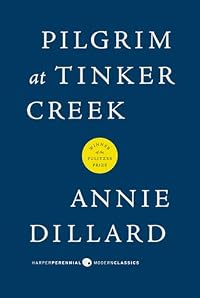
At every turn, this book offers the reader something unexpected, or heartbreaking, or funny, or uplifting. It will remind readers of the best of Annie Dillard. But I don’t think that even Annie Dillard could have found as much beauty in the piles of rusty cars as Janisse Ray has. We are incredibly lucky that she took the time to “look real close”. show less
I don’t think that message is getting out much these days. In fact, it seems like the opposite holds true. We judge books and people by their covers. We dress and act like we expect to be judged by our covers. Image has dominion over content. So if I said that I had just read a book by a woman who grew up in a junkyard show more in rural Georgia, who was raised in a fundamentalist Christian church so strict they didn’t allow Christmas, you might think you have heard you need to know.
You would be wrong. The book is called Ecology of a Cracker Childhood by Janisse Ray. And although I have just given you an accurate description of her story, (right out of the book jacket, in fact), it does nothing to convey what a moving and picturesque memoir this book really is. The word “cracker” stands for a southern, especially Georgian, poor white trash. The term probably comes from an early English word meaning “braggart”. But there is no bragging in Janisse Ray’s memoir. It is sad and thoughtful, passionately yet simply told.
Ray’s childhood was isolated by her family’s rural home and her father’s fundamentalist beliefs. Her only playmates were her older brothers and sister. Her only role models were her parents and an odd assortment of relatives. But living on the edge of town meant she also lived on the edge of wilderness. Her father’s junkyard was surrounded by an expanse of long leaf pine forest. Janisse played in the woods as often as she played among the mountains of wrecked cars. She grew to love the outdoors. When she finally left home for college, she majored in ecology. She has spent the greater part of her career campaigning to save the last few virgin stands of the long leaf pine- an entire ecosystem that is being decimated by our society’s insatiable desire for lumber.
It is the long leaf pine that you see all over Wilmington, left for its meager shade in housing developments after the hardwoods have been logged off. But these aren’t first or even second generation trees. To get an idea of the size and majesty of the pine forest as Janisse Ray remembers it, visit Hugh McRae park and look at the size of the trees there.
Ray knows that the pine woods seem monotonous to the untrained eye. But she points out the incredible diversity of the forest is there- you just need to “look real close”. She implies the same about her own family. She may have grown up a “redneck”, but her father was a mechanical and mathematical genius, although he never went to school. The people in her family all had high IQ’s, and would sit by the fire at night doing figures they way my mother would sit by the fire and knit. With the genius also came a history of mental depression. The children lived in fear of being “took sick”, like so many in their family. And yet, Janisse Ray repeats a letter her father wrote about his stay in the Georgia State Mental Institution, and it is the single most moving piece I have ever read on mental illness.
At every turn, this book offers the reader something unexpected, or heartbreaking, or funny, or uplifting. It will remind readers of the best of Annie Dillard. But I don’t think that even Annie Dillard could have found as much beauty in the piles of rusty cars as Janisse Ray has. We are incredibly lucky that she took the time to “look real close”. show less
Strong prose, good character studies, effective descriptions. The ecology chapters and autiobio chapters don't connect as well as I'd have liked them to. Strongest aspect is sense of place and writing about metal health. Weakened by a lack of awareness of racial issues--part of this is when it was written. Maybe race doesn't seem that important, but when you end with lines like "the South will rise again," I start seeing holes. I'd like to read more of her work.
Janisse Ray carefully intertwined two distinct themes in her autobiographical book, Ecology of a Cracker Childhood. First, there was the theme of her family - an interesting tapestry of men (mostly) and women who made up her genetic landscape. Second, there was the ecological theme - chapters about the deforestation of south Georgia. Ray loved, admired and respected her family and her forest, and this tenderness made her memoir charming and memorable.
Wrapped in the sweet cadence of her language, I especially enjoyed reading about Ray's family. That was a colorful bunch. Most of the men suffered from mental illness, which Ray depicted with dignity. But they were also resourceful - living off the land and inventing machines from scraps. I show more could hear their drawl in every page.
All in all, I enjoyed this short book about this beautiful region of our country, their Southern ways and Ray's determination to protect and preserve the land that she loves. show less
Wrapped in the sweet cadence of her language, I especially enjoyed reading about Ray's family. That was a colorful bunch. Most of the men suffered from mental illness, which Ray depicted with dignity. But they were also resourceful - living off the land and inventing machines from scraps. I show more could hear their drawl in every page.
All in all, I enjoyed this short book about this beautiful region of our country, their Southern ways and Ray's determination to protect and preserve the land that she loves. show less
In my mind, strong solid Southern writing is based upon a strong sense of place. There is no place like the South and Ray does a good job of capturing it. Some of here paragraphs are postcard perfect, and will have you swearing you smell pine trees as you read.
This work of non-fiction traces Ray's family history and child rearing in rural Georgia back in the 1960's. You'll find old ladies moon shining and poor people just as proud and noble as any war hero. Just as any storied southern place has.
Ray's nostalgic love of the land around her sparks some political tones in the book. And this is where I'm not too excited about the book.
I have to say while I agree almost 100% with Ray's love/concern for the environment, I do wish she had show more stuck to telling her southern fried stories and then wrote a follow up book concerning all of the ecological issues. These issues never squashed the story, but just seemed to drag it down a little.
All in all, a read I'm glad I picked up, though nothing super-stellar. show less
This work of non-fiction traces Ray's family history and child rearing in rural Georgia back in the 1960's. You'll find old ladies moon shining and poor people just as proud and noble as any war hero. Just as any storied southern place has.
Ray's nostalgic love of the land around her sparks some political tones in the book. And this is where I'm not too excited about the book.
I have to say while I agree almost 100% with Ray's love/concern for the environment, I do wish she had show more stuck to telling her southern fried stories and then wrote a follow up book concerning all of the ecological issues. These issues never squashed the story, but just seemed to drag it down a little.
All in all, a read I'm glad I picked up, though nothing super-stellar. show less
Some memoirs just so thoroughly take you to a time and place - The Road to Corrain, A Not-so-Still Life, Fierce Attachments - and this is one of them. An extraordinary book about a life and a landscape.
Members
- Recently Added By
Lists

Recommended Nature Writing
346 works; 180 members

Trees
22 works; 5 members
Author Information

14+ Works 923 Members
Janisse Ray left her hometown of Baxley, Georgia, to go to college and did not return for several years. She now lives on a farm in rural Georgia with her son. A naturalist and environmental activist, she has published her work in Wild Earth, Orion, Florida Naturalist, and Georgia Wildlife and is a nature commentator for Georgia Public Radio.
Awards and Honors
Series
Belongs to Publisher Series
Work Relationships
Common Knowledge
- Canonical title
- Ecology of a Cracker Childhood
- People/Characters
- Janisse Ray; Franklin Ray
- Important places
- USA; Georgia, USA; Baxley, Georgia, USA; Appling County, Georgia, USA
Classifications
- Genres
- Science & Nature, Nonfiction, Biography & Memoir, General Nonfiction
- DDC/MDS
- 975.8784 — History & geography History of North America Southeastern United States (South Atlantic states) Georgia Southeast Georgia Appling/Bacon/Toombs Counties Appling County (Georgia)
- LCC
- F294 .B39 .R39 — Local History of the United States, Canada and Latin America United States local history Georgia
- BISAC
Statistics
- Members
- 569
- Popularity
- 51,598
- Reviews
- 14
- Rating
- (3.94)
- Languages
- English
- Media
- Paper, Audiobook, Ebook
- ISBNs
- 7
- ASINs
- 6