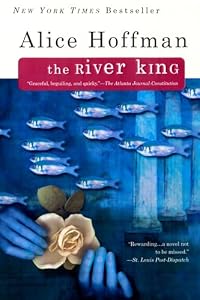
The River King
by Alice Hoffman
On This Page
Description
From the master storyteller, a suspenseful, lyrical account of one man's search for the truth behind an inexplicable death. For more than a century, the small town of Haddan, Massachusetts, has been divided, as if by a line drawn down the center of Main Street, separating those born and bred in the village from those who attend the prestigious Haddan School. But one October night the two worlds are thrust together due to an inexplicable death, and the town's divided history is revealed in show more all its complexity. The lives of everyone involved are unraveled: from Carlin Leander, the fifteen-year-old girl who is as loyal as she is proud, to Betsy Chase, a woman running from her own destiny; from August Pierce, a boy who unexpectedly finds courage in his darkest hour, to Abel Grey, the police officer who refuses to let unspeakable actions--both past and present--slide by without notice. show lessTags
Recommendations




Member Recommendations
Member Reviews
As soon as I started "The River King" I was smiling at having found something distinctive and wonderful.
I luxuriated in surrendering myself into the hands of a dryly witty, joyfully articulate and completely omniscient narrator who curated my journey through the lives of a small group of people at a long-established boarding school in a tiny Massachusetts town.
The form is close to that of a well-edited early twentieth-century novel but the sensibility is that of the early twenty-first century.
Even from the beginning, it was clear that. beneath the apparently benign narration, something darker lay in wait for these people. The setting seems to one of civilised tranquillity but the respectability is no deeper than a coat of paint. Scratch show more it and a culture of violent misogyny and corrupt privilege is revealed that compromises both the school and the town.
The writing style is new to me and I'm not sure what to call it. Atonal lyricism perhaps?
What I'm trying to describe is a duality that means the surface of the text is as fixed and calm as ice on a lake but beneath that layer moves a strong current of emotion that the ice somehow amplifies rather than hides.
I'm listening to the audiobook version. The narrator, Laural Merlington, is very skilled. She could make the text into many things but she manages her inflexions so that the authorial voice narrating the story is always calm, no matter how emotional the dialogue becomes. This doesn't dampen down the emotion. it creates a quiet in which it can be heard more clearly. I'm sure this is deliberate. I wonder if she picked it up from the frequent references in the book to listening well enough to hear what silence is telling you?
Anyway, it's like a really effective soundtrack, one that sustains the atmosphere of a film without bringing attention to itself.
Although it was written nineteen years ago, it seems to me that "The River King" understands the culture that has given America Trump as President and has turned the GOP into carrion crows, pecking at the corpse of the body politic.
The story takes place in a private co-ed school, attended mainly by the privileged. It deals with what happens when two people who are not privileged and who have no desire to join, encounter the unwritten but ruthlessly enforced rules of the prevailing hierarchy. It describes a culture of Patriarchy established by the schools wife-abusing and possibly murderous founder and preserved by traditions passed in secret from boy to boy. It shows the price paid by the victims, by those who collude with the perpetuators of the system and those who stand by and do nothing. It isn't a polemic but it is unflinching in showing the dynamics of corruption.
There is a part, early in the book, where the best looking, most privileged senior boy is brought to the reader's attention by the omniscient narrator.
The narration is chilling. What it describes lies at the heart of corruption. It's the infection that rots a society. Yet it's described in the accurate, unemotional, judgement-free tone a vivisectionist might use when dictating their observations on how the heart of the animal they have just sliced open still beats.
So the handsome and privileged boy is described as being aware of his privilege, of being grateful for it and of being greedy for more.
Grateful and greedy. That's a disturbing combination in the privileged. I think I'd prefer entitled and self-satisfied.
The boy revealed in this way will do anything and get others to do anything necessary to protect and expand his privilege.
The narrator then explains the group the boy leads. Through their dishonest response to an unfortunate circumstance that affected them all, these boys, who already valued conformity and loyalty, have learned that, while following rules may breed unity, breaking the rules together ensures it.
So they have institutionalised rule-breaking, built it into a hazing that ensures loyalty and fundamentally corrupts all who carry out the task required to earn acceptance into the group.
It seems to me that this captures the values and behaviours of the US Senators who have kept Trump in power while enriching themselves. Grateful and greedy for privilege and willing to sacrifice their own integrity/morality if it buys them membership of the Big Boys Club.
The story hangs from the death of two people, decades apart: the wife of the school's first headmaster and a present-day pupil. Both are deemed to have committed suicide. Both haunt the school, either literally or in the memories of the people who knew them but did not save them, depending on how you read the text.
Yet the story is not a whodunnit. The deaths aren't these to be solved or avenged. Their function seems to be to present the main characters in the book with choices about how they will react to deaths. What will they take responsibility for? What will they sacrifice? What will they bury and try to live with?
The core characters are a scholarship girl who knows the boy who dies; a teacher at the school whose photographs show her things that shouldn't be there and who is questioning the path she's chosen of a safe marriage and a quiet life; a third-generation policeman who lost someone he loved early in life, went wild for a while, is tolerated on the Force for the sake of father's and grandfather's memory and who cannot find it in himself to let go of things that feel wrong to him, and an older teacher approaching the end of her life, who lives with her regrets for the things she did not do.
The narrator displays these people to us candidly, sharing the thoughts, their doubts and their hopes. Yet the narrator is not the advocate of the characters. The narrator isn't trying to win the reader over to the side of a character of a set of characters. The narrator's sub-text seems to me to be: the world is as it is and it often isn't very nice. You may not be able to make a difference but the choices you make will change you even if they do not change the world. show less
I luxuriated in surrendering myself into the hands of a dryly witty, joyfully articulate and completely omniscient narrator who curated my journey through the lives of a small group of people at a long-established boarding school in a tiny Massachusetts town.
The form is close to that of a well-edited early twentieth-century novel but the sensibility is that of the early twenty-first century.
Even from the beginning, it was clear that. beneath the apparently benign narration, something darker lay in wait for these people. The setting seems to one of civilised tranquillity but the respectability is no deeper than a coat of paint. Scratch show more it and a culture of violent misogyny and corrupt privilege is revealed that compromises both the school and the town.
The writing style is new to me and I'm not sure what to call it. Atonal lyricism perhaps?
What I'm trying to describe is a duality that means the surface of the text is as fixed and calm as ice on a lake but beneath that layer moves a strong current of emotion that the ice somehow amplifies rather than hides.
I'm listening to the audiobook version. The narrator, Laural Merlington, is very skilled. She could make the text into many things but she manages her inflexions so that the authorial voice narrating the story is always calm, no matter how emotional the dialogue becomes. This doesn't dampen down the emotion. it creates a quiet in which it can be heard more clearly. I'm sure this is deliberate. I wonder if she picked it up from the frequent references in the book to listening well enough to hear what silence is telling you?
Anyway, it's like a really effective soundtrack, one that sustains the atmosphere of a film without bringing attention to itself.
Although it was written nineteen years ago, it seems to me that "The River King" understands the culture that has given America Trump as President and has turned the GOP into carrion crows, pecking at the corpse of the body politic.
The story takes place in a private co-ed school, attended mainly by the privileged. It deals with what happens when two people who are not privileged and who have no desire to join, encounter the unwritten but ruthlessly enforced rules of the prevailing hierarchy. It describes a culture of Patriarchy established by the schools wife-abusing and possibly murderous founder and preserved by traditions passed in secret from boy to boy. It shows the price paid by the victims, by those who collude with the perpetuators of the system and those who stand by and do nothing. It isn't a polemic but it is unflinching in showing the dynamics of corruption.
There is a part, early in the book, where the best looking, most privileged senior boy is brought to the reader's attention by the omniscient narrator.
The narration is chilling. What it describes lies at the heart of corruption. It's the infection that rots a society. Yet it's described in the accurate, unemotional, judgement-free tone a vivisectionist might use when dictating their observations on how the heart of the animal they have just sliced open still beats.
So the handsome and privileged boy is described as being aware of his privilege, of being grateful for it and of being greedy for more.
Grateful and greedy. That's a disturbing combination in the privileged. I think I'd prefer entitled and self-satisfied.
The boy revealed in this way will do anything and get others to do anything necessary to protect and expand his privilege.
The narrator then explains the group the boy leads. Through their dishonest response to an unfortunate circumstance that affected them all, these boys, who already valued conformity and loyalty, have learned that, while following rules may breed unity, breaking the rules together ensures it.
So they have institutionalised rule-breaking, built it into a hazing that ensures loyalty and fundamentally corrupts all who carry out the task required to earn acceptance into the group.
It seems to me that this captures the values and behaviours of the US Senators who have kept Trump in power while enriching themselves. Grateful and greedy for privilege and willing to sacrifice their own integrity/morality if it buys them membership of the Big Boys Club.
The story hangs from the death of two people, decades apart: the wife of the school's first headmaster and a present-day pupil. Both are deemed to have committed suicide. Both haunt the school, either literally or in the memories of the people who knew them but did not save them, depending on how you read the text.
Yet the story is not a whodunnit. The deaths aren't these to be solved or avenged. Their function seems to be to present the main characters in the book with choices about how they will react to deaths. What will they take responsibility for? What will they sacrifice? What will they bury and try to live with?
The core characters are a scholarship girl who knows the boy who dies; a teacher at the school whose photographs show her things that shouldn't be there and who is questioning the path she's chosen of a safe marriage and a quiet life; a third-generation policeman who lost someone he loved early in life, went wild for a while, is tolerated on the Force for the sake of father's and grandfather's memory and who cannot find it in himself to let go of things that feel wrong to him, and an older teacher approaching the end of her life, who lives with her regrets for the things she did not do.
The narrator displays these people to us candidly, sharing the thoughts, their doubts and their hopes. Yet the narrator is not the advocate of the characters. The narrator isn't trying to win the reader over to the side of a character of a set of characters. The narrator's sub-text seems to me to be: the world is as it is and it often isn't very nice. You may not be able to make a difference but the choices you make will change you even if they do not change the world. show less
I’m generally a fan of Alice Hoffman’s books, but this one took a dark turn that I’m not sure it can come back from… Set in the small town of Hadden, Hoffman weaves a tale suffused with conflict that is belied by its idyllic setting. A small private boarding school accompanies the river-bound town, providing a dichotomy of characters to interact as Hoffman’s drama unfolds. Set large are a quartet of protagonists, some from the school, some from the town, who must learn to tread carefully in the delicately maintained ecosystem of Hadden and the school. Of course, the whole conflict comes about because these players refuse to play by the rules (arbitrarily set as they are), and the real drama starts when August (Gus) Pierce is show more found dead in the river - becoming the titular River King. Hoffman writes the first half of the novel as if Gus’ death is going to be part of his ongoing rebellion against the school and is nothing more than a trick played out against his unwelcoming classmates, but as policeman Abel Grey continues to investigate August’s death (against the wishes of the constabulary and school) the town’s secrets begin to come out and everyone begins to unravel. Small towns and the insular worlds of boarding schools often have darker secrets than expected, and Hoffman plumbs the depths of these themes with her expectedly atmospheric writing and carefully drawn characters which walk as close to real life as a novel can get. As we near the final pages, August’s killers have not been brought to a real sort of justice and the remainder of our protagonists are quietly going their own ways away from Hadden and its petty drama, so we don’t get a real conclusion. And yet, this soft closing is maybe more realistic of real life; people have to move on and move out as some battles aren’t worth fighting, but for others swimming with the current of the river is the strongest path into the future. show less
I find that some of Hoffman's work can seem rushed, or a bit incomplete. I felt that way about this book. The story had beautiful imagery and prose, but the story seemed unresolved in the end. I wondered about the outcome of some of the characters.
Abe Grey knows that the body in the river was not the result of accidental drowning, but the police department wants him to keep his suspicions to himself... is this more realistic than the murder mystery genre that not only resolves the murder but sometimes gives a complete explanation in the last chapter? (i.e. "Hound of the Baskervilles" etc.)
This would be a great book for a book club so that members could examine these and other unresolved plot twists. Was it a "happy ending" after all?
Abe Grey knows that the body in the river was not the result of accidental drowning, but the police department wants him to keep his suspicions to himself... is this more realistic than the murder mystery genre that not only resolves the murder but sometimes gives a complete explanation in the last chapter? (i.e. "Hound of the Baskervilles" etc.)
This would be a great book for a book club so that members could examine these and other unresolved plot twists. Was it a "happy ending" after all?
This book is hard to categorize. It has elements of ghost story, psychological mystery, coming-of-age story, character study and murder investigation, but it isn't strictly any of those things. It's mostly an exploration of the consequences of keeping secrets and living with guilt. The small New England town of Haddan is divided East and West into the denizens of the Haddan boarding school--students, administration and staff-- at one end, and the townspeople, merchants and farmers who cannot afford to send their children there at the other. The town occasionally benefits from large contributions made by parents and alumni who want what happens at the school to STAY at the school, without interference from locals. Too much interest, even show more from law enforcement, even in suspicious deaths, is promptly discouraged by funding of a new park, or police station, or other impossible-to-refuse generosity. Still, incursions are made in both directions over the years, often with tragic long-term results. This was an engaging read, although many of the reveals that ought to have been bombshells failed to burst. I'm still thinking about it a couple days after finishing it, and that means it warrants an extra half-star. I'll read more of Alice Hoffman's work; I suspect she doesn't repeat herself. show less
Hoffman's prose is poetic, and she is clearly gifted in creating a sense of place. Her descriptions of the natural world are conveyed with a wealth of detail. Her characters as well are vivid and fully dimensional. But her narrative is somewhat Gothic--as is the boarding school and the small town in Massachusetts where the tale takes place; she portrays both quite beautifully. There is a fecundity to this novel, a saturation of emotion mixed with river water and fearsome storms. She matter of factly describes the triumphs and agonies of life, and in doing so diminishes the bravery of her characters and minimizes the climactic resolution. The ending just fades to black. Both the reader and her characters deserve more.
Alice Hoffman always writes special books—and she's done it again. She has placed a magical and tragic story into a small New England town. Hoffman writes like a dream, and sometimes that dreamlike quality lifts the reader through some very surreal passages that make her books stand out brilliantly against what seems many times like the drab backdrop of much of contemporary fiction.
Central to this book is the Haddan School, which is viewed by many of the townspeople with a resentful and envious eye. The school's troubled students are all from somewhere else and have very privileged lives when compared to the general blue-collar tone of the area. Abel Grey is a lifelong resident of the area, as well as a simple town cop who is trying show more to get to the bottom of the drowning death of one of the students. Where the rather odd boy and late student fits into (or didn't fit into) the social sphere of the school seems all-important to the investigation. Teenage themes of acceptance, love and tenderness, extreme school hazing, growth, and trust are all involved when Abel searches for the answers. But, then again, most of these things are central to our cop's life as well. If you were to sum up this special novel, it might fall into the "coming of age" mode. But the question upon reading it would be—who is it of all the characters, young and old, alive and dead, who most comes of age? Who grows the most? This finely written book has made me a Hoffman fan once again.
(5/01) show less
Central to this book is the Haddan School, which is viewed by many of the townspeople with a resentful and envious eye. The school's troubled students are all from somewhere else and have very privileged lives when compared to the general blue-collar tone of the area. Abel Grey is a lifelong resident of the area, as well as a simple town cop who is trying show more to get to the bottom of the drowning death of one of the students. Where the rather odd boy and late student fits into (or didn't fit into) the social sphere of the school seems all-important to the investigation. Teenage themes of acceptance, love and tenderness, extreme school hazing, growth, and trust are all involved when Abel searches for the answers. But, then again, most of these things are central to our cop's life as well. If you were to sum up this special novel, it might fall into the "coming of age" mode. But the question upon reading it would be—who is it of all the characters, young and old, alive and dead, who most comes of age? Who grows the most? This finely written book has made me a Hoffman fan once again.
(5/01) show less
I loved the way nature and people in the school community and small town interacted. The animals, weather, and plants responded to human emotions, and in return, those aspects of nature influenced human thought and feeling as well. Nice interplay.
The language was beautiful, rich, and flowing. The characters were complicated and unpredictable in believable ways. The New England small town and private school setting was a perfect microcosm of human experience.
Great book! May 20, 2010
The language was beautiful, rich, and flowing. The characters were complicated and unpredictable in believable ways. The New England small town and private school setting was a perfect microcosm of human experience.
Great book! May 20, 2010
Members
- Recently Added By
Lists

Read the book and saw the movie
1,170 works; 195 members

Magic Realism
371 works; 52 members

Female Author
1,235 works; 67 members
Best School Stories
219 works; 22 members

Best Books Set in Boarding Schools
160 works; 57 members

Nieuwe aanwinsten 2016 Fictie
10 works; 1 member

Books Read in 2022
5,164 works; 113 members

Books Read in 2006
417 works; 8 members

A Novel Cure
742 works; 23 members

Books set in high school
89 works; 7 members
Author Information

74+ Works 60,959 Members
Alice Hoffman, an American novelist and screenwriter, was born in New York City on March 16, 1952. She earned a B.A. from Adelphi University in 1973 and an M.A. in creative writing from Stanford University in 1975 before publishing her first novel, Property Of, in 1977. Known for blending realism and fantasy in her fiction, she often creates show more richly detailed characters who live on society's margins and places them in extraordinary situations as she did with At Risk, her 1988 novel about the AIDS crisis. Her other works include The Drowning Season, Seventh Heaven, The River King, Blue Diary, The Probable Future, The Ice Queen, and The Dovekeepers. Her book, The Third Angel, won the 2008 New England Booksellers' Award for fiction. Two of her novels, Practical Magic and Aquamarine, were made into films. She has also written numerous screenplays, including adaptations of her own novels and the original screenplay, Independence Day. Her title's The Museum of Exteaordinary Things, The Marriage of Opposites, Seventh Heaven, and The Rules of Magic made The New York Times Best Seller List. (Bowker Author Biography) show less
Some Editions
Awards and Honors
Awards
Distinctions
Work Relationships
Common Knowledge
- Canonical title
- The River King
- Original title
- The River King
- Original publication date
- 2000
- People/Characters
- Carlin Leander; Gus Pierce; Harry McKenna; Betsy Chase; Abel Grey; Eric Herman (show all 7); Helen Davis
- Important places
- Haddan, Massachusetts, USA
- Related movies
- The River King (2005 | IMDb)
- Dedication
- To Phyllis Grann
- First words
- The Hadden School was built in 1858 on the sloping banks of the Hadden river, a muddy and precarious location that had proven disastrous from the start.
- Last words
- (Click to show. Warning: May contain spoilers.)By then, the fish had grown used to her, and they swam along beside her, all the way home.
- Blurbers
- Hodgman, George; Pate, Nancy; Seaman, Donna; Fortini, Amanda; Leiding, Reba; Smiley, Jane
Classifications
Statistics
- Members
- 1,816
- Popularity
- 11,910
- Reviews
- 41
- Rating
- (3.65)
- Languages
- 7 — Danish, Dutch, English, French, German, Norwegian (Bokmål), Norwegian
- Media
- Paper, Audiobook, Ebook
- ISBNs
- 42
- ASINs
- 12