On This Page
Description
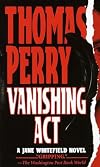
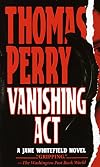
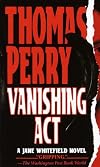
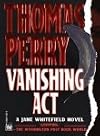
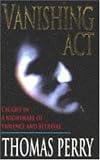
Jane Whitefield is a Native American guide who leads solitary outcasts through hostile territory to escape the vengeance of their enemies. But the shaded forest paths her Seneca ancestors might have followed on such missions have all been converted to superhighways, and now the safest way stations are crowded urban buildings that offer the camouflage of anonymity. Still, the supply of runaways-and the need for a woman who will take great risks to save them-have never been greater.Jane knows show more all the tricks; in fact, she has invented several of them herself in the ten years she has been teaching fugitives to live with new identities. Many of her clients have been innocent people whom the institutions of society have been too slow and cumbersome to protect, but an increasing number have been like the gambler Harry Kemple: people who aren't especially admirable but who aren't bad enough to deserve to die prematurely.Jane opens her door to find in her house an uninvited visitor named John Felker, the latest to run to her for sanctuary. Felker is not like the others Jane has helped, and everything about him is disquieting. He doesn't even know whom he is running from-only that whoever is framing him as an embezzler has already circulated an open contract in the prison system for his death. Maybe his problems began years ago, when he was a policeman; a good cop makes an enemy with each arrest. But perhaps he is still a policeman and has invented precisely the right story to entrap Jane. Or perhaps he is something even worse.The unexpected guest draws this exceptional woman into an adventure of mystery, love and sacrifice, betrayal and vengeance, and propels her on a pursuit that takes her from the night streets of Los Angeles and Vancouver to the dark, unexplored regions of her own mind. There is no way for Jane Whitefield to survive this particular vanishing act except to uncover the hidden meanings of violent events that have kept police forces and criminal syndicates equally mystified for years. She must see beyond the cement and steel of the cities and learn to see as her Indian ancestors did.Vanishing Act is Edgar Award winner Thomas Perry at the top of his form, pitting a heroine like no other against a cunning, implacable enemy in a world where mercy and brutality exist in equal measure and the only way to survive is by one's wits. show lessTags
Recommendations






Member Recommendations
Member Reviews
I was in the mood for a crime thriller a couple of weeks ago but the one I chose, Gangsterland, came up short for me. Though this is not a genre I read a ton of, it is one I like and when I am in the mood not much else will do so I decided to try again. Several books by Thomas Perry had been recommended by various friends in the past and this seemed like a good opportunity to check him out. I don't think anyone recommended this particular book, but I chose it because it was first in a series with a female lead. It was a great choice. This was lots of fun. Jane Whitfield (our leading lady) is a badass. She is a Native American woman who uses her extraordinary mental and physical prowess and her loose network of people who fly under the show more radar, tribe members, immigrants, low-wage workers, to help disappear people who are running for their safety. This is intended to be for the good, abused women, conscientious objectors, people escaping the mob etc. I cannot talk about the person in search of a new identity in this book without spoiling pretty much everything, but it is fun and surprising.
Aspects of this are dated (it was published in 1995) and not just the references to floppy discs and the mad search for landlines but also prevailing attitudes about many things. It is noticeable, but it in no way ruins the story any more than it does when one is reading Agatha Christie. I will definitely be returning to the series, and I suspect there will be more thrillers and mysteries coming up in my feed since it whetted my appetite for more. show less
Aspects of this are dated (it was published in 1995) and not just the references to floppy discs and the mad search for landlines but also prevailing attitudes about many things. It is noticeable, but it in no way ruins the story any more than it does when one is reading Agatha Christie. I will definitely be returning to the series, and I suspect there will be more thrillers and mysteries coming up in my feed since it whetted my appetite for more. show less
This book is the first I have read in the Jane Whitfield series. She specializes in helping to hide people who need to disappear from abusive husbands, gangsters, whatever. I don’t know about the other books in the series - yet - but the man she is helping in Vanishing Act has no trouble finding her, has lots of skills that would appear to help him hide himself, and comes with bags of cash. This one however, turns out to be the opposite of her usual client.
One criticism of the book might be that it waffles between being an escape thriller and a didactic lecture (hmmm, is that redundant) on Native American culture and history. Whitfield is Seneca and while I found the discourses and snippets of Indian language interesting, they seemed show more totally out of place with the rest of the book. On the other hand, once you get past some of the dream sequences, which reveal ALL of the rationale and motivations of the other character (that was a bit much,) her use of Indian lore and skills to overcome her adversary in the woods, was intriguing. Loved that part. show less
One criticism of the book might be that it waffles between being an escape thriller and a didactic lecture (hmmm, is that redundant) on Native American culture and history. Whitfield is Seneca and while I found the discourses and snippets of Indian language interesting, they seemed show more totally out of place with the rest of the book. On the other hand, once you get past some of the dream sequences, which reveal ALL of the rationale and motivations of the other character (that was a bit much,) her use of Indian lore and skills to overcome her adversary in the woods, was intriguing. Loved that part. show less
Not my usual genre, but it was recommended and I really enjoyed it. Can see myself seeking out other novels where Jane Whitefield helps people disappear.
I felt I had to give Thomas Perry another chance. At the same time I felt I had plenty of reason not to. Despite a glowing-but-carefully-worded introduction by Michael Connelly to Perry’s first book, The Butcher’s Boy (Random House, 2003), it remains the only novel--off the top of my head--that I’ve rated 2 Stars. In fact, I found the introduction much more interesting than anything that followed it. But I closed the review with: “. . . there is something here. I find myself wanting to read more. Neither can I deny I was disappointed.” Perhaps that’s the reason I jumped to Perry’s sixth book, the first in the acclaimed Jane Whitefield series. I was greatly rewarded for doing so.
Jane, who lives in upstate New York near the show more Canadian border, is half Seneca Indian by blood and completely so in spirit, at least as much as the modern world will allow. Perhaps that is why, when it comes to her life’s work, she thinks of herself as a guide. She helps people disappear. Not criminals, unless there is a greater good involved, but decent people who are forced by circumstances to give up their lives as they know it. She works unofficially, without government knowledge, and has access to an extensive network of people who work outside the law. She fits among them, a thorough professional playing her part. Unfortunately, not knowing this would be her calling, she was sloppy in the beginning and now too many people not only know of her existence, but actually know her physical address. A man suddenly showing up at her house and referencing a previous, successfully-relocated “client” begins our introduction to Jane.
What follows is a mix of Indian lore, Jane’s skill at her profession, and pursuit from those trying to kill the man she is attempting to help. A murder results when things go wrong, and though the killer is obvious I believe that was always the author’s intention because he never makes Jane look stupid, not an easy thing to avoid when the reader knows more than she. Eventually it comes down to a one-on-one confrontation, which Jane can only win because of who she is and what she believes. It reaffirms everything we’ve come to know about Jane and her world. Nothing can be more satisfying than that. show less
Jane, who lives in upstate New York near the show more Canadian border, is half Seneca Indian by blood and completely so in spirit, at least as much as the modern world will allow. Perhaps that is why, when it comes to her life’s work, she thinks of herself as a guide. She helps people disappear. Not criminals, unless there is a greater good involved, but decent people who are forced by circumstances to give up their lives as they know it. She works unofficially, without government knowledge, and has access to an extensive network of people who work outside the law. She fits among them, a thorough professional playing her part. Unfortunately, not knowing this would be her calling, she was sloppy in the beginning and now too many people not only know of her existence, but actually know her physical address. A man suddenly showing up at her house and referencing a previous, successfully-relocated “client” begins our introduction to Jane.
What follows is a mix of Indian lore, Jane’s skill at her profession, and pursuit from those trying to kill the man she is attempting to help. A murder results when things go wrong, and though the killer is obvious I believe that was always the author’s intention because he never makes Jane look stupid, not an easy thing to avoid when the reader knows more than she. Eventually it comes down to a one-on-one confrontation, which Jane can only win because of who she is and what she believes. It reaffirms everything we’ve come to know about Jane and her world. Nothing can be more satisfying than that. show less
Audio- i guessed who was the bad guy pretty quickly. Didn't she get that there where just too many questions ? Well surprise, surprise, that wasn't the big mystery. The real mystery comes after we know who and then why. ARGUH, I was on the edge of my seat screaming for her. The pacing of the book, the action, the intrigue- all top notch mystery.
Jane Whitefield, a Native American type of guide, a strong independent women, steeped in her families traditions. She thanks her ancestors,she thinks of the lessons taught to her, and uses them in her everyday life. I loved the Native American heritage that she respected and remembered. She brought her tribes history with her and did not sway from who she is to fit. Her fight to right what was show more done is dangerous and she never thinks to quit, this path is to the death.
Excellent narration - I will continue on with the series. show less
Jane Whitefield, a Native American type of guide, a strong independent women, steeped in her families traditions. She thanks her ancestors,she thinks of the lessons taught to her, and uses them in her everyday life. I loved the Native American heritage that she respected and remembered. She brought her tribes history with her and did not sway from who she is to fit. Her fight to right what was show more done is dangerous and she never thinks to quit, this path is to the death.
Excellent narration - I will continue on with the series. show less
The Native American frame adds an extra element to this, although it was clear pretty much from the beginning that something was not quite right with the situation surrounding John Felker. I also really enjoyed the puzzle element where Jane was trying to piece together the sequence of events. I'll probably read the rest of these eventually, but not right away.
Jane Whitefield, a Senecca is a guide who helps people escape those pursuing them. A man she is aiding, John Felker, is not who he says he is. There is tension and action in this book as well as a splattering of Senecca life. This is a great read and I'm looking forward to the next book in the series.
Members
- Recently Added By
Author Information

41+ Works 12,967 Members
Thomas Perry was born in Tonawanda, New York, in 1947. He graduated from Cornell University in 1969 and earned a Ph. D. in English Literature from the University of Rochester in 1974. Perry's novels, successful both critically and with the public, are suspenseful as well as comic. Butcher's Boy received an Edgar Award from the Mystery Writers of show more America for Best First Novel in 1983, and another one of his novels has been adapted in the movie, The Guide (1999). His other novels include: Death Benefits, Nightlife, Fidelity, and Strip. (Bowker Author Biography) Won an Edgar for The Butcher's Boy, and Metzger's Dog was a New Yor Times Notable book of the Year. Vanishing Act was chosen as one of the 100 Favorite Mysteries of the century by the Independent Mystery Booksellers Association. Perry's other works include: Death Benefits, The Face Changers, Shadow Woman, Dance for the Dead, and Blood Money. He lives in Southern California with his wife and two daughters. (Publisher Provided) show less
Some Editions
Awards and Honors
Notable Lists
Series

Common Knowledge
- Canonical title
- Vanishing Act
- Original publication date
- 1995
- People/Characters
- Jane Whitefield; Rhonda Eckerly; Jake Reinert; John Felker; Harry Kemple; Lewis Feng (show all 7); James Michael Martin
- Important places
- Deganawida, New York, USA; New York, USA; Vancouver, British Columbia, Canada; Santa Barbara, California, USA; Adirondack Mountains, New York, USA
- Epigraph
- There is nothing in which these barbarians carry their superstition to a more extravagant length, than in what regards dreams...in whatever manner the dream in conceived, it is always looked upon as a thing sacred, and as the... (show all) most ordinary way in which the gods make known their will to men.
For the most part, they look upon them either as a desire of the soul inspired by some genius, or an order from him; and in consequence of this principle, they hold it a religious duty to obey them; and an Indian having dreamed of having a finger cut off, had it really cut off as soon as he awoke, after having prepared himself for this important action by a feast...
The affair becomes still more serious, should any one take it into his head to dream that he cuts the throat of another, for he will certainly accomplish it if he can; but woe to him, in his turn, should a third person dream that he revenges the dead.
Pierre de Charlevoix,
Journal of a Voyage to North-America,
1761 - Dedication
- For Isabel
With love to Alix and Jo - First words
- Jack Killigan used the reflections in the dark windows to watch the woman walk quickly up the long concourse, look at her high heels so she could take a few extra steps while the escalator was carrying her down, and then hurr... (show all)y around the curve so she could step onto the conveyor.
- Last words
- (Click to show. Warning: May contain spoilers.)"They're back in my kitchen now, eating some breakfast."
Classifications
Statistics
- Members
- 857
- Popularity
- 31,687
- Reviews
- 36
- Rating
- (3.81)
- Languages
- Chinese, Danish, English, German
- Media
- Paper, Audiobook, Ebook
- ISBNs
- 21
- ASINs
- 3