On This Page
Description
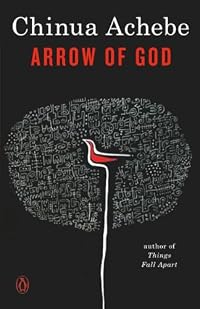
Set in the Ibo heartland of eastern Nigeria, one of Africa's best-known writers describes the conflict between old and new in its most poignant aspect--the personal struggle between father and son.Tags
Recommendations




Member Recommendations
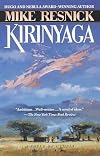
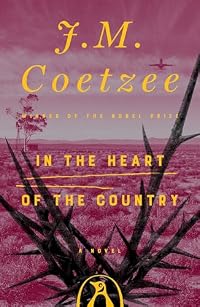
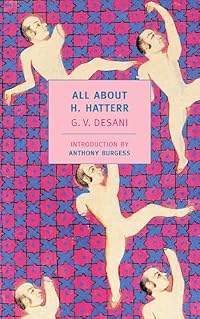
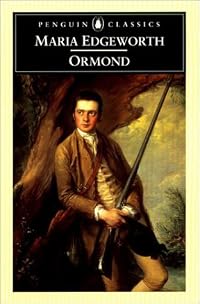
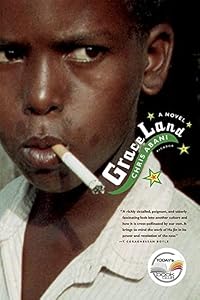
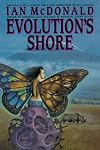
aulsmith Two books about old Africans losing their culture. The Achebe is literary, the Resnick science fiction.
Member Reviews
The novel centres around Ezeulu, a chief priest who acts as god's representative to the Umauro village. What makes Ezeulu's mission different from that of his ancestors is the presence of the white man and his religion, Christianity. One of the themes running through the novel the abandonment of traditional beliefs by the natives and embracing that of the white man. The village gradually stops trusting their priest. Achebe clearly shows how it was done for purely pragmatic reasons at first, and not spiritual ones, in attempt to clear up the misconception that natives were irrational and easily fooled, since that's how colonial accounts usually depict them.
The issue of colonial policy is also important and how the British administration show more managed the different societies that coexisted in the Nigerian colony (indirect rule).
The novel is very well written. It is a realistic novel that does not leave the reader indifferent. Although Things Fall Apart is considered Achebe's best novel, I prefer Arrow of God for its well-built characters and the more detailed and rich account of the era Achebe was describing (the Igbo village in Nigeria under British colonial rule) show less
The issue of colonial policy is also important and how the British administration show more managed the different societies that coexisted in the Nigerian colony (indirect rule).
The novel is very well written. It is a realistic novel that does not leave the reader indifferent. Although Things Fall Apart is considered Achebe's best novel, I prefer Arrow of God for its well-built characters and the more detailed and rich account of the era Achebe was describing (the Igbo village in Nigeria under British colonial rule) show less
Not as easy to follow, Achebe’s third novel in his African Trilogy is a less straightforward narrative than his famed Things Fall Apart. Although both novels focus feature Nigerian male protagonists battling with the influence of colonialism, Things was more us versus them. With Arrow, priest Ezeulu also faces a fatal battle with his own people.
As with Things, Achebe sets up the local scene before introducing the white man. Again, this gives the (intended Western) reader time to come around to the local way of thinking and doing things, to gain some level of empathy with tradition. But by the time the white man shows his influence in Arrow, it’ll be the rare reader who feels that what might potentially be destroyed by the Imperial show more influence is worth hanging on to.
Achebe paints a vivid picture of tribal infighting, familial jealousies and as much disharmony as you can expect in any culture anywhere. For this, the novel is important in showing us that many a myth surrounds ideas of colonists trespassing on humanitarian idylls. Mel Gibson’s film Apocalypto did the same thing in more recent times.
And so, while Ezeulu navigates the delicate diplomatic pathways of his own people, a summons from local colonial administrator Winterbottom throws an added dimension of conflict into the mix. Misunderstandings on both sides escalate an otherwise innocuous incident, and what was intended to empower Ezeulu actually threatens to undermine him. His harsh response heralds the tragic end of the novel for Ezeulu; an end, however, which the ardent colonial would be rather pleased with.
The prose is beautifully poignant, and Achebe gives voice to the people of the Igbo tribe as only he can. But the sheer number of characters in what is after all a short novel and the complexity of their relationships makes this novel harder to get through than it might otherwise have been. Arrow remains a classic for its subject matter, not the refinement of the narrative. show less
As with Things, Achebe sets up the local scene before introducing the white man. Again, this gives the (intended Western) reader time to come around to the local way of thinking and doing things, to gain some level of empathy with tradition. But by the time the white man shows his influence in Arrow, it’ll be the rare reader who feels that what might potentially be destroyed by the Imperial show more influence is worth hanging on to.
Achebe paints a vivid picture of tribal infighting, familial jealousies and as much disharmony as you can expect in any culture anywhere. For this, the novel is important in showing us that many a myth surrounds ideas of colonists trespassing on humanitarian idylls. Mel Gibson’s film Apocalypto did the same thing in more recent times.
And so, while Ezeulu navigates the delicate diplomatic pathways of his own people, a summons from local colonial administrator Winterbottom throws an added dimension of conflict into the mix. Misunderstandings on both sides escalate an otherwise innocuous incident, and what was intended to empower Ezeulu actually threatens to undermine him. His harsh response heralds the tragic end of the novel for Ezeulu; an end, however, which the ardent colonial would be rather pleased with.
The prose is beautifully poignant, and Achebe gives voice to the people of the Igbo tribe as only he can. But the sheer number of characters in what is after all a short novel and the complexity of their relationships makes this novel harder to get through than it might otherwise have been. Arrow remains a classic for its subject matter, not the refinement of the narrative. show less
Achebe does something very clever here: basically a story about power shifts in 1920s Nigeria with his so-called Western readers in mind, but turning the tables on them, acknowledging the power a storyteller has, leaving concepts unexplained and words untranslated. If Things Fall Apart was the telling of "The so-called savages you so-called civilized already had a civilization, thankyouverymuch", this is the showing, effectively colonizing the English-language novel right back. Unfortunately the story itself meanders and plods a bit too much at times.
This review is part of a longer one I wrote of the entire African Trilogy.
For me, this was the most remarkable of the three novels, capturing the meaning of Igbo religious practices and the strength of village and personal relationships while at the same time illustrating the rift that white colonial rule created in those traditional structures. It takes place in the period between the first two novels, when British political administration had been established in Nigeria, and focuses on Ezeulu, half man, half spirit, the Chief Priest of Ulu, who is the chief god of a loose alliance of six villages. Ezeulu takes his religious obligations very seriously, and is mostly respected in his village, but several people are opposed to him show more because, during a prior dispute with another village, he told the truth to the local British administrator, Captain Winterbottom, who then praised him, and thus he is accused of having a friend who is a white man. In addition, he has various issues with his wives and his children, one of whom he sent to study with the British. The novel, which includes sections told from the perspective of Winterbottom and his colleagues, dramatically and insightfully illustrates the clash between two completely different civilizations which completely fail to understand each other. To the British, Africa is hot and uncomfortable and the people are stupid if not savages; to the Africans, the British have no awareness of the importance of family relationships, traditional customs, and spiritual obligations. Of course, the British have the army behind them so the clash is unequal.
Ezeulo is a complex, thoughtful man who can ever so slightly see that perhaps some accommodation to the white man would be useful; however, he draws the line by refusing to accept a position they want him to take. Ultimately, the weight of his spiritual beliefs leads to a conflict with the people that ends in a loss of power, and tragedy. I found this novel utterly compelling in its portrayal of a man, his deeply held beliefs, and the impact of colonialism on a traditional culture. show less
For me, this was the most remarkable of the three novels, capturing the meaning of Igbo religious practices and the strength of village and personal relationships while at the same time illustrating the rift that white colonial rule created in those traditional structures. It takes place in the period between the first two novels, when British political administration had been established in Nigeria, and focuses on Ezeulu, half man, half spirit, the Chief Priest of Ulu, who is the chief god of a loose alliance of six villages. Ezeulu takes his religious obligations very seriously, and is mostly respected in his village, but several people are opposed to him show more because, during a prior dispute with another village, he told the truth to the local British administrator, Captain Winterbottom, who then praised him, and thus he is accused of having a friend who is a white man. In addition, he has various issues with his wives and his children, one of whom he sent to study with the British. The novel, which includes sections told from the perspective of Winterbottom and his colleagues, dramatically and insightfully illustrates the clash between two completely different civilizations which completely fail to understand each other. To the British, Africa is hot and uncomfortable and the people are stupid if not savages; to the Africans, the British have no awareness of the importance of family relationships, traditional customs, and spiritual obligations. Of course, the British have the army behind them so the clash is unequal.
Ezeulo is a complex, thoughtful man who can ever so slightly see that perhaps some accommodation to the white man would be useful; however, he draws the line by refusing to accept a position they want him to take. Ultimately, the weight of his spiritual beliefs leads to a conflict with the people that ends in a loss of power, and tragedy. I found this novel utterly compelling in its portrayal of a man, his deeply held beliefs, and the impact of colonialism on a traditional culture. show less
I found this book to be better than the second one, and a satisfying conclusion to the trilogy overall. As a history nerd, this book was fascinating to me to read about the struggle between the old beliefs vs the new, and how the main character in this book struggles to hold onto his power and beliefs even as forces from outside, and forces from within (even his own family!)
The book was written in 1964 but the story itself is set in the 1920's, where many parts of the world, not just in Nigeria, dealt with similar struggles. Not that I am defending all of Ezeulu's actions because some of his stubborn actions do more harm than good and the yams rot so the people are at risk of starvation, but it's still a fascinating story nonetheless. show more 4.5/5 stars. show less
The book was written in 1964 but the story itself is set in the 1920's, where many parts of the world, not just in Nigeria, dealt with similar struggles. Not that I am defending all of Ezeulu's actions because some of his stubborn actions do more harm than good and the yams rot so the people are at risk of starvation, but it's still a fascinating story nonetheless. show more 4.5/5 stars. show less
Hard to decide if the simplicity of Things Fall Apart or the expansive Arrow of God is the best of the Trilogy. Both hit on a lot of similar themes, neither really has characters that are heroes or morally straightforward figures, and both are heartbreaking. Chinua Achebe once famously tore down Heart of Darkness for its racist portrayal of Africans, of treating them as a backdrop to muse on the downfall of a European idealist. It was canonised books like this which spurred Achebe to write books which showed the rich, complex societies that imperialists viewed as uncivilised or inhuman. But both Conrad and Achebe write in a similar moderninst view emphasized in Heart of Darkness' description of Marlowe's storytelling quality: 'to him show more the meaning of an episode was not inside like a kernel but outside, enveloping the tale which brought it out only as a glow brings out a haze, in the likeness of one of these misty halos that sometimes are made visible by the spectral illumination of moonshine.' show less
all I can say is, Chinua Achebe is awesome. I’ve read three books by him (Things Fall Apart, Anthills of the Savannah, and Arrow of God) and they are all first-rate, #5, everyone should read these books.
repeating myself:
the man is amazingly talented with words, world-building, and characterization. he can be very economical in his writing, straight to the quick and every word, every image is exactly what is necessary to convey his meaning and carry the story. he can also be very philosophical and soul-searching, when his characters are and when the situation calls for it. his stories are very human and real--- there's no real heroes or villains or any "correct" viewpoints involved (though a character might think of his viewpoint as show more supreme) or preaching of a moral. you feel as if you know the people personally somehow, as if they are quite real, and correspondingly complicated without being constructedly so. you come to understand the world they populate in a short time, as if you've been there, as if you could put the book down and find yourself there.
amazingly talented.
Arrow of God is told primarily from the viewpoint of a chief priest of an Igbo village (Umuaro; several villages as one, really), but also from that of the British man on the spot and his subordinates. the reality each person experiences (not only each side- ie, white/black- but also, yes, each person) is very different, and yet as they interact more and come to their own (often bizarre yet predictable) understandings of each other, their realities began to converge. not that either side ever really fully and truly understands each other, but they go from being separate entities to sharing in a common future.
Achebe's thorough discussion of the events brings the reader to realize many aspects of life and truth in the story. for just one example,the book documents the disintegration of the traditional religion (again, not total disintegration, but the toppling from its dominance in the community and taking a diminished and quite secondary or even forgotten role) , and in a way that makes total sense in the context of that religion (and the accompanying culture). not just, the Christians came and the Christians shone their truth forth and yeah verily we all converted. no, we get the real, complicated story of how the priest and even the god itself misstepped and fell from power, with the white religion as a context, but not as the defining factor.
he's such an engaging writer. I actually picked this book up after I had already started The Hamlet (Faulkner), and I couldn't put it down. even though I had already started in on William Faulkner! yes, if I may be so bold, I think Chinua Achebe is the William Faulkner of Nigeria. truly great, truly great. show less
repeating myself:
the man is amazingly talented with words, world-building, and characterization. he can be very economical in his writing, straight to the quick and every word, every image is exactly what is necessary to convey his meaning and carry the story. he can also be very philosophical and soul-searching, when his characters are and when the situation calls for it. his stories are very human and real--- there's no real heroes or villains or any "correct" viewpoints involved (though a character might think of his viewpoint as show more supreme) or preaching of a moral. you feel as if you know the people personally somehow, as if they are quite real, and correspondingly complicated without being constructedly so. you come to understand the world they populate in a short time, as if you've been there, as if you could put the book down and find yourself there.
amazingly talented.
Arrow of God is told primarily from the viewpoint of a chief priest of an Igbo village (Umuaro; several villages as one, really), but also from that of the British man on the spot and his subordinates. the reality each person experiences (not only each side- ie, white/black- but also, yes, each person) is very different, and yet as they interact more and come to their own (often bizarre yet predictable) understandings of each other, their realities began to converge. not that either side ever really fully and truly understands each other, but they go from being separate entities to sharing in a common future.
Achebe's thorough discussion of the events brings the reader to realize many aspects of life and truth in the story. for just one example,the book documents the disintegration of the traditional religion (again, not total disintegration, but the toppling from its dominance in the community and taking a diminished and quite secondary or even forgotten role) , and in a way that makes total sense in the context of that religion (and the accompanying culture). not just, the Christians came and the Christians shone their truth forth and yeah verily we all converted. no, we get the real, complicated story of how the priest and even the god itself misstepped and fell from power, with the white religion as a context, but not as the defining factor.
he's such an engaging writer. I actually picked this book up after I had already started The Hamlet (Faulkner), and I couldn't put it down. even though I had already started in on William Faulkner! yes, if I may be so bold, I think Chinua Achebe is the William Faulkner of Nigeria. truly great, truly great. show less
Members
- Recently Added By
Lists

1001 Books You Must Read Before You Die
1,448 works; 1,132 members

Classics you know you should have read but probably haven't
421 works; 407 members

Best of World Literature
431 works; 51 members
Best African Books
126 works; 46 members

20th Century Literature
1,161 works; 55 members

Literature by People of Color
81 works; 9 members

Big Jubilee List
70 works; 3 members

Expand Your Reading Demographics!
47 works; 15 members

Africa
109 works; 8 members

1,001 BYMRBYD Concensus
723 works; 27 members
Reading Globally
136 works; 16 members
Harold Bloom - The Western Canon: D. The Chaotic Age
833 works; 24 members

My TBR
371 works; 3 members
Author Information

61+ Works 32,699 Members
Albert Chinualumogu Achebe was born on November 16, 1930 in Ogidi, Nigeria. He studied English, history and theology at University College in Ibadan from 1948 to 1953. After receiving a second-class degree, he taught for a while before joining the Nigeria Broadcasting Service in 1954. He was working as a broadcaster when he wrote his first two show more novels, and then quit working to devote himself to writing full time. Unfortunately his literary career was cut short by the Nigerian Civil War. During this time he supported the ill-fated Biafrian cause and served abroad as a diplomat. He and his family narrowly escaped assassination. After the civil war, he abandoned fiction for a period in favor of essays, short stories, and poetry. His works include Things Fall Apart, Arrow of God, No Longer at Ease, A Man of the People, Anthills of the Savannah, and There Was a Country. He also wrote four children's books including Chike and the River and How the Leopard Got His Claws. In 2007, he won the Man Booker International Prize for his "overall contribution to fiction on the world stage." He also worked as a professor of literature in Nigeria and the United States. He died following a brief illness on March 21, 2013 at the age of 82. (Bowker Author Biography) show less
Some Editions
Awards and Honors
Notable Lists
Series

Belongs to Publisher Series
Work Relationships
Is contained in
Has as a study
Common Knowledge
- Canonical title
- Arrow of God
- Original title
- Arrow of God
- Alternate titles*
- Pijl van God : roman
- Original publication date
- 1964
- Important places
- Nigeria
- Dedication
- To the Memory of my Father
ISAIAH OKAFOR ACHEBE - First words
- This was the third nightfall since he began to look for signs of the new moon.
Whenever people have asked me which among my novels is my favourite I have always evaded a direct answer, being strongly of the mind that in sheer invidiousness that question is fully comparable to asking a man to list his ch... (show all)ildren in the order in which he loves them. (Preface to the Second Edition) - Last words
- (Click to show. Warning: May contain spoilers.)Thereafter any yam that was harvested in his field was harvested in the name of the son.
(Click to show. Warning: May contain spoilers.)And he would gladly have forgiven them. (Preface to the Second Edition) - Blurbers
- Atwood, Margaret; Dorris, Michael; Ondaatje, Michael
- Original language
- English
*Some information comes from Common Knowledge in other languages. Click "Edit" for more information.
Classifications
Statistics
- Members
- 1,456
- Popularity
- 15,952
- Reviews
- 29
- Rating
- (3.72)
- Languages
- 11 — Dutch, English, French, German, Italian, Japanese, Portuguese, Russian, Spanish, Swedish, Turkish
- Media
- Paper, Audiobook, Ebook
- ISBNs
- 38
- ASINs
- 22